On June 6, 2025, the CDC and the FDA notified the public of a seven-state outbreak of Salmonella Enteritidis illnesses linked to contaminated eggs from August Egg Company.
According to the CDC, the outbreak comprised 79 confirmed illnesses, including 21 hospitalizations.
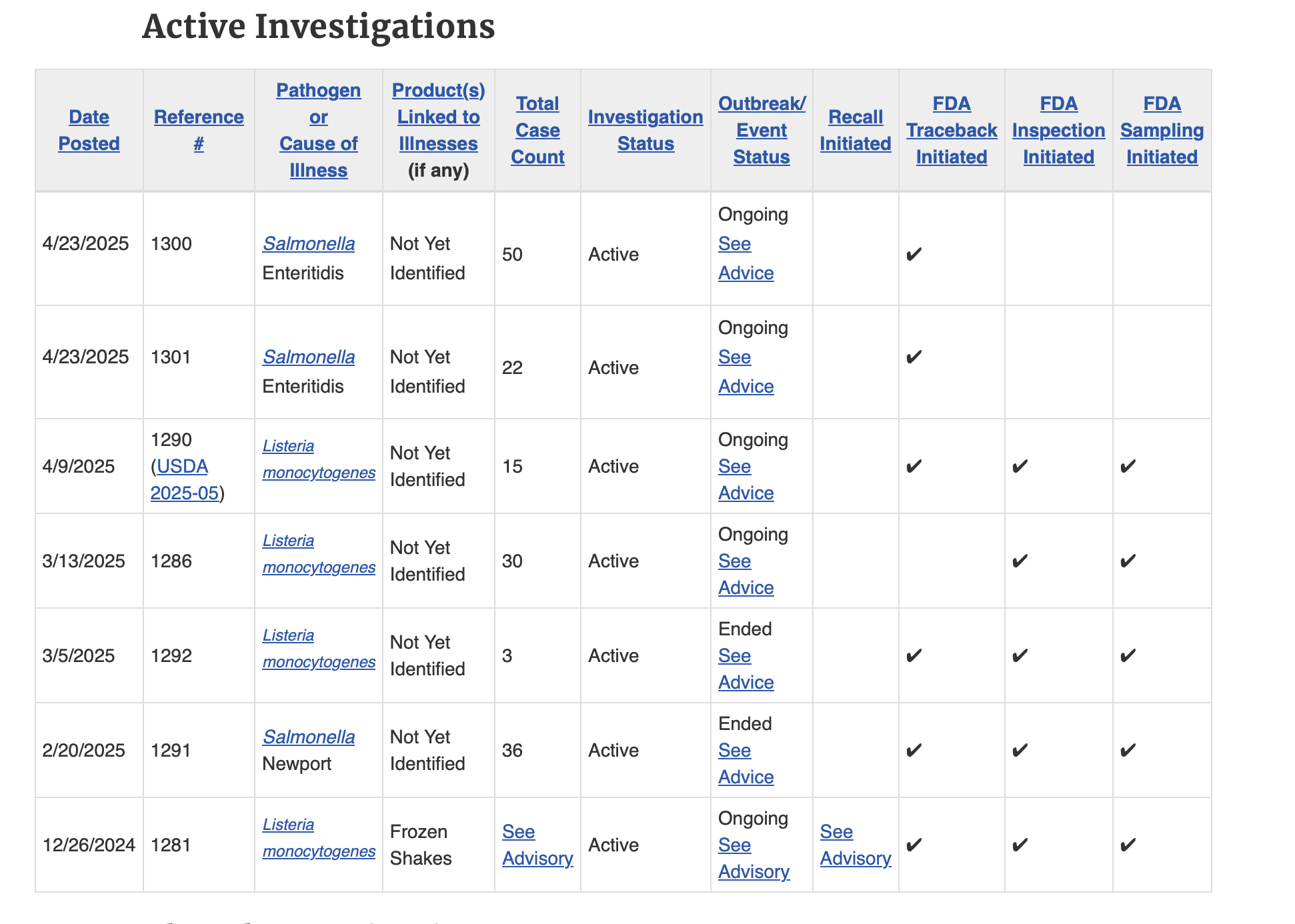
The FDA reported that this outbreak corresponded to its Active Investigation #1300. That investigation was opened on April 23, 2025, with an initial count of 50 cases (see below).
By May 14, 2025, the number of reported to be part of that investigation had increased to 78 (see below).
Yet the “official” tally of confirmed cases has now dropped to 79.
What has happened to the 50 missing cases? Were they included in the Active Investigation tables erroneously for week after week? Or were they omitted—either deliberately or in error—from the official CDC and FDA notices of investigation that were released on June 6th?
This inquiring mind wants to know.
“Reads like a true crime novel” – Food Safety News
Interested in learning more about food safety and the history of foodborne disease outbreaks and investigations?
Click on the link to listen to a short excerpt, then follow the buy links to add a digital, print or audio copy to your personal library.
A seven-state outbreak of Salmonella Enteritidis illnesses has been traced to eggs supplied by August Egg Company of Hilmar, California, according to information from the CDC and the FDA.
As of today, the CDC has received reports of 79 confirmed outbreak cases, including 21 hospitalizations. Cases have been reported from Arizona (3), California (63), Kentucky (1), Nebraska (2), New Jersey (2), Nevada (4), and Washington (4).
The first case was identified on February 24, 2025. Victims range in age from 1 year to 90 years, with a median age of 48 years.
Of 30 people interviewed, 27 (90%) reported eating eggs. Six of the victims from Kentucky, New Jersey, and Washington reported having traveled to California or Nevada in the week before they became ill.
The FDA has conducted an inspection of August Egg Company’s processing facility and has recovered Salmonella that is closely related to the outbreak strain from environmental samples collected during the inspection.
The recall
August Egg Company has announced a recall of 1,700,000 dozen brown cage free eggs and brown certified organic eggs, sold under the brand names, Clover, First Street, Nulaid, O Organics, Marketside, Raleys, Simple Truth, Sun Harvest, and Sunnyside.
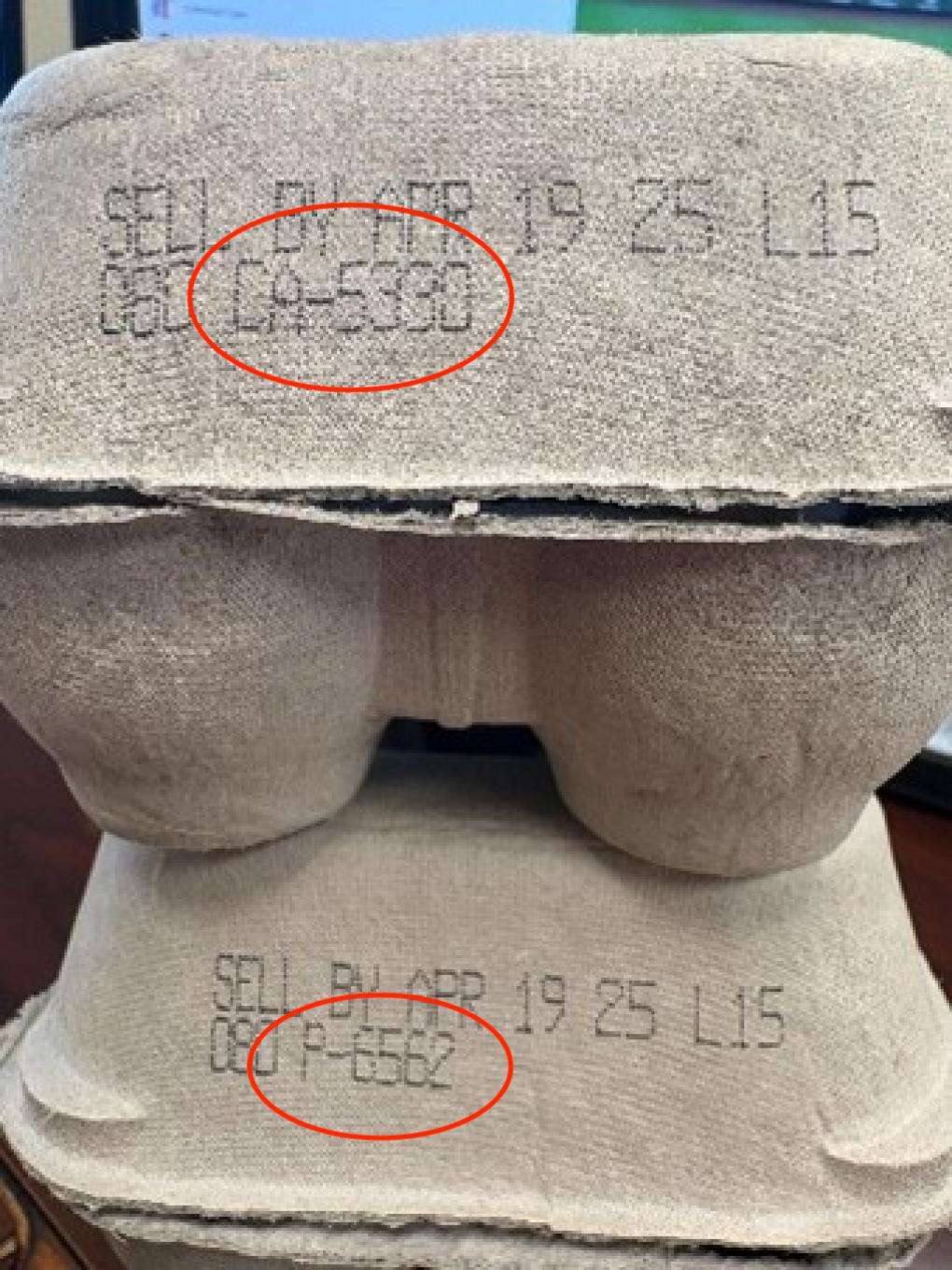
The recalled eggs will have printed on the carton or package a plant code number P-6562 or CA5330 with the Julian Dates between 32 to 126. The recalled retail eggs will be in fiber or plastic cartons, with the above codes printed on one side of the carton. The eggs were packed in cartons of 12 or 18, or supplied in flats.
The eggs were distributed from February 3, 2025, through May 15, 2025, with sell by dates from March 4, 2025, to June 4, 2025, within California and Nevada and were sold at retail locations including Save Mart, FoodMaxx, Lucky, Smart & Final, Safeway, Raleys, Food 4 Less and Ralphs.
The eggs were also distributed from February 3, 2025, through May 6, 2025, with sell by dates from March 4, 2025, to June 19, 2025, to Walmart locations in California, Washington, Nevada, Arizona, Wyoming, New Mexico, Nebraska, Indiana and Illinois.
Please refer to the recall notice for a detailed list of affected eggs.
According to information contained in the company’s recall notice, the company has been voluntarily diverting its eggs to an egg-breaking plant for pasteurization for more than a month. The company gave no explanation as to why it delayed recalling its eggs from the marketplace until today.
FDA advisory
Consumers, restaurants, and retailers should not eat, sell, or serve recalled brown cage free and brown certified organic eggs from August Egg Company.
Consumers, restaurants, and retailers who purchased or received the recalled eggs, including wholesale eggs, should carefully clean and sanitize any surfaces or containers that they touched.
Check your refrigerators for the recalled brown cage free and brown certified organic eggs and throw them away or return them to the place of purchase. If you stored the eggs without the original packaging and can’t tell if it is part of this outbreak, throw them away.
Wash hands, utensils, and surfaces with hot, soapy water before and after handling raw eggs and raw egg-containing foods. Follow FDA’s safe handling and cleaning advice and use extra care in cleaning and sanitizing any surfaces and containers that may have come in contact with this product to reduce the risk of cross-contamination.
Contact your healthcare provider if you think you may have developed symptoms of a Salmonella infection, after eating eggs.
“Reads like a true crime novel” – Food Safety News
Interested in learning more about food safety and the history of foodborne disease outbreaks and investigations?
Click on the link to listen to a short excerpt, then follow the buy links to add a digital, print or audio copy to your personal library.
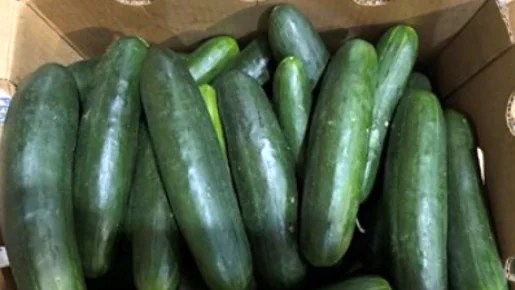
The outbreak of Salmonella Montevideo illnesses linked to whole cucumbers from Bedner Growers, Inc. has expanded to three more states according to an update releaased today by the CDC.
As of May 30, 2025, 45 individuals from 18 states have been confirmed to be infected with the outbreak strain. Sixteen people have been hospitalized.
Confirmed cases have been reported in Alabama (1), California (1), Colorado (1), Florida (6), Georgia (7), Illinois (4), Indiana (1), Kansas (1), Kentucky (1), Massachusetts (1), Michigan (2), North Carolina (3), New York (3), Ohio (4), Pennsylvania (3), South Carolina (2), Tennessee (1), and Virginia (3).
Eight of the outbreak victims reported having taken a cruise in the week before becoming ill. All of the six ships identified by victims departed from Florida ports. Three of the victims travelled on the same ship.
Outbreak victims range in age from 2 to 84 years (median age of 50 years). Roughly three-quarters (76%) of the victims are female.
Of 27 people interviewed so farm, 24 (86%) reported having eaten cucumbers (compared to ~50% of respondents in a FoodNet survey).
The FDA has recovered the outbreak strain in an environmental sample collected during an inspection conducted at Bedner Growers, Inc. The inspection was a follow-up to the investigtion of a 2024 Salmonella outbreak that was linked to cucumbers grown by Bedners.
During the course of the investigation into the current outbreak, the FDA collected a sample of Bedner Growers, Inc., cucumbers from a distribution center in Pennsylvania. Salmonella matching the outbreak strain was recovered from the cucumber sample.
The FDA also found multiple other strains of Salmonella, unrelated to this outbreak investigation, matched other isolates in the National Center for Biotechnology Information’s (NCBI) database that were reported in 2025 and previous years. The CDC is working to determine if additional human illnesses match these strains.
On May 19, 2025, Bedner Growers, Inc. recalled whole cucumbers sold directly to consumers at Bedner’s Farm Fresh Market and to its wholesale distributor. Multiple additional recall notices have been issued by the consignees of these cucumbers. The FDA has posted a table linking to the recall notices.
The FDA and CDC investigations are ongoing, and the CDC warns the public that additional outbreak cases are likely to be reported.
CDC recommends the following actions
What businesses should do
Do not sell or serve whole cucumbers grown by Bedner Growers Inc. and distributed by Fresh Start Produce Inc. between April 29, 2025 and May 19, 2025.
Wash and sanitize items and surfaces that may have come in contact with cucumbers.
Stores can also notify customers who may have purchased cucumbers using signs in stores or emails to customers.
What consumers should do
If you have cucumbers at home and can’t tell where they are from, throw them away.
When eating out over the next week, ask if cucumbers were from Bedner Growers or Fresh Start Produce Sales Inc.
Wash surfaces and items that may have touched the cucumbers using hot soapy water or a dishwasher.
Call your healthcare provider if you have any of these severe Salmonella symptoms
Diarrhea and a fever higher than 102°F
Diarrhea for more than 3 days that is not improving
Bloody diarrhea
So much vomiting that you cannot keep liquids down
Signs of dehydration, such as not peeing much, dry mouth and throat, and feeling dizzy when standing up
“Reads like a true crime novel” – Food Safety News
Interested in learning more about food safety and the history of foodborne disease outbreaks and investigations?
Click on the link to listen to a short excerpt, then follow the buy links to add a digital, print or audio copy to your personal library.




 eFoodAlert