
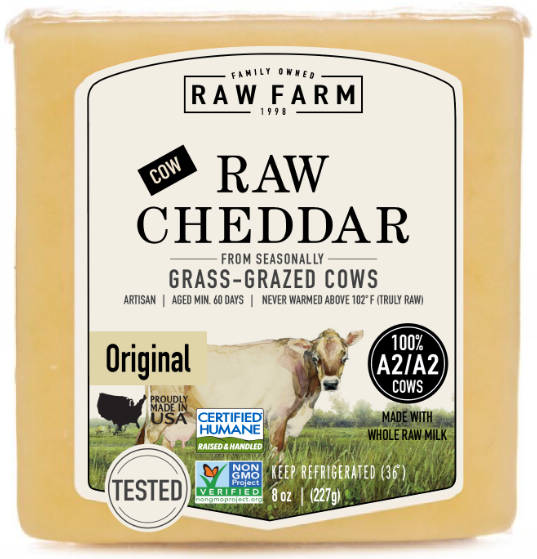
RAW FARM LLC recalls raw cheeses “under protest”

RAW FARM LLC has voluntarily recalled several varieties of raw cheddar cheese “under protest” in response to repeated recommendations from the FDA.

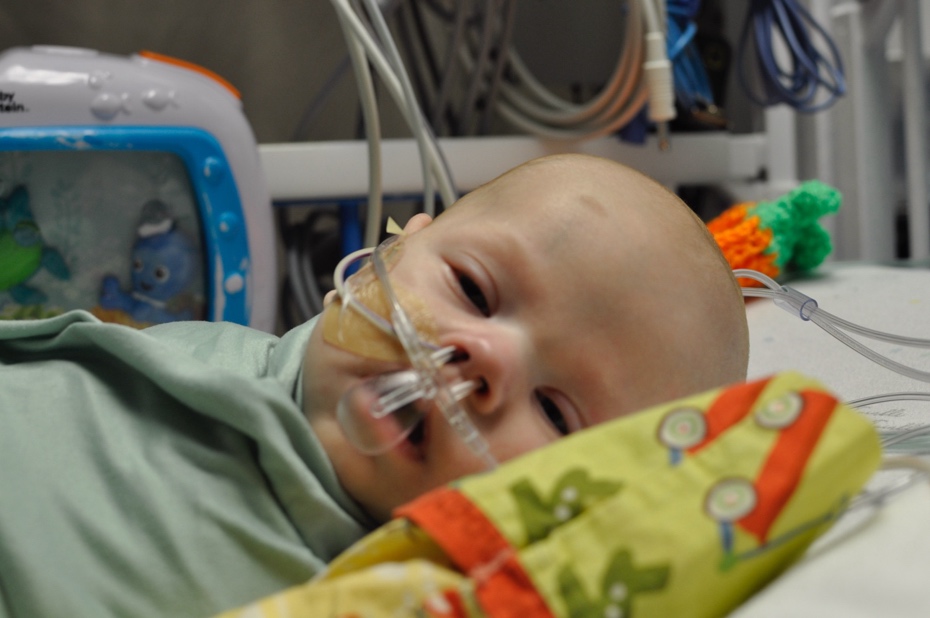
The recalled cheeses have been implicated through epidemiological data collected by the CDC to nine-case outbreak of E. coli O157:H7 infections. More than one-half of the outbreak victims are children under the age of five. Three outbreak victims have been hospitalized, and one has developed hemolytic uremic syndrome (HUS).

Of the eight victims interviewed, all reported having consumed or being served unpasteurized milk or cheese. Seven of the eight specifically mentioned consuming Raw Farm brand dairy products. Five of the seven had consumed Raw Farm cheddar cheese prior to becoming ill.

The company has resisted repeated FDA recommendations to recall the implicated products. In its recall notice, headed simply “Voluntary Recall,” RAW FARM repeats its assertions that the company’s products are not the source of the outbreak, beginning the recall notice with the following announcement:

Company Announcement

  • No pathogens have been found in RAW FARM-brand cheese products.
  • No pathogens have been found in FDA samples collected directly or samples collected by state Health Department officials.
  • RAW FARM continues to contest the epidemiological links provided by the FDA.
  • This Voluntary Recall is being performed under protest.
  • This Voluntary Recall is performed as a path forward.
  • RAW FARM proudly makes truly raw cheddar cheese from milk that is not pasteurized or thermalized and is fully compliant with C.F.R section 133.113.

Here is a list of the products included in the recall announcement, which includes batch numbers produced up to and including the indicated dates.

An FDA inspection of the RAW FARM LLC production plant, including sampling of the environment and finished products for the presence of E. coli O157:H7, is in progress. To date, the FDA has not reported any positive results. Nevertheless, the epidemiological evidence is strong.

As eFoodAlert reported previously, the company has a checkered history with both the FDA and the California Department of Health. Two years ago, its raw cheeses were linked epidemiologically to an eleven-case outbreak of E. coli O157:H7 illnesses, and in 2023/2024, RAW FARM-brand unpasteurized milk was found to be the source of a 171-case outbreak of Salmonella Typhimurium illnesses in the state of California. On that occasion, the outbreak strain was recovered from samples of the company’s raw milk.

Although raw milk and other dairy products made with raw (unpasteurized) milk are not permitted to be shipped for retail sale across state lines, they are legal for retail sale within a number of states, including California.

According to the FDA, since 1987 and up to March 2024, there have been 143 recorded outbreaks of illnesses in the United States associated with consumption of raw milk and raw dairy products. These include outbreaks of Listeria monocytogenes, Campylobacter, Salmonella, and shiga toxin-producing E. coli (such as E. coli O157:H7).

If you consumed a RAW FARM, LLC cheese product and you develop symptoms of gastrointestinal upset within the few days following consumption, consider seeking medical treatment, especially if your symptoms include one or more of the following:

  • Diarrhea and a fever higher than 102°F
  • Diarrhea for more than 3 days that is not improving
  • Bloody diarrhea
  • So much vomiting that you cannot keep liquids down
  • Signs of dehydration, such as:
    • Not peeing much
    • Dry mouth and throat
    • Feeling dizzy when standing up

TAINTED formats 3
“Reads like a true crime novel” – Food Safety News

Interested in learning more about food safety and the history of foodborne disease outbreaks and investigations?

Click on the link to listen to a short excerpt, then follow the buy links to add a digital, print or audio copy to your personal library.


Chapter 6. Birth of a Pathogen

Frozen veggies suspected source of US Listeria outbreak

Frozen vegetables grown and processed in Egypt may be linked to a mysterious outbreak of Listeria monocytogenes infections that erupted in three stages in 2024 and 2025.

According to information obtained by eFoodAlert from the FDA in response to a Freedom of Information Act request, the outbreak was first investigated by the CDC in April 2024 without success. The investigation was reopened in August 2024 when additional cases appeared on the CDC’s radar screen. Again, the investigation was closed without a possible source having been determined.

In June 2025, the CDC reopened the investigation once more after an additional five cases attributed to the same outbreak strain were found. One of those cases occurred in December 2024; the other four from January to May 2025.

Although the outbreak comprised 27 cases overall in 13 states, according to the FDA investigation report, the CDC map provided as part of the report only shows locations for 25 of the cases: Connecticut (1), Florida (2), Illinois (1), Massachusetts (2), Maryland (1), Michigan (1), Minnesota (1), Missouri (1), New Jersey (1), New York (8), Pennsylvania (4), Rhode Island (1), and Virginia (1).

Ages of outbreak victims ranged from less than one to 97 years, with a median age of 72 years. Twenty-five of the victims were hospitalized and one person died. Two of the outbreak patients were pregnant women.

The FDA did not conduct an official traceback investigation for this outbreak, as the CDC could not supply strong epidemiological evidence for a possible source. However, the agency did conduct a “limited distribution analysis” for two of the cases.

Although many of the details as to the suspected source have been redacted from the investigation report, the FOIA officials left enough breadcrumbs for eFoodAlert to follow.

The FDA collected records and samples from possible suppliers of the suspect food and, on August 20, 2025, reported positive samples with possible connection to clinical outbreak cases. Eight days later, the CDC advised the FDA that samples collected from one of the suppliers (name redacted in the investigation report supplied to eFoodAlert) was a genetic match for the outbreak strain. Samples collected from the other [unidentified] manufacturer did not match the outbreak strain.

On September 2, 2025, Endico Potatoes Inc. of Mount Vernon, NY recalled two lots of frozen vegetables due to possible Listeria monocytogenes contamination. The recall included one lot each of “frozen peas and carrots” and “mixed vegetables.” According to the Enforcement Report details, the vegetables were imported from Egypt.

In June 2024, the FDA conducted a comprehensive inspection of Endico Potatoes (Inspection ID #1232874) relating to the Foreign Supplier Verification Program. The inspection did not uncover any significant deviations or discrepancies and the results were classified as “No Action Indicated.”

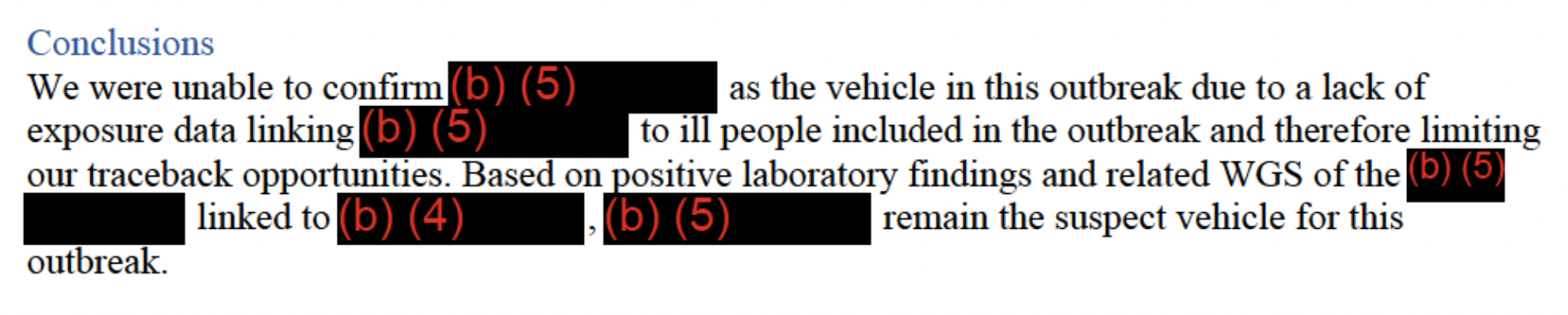
Excerpt from redacted FDA investigation report

The recalled lots of frozen vegetables were manufactured after the last of the outbreak cases was detected, and the recall notice states that no illnesses were reported. Nevertheless, on September 30, 2025, the manufacturer of the frozen vegetables was added to FDA’s Import Alert 99-23, Detention Without Physical Examination of Produce Due to Contamination With Human Pathogens.

The manufacturer and supplier of the recalled vegetables was International Company For Agricultural Production & Processing (ICAPP), headquartered in Cairo, and with production facilities in Ramadan City, Ash Sharqiyah, Egypt. Both the headquarters location and the production plant site were listed in the Import Alert.

On October 22, 2025, the FDA added another supplier to Import Alert 99-23. This supplier, whose samples were positive for Listeria monocytogenes but did not match the outbreak strain, is identified in the Import Alert as Warminskie Zaklady Przetworstwa Owocowo – Warzywnego sp. o.o of Pomorskie, Poland.

Excerpt from FDA Investigation Report

This would not be the first time that frozen vegetables have been linked to an outbreak of Listeria monocytogenes. In 2016, nine people were infected as a result of consuming frozen vegetables produced by CRF Frozen Foods of Pasco, Washington. A Connecticut resident died as a result of the infection, and two other outbreak victims died from other causes.

A separate outbreak between 2015 and 2018 was responsible for at least 47 illnesses and 9 deaths in Austria, Denmark, Finland, Sweden and the United Kingdom. That outbreak was traced to frozen corn and frozen vegetable mixes from a Hungarian freezing plant.

The author(s) of the FDA investigation report acknowledge that frozen vegetables are an “established vehicle” for Listeria monocytogenes, that the suspect products had an extended shelf life, and that contaminated product might still be in consumers’ homes.

The smoking gun (finding the outbreak strain in a sample of frozen vegetables) wasn’t enough for the FDA and CDC to reach a firm conclusion in this case. Instead, they identifed frozen vegetables as the “suspect vehicle” and withheld this information from the public.

Despite knowing that consumers might still be exposed to contaminated product, and despite the likelihood that frozen vegetables were the source of more than two dozen cases of Listeria monocytogenes, including one death, the FDA and the CDC remained silent.

The FDA could have issued an advisory at the time to alert consumers to the risk. This could have been done without naming the importer or the manufacturer.

The FDA should have alerted the public to this hazard, reminding consumers that frozen vegetables are not ready-to-eat products, but must be cooked thoroughly before being consumed.

The redacted FDA investigation report is an excellent example of redaction overreach.

The FOIA officer redacted information on the number of outbreak cases and their geographic distribution, even though that information was readily available in the CDC outbreak map included in the same report.

Other information that was redacted even though the information was publicly available included: the identity of the companies added to Import Alert 99-23, the details of the 2016 Listeria monocytogenes in the United States, and the details of the 2015-2018 outbreak in several European countries.

Certainly, proprietary information (e.g., product formulations and supply chain information) should be redacted as a matter of course. But, there is absolutely no justification to redacting information that is readily available to the public from other published sources.

Here is a link to the full redacted FDA Investigation Report as supplied to eFoodAlert in response to our FOIA request.


TAINTED formats 3
“Reads like a true crime novel” – Food Safety News

Interested in learning more about food safety and the history of foodborne disease outbreaks and investigations?

Click on the link to listen to a short excerpt, then follow the buy links to add a digital, print or audio copy to your personal library.
Chapter 6. Birth of a Pathogen

To Safer Infant Formulas and doing away with Botulism, Cronobacter sakazakii, Salmonella and Bacillus cereus

NOTE: This post on Marler Blog was written by food safety attorney, Bill Marler, and is reposted here with the author’s permission.

A bit over a month ago, I was set to testify before the House and Senate Safe Food Caucus in D.C. Instead, the night before I had a heart attack. I am fine. I got great care at Howard University Hospital and have made a complete recovery – although changing a few habits going forward.

I had been asked to share some thoughts on the infant formula industry’s inability to make sure that such a critical food item is safe. As I sit here on this Sunday afternoon I am puzzled how we can spend countless billions on yet another unnecessary war and even more billions on AI and robots to make most of us irrelevant and we cannot make infant food safer? Here is some of what I wanted to discuss. I am sure there are other ideas – I would love to hear them.

Infant formula has until recently been considered low risk for C. botulinum (and, then there are other pathogens – Cronobacter sakazakii, Salmonella and recently, Bacillus cereus of concern).

The recent C. botulinum outbreak and the mixed picture you get from looking at the multitude of WGS sequences on NCBI indicates that infant formula might be riskier. We need a new risk assessment of C. botulinum (and other pathogens) in infant formula and its constituent ingredients and how to control the pathogens in powdered infant formula (PIF). For C. botulinum we need more information about:

How often is infant formula and its constituents contaminated with C. botulinum spores?

Do we detect the pathogen when we need to? We need to assess if the current methods are good enough (sensitive enough)?

How often is a product contaminated with more than one strain of C. botulinum (multiple WGS profiles)? How many isolates (colonies on a plate) from each sample should be sequenced to detect all contaminants?

Should we routinely culture infant formula from cases of infant botulism when the child has been fed such a product? (I highly suspect that infant formula is causing many more cases of infant botulism than we know of at the moment).  

How do we best control C. botulinum spores in infant formula. We need studies on methods to control C. botulinum more efficiently in infant formula.

Do we need new regulations and redefined best practices for the production of infant formula and detecting and culturing the organism from product, environment and patients? 

Perhaps as a start:

Fund a risk assessment on the prevalence of C. botulinum spores, Cronobacter sakazakii, Salmonella and Bacillus cereus and sulfite reducing clostridia (as indicators) in:

            a.         raw milk

            b.         pasteurized milk

            c.         dairy powders – including whole milk powder, whey powder, whey protein concentrates, whey protein hydrolysates, nonfat dry milk, skim milk powder 

A specific risk assessment on the prevalence of C. botulinum spores and sulfite reducing clostridia in Powdered infant formula

Risk assessment on the prevalence of C. botulinum spores in minimally processed (non-retort thermally processed) commercial baby foods fed to children <1 year of age

Risk assessment on the prevalence of C. botulinum spores in low moisture infant first foods (puffs, cereals (rice and oatmeal), peanut butter, etc.)

Processing strategies to minimize spores in PIF – investigate technologies to reduce spores in infant foods while maintaining nutritional standards

Impact of farming practices on the incidence of C. botulinum spores in milk 

            a.         Prevalence of C. botulinum spores in silage, bedding, etc., at the farm

            b.         Milk collection on organic vs. conventional dairy farms

Improved resources for the tracking and following up of Infant Botulism cases to determine the source of botulism outbreaks

Bottom line for control of spores in powdered infant formula (PIF): either they destroy all the spores or reformulate to lower the incidence of spores in PIF (at least down to where it was prior to the addition of whole milk powder into the formulations of PIF). Because PIF is fed to infants from Day 1 it should be commercially sterile. Leave it up to the companies to determine how to make PIF commercially sterile. At the very least I would suggest that until a study is conducted to show the prevalence of C. botulinum spores in whole milk powder and a risk assessment is conducted, any formulation that contains whole milk powder should not enter into commerce.


It is inarguable that breastfeeding is the “gold standard” of infant nutrition. Unfortunately, not every woman is capable of providing an adequate supply of breast milk to her newborn.

Infant formula was developed originally as a means of supplementing a woman’s breast milk. Over the decades, it has grown into a Frankenstein’s monster—an ultraprocessed convenience food manufactured on a massive scale and heavily marketed to the medical profession and to individual consumers.

While the ultimate decision of breast- versus bottle-feeding rests with the mother, the responsibility for ensuring that infant formula is both safe and nutritious must sit on the shoulders of the industry and the FDA (and its sister agencies around the world).

The industry and its regulators have abrogated their responsibility for far too long. Bill Marler’s suggestions are sensible and long overdue.