
FDA issues new safety advisory after two cats fall sick
October 26, 2026
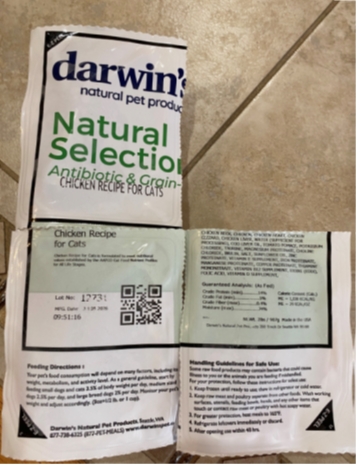
The FDA is cautioning cat owners not to feed their pets two lots of Darwin’s Natural Selections Chicken Recipe for Cats after both lots tested positive for Salmonella.
The affected lots are identified as Lot 12731, MFG Date: Jul 08, 2026 and Lot 12493, MFG Date: Apr 02, 2026, and are sold frozen in 2-pound white and clear plastic packages with green and black labeling.
The FDA tested samples from these two lots after receiving a consumer complaint about two cats that developed symptoms of gastroenteritis after having consumed the product. One of the cats was hospitalized.
Both cats recovered after being switched to a different food.
The FDA recommended that Arrow Reliance, Inc., the manufacturer of Darwin’s Natural Pet Products, initiate a recall. As of today, the company has not complied.
Déjà vu…again
In the movie Groundhog Day, the main character relives the same 24-hour period over and over again, until he gets it right.
What better metaphor than that for the years-long dispute between the FDA and Arrow Reliance?
The company and the FDA have been at loggerheads for close to a decade over repeated instances of Salmonella, Listeria monocytogenes, and shiga toxin-producing E. coli in Darwin’s dog and cat foods. Multiple inspections of the company’s production facility in Tukwila, Washington, have documented environmental contamination and sanitation deficiencies.
On August 11, 2026, the US Department of Justice, acting on behalf of the FDA, filed a complaint in federal court asking for a permanent injunction to prevent Arrow Reliance and its owner from “…manufacturing and selling adulterated pet food.”
The DoJ’s complaint specified five counts:
- Adulteration due to containing a poisonous or deleterious substance
- Adulteration due to production under insanitary conditions
- Failure to follow preventive controls regulation
- Failure to register as a food facility
- Introduction of unapproved new animal drug into interstate commerce.
In response, the company filed a motion requesting that the court dismiss the third and fourth counts. Arrow Reliance claims that it is a “retail food establishment” because it sells directly to consumers through its website, and therefore, is not required to register as a food facility. The company further claims that as a “retail food establishment,” it is not required to follow the federal preventive controls regulation.
The case is still pending.
What FDA wants consumers to know
If you have any of the lots of Darwin’s Natural Selections cat food products listed above, stop feeding the product to your pets and throw it away in a secure container where other animals, including wildlife, cannot access it. Do not donate the food.
The product lot codes are printed on the front of the lower left unit of the package of food. If you no longer have the part of the package with the lot code or can’t read the lot code, throw the food away.
Consumers who have had the products listed above in their homes should clean and disinfect all pet supplies, including all storage containers, bowls, utensils, food prep surfaces, pet bedding, toys, floors, and any other surfaces that the food or pet may have had contact with, including your refrigerator or freezer. Clean up the pet’s feces in yards, parks, or other places where people or other animals may become exposed. Consumers should thoroughly wash their hands after handling the product or cleaning up potentially contaminated items and surfaces.
Pets do not always display symptoms when infected with Salmonella, but signs can include vomiting, diarrhea (which may be bloody), fever, loss of appetite and/or decreased activity level. If your pet has these symptoms, consult a veterinarian promptly.
Pets do not need to display symptoms of illness to pass bacteria on to their human companions. Infected pets can shed these bacteria in their feces and saliva, further contaminating the household environment, other animals, and sometimes, people. To help prevent the spread of bacteria from infected pets to other animals or people, it is important to clean up feces immediately, to wash hands after touching the pet or its environment and avoid contact with the saliva of pets.
How to report a pet illness
People who think their pets have become ill after consuming contaminated pet food should first contact a veterinarian.
The FDA encourages consumers and veterinarians to report complaints about pet food products electronically through the Safety Reporting Portal.

“A complete and compelling account of the hidden and not-so-hidden ways the food we give our beloved pets can be contaminated.” – JoNel Aleccia, Health Reporter, Food & Nutrition, The Associated Press.
“An invaluable resource for busy pet owners” – Food Safety News