
8 hospitalized, 3 with HUS
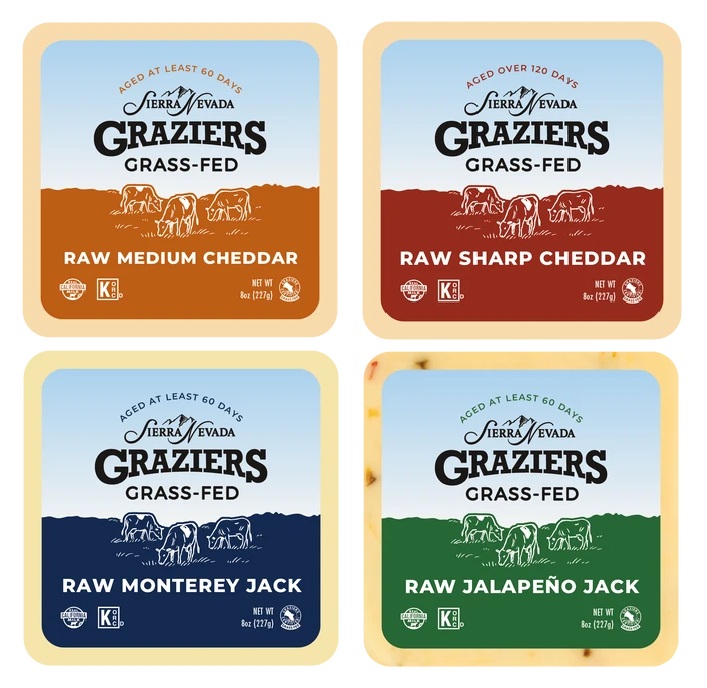
Thirteen people have become infected with shiga toxin-producing E. coli O26:H11 after consuming Graziers raw milk cheeses made and sold by the Sierra Nevada Cheese Company.
More than one half of the thirteen victims are children 5 years old and younger, according to the CDC.
The outbreak has been percolating since early July of this year, with the first victim developing symptoms on July 7th.
The raw milk cheese implicated in the outbreak was distributed across the United States. When contacted by the FDA, the company agreed to recall several varieties of cheese and posted a notice on social media and is cooperating with the FDA’s ongoing investigation.
Outbreak cases have been reported in California (3), Colorado (1), Georgia (1), Kentucky (1), Michigan (1), Nevada (3), Oregon (1), Tennessee (1), and Utah (1). Two of the three California victims live in San Diego County and are less than five years old.
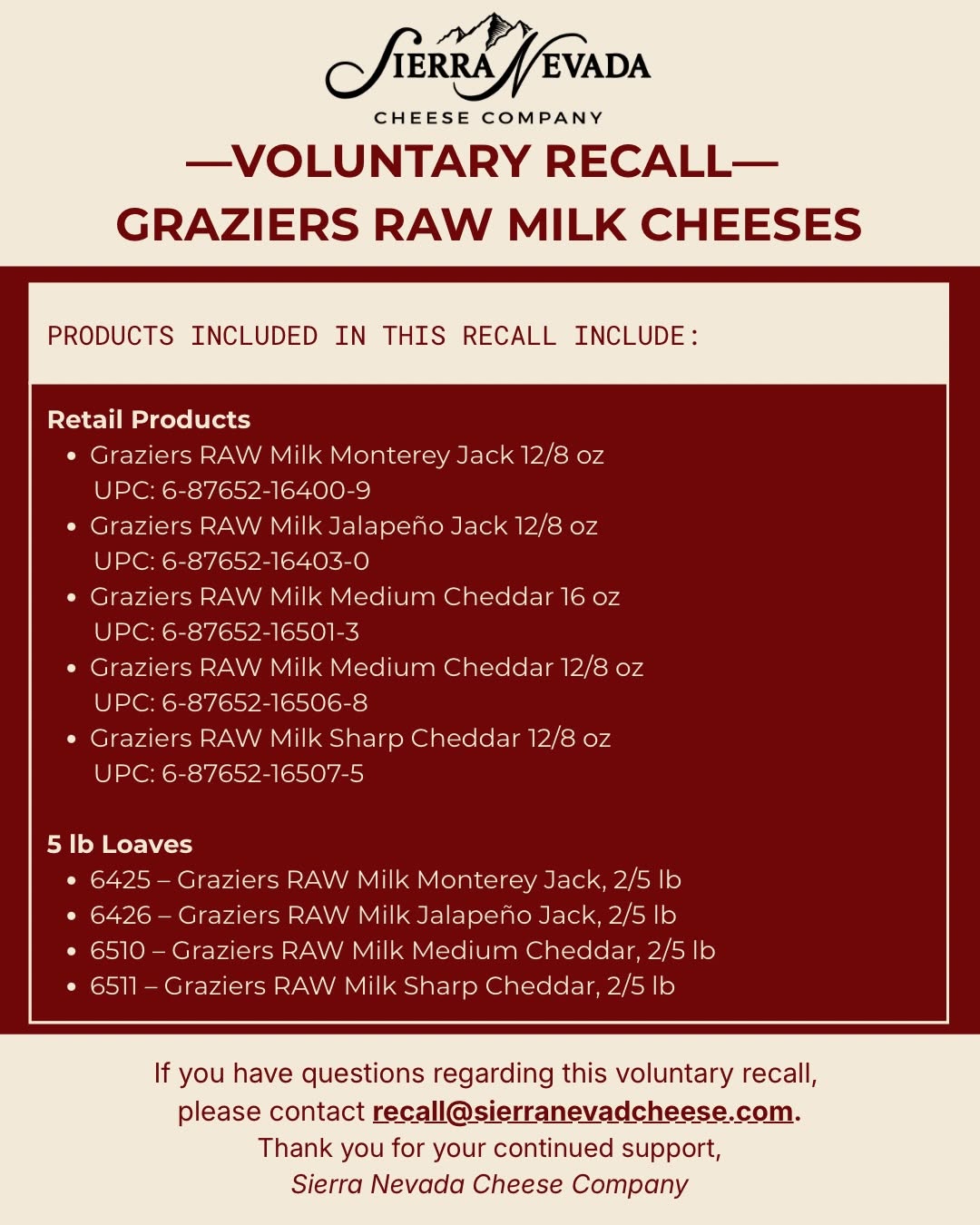
Although the outbreak appears to be associated with Graziers Raw Milk Medium Cheddar, the company has recalled all Graziers Raw Milk cheeses, as indicated in this recall notice posted on the company’s Facebook page.
Same play, different cast
This is the second multistate outbreak linked to consumption of raw milk cheeses this year, and the third since 2024.
In March 2026, the CDC notified the public of an outbreak of E. coli O157:H7 infections in three states. Those cases were linked to consumption of raw cheddar cheese and raw milk from Raw Farm, LLC, a California dairy. Raw cheddar cheese from the same dairy was also linked to a five-state outbreak of E. coli O157:H7 in 2024.
Although cheeses from Sierra Nevada Cheese Company have not been linked to an illness outbreak in the past, a specific lot code of the company’s raw goat milk cheese was the subject of a California-wide recall and quarantine order in August 2025 after the state found Listeria monocytogenes in a sample of the cheese.
What the public needs to know
Consuming cheese made from raw (unpasteurized) milk bears a heightened risk of foodborne illnesses, including those caused by Salmonella, Listeria monocytogenes, and shiga toxin-producing E. coli. Aging a cheese for six months is not a “kill step,” and does not eliminate the risk.
Children, especially those under the age of five years, pregnant women, the elderly, and immunocompromised individuals are at an elevated risk of serious illness as a result of a foodborne disease, and should avoid consuming raw dairy products, including raw milk cheeses.
FDA recommendations:
- Do not eat, serve, or sell recalled Sierra Nevada Graziers grass-fed raw milk cheeses (medium cheddar, sharp cheddar, jalapeno jack, or Monterey jack varieties). Consumers who purchased recalled cheese may return it to the place of purchase for a refund.
- This product has a long shelf life. Check your refrigerators and freezers for the recalled raw milk cheeses and throw them away. If you refrigerated or froze cheese without the original packaging and can’t tell if it’s part of the recall, throw it away.
- Consumers, restaurants, retailers, and foodservice customers who purchased or received recalled raw milk cheese, including wholesale products, should carefully clean and sanitize any surfaces or containers that it touched. Follow FDA’s safe handling and cleaning advice to reduce the risk of cross-contamination.
- Retailers that received recalled product and repackaged it for individual sale should not sell it and remove the product from the market.
- Consult your health care provider immediately if you ate recalled this brand of cheese and have any symptoms of an E. coli infection.

Interested in learning more about food safety and the history of foodborne disease outbreaks and investigations?
Click on the link to listen to a short excerpt, then follow the buy links to add a digital, print or audio copy to your personal library.


