Recalls and Alerts: November 9–10, 2026

eFoodAlert posts links to recalls for English-language countries only. If you are interested in recall information for other countries (including EU-member countries), please click on the Recall Link menu, above.

The live links in this post will take you directly to the official recall notices and company news releases that contain detailed information for each recall and alert.

If you would like to receive automatic email alerts for all new articles posted on eFoodAlert, please submit your request using the sidebar link.

Advertisements

TAINTED formats 3
“Reads like a true crime novel” – Food Safety News

Interested in learning more about food safety and the history of foodborne disease outbreaks and investigations?

Click on the link to listen to a short excerpt, then follow the buy links to add a digital, print or audio copy to your personal library.

Chapter 6. Birth of a Pathogen

Outbreak/Illness Investigations

USA (Final Update): CDC reports that the multistate outbreak of Salmonella and shiga toxin-producing E. coli infections attributed to contaminated alfalfa sprouts and sprouting seeds has ended. In total, 77 people were affected in 16 states. Six of the victims were hospitalized. Three of the infected individuals experienced a double infection. The FDA has also completed and closed its investigation into the source of the outbreak.

Advertisements

United States

Food Safety Recall: Country Creek LLC recalls Country Creek Acres Alfalfa Sprout Seeds (16 oz pkgs; No code information) due to possible E. coli and/or Salmonella contamination.

Food Safety Recall: Francisco Family Foods recalls Alfalfa Sprouts hydroponically grown (4 oz; No code information) due to possible E. coli and/or Salmonella contamination.

Canada

Food Safety Recall: Molson Canada 2005 recalls Various brands of alcoholic and non-alcoholic beer due to foreign matter contamination (pieces of metal).

Advertisements

Ireland and United Kingdom

Allergy Alert (UK): Waitrose & Partners recalls Waitrose & Partners Sweet, Fluffy, Golden Ring Doughnuts (5-pack; Best before 10 November 2026 and 11 November 2026) and Waitrose & Partners Jammy, Messy, Squidgy Doughnuts (5-pack; Best before 10 November 2026 and 11 November 2026) due to undeclared soy.

Hong Kong and Singapore

No Alerts

Australia and New Zealand

Allergy Alert (New Zealand): New World Motueka recalls New World Motueka made-in-store Vegan Afghan Biscuits (8-pack; Best before 18 November 2026) due to undeclared milk and walnuts.

Advertisements


“A complete and compelling account of the hidden and not-so-hidden ways the food we give our beloved pets can be contaminated.” – JoNel Aleccia, Health Reporter, Food & Nutrition, The Associated Press.

“An invaluable resource for busy pet owners” – Food Safety News

Recalls and Alerts: October 30, 2026

eFoodAlert posts links to recalls for English-language countries only. If you are interested in recall information for other countries (including EU-member countries), please click on the Recall Link menu, above.

The live links in this post will take you directly to the official recall notices and company news releases that contain detailed information for each recall and alert.

If you would like to receive automatic email alerts for all new articles posted on eFoodAlert, please submit your request using the sidebar link.

Advertisements

TAINTED formats 3
“Reads like a true crime novel” – Food Safety News

Interested in learning more about food safety and the history of foodborne disease outbreaks and investigations?

Click on the link to listen to a short excerpt, then follow the buy links to add a digital, print or audio copy to your personal library.

Chapter 6. Birth of a Pathogen

Outbreak/Illness Investigations

BRAZIL: Waterborne gastroenteritis outbreak in Itapeva, Brazil with around 2600 cases involving Cryptosporidium and E. coli

USA: CDC, FDA, and officials in multiple US states continue to investigate an outbreak of Salmonella Telelkebir illnesses linked to consumption of raw oysters from Little Wicomico River, Virginia. Thirteen states have reported a total of 28 illnesses, including 5 hospitalizations.

USA: Dallas County, Texas is investigating an outbreak of shiga toxin-producing E. coli infections that may be linked to attendance at the State Fair of Texas petting zoo. At least three children have been hospitalized.

USA: San Obispo County, California is investigating an outbreak of shiga toxin-producing E. coli infections that may be linked to Brookshire Farms, a pumpkin patch and agritourism site in the county. Two adults and three children who visited the farm have been diagnosed with the infections. The three children are being treated in pediatric intensive care units.

Advertisements

United States

Food Safety Recall: SLR Food Distribution Inc. recalls Wise Wife Brand Ground Cinnamon (110g (3.88 oz); Best before 4/25/2027; UPC 0688474302754) due to possible elevated lead levels.

Dietary Supplement Safety Recall: Vitality Works Inc. recalls 365 Whole Foods Market Standardized + Full Spectrum Blend Ashwagandha Capsules (120 count; Lot #2025-26227; Expiration date 10/13/2028; UPC 9948252099) due to possible Salmonella contamination.

Food Safety Alert: FDA advises consumers not to buy or serve Once Upon A Farm Tractor Wheels Organic, Toddler Soft-Baked Bars due to a potentially fatal choking hazard.

Canada

Allergy Alert: Ecological Park Agriculture Inc. recalls Snow Crab Flavoured Surimi Stick (200g; Codes 20260802, 20270201, and J016 D02; UPC 6 926104 942661) due to undeclared egg and soy.

Food Safety Recall: Boucherie Blainville (Blainville, QC) recalls multiple salads, prepared dishes, and frozen products that were produced, packaged or stored in a manner that might render them unsafe to consume.

Food Safety Recall: Casse-croûte Fromage Cie (Grenville, QC) recalls FROMAGE EN GRAINS NATURE / Cheese curds, plain (200g and 400g; All lots with best before dates of 1 November, 8 November, or 9 November, 2026) and FROMAGE EN GRAINS AVEC SAVEUR (épices à steak, aneth, BBQ, jalapeno) / Flavored cheese curds (steak spice, dill, BBQ, jalapeño) (200g; All lots with best before dates of 1 November, 8 November, or 9 November, 2026) because the products were prepared or packaged in a manner that might render them unsafe to consume.

Advertisements

Ireland and United Kingdom

Allergy Alert (UK): PepsiCo recalls Walkers Variety Snacks Sharing Box (655g box (6 packs); Batch code 107543; Best before 21 November 2026) due to undeclared wheat (gluten).

Hong Kong and Singapore

No Alerts

Australia and New Zealand

Allergy Alert (New Zealand): Woolworths New Zealand Limited recalls Woolworths Potato Long Roll (6-pack; Best before dates from 10.OCT.26 up to and including 31.OCT.26) due to undeclared soy.

Food Safety Recall (Australia): Maria’s Pasta recalls Various Maria’s Pasta products due to possible foreign matter contamination (metal).

Advertisements


“A complete and compelling account of the hidden and not-so-hidden ways the food we give our beloved pets can be contaminated.” – JoNel Aleccia, Health Reporter, Food & Nutrition, The Associated Press.

“An invaluable resource for busy pet owners” – Food Safety News

Viva Raw’s contract manufacturer failed two FDA inspections

USDA-inspected company received FDA Warning Letter

Lewis Sausage Company Inc. (Burgaw, NC) is a small meat and poultry processing company that falls under USDA jurisdiction. It has been producing smoked sausages since the 1950s, and has never issued a product recall for any USDA-inspected food.

The company also performs contract manufacturing for Viva Raw LLC, a Hillsborough, NC, pet food company that falls under FDA jurisdiction.

And therein hangs the story.

On January 23, 2024, Viva Raw recalled four of its pet foods after being notified by the FDA that the products had tested positive for Listeria monocytogenes and Salmonella. No public recall notice was ever published, but the products were listed in the FDA’s Enforcement Report as:

On May 15, 2024, the FDA, together with the North Carolina Department of Agriculture and Consumer Services (NCDACS), completed an inspection of Lewis Sausage Company’s processing facilities, including collecting finished product samples. Five Viva Raw products, all manufactured under Lot 21244, were found to be contaminated with Listeria monocytogenes.

On June 12, 2024, Viva Raw initiated a recall of the five products, including Viva Turkey for Dogs Ground, Viva Turkey for Dogs Chunked, Viva Turkey for Cats, Viva Pure Turkey, and Viva Beef & Turkey for Puppies, according to FDA Enforcement Report files. The company issued a public recall notice on July 1, 2024.

The FDA classified the results of its May 2024 inspection as Official Action Indicated, citing deficiencies in Lewis Sausage’s Hazard Analysis and Preventive Controls actions. The agency issued an Untitled Letter on March 14, 2025, and performed a follow-up inspection on August 25 through August 29, 2025. Once again, the inspection was carried out jointly with the NCDACS.

On August 25, 2025, the day the inspection began, Viva Raw announced yet another recall. This time, the company recalled six varieties of raw dog and cat foods, comprising two lot codes. The company’s recall notice explained that routine testing by the NCDACS had found Salmonella and Listeria monocytogenes in samples of the products.

In January 2026, Viva Raw announced on its website that the company had adopted high pressure processing to enhance the safety of its raw pet food products.

Finally, on August 5, 2026, the FDA issued a Warning Letter to Viva Raw and a separate Warning Letter to Lewis Sausage. In those letters the agency reviewed the issues raised as a result of the inspection conducted the previous year and listed the items that required additional documentation to confirm correction of issues that were outstanding.

Lewis Sausage is a USDA-inspected facility. But this means very little when the subject is microbiological safety of raw pet foods.

It is true that using USDA-inspected meat and poultry exclusively provides assurance that the finished pet food does not contain any 4D meat (denatured meat from dying, disabled, diseased or dead animals). However, the USDA have very different criteria for the presence of pathogenic bacteria in meat and poultry.

USDA, which has authority over meat and poultry for human consumption, considers raw beef that contains shiga toxin-producing E. coli to be adulterated and subject to recall. On the other hand, raw meat and poultry that is contaminated with Listeria monocytogenes or Salmonella is not treated as adulterated on the principle that the meat will be subject to further processing (including cooking in the home kitchen) before being consumed.

The FDA has authority over all food for animals, whether companion animals or livestock. It considers any product—even raw pet foods—that is sold as ready-to-eat to be adulterated if it contains ANY foodborne pathogen, regardless of the level of contamination.

My curiosity was piqued when I read the FDA Warning Letter to Lewis Sausage and realized that I had never seen a recall notice for the products listed as contaminated, so I started checking pet food recalls around the timeframe when the company had been inspected. When I found the August 2025 Viva Raw recall notice, I did some additional cross-checking and confirmed the relationship.

Viva Raw is very open on its website about employing a contract manufacturer to produce its raw pet foods, but does not reveal the company’s name.

The FDA considers information such as the identity of a company’s clients or the name of a company’s contract manufacturer to be confidential commercial information. That information was redacted from the Warning Letters issued to Viva Raw and Lewis Sausage.

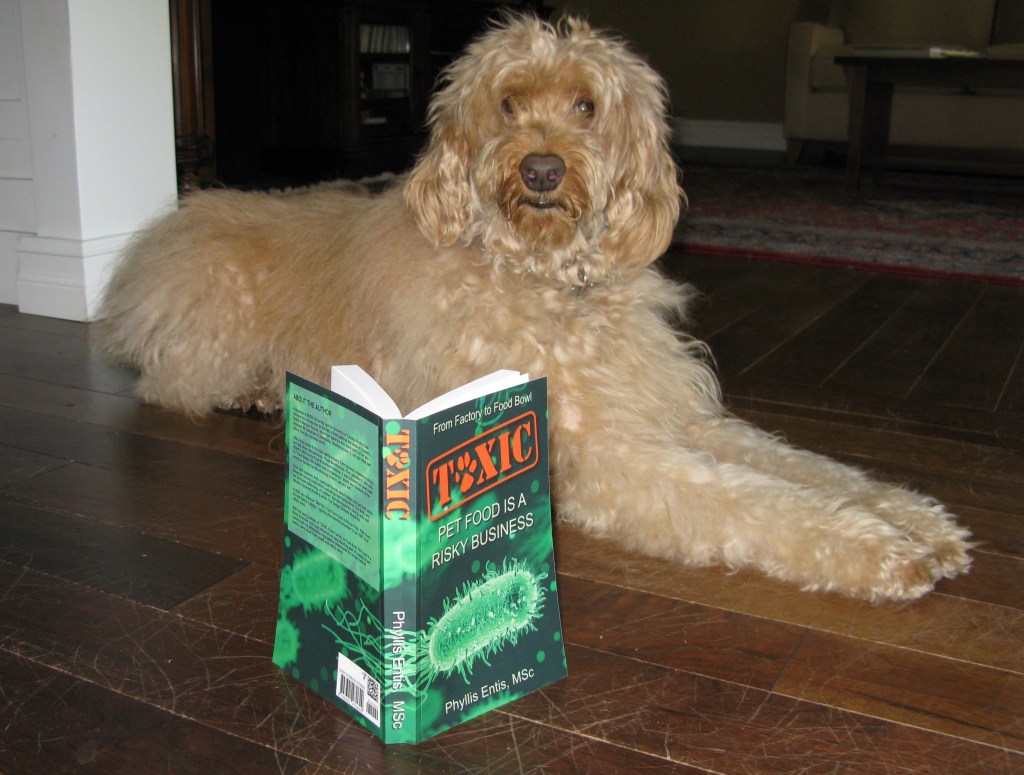
It should come as no surprise to anyone who has followed eFoodAlert over the years, or who has read my book on pet food safety, that I am not a fan of commercial raw pet food. There are some companies out there who try hard to produce and supply high-quality, safe products.

There are others that hide behind a philosophy that dogs and cats have a different digestive system and are not susceptible to foodborne pathogens like Salmonella. Some of these bad actors give short shrift to sanitation and cross-contamination in their production facilities, choosing to spend their time complaining about being targeted “unfairly” by the FDA instead of working to meet federal guidelines for producing safe pet food.

I have fed raw meat to our dog at times during her eleven-year lifespan. But I have always done so with full control over the preparation and storage, buying whole cuts of beef or lamb at the supermarket, searing the outside to kill most of the bacteria (which tend to be on the surface and not in the depths of the muscle), and grinding it myself before freezing individual portions.

In my opinion, the convenience of commercial raw pet food is not worth the risks associated with it.


“A complete and compelling account of the hidden and not-so-hidden ways the food we give our beloved pets can be contaminated.” – JoNel Aleccia, Health Reporter, Food & Nutrition, The Associated Press.

“An invaluable resource for busy pet owners” – Food Safety News