
On August 30, 2023, the US Food and Drug Administration (FDA) issued formal Warning Letters to three manufacturers of powdered infant formulas: ByHeart, Inc., Reckitt/Mead Johnson Nutrition, and Perrigo Wisconsin, LLC.
That same day, the FDA released the redacted content of those Warning Letters to the public.
The letters reflected the agency’s concern that the companies had not established “ …a system of process controls covering all stages of processing that was designed to ensure that infant formula does not become adulterated due to the presence of microorganisms in the formula or in the processing environment…”
According to the information contained in the Warning Letters, all three companies had a history of Cronobacter sakazakii contamination in the production environment, with occasional positive finished product samples. And all three companies failed, in the FDA’s estimation, to conduct a thorough “root cause analysis” to determine and correct the source of their contamination issues.
Case-by-case overview
Although the general conclusions reached by FDA investigators were similar for all three companies, each situation presented its own challenges.
ByHeart, Inc.

The FDA conducted its inspection of ByHeart’s Pennsylvania manufacturing subsidiary from December 21, 2022, through February 17, 2023. The operation, located at 61 Vanguard Drive, Reading, PA, manufactured an infant formula base product that was subsequently blended and packaged at a third-party contract manufacturing facility.
In October 2022, the company learned that a powdered infant formula product manufactured during a continuous production campaign at the facility from July 13, 2022, through August 23, 2022 and blended and packaged from September 15, 2022 through October 7, 2022, had tested positive for Cronobacter sakazakii.
The company’s “root cause analysis” blamed the positive result on lab error on the part of a third-party laboratory. A detailed review of the laboratory’s protocols and records found no basis to support such a conclusion.
A separate infant formula base mix that was manufactured on August 24, 2022, also tested positive for the pathogen.
This contamination event was blamed on a failure to follow specified cleaning and sanitation procedures following maintenance work and valve repair.
Cronobacter sakazakii also was found in multiple locations in the production environment from July 25, 2022 through August 27, 2022, all of which were attributed to “…isolated events such as facility repairs, using an ineffective sanitizer, or ineffective cleaning frequency.”
In it’s Warning Letter, the FDA emphasized that the company’s root cause analyses were inadequate and did not get to the root of the problems. For example, ByHeart could have—should have, in the agency’s opinion—carried out whole genome sequencing (WGS) on the various Cronobacter sakazakii cultures in order to determine whether or not the same strain was consistently present in the production plant.
Perrigo Wisconsin, LLC

The FDA’s inspection of Perrigo’s Eau Claire, Wisconsin, manufacturing facility took place from March 6 through April 26, 2023.
On four separate occasions prior to and during the FDA inspection, the company found Cronobacter sakazakii in samples of its spray-dried infant formula manufactured during the period from October 2022 through April 2023.
The company blamed the contamination variously on probable cross-contamination betwen the dryer environment and the product contact equipment, packaging line downtime due to multiple scoop jams during production, and potential contamination introduced into the packaging line during increased dry cleaning interventions.
The FDA took exception to Perrigo’s root cause analysis in each case, pointing out that the company had not thoroughly investigated the source of the contamination. In addition, the agency expressed its disapproval of the company’s sanitation protocols and practices, stating:
“The detection of C. sakazakii in your facility across multiple independent inspections is significant in that it demonstrates your sanitation procedures have been inadequate to significantly minimize or prevent the presence of C. sakazakii in your facility.”
Reckitt/Mead Johnson Nutrition
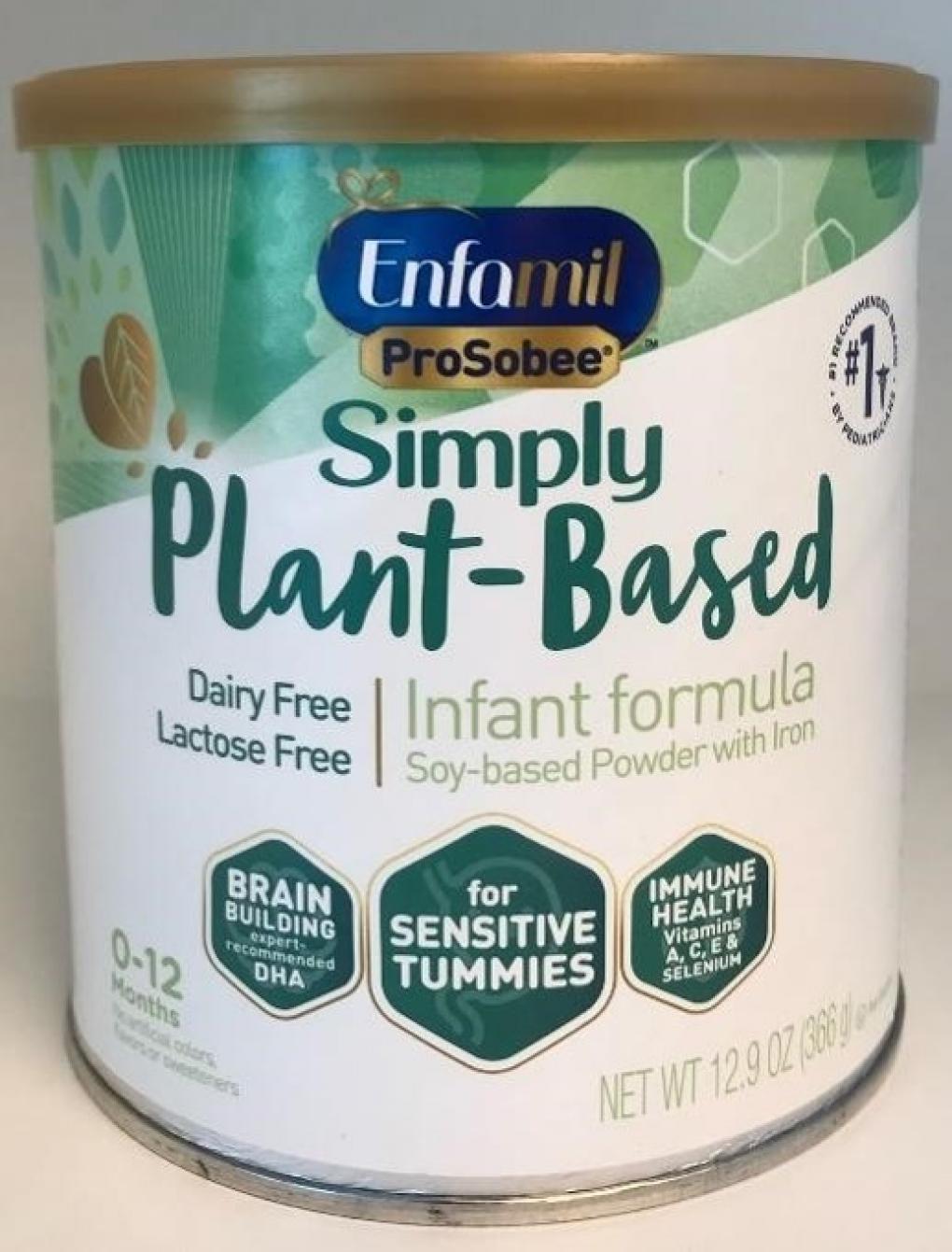
The FDA Warning Letter detailed outstanding issues at two separate manufacturing plants: Zeeland, Michigan (inspected from February 7, 2023, through February 23, 2023) and Wanamingo, Minnesota (inspected from November 28, 2022 through January 9, 2023).
As was the case for Perrigo and ByHeart, FDA investigators found evidence of multiple reports of Cronobacter sakazakii in both finished products and environmental swab samples at both manufacturing plants
The FDA was once again unhappy with the manufacturer’s response to the Cronobacter-positive findings, stating, “Upon receiving notification of this result, you failed to conduct an independent root cause analysis or investigation and you did not evaluate whether other products may have been impacted by this contamination event.”
Root cause analysis
Cronobacter sakazakii is a common presence in the environment, and can be found in soil, surface water, mud, grains, rotting wood, bird droppings, and food.
The microbe is relatively harmless to most people, but can cause severe illness, often leading to death in susceptible individuals, especially in preterm, low-birthweight, immunocompromised, and/or infants under than 28 days of age.
It is, therefore, incumbent upon manufacturers of powdered infant formulas to take every possible step to ensure that their products are not contaminated with this potentially dangerous microbe.
In principle, any finding of Cronobacter sakazakii in the production environment or finished infant formula should trigger what is known as a “root cause analysis”—a systematic and intensive effort to find the source of the contamination and to make the necessary corrections before proceeding with additional production.
In practice, what ByHeart, Mead Johnson, and Perrigo did was to treat the symptoms rather than diagnose and correct the problem.
For example, in some instances, the companies responded to the finding of Cronobacter by performing an intensive cleaning and sanitizing without first carrying out environmental sampling to determine where in the production or packaging environment the microbe was lurking.
The sanitation effort provided a temporary solution, but did not prevent a recurrence of the contamination. Effectively, this approach treated the symptoms, rather than eliminating the source(s) of the contamination.
In its trilogy of Warning Letters, the FDA emphasized that a proper root cause analysis must be comprehensive and complete in order to be of value in determining the source of a contaminant.
Only once the source has been identified correctly can a long-term, effective solution to the problem be put into effect.
What next for infant formula safety?
In its August 30, 2023, news release announcing the Warning Letters, the FDA pledged its commitment to ensuring the safety of powdered infant formula, stating,
“The FDA will continue its regulatory oversight and engagement with industry to enhance infant formula safety, including continuing to conduct annual inspections of infant formula facilities, maintaining a dialogue with infant formula manufacturers on these issues, and furthering prevention-based research and activities.”
It behooves all manufacturers of powdered infant formula to do their part to maintain safe and sanitary production environments and to take all precautions necessary for the production of pathogen-free products, especially as these products are destined for the nourishment of a highly susceptible population.

Interested in learning more about food safety and the history of foodborne disease outbreaks and investigations?
Click on the link to listen to a short excerpt, then follow the buy links to add a digital, print or audio copy to your personal library.


 eFoodAlert