Evanger’s Blames Supplier, FDA, for Pentobarbital in Dog Food

FDA says beef suppliers are not registered; Evanger’s hints at expanded recall
lh-600dpi-with-ice-no-color-restBreaking news: Evanger’s reveals presence of horse DNA in its Hunk of Beef dog food in a Wednesday letter to its customers. The company will recall all of its Hunk of Beef, Braised Beef Chunks with Gravy and Against the Grain Pulled Beef. The formal recall announcement will be issued this week.

Consumer complaints continue as the FDA digs deeper into operations at Evanger’s pet food after discovering evidence that none of the company’s meat suppliers are registered with USDA. Evanger’s owners blamed their suppliers and the FDA in the wake of findings that their dog food contains a barbiturate used to euthanize animals.

At least one dog has died and at least four others required medical attention after eating Hunk of Beef canned dog food from Evanger’s Dog & Cat Food Company Inc., which is owned by the Sher family. Evanger’s and Nutripack LLC, another pet food company owned by members of the same family, have recalled certain lots of certain flavors of their canned dog food.

“The guilty party has turned out to be one of our most trusted meat suppliers. A USDA-APHIS inspected supplier who we had done business with for over 40 years, and whose plant we had visited numerous times over the years,” said Evanger’s owners Holly and Joel Sher in an online statement posted Sunday. “We have taken it upon ourselves to lead the campaign to force the FDA to put an end to allowing drugs like pentobarbital to enter the raw material stream and contaminate our pets’ food and endanger their lives.”

Officials with the Food and Drug Administration do not agree with the company’s contention that the agency is responsible for the pet food being contaminated.

“The detection of pentobarbital in pet food renders the product adulterated in violation of the Federal Food, Drug, and Cosmetic Act. Therefore, it is not acceptable to use animals euthanized with a chemical substance in pet or animal foods,” an FDA spokesperson said Tuesday.

“It is the responsibility of the animal protein ingredient suppliers to implement practices at their facilities to ensure that euthanized animals are either not accepted at the facility, or to determine how they died and ensure euthanized animals are segregated from animal protein going for animal food use.

“Further, it is the responsibility of the pet food manufacturer to ensure that the food they produce is safe for consumption and properly labeled. One way that a manufacturer can do this is by taking steps to verify the identity and safety of the ingredients they receive from their suppliers.”

During the course of their investigation, FDA inspectors discovered a bill of lading from Evanger’s supplier, which listed “Inedible Hand Deboned Beef – For Pet Food Use Only. Not Fit For Human Consumption.”

While FDA cannot reveal the identity of the supplier, an agency spokesperson described it as one that, “…provides materials from animals that are not fit for the human food supply, for a variety of reasons.”

Evanger’s sources the meat for its pet food from more than one supplier. According to the FDA spokesperson, the agency’s “… preliminary assessment indicates that none of these suppliers are USDA-FSIS registered facilities.”

Those findings are in direct contrast to statements from Evanger’s and Nutripack LLC about their pet foods, which they say are made with human-grade food. FDA inspectors also found incomplete information on Evanger’s brand and Nutripack’s Against the Grain brand production records.

According to FDA, inspectors were unable to determine from company records whether any of the beef that was used in the recalled Evanger’s and Against the Grain production lots was also used in any other products. In a letter to its customers released Feb. 21, Evanger’s indicated the recall could be expanded to include all products containing chunk beef, “out of an abundance of caution.”

The investigation so far

In a Friday consumer advisory, the FDA cautioned the public not to feed the recalled Evanger’s and Against the Grain canned dog food products to their pets. The products in question were recalled on Feb. 3 and Feb. 9 by Evanger’s Dog & Cat Food Company Inc. and Against the Grain, respectively, after pentobarbital was confirmed in samples of both products.

In conjunction with the advisory, FDA released two Inspectional Observation reports — Form 483 reports — which detailed the conditions found by the agency’s inspectors during visits to Evanger’s production facility in Wheeling, IL, and to the facility belonging to Nutripack LLC in Markham, IL.

The Wheeling operation had last been inspected by FDA in November 2012. According to a spokesperson with FDA, the Illinois Department of Agriculture performed an inspection in 2016 and classified the Wheeling facility as ‘No Action Indicated.’ However, the plant was not operating at the time, and the inspector was unable to observe the normal day-to-day activities. Nutripack had not been inspected either by the state or by the FDA prior to February 2017.

The USDA’s Food Safety and Inspection Service (FSIS) is the federal agency tasked with oversight and inspection of slaughterhouses and meat processing operations. To be deemed “Fit for Human Consumption,” any meat that enters interstate commerce must have been produced under USDA-FSIS supervision. Slaughterhouses and meat processing operations that do not engage in interstate commerce come under the supervision of the department of agriculture in their home state.

Evanger’s is a private company, incorporated in Illinois. Its President and Agent of Record is Holly Sher, who owns the business together with her husband, Joel Sher.
Against the Grain
Against the Grain

Nutripack is a Limited Liability Company registered in Illinois. Its Agent of Record is Brett Sher, son of Joel and Holly Sher. Nutripack is managed by Sher Services Company Inc. Joel A. Sher is both the agent of record and the president of Sher Services, while Holly Sher is the secretary. The Against the Grain trademark is registered to Chelsea Sher, daughter of Joel and Holly Sher. Chelsea Sher also is listed as Secretary of Evanger’s.

In their online letter Sunday, the Sher family’s reference to their supplier having been “USDA-APHIS inspected” suggests they may not understand what agencies have jurisdiction over their pet food operations.

According to the USDA website the primary role of APHIS (Animal and Plant Health Inspection Service) in the U.S. food safety network of agencies “is to protect against plant and animal pests and diseases. APHIS also administers the Animal Welfare Act and carries out wildlife damage management activities.”

On the other hand, according to USDA, the FSIS is “responsible for ensuring the safety and wholesomeness of meat, poultry, and processed egg products and ensures that it is accurately labeled.”

As its investigation continues, FDA reports it has received additional complaints from consumers who fed Evanger’s Hunk of Beef to their dogs, in some cases exclusively.

As consumers tend to throw out or recycle empty cans, obtaining specific lot number information has been difficult. The agency continues to encourage consumers to report problems with Evanger’s products through the Safety Reporting Portal or by contacting a Consumer Complaint Coordinator. Additional information is available on the FDA web page, How to Report a Pet Food Complaint.

This story first appeared on Food Safety News and is reposted here with permission.

FDA Inspection Report Labels Evanger’s Products Adulterated

Reveals use of meat “not for human consumption” despite Evanger’s marketing claims.

The U.S. Food and Drug Administration (FDA) last Friday (Feb. 17) released the results of a month-long investigation of Evanger’s Dog and Cat Food Company’s production facility in Wheeling, IL and Nutripack LLC, facility in Markham, IL.

Nutripack is owned by Brett Sher, son of Joel and Holly Sher, who own Evanger’s. Joel Sher is listed as Manager of the Nutripack operation. The two facilities are located approximately 50 miles apart.

The investigation was initiated when five dogs in one household developed symptoms of barbiturate poisoning after eating a snack that included Evanger’s Hand Packed Hunk of Beef au Jus.

Four of the five dogs required veterinary ICU hospitalization, and one of those four dogs died. According to a spokesperson from FDA, the agency has received several additional complaints associated with feeding of Evanger’s dog food.

Some of those complaints are of a general nature; however, some complainants report symptoms possibly associated with phenobarbital toxicity. FDA has briefed its Consumer Complaint Coordinators on the Evanger’s situation and urges pet owners and veterinarians to report any concerns via the agency’s How To Report A Pet Food Complaint web page. The agency is especially interested in cases where the dog received a veterinary work-up and  the owners still have cans of food available for testing by FDA.

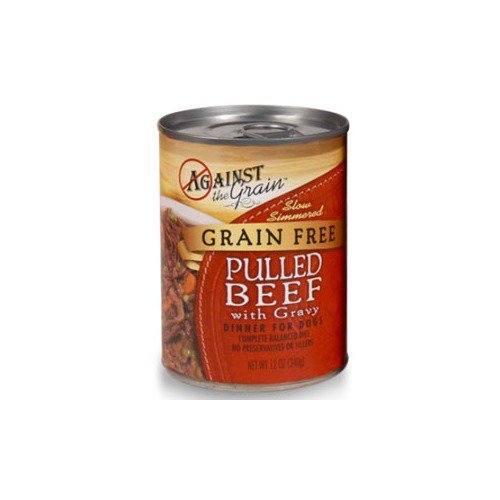
The Inspectional Observations report (FDA Form 483) confirms that Evanger’s Hand Packed Hunk of Beef au Jus, Net Wt 12 oz and coded 1816E06HB13, and Against the Grain brand Grain Free Pulled Beef with Gravy Dinner for Dogs Net Wt 12 oz and coded 2415E01ATB12 BEST DEC 2019 both contained the barbiturate drug pentobarbital.

Tests carried out by USDA confirmed that the meat used in the canned pet foods was beef. According to FDA’s News Release, the agency “…was unable to determine from available records whether any other Evanger’s or Against the Grain products made with beef contain any of the beef that went into the recalled products.”

Pentobarbital, a controlled substance, is used as a chemical euthanasia agent by veterinarians and pet shelters.

According to the Federal Food, Drug and Cosmetic Act, a food “…shall be deemed to be adulterated if it bears or contains any added poisonous or added deleterious substance that is unsafe…”  A food also is considered to be adulterated under the Act “…if it has been prepared, packed, or held under insanitary conditions whereby it may have become contaminated with filth, or whereby it may have been rendered injurious to health.” The list of violations and deficiencies found during the recent inspections visits fall under both of these definitions:

  • Condensate dripping directly into open cans of in-process foods (Wheeling and Markham)
  • Birds flying through the warehouse, resting in rafters, and feeding on spilled pet food on the concrete floor (Markham)
  • Pitted, cracked and damaged floors causing pooled water in areas where food is exposed (Wheeling and Markham)
  • Peeling paint and mold on walls, including areas where food is exposed (Wheeling)
  • Open sanitary sewer within 25 feet of food storage trailers and one food processing trailer (Wheeling)
  • Lack of operating refrigerated storage facilities or other means of controlling temperature exposure of raw meats during thawing, storage and processing (Wheeling)
  • Lack of ambient temperature control during hand packing operations (Wheeling)
  • Employees observed cutting raw chicken parts on untreated wooden building construction lumber (Markham)

Pet owners may remember that this is not Evanger’s first brush with FDA, nor is this the first time that an inspection has turned up instances of insanitary conditions, poor temperature control, and deficiencies in plant construction and design. A summary of results from an inspection completed on December 5, 2011 and retrieved from FDA’s on-line archive, included the following observations (among others):

  • Construction of plant does not allow floors, walls, and ceilings to be adequately cleaned and kept clean and kept in good repair
  • Inadequate screening or other protection against pests
  • Failure to provide running water at a suitable temperature for employee sanitary facilities
  • Failure to manufacture and store foods under conditions and controls necessary to minimize the potential for growth of microorganisms
  • Failure to thaw frozen raw materials in a manner that prevents them and other ingredients from becoming adulterated
  • Deficiencies in plant construction and design prevent the taking of precautions to protect food, food-contact surfaces, and food-packaging materials from contamination with filth
  • Instruments used for measuring conditions that control or prevent the growth of undesirable microorganisms are not accurate
  • Plumbing is source of contamination to water supply
  • Inadequate lighting in food examination, storage and processing areas
  • Food-contact surfaces not cleaned frequently enough to protect against contamination

A subsequent inspection, completed in November 2012 (also retrieved from FDA’s on-line archive), revealed that some of these same issues still lingered, and were joined by a few new ones, such as:

  • Failure to mark each hermetically sealed container of low-acid processed food with an identifying code that is permanently visible to the naked eye
  • Failure to properly store equipment and remove litter and waste that may constitute an attractant, breeding place, or harborage area for pests, within the immediate vicinity of the plant buildings or structures
  • Failure to install bleeders so that the operator can observe that they are functioning properly (bleeders are part of the retorts – equipment that cooks the food inside the sealed cans)

Evanger’s has long boasted that all of its suppliers of meat products are ‘USDA Approved.’ During the course of its just-completed inspection, FDA found evidence to the contrary. Specifically, the investigation team found a bill of lading from Evanger’s supplier of beef that listed ‘Inedible Hand Deboned Beef – For Pet Food Use Only. Not Fit For Human Consumption’.

FDA has established that the supplier in question does not have a ‘grant of inspection’ from USDA. The meat from this supplier DOES NOT bear the USDA inspection mark. This meat does not, under any circumstances, qualify as ‘human-grade’, a term that Evanger’s has used to describe its meat ingredients since at least June 2003.

Evanger’s practice could result in allegations of false or deceptive advertising, and require the pet food makers to deal with another federal agency.

Actions Consumers Can Take On Their Own:

The Federal Trade Commission (FTC) is tasked with the enforcement of the nation’s truth-in-advertising laws. According to the Commission’s website, “The FTC looks especially closely at advertising claims that can affect consumers’ health or their pocketbooks – claims about food, over-the-counter drugs, dietary supplements, alcohol, and tobacco and on conduct related to high-tech products and the Internet.” FTC has several remedies at its disposal, including filing actions in federal district court to stop perpetration of scams and to obtain compensation for victims.

FTC and FDA cooperation in bringing companies making false claims to heel is common, especially against those who market phony supplements and medical devices. In addition to their work, and that of USDA, there are some actions consumers can take on their own, including:

  1. Return any and all recalled product to the place of purchase, or directly to the manufacturer.
  2. Consider switching to a different brand of pet food until Evanger’s is once more in compliance with the Federal Food, Drug and Cosmetics Act and all of its associated regulations.
  3. If you believe that your pet has been made ill as a result of consuming Evanger’s or any other pet food, please visit the FDA webpage, How to Report a Pet Food Complaint at: https://www.fda.gov/AnimalVeterinary/SafetyHealth/ReportaProblem/ucm182403.htm.
  4. If your pet has been examined by a veterinarian who believes that an illness may be food related, urge your veterinarian to report the incident via the federal Safety Reporting Portal at: https://www.safetyreporting.hhs.gov.
  5. If you purchased an Evanger’s meat-based food on the understanding that all of the meat in the Company’s products is sourced from ‘USDA Approved’ suppliers, consider filing a formal complaint of false advertising against Evanger’s on the Federal Trade Commission website at: https://www.ftccomplaintassistant.gov/#&panel1-1.

This article first appeared on Food Safety News and is reposted here with permission.

Recalls and Alerts: February 16 – 18, 2017

Here is today’s list of food safety recalls, product withdrawals, allergy alerts and miscellaneous compliance issues. The live links will take you directly to the official recall notices and company news releases that contain detailed information for each recall and alert.

If you would like to receive automatic email alerts for all new articles posted on eFoodAlert, please submit your request using the sidebar link.

United States

Allergy Alert: Chapis Spice & Tea (Los Angeles, CA) recalls various Chapis brand Bread Crumbs due to possible presence of undeclared wheat, milk, eggs, tree nuts or soybean. Please refer to the recall notice for a detailed list of affected products, all of which were distributed through retail stores in Los Angeles and adjacent cities in Los Angeles County.

Allergy Alert: Licata Enterprises (Huntington Beach, CA) recalls The Supreme One/Theravits 100 multiple vitamin (all lots) due to undeclared fish oils and other labelling issues. The recalled products were distributed in Southern California, Ohio and Pennsylvania through health food stores, and also sold in Wyoming, Virginia, Utah, Idaho, Washington, Oregon and Texas.

Allergy Alert: Ditos (Anchorage, Alaska) recalls Heart Plastic Platter Strawberries w/ Dip with Chocolate Frosting 32oz, and Heart Plastic Platter Mixed Fruit w/ Dip with Chocolate Frosting 40oz (Use by dates: 02/14/2017, 02/15/2017, 02/16/2017, 02/19/2017) due to undeclared soy and/or milk. The product was sold at seven Walmart stores in Debarr, Dimond, Eagle River, Fairbanks, Kenai, Midtown, and Wasilla.

Allergy Alert: Price Chopper recalls Market 32 Elegant Dessert Apple Crumb Tart (5.5 oz) due to undeclared milk.

Food Safety Recall: Biery Cheese Company recalls various specialty Longhorn Colby cheeses due to potential contamination with Listeria monocytogenes. The recalled products were distributed between November 11, 2016 and January 4, 2017 to distribution centers in Georgia, Indiana and Pennsylvania. Please refer to the recall notice for a detailed list of products.

Food Safety Recall: Saputo Inc. recalls certain Great Midwest brand Applewood Smoked Gouda cheese (Sell by MAY 22 17) and Dutchmark brand Pasteurized Processed Smoked Gouda cheese (Best when used by 11-18-17) that may have been contaminated with Listeria monocytogenes.

Food Safety Recall: Sargento Foods Inc. (Plymouth, WI) expands its earlier recall to include additional products and production dates due to potential contamination with Listeria monocytogenes that originated from the facility of its supplier, Deutsch Kase Haus, LLC. Sargento also has terminated its relationship with the supplier. Please refer to the recall notice for a complete list of affected products.

Food Safety Recall: Dutch Valley Food Distributors, Schlabach Branch, recalls various cheeses and cheese-containing items due to potential contamination with Listeria monocytogenes. Please refer to the recall notice for a complete list of affected items.

Food Safety Recall: Hallmark Management Services, Inc. (Columbus, OH) expands its February 2, 2017 recall to include approximately 11.25 pounds of additional Chicken Tikka Masala that was produced without the benefit of inspection. Please refer to the recall notice for additional details.

Food Safety Recall: Papa John’s Salads & Produce recalls Colby Cheese Half Moon, Colby Jack Cheese Half Moon, Monterey Jack Cheese Half Moon and Pepper Jack Half Moon (Use by dates for all products: 1/10/17 through 5/9/17), because the products contain cheese that may be contaminated with Listeria monocytogenes. The recalled products were sold in Fry’s and Smith’s stores.

Food Safety Recall: Index Fresh recalls Index Fresh Avocados (UPC 76101-40154; Pack date 2/13/17; 4ct. bag) because the product may be contaminated with Listeria monocytogenes. The recalled avocados were sold in Ralphs stores.

Food Safety Recall: Meijer recalls Ham Sub on Artisan White Baguette (UPC 7-13733-76499-5; various expiration dates from 11/2/2016 through 12/30/2016) because the product contains cheese that may be contaminated with Listeria monocytogenes.

Food Safety Recall: GraceKennedy Foods recalls La Fe Papa Criolla Yellow Potatoes (14 oz; All date codes) due to the presence of Listeria monocytogenes. The recalled product was sold at Stop & Shop stores.

Food Safety Notice: The South Carolina Department of Health and Environmental Control (DHEC) has closed some shellfish harvesting beds in Beaufort County due to a sewer overflow.

Food Safety Notice: Oregon has closed recreational and commercial mussel harvesting from Cape Arago, south of Coos Bay, to the California border, due to elevated levels of paralytic shellfish toxins. Coastal scallops are not affected when only the adductor muscle is eaten.

Canada

Allergy Alert: Figues et Romarin (Blainville, QC) recalls Minestrone Soup (500 mL and 1 L sizes) due to undeclared wheat.

Europe

Allergy Alert (UK): Poundstretcher recalls Chocolate Crème Oreos (176g; pkg of 4; Best before April, May, July and August 2017) due to undeclared wheat and milk.

Allergy Alert (Northern Ireland): Heatons recalls a consignment of Toblerones (100g; Best before 8 September 2017; Batch code 00Y4062333) due to undeclared egg.

Food Safety Recall: Morrisons recalls Ready to Eat Peppered Beef Slices (150g; Use by 21 February 2017) because Listeria monocytogenes was found in the product.


Some supermarket chains post recall notices on their web sites for the convenience of customers. To see whether a recalled food was carried by your favorite supermarket, follow the live link to the supermarket’s recall website.

*The Kroger umbrella encompasses numerous supermarket, marketplace and convenience store chains
**Includes Safeway, Vons, Pavilions, Dominick’s, Genuardi’s, Randalls, Tom Thumb, Carrs and Pak N’ Save.