Salmonella case count soars in onion outbreak – UPDATED

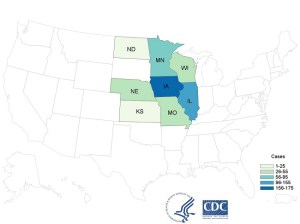
As of August 7, 2020, the US Centers for Disease Control and Prevention (CDC) has received reports of 640 confirmed cases of Salmonella Newport infections across 43 states.

Eight-five outbreak victims have required hospitalization.

In addition to the US outbreak, 239 confirmed cases have been reported to the Public Health Agency of Canada (PHAC) across seven provinces as of August 7th. Twenty-nine Canadians have been hospitalized.

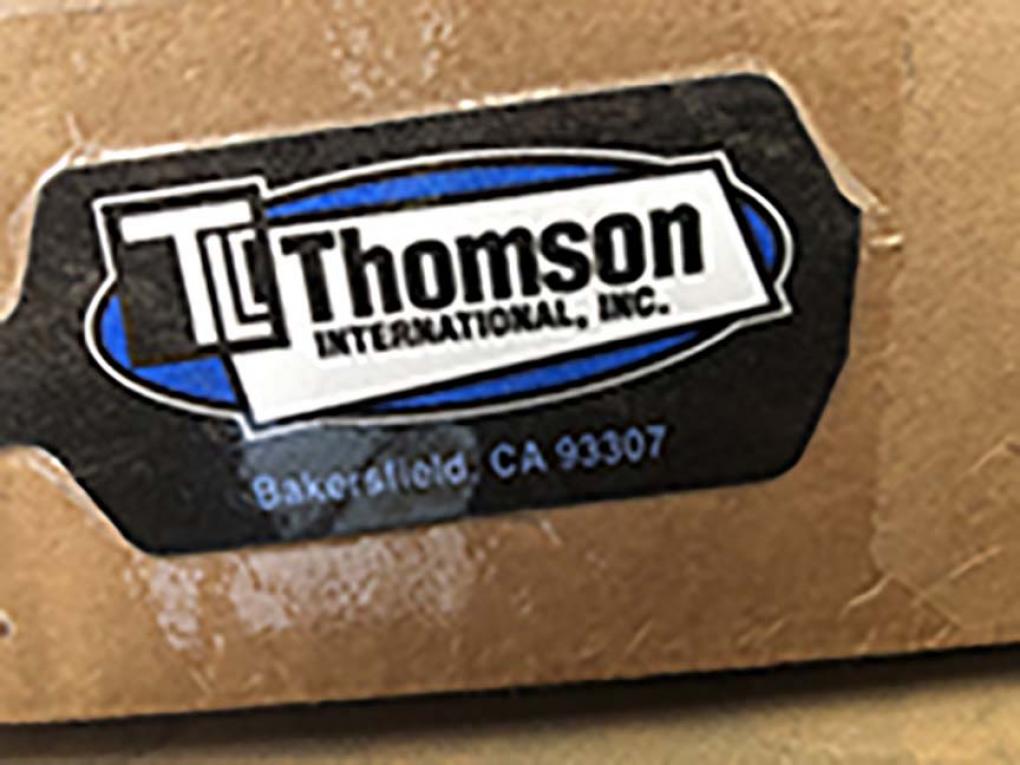
According to the US Food and Drug Administration (FDA) illnesses in both countries have been linked to red onions grown and supplied by Thomson International, Inc. (Thomson) of Bakersfield, CA.

On August 1st, Thomson recalled all varieties of onions that could have come in contact with potentially contaminated red onions, including red, yellow, white, and sweet yellow onions shipped from May 1, 2020 to present.

The recalled onions were supplied to customers in the USA and Canada under several brand names, including:

  • Thomson Premium
  • TLC Thomson International
  • Tender Loving Care
  • El Competitor
  • Hartley’s Best
  • Onions 52
  • Majestic
  • Imperial Fresh
  • Kroger
  • Utah Onions
  • Food Lion

In addition to the Thomson recall, companies in the United States and Canada have recalled Thomson-supplied onions or products that contain onions on the Thomson recall list. Please follow the links to the individual recall notices for a complete list of products.

US recalls

ALDI
Brookshire’s Food and Pharmacy (Southwest Turkey Cobb Salads)
Costco Wholesale (multiple recall notices)
Department of Defense Commissaries
Giant Eagle

Food Lion
Fred Meyer
Fry’s Food Stores
H-E-B
Kroger
Martin’s Groceries, Supermarket & Pharmacy
Publix Super Markets
Schnucks
Smith’s
Stop&Shop
Super 1 Foods
Taylor Farms (products without meat)
Taylor Farms (products containing meat)
Walmart (multiple recall notices)

Canadian recalls

List of recalled products in Canada
Costco Canada
Freshpoint Foodservice
Giant Tiger
Multiple companies
Sysco

This outbreak is not over. Both CDC and PHAC are anticipating additional cases. To keep yourself and your family and your customers safe, please take note of the following guidance:

Advice to consumers

Check your home for red, white, yellow, and sweet varieties, including whole, sliced, or chopped onions, and any prepared foods that contain onions as an ingredient, such as premade salads, sandwiches, wraps, salsas or dips. 

  • If you have onions at home:
    • Look for a label showing where the onion was grown. It may be printed on the package or on a sticker. 
    • If the packaging or sticker shows that it is from Thomson International Inc., don’t eat it. Throw it away and wash your hands.
    • If it isn’t labeled, don’t eat it. Throw it away and wash your hands.
    • If you don’t know whether the onion found in a premade salad, sandwich, wrap, salsa or dip contains onions from Thomson International Inc., don’t eat it. Throw it away and wash your hands.
    • Wash and sanitize any surfaces that may have come in contact with onions or their packaging, such as countertops, fridge drawers, pantry shelves, knives, and cutting boards.
  • If you buy onions at grocery or convenience stores:
    • Make sure they are not selling onions from Thomson International Inc., or serving fresh foods prepared with them. 
    • If you can’t confirm that the onion in stores is not from Thomson International Inc., don’t buy it.
  • If you order salad or any other food items containing onions at a restaurant or food establishment:
    • Ask the staff whether their onions come from Thomson International Inc. If they did, or they don’t know, don’t eat it.
  • Do not eat any recalled food products. Check to see if you have recalled food products at home. If you do, throw them out and wash your hands. 
  • If you believe you are experiencing symptoms of a Salmonella infection, consult a healthcare practitioner immediate.
  • If you have been diagnosed with a Salmonella infection or any other gastrointestinal illness, do not cook food for other people.
  • Contact your local public health authority to report any food safety concerns at restaurants or grocery stores, or if you suspect food poisoning from a restaurant or other food establishments.

Advice to restaurants, retailers, suppliers and distributors

  • Check the label on bags or boxes of onions, or ask their suppliers about the source of their onions.
  • Do not ship or sell onions from Thomson International Inc. of Bakersfield, California, USA, or any products made with these onions.
  • Clean and sanitize all surfaces and storage bins that onions may have come in contact with, including cutting boards, countertops, slicers, utensils, and containers used to store or transport them.

US exports Cyclospora outbreak to Canada

From cdc.gov

The Public Health Agency of Canada (PHAC) has received reports of 37 confirmed cases of Cyclospora illnesses in Ontario (26), Quebec (10) and Newfoundland and Labrador (1).

The infections developed between mid-May and mid-June. One person has been hospitalized.

PHAC considers the outbreak to be ongoing, as the agency continues to receive reports of recent illnesses.

At least some of the outbreak victims report having eaten certain Fresh Express brand salad products containing iceberg lettuce, red cabbage and carrots before they fell ill. The rest of the cases are still under investigation.

On June 29, 2020, the Canadian Food Inspection Agency announced a recall of twelve varieties of Fresh Express brand salad products, which had been imported from the USA.

At the time of the recall, no Canadian illnesses associated with these products had been reported to PHAC.

The salad mixes implicated in this outbreak, and in a concurrent 8-state outbreak in the US, were produced at the Fresh Express facility located in Streamwood, Illinois. FDA is conducting a detailed traceback investigation into the source of the contamination.

The Cyclospora outbreak in the US has spread to 8 midwestern states, and has sickened at least 509 individuals as of CDC’s most recent (July 9, 2020) update. Thirty-three people have been hospitalized.

Lab-confirmed cases have been reported in Illinois (151), Iowa (160), Kansas (5), Minnesota (63), Missouri (46) Nebraska (48), North Dakota (6), and Wisconsin (30).

The following companies have announced product recalls in the USA due to Cyclospora contamination. Please click on the links for additional information on recalled products.

The recalled products have been distributed nationwide across Canada and in the following US states: Arkansas, Connecticut, Delaware, Iowa, Illinois, Indiana, Kansas, Kentucky, Massachusetts, Maryland, Maine, Michigan, Minnesota, Missouri, Montana, North Carolina, North Dakota, Nebraska, New Hampshire, New Jersey, New York, Ohio, Oklahoma, Pennsylvania, Rhode Island, South Dakota, Tennessee, Virginia, Vermont, Wisconsin, West Virginia, and the District of Columbia. 

Products may have been further distributed and sent to retailers in additional states, according to FDA.

Consumers in Canada and the USA should check their refrigerators and discard any recalled products with production codes beginning with lot code “Z177” or a lower number and have best before dates up to and including 20JUL08 – 20JUL14. This includes Fresh Express brand products in Canada and both Fresh Express and the above-mentioned store brands in the USA.

Symptoms of Cyclospora infection usually begin within one week of consuming a contaminated product and may include: watery diarrhea, abdominal bloating and gas, fatigue (tiredness), stomach cramps, loss of appetite, weight loss, mild fever, and/or nausea. Symptoms may disappear and then return over a period of several weeks without treatment.

If you think you may have eaten a recalled product and are experiencing these symptoms, please consult a health care professional without delay.


Valley Proteins receives FDA Warning Letter one year after pentobarbital found

Valley Proteins, Inc., a renderer located in Winchester, Virginia, was issued a Warning Letter from the US Food and Drug Administration (FDA) on November 18, 2019, one year almost to the day after FDA found pentobarbital in a sample of the company’s “animal fat product.”

The Warning Letter cited several violations of the Federal Food, Drug and Cosmetic Act revealed during the course of FDA inspections carried out in February 2019 and April 2019.

The animal fat product was adulterated due to the presence of pentobarbital

According to the Warning Letter, FDA advised Valley Proteins on December 18, 2018 that the agency had found pentobarbital in a sample of the Company’s animal fat product.

Despite the requirements spelled out in the Company’s formal Recall Plan, Valley Proteins “…did not take immediate action to notify customers or recall the product…”

On four separate occasions in February and in April 2019, FDA inquired as to whether the Company planned to recall the contaminated product. Valley Proteins declined to initiate a recall and refused to supply FDA with requested information regarding the amount of potentially affected product that was distributed by the Company before it learned of the pentobarbital contamination.

In response to FDA’s finding, Valley Proteins asserted that pentobarbital is an “unavoidable contaminant not known to present a health hazard,” an assertion strongly refuted by FDA in its Warning Letter, which included the following statement:

Adulteration of animal food with pentobarbital is not unavoidable. It is your responsibility to prevent adulteration of animal food with unsafe new animal drugs by ensuring that you are not receiving ingredients from your suppliers that contain unsafe new animal drugs or by developing methods to ensure that materials you receive containing unsafe new animal drugs are segregated and not used for animal food.”

The animal fat product was adulterated due to Animal Food Hazard Analysis and Risk-Based Preventive Controls (PC) violations

Specifically, Valley Proteins did not “…identify and evaluate hazards that may be specific to the source of [the] raw material, which included carcasses of animals euthanized with pentobarbital” in that the Company’s Hazard Analysis “…did not list Pentobarbital as a known and reasonably foreseeable hazard.” 

Valley Proteins began cleaning operations and started testing for pentobarbital in January 2019. However, it did not provide FDA with any indications as to how it planned to account for adulterated product that was distributed prior to starting its cleaning and testing program.

In fact, the Company continues to assert that it has no legal requirement to recall any products due to pentobarbital contamination.

In an update to its Hazard Analysis documentation, the Company states that it will no longer accept or process “dead stock” (i.e., euthanized animals). However, in a letter to its customers, the Company indicates that it “…will accept euthanized animals for collection and disposal, but chemically euthanized animals will not be rendered.”

FDA has requested, but has not yet received, information as to how Valley Proteins proposes to collect and dispose of euthanized animals.

Microbial hazards

FDA also highlighted concerns regarding the Company’s process control to prevent microbial hazards.

Specifically,
1. Bills of Lading for some products should have – but did not – including the statement, “not processed to control microbial hazards.”
2. The Company’s process controls lacked adequate parameters for controlling some microbial hazards, including Salmonella, E. coli and Listeria monocytogenes.
3. The process control parameters provided to FDA by the Company did not match the parameters as determined in the scientific study presented to validate those process controls.

Where did the adulterated animal fat go?

According to a spokesperson for FDA, the Company claims that none of the adulterated animal fat was distributed to pet food manufacturers. However, the firm did not provide any documentation to support its assertion.

The Warning Letter describes the adulterated sample as having been taken from a finished fat tank “…used to store animal fat distributed for use in animal food.” This could refer to food for livestock, including poultry, cattle, etc.

FDA is at risk of becoming a paper tiger

Setting aside the specific violations cited in this Warning Letter, Valley Proteins is just the latest in a string of companies that has refused an FDA request for a product recall, for documentation, or for some other aspect of cooperation in an investigation.

In recent months, we have seen at least two other instances of non-cooperation, even in the face of a direct risk to the health of consumers or their companion animals.

Lystn, LLC (Answers Pet Food) initiated a lawsuit against FDA, the US Department of Health and Human Services, and the Colorado Department of Agriculture, among others, rather than agree to a recall of its contaminated raw pet food products.
FDA was forced to take the extreme step of suspending facility registration of Topway Enterprises Inc. (a Texas-based seafood producer), citing “…an unwillingness and disregard by the company to cease operations and correct severe violations at their facility.”

These two examples are only the tip of the iceberg. It is not uncommon for company officials to decline FDA inspectors access to consumer complaint records, product formulations, and other information that inspectors often need to conduct their oversight. It is not unknown for a company to deny an inspector permission to document observations by photography, and later dispute the accuracy of the inspector’s written observations.

FDA’s remedies in the face of non-cooperation are limited. In theory, FDA is empowered under existing law to demand full access to these records. In practice, however, there is little an FDA inspector can do to enforce the agency’s authority other than by suspending the inspection and applying for a court order.

Similarly, FDA’s mandatory recall authority is a clumsy and slow instrument of last resort. The mandatory notification and appeal process would render moot an eventual mandatory recall of a perishable product. FDA’s best tool is to issue a Public Health Alert, warning consumers of the hazard posed by the offending firm’s products.

It’s time for a more assertive FDA stance

A driver caught for speeding is obliged by law to produce relevant documentation (driver license, vehicle registration and proof or insurance) upon request. Declining such a request lands the driver in even hotter water than before. Nor can the driver fight the charge by claiming that a speed limit is arbitrary and thus may be ignored.

Perhaps it’s time for FDA to arm its inspectors with the appropriate warrant or court order at the start of an inspection, especially in the case of a company with a history of prior non-cooperation.

Perhaps it’s time for an amendment to the Food Safety Modernization Act. One that will grant FDA the authority to suspend a company’s operations in the event of non-cooperation with a lawful inspection.