
Recalls and Alerts: October 19-20, 2021

TAINTEDHere is today’s list of food safety recalls, product withdrawals, allergy alerts and miscellaneous compliance issues. The live links will take you directly to the official recall notices and company news releases that contain detailed information for each recall and alert.

If you would like to receive automatic email alerts for all new articles posted on eFoodAlert, please submit your request using the sidebar link.

Interested in learning more about food safety and the history of foodborne disease outbreaks and investigations? Click on the TAINTED menu at the top of the page to read a short excerpt, then follow the buy links to add a digital or print copy to your personal library.

United States

OUTBREAK INVESTIGATION: CDC and FDA have determined that a major outbreak of Salmonella Oranienburg illnesses is connected to whole, fresh onions imported from Mexico. To date, 652 people have become infected and 129 of them have needed hospitalization. Cases have been confirmed in 37 US states. FDA has identifed ProSource Inc. as a source of the potentially contaminated onions imported from the State of Chihuahua, Mexico. ProSource Inc. has agreed to voluntarily recall red, yellow, and white onions imported from the State of Chihuahua, MX, with import dates from July 1, 2021 through August 27, 2021. Descriptions of these onion types include, but are not limited to, jumbo, colossal, medium, and sweet onions. Additional recall information will be made public as soon as it is available from ProSource Inc.

Allergy Alert: Demaiz Inc. recalls approximately 20,759 pounds of pork and beef tamales due to undeclared sesame seeds. Please refer to the recall notice for a complete list of affected products.

Food Safety Recall: Ivar’s Soup and Sauce Company recalls Kettle Classic Clam Chowder With Uncured Bacon (2-24oz Sleeved Packs; Costco Item #1270666; Use by 12-22-2021; UPC 0 30383 19649 6) due to foreign matter (hard, sharp opaque plastic pieces) contamination.

Canada

Food Safety Recall: Aux saveurs des Sévelin recalls sauce carbonara / Carbonara sauce (1 L glass jars; Sold up to 19 October 2021) due to the absence of a mandatory “Keep Refrigerated” statement on the label.

Food Safety Recall: allSpices Food recalls allSpices Food brandSauce Ging-Hab (250 ml; Best Before July 2022; UPC 6 27987 39550 1) due to container integrity defects.

Europe

Allergy Alert (Finland): SOK recalls Amarillo Green Burrito (300g; Use by 21.10.2021) due to undeclared egg and milk.

Allergy Alert (Sweden): Axfood recalls Garant Dillmajonnäs / Dill mayonnaise (200 ml; Best before 2021-12-28) due to undeclared milk.

Food Safety Recall (Belgium): Aldi recalls Rôti d’épaule de cerf mariné / Marinated venison shoulder roast (500g; Lot #21281; Use by 24/10/2021 & 26/10/2021) due to possible Salmonella contamination.

Food Safety Recall (France): La Fromagerie du Thouet recalls fromagerie du thouet fromage de chèvre au lait cru / raw milk goat cheese (Lot 07/10/21; Best before 05/12/2021) due to Listeria monocytogenes contamination.

Food Safety Recall (Germany): August Töpfer & Co. (GmbH & Co.) KG recalls zauberhaft Backen Haselnusskerne gehackt / magical baking chopped hazelnut kernels (Lot #L50357; Best before 11.06.2022) due to Salmonella contamination.

Food Safety Recall (Iceland): Lagsmaður ehf. recalls Mama brand Instant noodles with tom yum pork flavour (60g; Lot #1D4SD11; Best before 28-04-2022; Product of Thailand) due to foreign matter (broken glass) contamination.

Food Safety Recall (Italy): Sicily Food srl recalls Fish & Fine brand Salmone affumicato a fetta lunga / Smoked salmon, long sliced (200g; Lot #103936090712-25421; Best before 21/10/2021; Product of Serbia) due to Listeria monocytogenes contamination.

Food Safety Recall (Luxembourg): Aldi recalls WILD VERMEERSCH BV brand Rôti d’épaule de cerf mariné / Marinated venison shoulder roast (500g; Lot #21281; Use by 24/10/2021 & 26/10/2021) due to possible Salmonella contamination.

Asia, Africa and the Pacific Islands

Allergy Alert (Hong Kong): SUN SHUN FUK FOODS CO., LTD. recalls Sau Tao brand Thick Egg Noodles (454g; Best before December 1, 2022; Product of China) due to undeclared sulphur dioxide.

Allergy Alert (Israel): Bnei Riyad Mahrum Sweets Ltd. recalls Dreja Candy (330g; All expiration dates up to and including 03/10/22) due to undeclared almonds.

Allergy Alert (Israel): Alef Kissing Factory Ltd. recalls Jacobs brand Salty Cookies (350g; All expiration dates up to and including 17/01/2022) due to undeclared macadamia nuts.

Food Safety Recall (Israel): Aleutmani Salads recalls Tahini Salad (Use by 17.11.2021) due to Listeria monocytogenes contamination.

Australia and New Zealand

Allergy Alert (Australia): Fruit X Pty Ltd recalls Fruit X Berries Blueberry Chocs (150g; Use by 31-12-2022) due to undeclared macadamia nuts.

Allergy Alert (New Zealand): Sunson Asian Food Market recalls Malakongjian brand Hot Pot Sauce Spicy Flavour (320g; All batches; Product of China) due to undeclared gluten.

Sportmix Pet Food aflatoxin recall now international in scope – Updated January 26, 2021

Aflatoxin-contaminated pet foods may have been exported to as many as thirty-five (35) countries, according to an update on the Midwestern Pet Foods aflatoxin investigation released today by the US Food and Drug Administration (FDA).

The Damage Done

The FDA is now aware of more than 110 dogs that died and more than 210 pets that became sick after having eaten a Sportmix pet food.

Although the vast majority of the case reports involve dogs, the FDA has received a couple of reports of sick cats, according to an agency spokesperson.

Not all of these cases have been officially confirmed as aflatoxin poisoning through laboratory testing or veterinary record review, according to the FDA.

Reports submitted only to the pet food manufacturer are not shared with FDA and are not a part of this count. 

The Recall

On January 11, 2021, Midwestern Pet Foods, Inc. expanded an earlier recall to encompass “all pet foods containing corn and manufactured in the company’s Oklahoma plant, and having an expiration date on or before July 9, 2022.”

The list of recalled products includes multiple lot numbers of the following items:

  • Pro Pac Adult Mini Chunk
  • Pro Pac Performance Puppy
  • Splash Fat Cat 32%
  • Nunn Better Maintenance
  • Sportstrail 50
  • Sportmix Original Cat 15
  • Sportmix Original Cat 31
  • Sportmix Maintenance 44
  • Sportmix Maintenance 50
  • Sportmix High Protein 50
  • Sportmix Energy Plus 44
  • Sportmix Energy Plus 50
  • Sportmix Stamina 44
  • Sportmix Stamina 50
  • Sportmix Bite Size 40
  • Sportmix Bite Size 44
  • Sportmix High Energy 44
  • Sportmix High Energy 50
  • Sportmix Premium Puppy 16.5
  • Sportmix Premium Puppy 33

According to the recall notice, the affected products were distributed nationally to online distributors and retail stores nationwide. 

The FDA has since determined that one or more of the recalled products may have been exported to the following countries: Bahrain, Barbados, Chile, Costa Rica, Curacao, Cyprus, Czech Republic, Ecuador, El Salvador, French Polynesia, Ghana, Guatemala, Honduras, Hong Kong, Iceland, Indonesia, Ireland, Israel, Korea, Kuwait, Lebanon, Lithuania, Malaysia, Mexico, New Zealand, Nicaragua, Panama, Peru, Singapore, Taiwan, Trinidad, Ukraine, UAE, Uruguay, and Vietnam.

The State of the States

Several state departments of agriculture are aiding the FDA in its response to the aflatoxin contamination by monitoring the effectiveness of the recall at the retail level and by testing samples of Midwestern’s products.

Several states, including Arkansas, Kansas and New Mexico and Washington, are in the process of analyzing multiple Midwestern Pet Foods samples for the presence of aflatoxin.

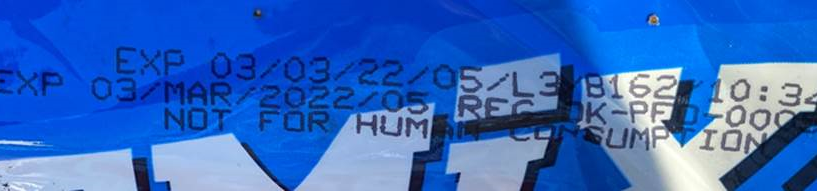
As of the end of last week, New Mexico had tested twelve samples, eleven of which were negative for aflatoxin. A sample of Sportmix Original Cat Food (Lot: EXP 04/29/22/05/L3/B167 14:21) contained 46 parts per billion (ppb) of aflatoxin, according to a Department of Agriculture spokesperson.

Kansas has completed testing on three samples, according to a spokesperson for the Kansas Department of Agriculture. Two of the samples did not contain aflatoxin; however, a third sample contained, on average, ~80 ppb, which is approximately four times the FDA’s 20 ppb action level for aflatoxin in pet food.

What Pet Owners Should Do

If your pet has symptoms of aflatoxin poisoning, contact a veterinarian immediately. Even pets without symptoms may have suffered liver damage, so you may want to contact your veterinarian if your pet has eaten any of the recalled products. Provide a full diet history to your veterinarian. You may find it helpful to take a picture of the pet food label, including the lot number.

Don’t feed the recalled products to your pets or any other animal. Contact the company listed on the package for further instructions or throw the products away in a way that children, pets and wildlife cannot access them. Sanitize pet food bowls, scoops, and storage containers using bleach, rinsing well afterwards with water, and drying thoroughly.

There is no evidence to suggest that pet owners who handle products containing aflatoxin are at risk of aflatoxin poisoning. However, pet owners should always wash their hands after handling any pet food.

You can report suspected illness to the FDA electronically through the Safety Reporting Portal or by calling your state’s FDA Consumer Complaint Coordinators. It’s most helpful if you can work with your veterinarian to submit your pet’s medical records as part of your report. For an explanation of the information and level of detail that would be helpful to include in a complaint to the FDA, please see How to Report a Pet Food Complaint.

What Veterinarians Should Do

The FDA urges veterinarians treating aflatoxin poisoning to ask their clients for a diet history. We also welcome case reports, especially those confirmed through diagnostic testing. You can submit these reports electronically through the FDA Safety Reporting Portal or by calling your state’s FDA Consumer Complaint Coordinators. For an explanation of the information and level of detail that would be helpful to include in a complaint to the FDA, please see How to Report a Pet Food Complaint.

Lawsuits Filed

At least two class action suits already have been filed against Midwestern Pet Foods by pet owners, alleging their dogs were poisoned by the company’s products.

Why Recalls Happen: A Sunshine Mills, Inc. Case Study, Part 2 (Salmonella)

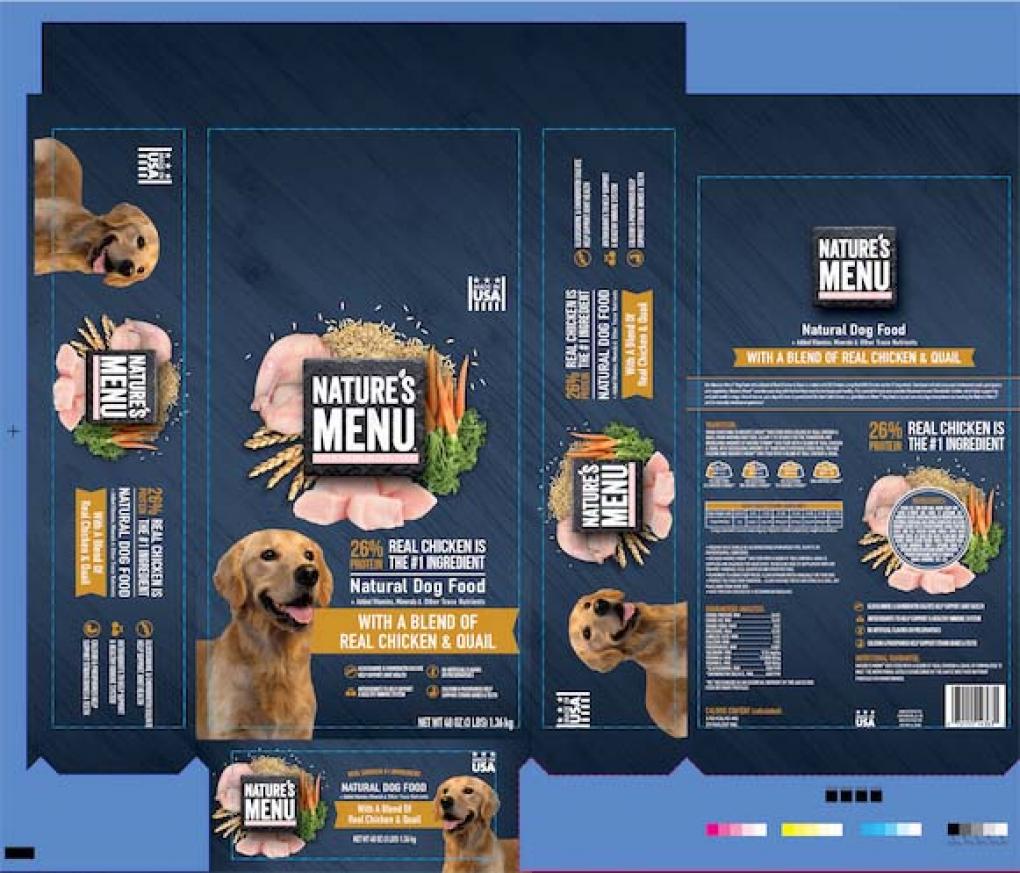
On August 4, 2020, the Georgia Department of Agriculture detected Salmonella in a sample of Nature’s Menu® Super Premium Dog Food with a Blend of Real Chicken & Quail, manufactured by Sunshine Mills, Inc. (Sunshine).

The state notified Sunshine of its finding on August 12th.

Twelve days later, the company announced a recall of multiple lot codes of the Nature’s Menu dog food.

On September 8, 2020, the US Food and Drug Administration (FDA) began an investigation of Sunshine’s Tupelo, Mississippi facility.

What the FDA inspector found

  • Finished product storage bins that are not covered by the company’s environmental monitoring program or sanitation schedules
  • Inadequate sanitation prevention controls, including dry dog food build-up on the surface of certain equipment and pitted and porous surfaces on interior surface welds
  • Sanitation control monitoring records that are not reviewed by a responsible individual
  • Inadequate corrective action after receiving notification from Georgia of the Salmonella-positive result
  • Inadequate evaluation of the scope of Salmonella contamination across multiple batches of finished product
  • Pre-filling of the sanitation checklist before the sanitizing procedures were carried out

How Sunshine responded

The company responded to most of the FDA inspector’s observations by acknowledging their accuracy and promising corrections.

In response to the inspector’s complaint about the inadequacy of Sunshine’s corrective actions regarding the detection of Salmonella, Phil Bates, Chief Operating Officer of Sunshine Mills, Inc., placed a portion of the blame on the State of Georgia, saying,

“We were in the process of investigating the detection of Salmonella spp. in the finished dog food product. Upon notification from the State of Georgia, a request was made for a split sample of the product in question which is required to be provided under Georgia law. The investigation proceeded with testing for Salmonella spp. in the retain sample of the product in question which was negative. We were subsequently informed that Georgia would not be able to provide the split sample for testing. The inability of Georgia to provide the split sample for testing delayed the investigation and implementation of corrective actions.”

Obtained in response to Freedom of Information Act request

Bates also blamed the leader of the sanitation crew for pre-filling the checklist, adding that the proper procedure had since been reviewed with the Sanitation Lead and with each member of the crew.

Why Salmonella contamination of a pet food matters

The FDA has this to say about the risks of Salmonella infections to dogs and cats.

Salmonellosis is uncommon in dogs and cats, but they can be carriers of the bacteria. This means that even if the pets don’t show symptoms of salmonellosis, they can still shed Salmonella in their stool and saliva and then spread the bacteria to the home environment and to people and other pets in the household. For example, cats can spread Salmonella through shared litter boxes or when roaming throughout the house, such as on kitchen countertops. Some ways dogs can spread the bacteria is when they give people kisses or have stool accidents inside the home. Pet waste from both sick and healthy pets can be a source of infection for people.

When the disease is seen in an adult dog or cat, the animal typically has another infection or health problem at the same time. Puppies and kittens are more likely to show signs of disease. Signs of salmonellosis in dogs and cats include:

  • Vomiting;
  • Diarrhea (which may be bloody);
  • Fever;
  • Loss of appetite; and
  • Decreased activity level.

The Salmonella incident investigation overlapped with the FDA’s investigation of aflatoxin contamination in pet food manufactured in the same Sunshine facility (See Part 1). Stay tuned for Part 3 of this series, which will look at the interweaving of the two incidents and how they relate to conditions that were revealed at the manufacturing plant in 2018, when the company’s pet foods were found to contain excessive levels of vitamin D.

Note: Information contained in this story was obtained from the FDA website and from documents furnished by FDA in response to a Freedom of Information Act request.