
Outbreaks in Quebec, Twin Cities Traced to Chinese Raspberries

Frozen raspberries imported from China were the source of 615 confirmed cases of norovirus in Quebec between March and July of this year, and of 15 cases in Minnesota in August of 2016.

The Quebec outbreak included clients and staff at seven seniors’ residences, two daycare centers and one hotel in four separate administrative regions of the province, according to a spokesperson for Quebec’s Ministry of Health and Social Services (MSSS).

Confirmed cases were documented in Mauricie at 6 seniors’ residences, in Laurentides at a conference at a hotel, in Chaudieres-Appalaches at a daycare center, and in Capitale-Nationale at a daycare center and a seniors’ residence.

Of the 615 outbreak victims, 141 were employees of at least two of the seniors’ residences. Four were employees at one of the affected daycare centers. Citing privacy concerns, MSSS declined to provide any further details on the victims by gender, age or geographic location. However, extrapolation of data provided by the provincial health agency suggests about 250 of the outbreak victims were seniors, and 33 were children.

The Minnesota outbreak was linked to ice cream manufactured by Sebastian Joe’s, a Minneapolis-based company, according to a spokesperson from the Minnesota Department of Health (MNDOH). The company supplied the ice cream to multiple venues within the Minneapolis-St. Paul area.

Norovirus illnesses were linked to consumption of raspberry chocolate chip flavor ice cream consumed at two Sebastian Joe’s venues, one private gathering, and one area restaurant. Of the 15 confirmed cases, 10 were female. One person was hospitalized.

The ice cream contained frozen raspberries imported from China. Analyses conducted by the Food and Drug Administration confirmed the presence of norovirus matching the case specimens in samples of the raspberries.

The Twin Cities and Quebec outbreaks occurred more than six months apart and appear to have been independent of each other, though frozen raspberries from China were implicated in both. Taian Runko, the company identified by the FDA during its analytical sampling, was not involved in the Quebec outbreak, according to the CFIA.

Product recalls lacked transparency
The Canadian Food Inspection Agency (CFIA) issued 14 recall notices, from June 20 through Aug. 21 this year. The agency disseminated 11 of the recalls only to businesses in the food industry, with no public warning released. Recall notices dated Aug. 11, 16 and 21 were released to the public, and alluded to the existence of “…reported illnesses associated with the consumption…” of the recalled products.

From June 23 through Aug. 14, Quebec’s Ministry of Agriculture, Fisheries and Food (MAPAQ) issued a series of six public alerts and product recalls, which included numerous bakery products manufactured with the individually quick frozen (IQF) raspberries. Each of the MAPAQ alerts warned of “many” illnesses associated with the consumption of products containing the IQF raspberries.

The U.S. Food and Drug Administration carried out analytical sampling and laboratory analysis when advised of the Minnesota outbreak, according to an agency spokesperson. As a result of the FDA investigation, the agency added IQF raspberries from Taian Runko Industry International Trade Co. Ltd. to the Import Alert 99-35 “Detention Without Physical Examination” list (Red List) on May 2 this year. Sebastian Joe’s initiated a product withdrawal as a result of the 2016 Minnesota outbreak.

Canadian health agency never issued alert
The Public Health Agency of Canada (PHAC) never issued a public health alert in conjunction with the IQF-raspberry norovirus outbreak. A spokesperson for PHAC explained the agency’s silence was because of the outbreak having been confined to a single province.

In Quebec, the provincial health department responsible for investigating the 5-month outbreak did not issue any news releases or public health alerts either. According to a MSSS spokesperson, food recalls are the responsibility of MAPAQ and CFIA. The spokesperson added that MSSS worked in collaboration with MAPAQ and other federal authorities on the investigation.

The first public notice of the Quebec outbreak was contained in a public warning and recall notice issued by MAPAQ on June 23. The CFIA did not include a similar warning with its recall notices until Aug. 11.

No public health alerts were posted on the Minnesota Department of Health website regarding the norovirus illnesses or ice cream recall in that state.

What consumers should know about norovirus
Norovirus is the leading cause of outbreaks from contaminated food in the United States, according to the Centers for Disease Control and Prevention. It accounts for approximately about half of all foodborne illnesses in the country every year.

Symptoms of norovirus infection include nausea, vomiting, diarrhea and stomach pain. The symptoms usually develop within 12 to 24 hours after exposure to the virus and last one to three days days.

Although extremely unpleasant, most cases of Norovirus are self-limiting, and do not present a long-term health risk, according to the CDC. Nevertheless, seniors and young children are at heightened risk of severe dehydration if infected with the virus.

Most cases of norovirus illness in the population at large are shrugged off as so-called stomach flu. Victims are usually not seen by doctors, and the infections go unreported.

A national survey carried out in the United Kingdom in 2011 determined that only one in every 23 people with norovirus consulted a physician. Overall, for every 288 cases of norovirus occurring in the general population, only one was reported to national surveillance authorities.

Timeline for Quebec, Minnesota outbreaks
August 4-14, 2016: Norovirus illnesses associated with consumption of raspberry chocolate chip ice cream at four Minneapolis-St. Paul area venues.

March-May 2017: Three separate outbreak clusters involving six seniors’ residences, all of which were serviced by a single central kitchen.

May 2, 2017: Individually quick frozen (IQF) Red Raspberries from Taian Runko Industry International Trade Co. Ltd. in Taian, Shandong China, is added to the Red List of Import Alert 99-35, citing norovirus GII contamination.

May 31, 2017: CFIA is notified by Quebec authorities that norovirus outbreak clusters appear to be linked to raspberries, and initiates a food safety investigation.

June 2017: Two additional outbreak clusters occur, one at a daycare center and the other at a hotel.

June 20, 2017: CFIA issues first product recall notice for IQF raspberries imported from China.

June 23, 2017: MAPAQ issues first consumer alert and recall notice for IQF raspberries and some products containing the raspberries, reporting for the first time the existence of “many” illnesses associated with consumption of IQF raspberries.

July 2017: Two additional outbreak clusters are reported, one at a daycare center and the other at a seniors’ residence.

This story first appeared in Food Safety News and is reproduced here with permission.

Recalls and Alerts: September 12 – 17, 2017

Here is today’s list of food safety recalls, product withdrawals, allergy alerts and miscellaneous compliance issues. The live links will take you directly to the official recall notices and company news releases that contain detailed information for each recall and alert.

If you would like to receive automatic email alerts for all new articles posted on eFoodAlert, please submit your request using the sidebar link.

United States

Outbreak Alert: CDC and Texas Health Officials warn the public that anyone who consumed raw milk or raw milk products from K-Bar Dairy (Paradise, Texas) between June 1 and Aug. 7, 2017, should get antibiotic treatment to avoid the risk of lifelong, chronic infections as a result of infection with Brucella RB51. So far, CDC and Texas health officials have received reports about people who drank K-Bar milk or have symptoms consistent with brucellosis caused by RB51 in Alabama, Arkansas, California, Ohio, North Dakota, Tennessee and Texas.

Outbreak Alert: The Rhode Island Department of Health is investigating two cases of Listeria infection linked to consumption of queso fresco made with unpasteurized milk.

Outbreak Alert: CDC reports a 7-state outbreak of Campylobacter illnesses linked to puppies purchased from Petland, a national pet store chain. Thirty-nine confirmed cases have been reported; 9 of the victims required hospitalization.

Allergy Alert: America New York RI Wang Food Group recalls approximately 53,973 pounds of Heat Treated but Not Fully Cooked-Not Shelf Stable pork sausage products due to undeclared milk. Please refer to the recall notice for a complete list of recalled products, which were distributed for institutional use and for retail sale in New Jersey and New York.

Allergy Alert: Cherry Valley Marketplace recalls CHERRY VALLEY VANILLA CUPCAKES and CHERRY VALLEY CHOCOLATE CUPCAKES (12 oz pkgs; Expiry 09/20/2017 and 09/30/17) due to undeclared milk. The recalled products were distributed in New York, New Jersey and Connecticut.

Food Safety Recall: German Sausage Haus, LLC recalls approximately 1,252 pounds of Heat Treated, Not Fully Cooked-Not Shelf Stable (HTNFCNSS) meat products due to a possible processing deviation that may have led to staphylococcal enterotoxin contamination. Please refer to the recall notice for a complete list of recalled products, which were distributed for institutional use and shipped to retail stores in Washington State.

Canada

Allergy Alert: Canda Six Fortune Enterprise Co. Ltd. recalls various Ri Wang Food Chinese Brand sausages due to undeclared milk. Please refer to the recall notice for a complete list of recalled products, which were supplied to retailers nationwide.

Allergy Alert: Greenspace Brands recalls Love Child Organics brand Baby’s First Buckwheat + Chia Organic Infant Cereal (227g; Product codes 2017NO16, 2017DE21, 2018JA24, 2018AL09, and 2018SE26: UPC 8 58860 00181 7) due to undeclared gluten. The recalled product was supplied to retailers nationwide.

Allergy Alert: Fruits & Légumes Mercier inc. recalls Crab Galettes (225g; all lots sold up to and including September 12, 2017) due to undeclared mustard seed, soy, wheat and sulfites.

Europe

Allergy Alert (Denmark): Lidl Denmark recalls Soft-baked Triple chocolate cookies (210g; Best by 21/07/2018; Lot no. 1720309-02) due to undeclared gluten, milk, egg and soy and possible trace contamination with nuts and lupins.

Allergy Alert (Denmark): K.T. Food recalls Delikatessen’s Æggestand (100g; Expiry  07/10/2017; Lot no. 607-1) due to undeclared eggs and milk.

Allergy Alert (Ireland): Tesco recalls Tesco Cookie and Cream Biscuits (176g; all batches and date codes) due to undeclared milk.

Allergy Alert (UK): Tesco recalls Tesco Cookie and Cream Biscuits (176g; all batches and date codes) due to undeclared milk.

Food Safety Recall (Germany): dm-drogerie markt recalls dmBio Linseneintopf (400g; Expiry date 30.05.2020) due to possible contamination with plastic pieces.

Food Safety Recall (Germany): Dirk Rossmann GmbH recalls enerBio vegan rice nougat crisp (80g; Best by 01/2018; Lot no. L17045) due to contamination with broken glass.

Food Safety Recall (Sweden): Arla recalls Arla Milk, 1.5% (10-liter bag-in-box; Best before September 19, 2017) and Arla Standard Milk, 3.0% (10-liter bag-in-box; Best before September 19, 2017) because the milk may be contamined with a dishwashing solution.

Asia, Africa and the Pacific Islands

Allergy Alert (Hong Kong): JM Lifestyle International Limited recalls Love Child Organics brand Baby’s First Buckwheat + Chia Organic Infant Cereal (227g; Batch codes 2018JA24 and 2018AL09; Best before January 24, 2018 , April 9, 2018; Product of Canada) due to undeclared gluten.

Food Safety Recall (Hong Kong): Angliss Hong Kong Food Service Limited recalls Holland Organics brand Dutch Organic Fresh Whole Milk (1 liter; Use by October 2, 2017, October 3, 2017; Product of Netherlands) due to excessive total bacterial counts.

Food Safety Recall (Hong Kong): Greens (HK) Ltd recalls Vadilal Fruit Bonanza Ice Cream (Cashew & Coconut) and Vadilal Tender Coconut Ice Cream (140 mL; Best before October 14, 2018; Product of India) due to total bacterial counts and coliform bacteria counts in excess of legal limits.

Australia and New Zealand

Food Safety Recall (Australia): Hans Continental Smallgoods Pty Ltd recalls Hans Spanish Chorizo (250g; Use By 1 Dec 2017) due to E. coli contamination. The recalled product was sold at Coles stores in QLD and NSW.

Food Safety Recall (New Zealand): Skazka Delicatessen recalls Leis brand Dillspitzen Getrocknet (dill) (50g; Best before 10.11.2017) due to presence of Salmonella and a high level of Enterobacteriaceae.

Some supermarket chains post recall notices on their web sites for the convenience of customers. To see whether a recalled food was carried by your favorite supermarket, follow the live link to the supermarket’s recall website.

*The Kroger umbrella encompasses numerous supermarket, marketplace and convenience store chains
**Includes Safeway, Vons, Pavilions, Dominick’s, Genuardi’s, Randalls, Tom Thumb, Carrs and Pak N’ Save.

Papaya pathogen problems persist

Little appears to have changed since 2011 outbreak, despite efforts of U.S., Mexican governments

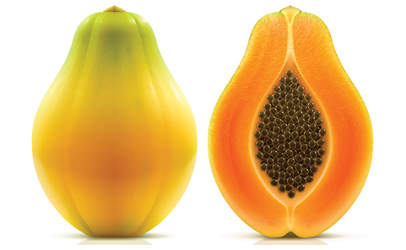
The CDC posted this photo with its outbreak notice, describing maradol papayas as large, oval fruits that weigh 3 or more pounds, with green skins that turn yellow when the fruit is ripe. The flesh inside the fruit is salmon-colored. Photo courtesy of CDC

Salmonella — the pathogen behind an ongoing foodborne illness outbreak that has sickened 173 people across 21 states, killing one — is a normal inhabitant of the intestinal tract of many birds, reptiles and mammals.

The possibility that an agricultural product such as papayas may be contaminated with Salmonella is impossible to eradicate; however, the risk of widespread contamination can be controlled through careful attention to current best sanitary practices in the cultivation, harvesting and packing of raw produce. Failure to do so can result in a vicious cycle of contamination in fields, packing houses and the distribution system.

Cultivation, harvesting and packing
The papaya is a fast-growing, tree-like herbaceous plant, which is at home in tropical and semi-tropical climates and is cultivated extensively across southeastern Mexico, according to a report issued by the University of Florida IFAS Extension Service. The most recent report from Mexico’s Secretaría de Agricultura, Ganadería, Desarrollo Rural, Pesca y Alimentación (Ministry of Agriculture, Livestock, Rural Development, Fisheries and Food) shows Mexico to be the fifth largest producer of papayas in the world.

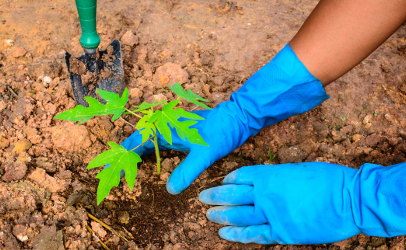
Papaya trees are propagated from seeds. When seedlings are large enough, they are transplanted by hand into growing fields.

The papaya plant is propagated from seeds, with seedlings transplanted into fields when they are of sufficient size. The plant matures in six to nine months in warmer regions. Susceptible to a variety of plant diseases and pests, such as root rot, powdery mildew, papaya ringspot virus, fruit fly and white fly, papaya plants usually have an abbreviated commercial lifespan of two to three years, according to information from the University of Hawaii. It is not unusual for a papaya plant to only produce a single crop in its lifetime.

Once harvested and delivered to the packing house, each papaya is graded according to ripeness and size. Next, the fruit is sorted according to size a second time, as well as shape, and color. It is also examined for insect or mechanical damage.

The sorted fruit is generally washed in large vats of chlorinated tap water to remove dirt, debris and insect contamination. Depending upon the condition of the fruit and the expected final destination, it may be subjected to additional treatments, including a hot water bath or a fungicide dip. After air-drying, the fruit is packed for shipment.

2011 Salmonella Agona outbreak
In 2011, the Centers for Disease Control and Prevention and the Food and Drug Administration investigated a Salmonella Agona outbreak that was traced to contaminated papayas imported from Mexico. The papayas were grown and packed by Agromod SA de CV of Chiapas, Mexico, and distributed by Agromod Produce Inc. of McAllen, Texas.

Photo illustration

The Agromod papaya plantation had an interconnected drainage ditch system, according to information presented in 2013 during the annual educational conference of the National Environmental Health Association (NEHA).

The marsh-like environment of the drainage ditches was a haven for waterfowl, frogs and other wildlife, and provided perfect growth conditions for pathogenic bacteria. During heavy rain and flooding, the ditches overflowed into the soil surrounding the trees, impregnating the soil with pathogens from the water.

During an on-site inspection of Agromod’s plantation and packing house, investigators from FDA recovered a full two dozen different types of Salmonella, including the Salmonella Agona outbreak strain. Salmonella-positive samples were drawn from fields where the papaya grew and from packing-house drains.

The crops at Agromod were harvested by two-person teams. One person worked at tree level, picking fruit and handing or tossing it to the other person below. The second person laid each papaya onto a piece of poly foam on the unprotected soil. The foam was wrapped around the fruit, which was loaded into foam-lined bins for transport to the packing house.

It was common practice at Agromod for the sheets of poly foam to be reused for up to 15 days before being discarded, helping to spread contamination from the fields to the fruit, packing house and back again.

Photo illustration

Once in the packing house, the fruit was washed in large vats of water. The level of chlorine in the wash water was not properly monitored or controlled, allowing Salmonella to spread throughout an entire batch of papayas.

The wash water was discharged into the drainage ditch system, returning Salmonella to the fields in a vicious cycle of contamination.

Import Alert
In response to the extent of Salmonella contamination brought to light during the investigation of the 2011 outbreak, FDA instituted Import Alert #21-17, “Countrywide Detention Without Physical Examination Of Papaya From Mexico.” Firms that provided documentation of five consecutive Salmonella-negative commercial shipments qualified for an exemption from the automatic detention at the U.S. border.

Concurrent with FDA’s initiation of the Import Alert, Mexico’s Servicio Nacional de Sanidad, Inocuidad y Calidad Agroalimentaria (National Service for Health, Safety and Agrifood Quality) (SENASICA ) unveiled a plan to assist that country’s papaya growers, packers and shippers in addressing the issues of safe growing and handling of the fruit.

History repeats
Notwithstanding the efforts of multiple agencies in both countries, the United States is once again in the throes of an outbreak of Salmonella that is associated with consumption of fresh, whole papayas imported from Mexico.

To view a larger version of the map on the CDC’s website, please click on the image.

As of Aug. 18 when the CDC posted it’s most recent outbreak update, 173 people had been confirmed sick across 21 states, with 58 hospitalizations, and one death on New York City. The CDC warns that the number of confirmed illnesses is likely to increase.

Thus far FDA has identified one farm in connection with the contaminated papaya. That farm, Carica de Campeche, has been supplying papayas to the U.S. market under an Import Alert exemption since 2015.

According to a spokesperson from FDA, at present there are no specific ongoing testing or inspection requirements that a producer must meet in order to maintain an exemption from automatic detention, although a firm is expected to “… continue to provide the commodity in a wholesome manner and follow all the regulatory requirements of FDA.”

The FDA revoked the exemption granted to Carica de Campeche under Import Alert 21-17 on Aug. 7.

This article first appeared in Food Safety News and is reposted here with permission.