
OUTBREAK ALERT: Alfalfa sprouts linked to Salmonella outbreak in Ontario, Canada

Ontario Public Health is investigating an outbreak of salmonellosis linked to alfalfa sprouts from Sunsprout Natural Foods, according to a recall update released late yesterday (September 19) by the Canadian Food Inspection Agency (CFIA).

Sunsprout has recalled two alfalfa sprout products due to Salmonella contamination.

CFIA advises that consumers should not consume and retailers, restaurants, and institutions should not sell or use the following recalled products:

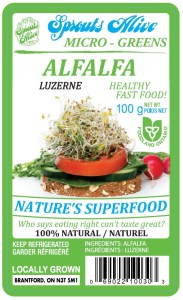
Sprouts Alive brand Micro – Greens Alfalfa, 100g:- All best before dates up to and including BBOCT13 (UPC 0 69022 10030 3)
Sunsprout brand Micro – Greens Alfalfa, 100g:- All best before dates up to and including BBOCT13 (UPC 0 57621 13511 6)

No information has been released as yet regarding the number of Salmonella infections under investigation in Ontario, nor are there any details available regarding the scope of the outbreak or severity of symptoms.

The recall announced yesterday is an update to an August 11th recall of Sunsprout brand Micro-Greens Alfalfa & Radish (100g; Batch code BBAUG11; UPC 0 57621 13512 3). No illnesses were associated with the August recall. 

Distribution of the recalled sprouts appears to be limited to the province of Ontario.


Contaminated Peaches from USA Cause Salmonella Outbreak in Canada

Thirty-three Canadians in Ontario (22 cases) and Quebec (11 cases) have become infected with Salmonella Enteritidis after consuming peaches imported from the USA, according to a report released this morning by the Public Health Agency of Canada (PHAC).

Three of the outbreak victims have been hospitalized.

Those infected with the outbreak strain of Salmonella Enteritidis range in age between 0 and 91 years, and 55% of the victims are female.

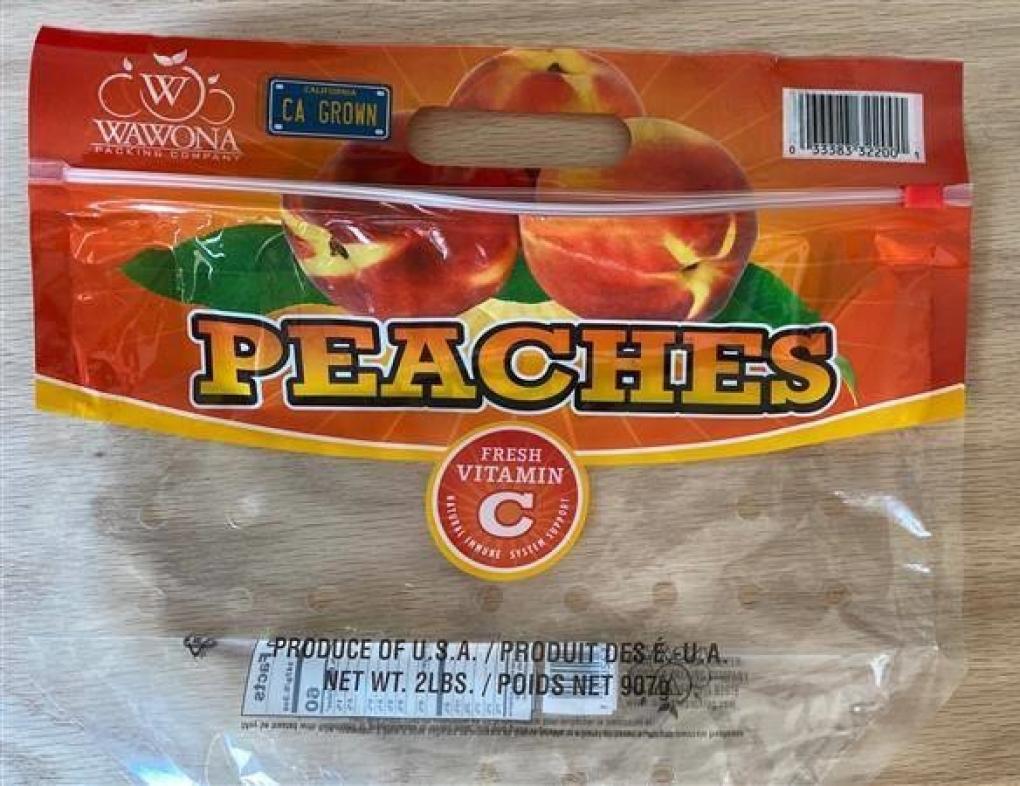
The outbreak is linked to peaches supplied by Prima Wawona, a California-based company, which has recalled a series of products from the marketplace.

Prima Wawona peaches have also been blamed for an outbreak of Salmonella Enteritidis in the USA, which had sickened 68 individuals in 9 US states as of August 21st, according to the US Centers for Disease Control and Prevention.

On August 22nd, the Canadian Food Inspection Agency (CFIA) issued a Consumer Advisory alerting Canadians to the presence of the recalled peaches in the country and warning that PHAC had identified some illnesses linked to their consumption.

Canadian consumers should avoid purchasing, serving or eating any of the following peaches, or any other food products containing these peaches.

  • Harvest Sweet Sweet 2 Eat Prima Sweet Value Wawona Yellow Peaches; PLU 4037, PLU 4038 PLU 4044,
  • Harvest Sweet Sweet 2 Eat Prima Sweet Value Wawona White Peaches; PLU 4401
  • Sweet 2 Eat Sweet O Organic Yellow Peaches; PLU 94037, PLU 94038, PLU 94044
  • Sweet 2 Eat Organic White Peaches; PLU 94401
  • Wawona Peaches; 907g / 2 lb; UPC 0 33383 32200 1
  • Wegmans Peaches; 907g / 2 lb; UPC 0 77890 49048 8
  • Extrafresh Peaches; 907g / 2 lb; 0 33383 02071 6; Codes CPO3148, CPO3164, CPO3163, CPO3186, CPO3207, CPO3213, CPO3228, CPO3265, CPO3281, CPO3302, CPO3328, CPO3354, MPO0500, MPO0503, MPO0524, MPO0671, MPO0678, MPO0689, MPO0693, MPO0703, MPO0716, MPO0725, MPO0730, MPO0767, MPO0795

Peaches imported in bulk may have been sold loose or in bulk, with or without a brand name. These peaches may have been repackaged into a variety of formats.

Except for the Extrafresh Peaches, the recall encompasses all products sold from June 1, 2020 forward.

What Consumers Need to Know

  • Do not purchase or consume any peaches listed above. If you are in doubt as to the origin of peaches which you have already purchased, throw them away and disinfect the bin in which they were stored.
  • Some of the peaches may have been supplied to restaurants, hotels, bakeries or various food service establishments, including hospitals and nursing homes and may have been used in salads, desserts or baked goods. It would be prudent to avoid all of these items, unless you can be certain they were produced using peaches not included in this Advisory.
  • If you are suffering from symptoms of salmonellosis, including low-grade fever, stomach cramps, diarrhea, and/or vomiting, consult your healthcare professional. Be prepared to provide information on the food items you consumed during the week before beginning to experience your symptoms

This is the third Canadian foodborne disease outbreak since the beginning of July, all of them linked to consumption of produce imported from the USA. Local produce is readily available during the summer months. Consider supporting your local producers instead of buying imported produce.

OUTBREAK ALERT: Wawona-brand bagged peaches linked to 9-state Salmonella outbreak

Sixty-eight people in nine US states have been infected with Salmonella Enteritidis according to a report just released by the US Centers for Disease Control and Prevention (CDC). Fourteen people have been admitted to hospital.

Outbreak cases are reported in Iowa (8), Maryland (1), Michigan (17), Minnesota (23), New Jersey (4), New York (8), Pennsylvania (1), Virginia (3) and Wisconsin (3).

Epidemiological evidence has linked the illnesses to consumption of Wawona-brand bagged peaches sold at certain ALDI stores in several states.

ALDI has recalled assorted bagged and loose peaches received from its supplier, Wawona Packing Company. The peaches were sold on or after June 1, 2020 in select ALDI stores in Connecticut, Florida, Illinois, Iowa, Kentucky, Massachusetts, Maryland, Michigan, Minnesota, North Dakota, New Hampshire, New York, Ohio, Pennsylvania, Rhode Island, South Dakota, Vermont, Virginia, Wisconsin and West Virginia and also were available for purchase through Instacart, a grocery delivery service.

Please refer to the ALDI recall notice for additional details.

According to a report from the Minnesota Department of Health, outbreak victims in that state became ill after eating peaches purchased from Aldi, Target, and possibly other retail locations. Target is in the process of removing the implicated peaches from its stores, but has not issued a formal recall notice as yet.

FDA is conducting a full traceback investigation to determine the source of the contamination and the full scope of distribution of the implicated peaches.

What consumers need to know

  • Consumers should not eat, and retailers, suppliers and restaurants should not sell or serve Wawona brand peaches, or any foods made with these peaches.
  • Consumers who purchased bagged peaches from ALDI stores from June 1, 2020 to present and cannot identify the brand, should throw the peaches away.
  • If you believe yourself or a family member to be experiencing symptoms of a Salmonella infection, talk to your healthcare provider and/or report your illness to your local health department.