Multistate E. coli O26 outbreak linked to flour

Flour manufactured by ADM Milling and sold by Aldi has been linked to 17 cases of E. coli O26 illness in eight states.

Three people have been hospitalized.

ADM Milling and Aldi have jointly recalled all lots and date codes of the following product:

Bakers Corner All Purpose Flour (5-lb bag; UPC 041498130404)

The recalled product was sold in Connecticut, Delaware, Massachusetts, New Hampshire, New Jersey, New York, Ohio, Pennsylvania, Rhode Island, Vermont and West Virginia.

According to CDC, illnesses associated with this outbreak have been reported in California (1), Connecticut (1), Missouri (1), New Jersey (1), New York (5), Ohio (5), Pennsylvania (2), and Rhode Island (1).

Illnesses started on dates ranging from December 11, 2018 to April 18, 2019. Ill people range in age from 7 to 86 years, with a median age of 23. Sixty-five percent of the outbreak victims are female.

DNA analysis of an E. coli O26 recovered from an unopened bag of flour revealed a close genetic relationship to the outbreak strain, according to FDA.

Individuals infected with E. coli O26 may experience symptoms that include severe stomach cramps, diarrhea, fever, nausea, and/or vomiting. Some infections can cause severe bloody diarrhea and lead to life-threatening conditions, such as a type of kidney failure called hemolytic uremic syndrome (HUS), or the development of high blood pressure, chronic kidney disease, and neurologic problems.

Symptoms may not develop until as long as nine days follwoing infection.

Anyone experiencing symptoms of E. coli O26 infection should consult a healthcare provider.

FDA offers the following recommendations to consumers and food handlers:

  • DO NOT use or eat flour from five-pound bags of Baker’s Corner All Purpose Flour packed for ALDI, that includes all lot codes and all Best If Used By Dates distributed in Connecticut, Delaware, Massachusetts, New Hampshire, New Jersey, New York, Ohio, Pennsylvania, Rhode Island, Vermont and West Virginia.
  • DO NOT eat any raw cake mix, batter, or any other raw dough or batter product that is supposed to be cooked or baked.
  • WASH hands, work surfaces, and utensils thoroughly after contact with flour and raw batter or dough products.
  • KEEP raw foods separate from other foods while preparing them to prevent any contamination that may be present from spreading. Be aware that flour or cake mix may spread easily due to its powdery nature.

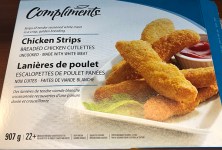
 

Compliments brand chicken strips linked to Salmonella illnesses in Canada

Sofina Foods Inc. (Sofina) has recalled Compliments brand raw, breaded chicken strips after the product was implicated in a Salmonella outbreak, according to a recall notice posted on the Canadian Food Inspection Agency (CFIA) website.

The public is advised to avoid consuming the following product, and to discard the product or return it to the place of purchase.

Compliments brand Chicken Strips – Breaded Chicken Cutlettes – Uncooked (907g; Product code (Outer package) 2019 NO 24 / (Inner package) 3288M; UPC 0 57742 33687 0)

The chicken strips were sold nationally until May 1, 2019 but some consumers may still have the product in their freezer.

This is one of 17 Salmonella outbreaks traced to raw, breaded chicken products in Canada since May 2017. The most recent outbreak was declared over by the Public Health Agency of Canada (PHAC) on May 13th.

Symptoms of Salmonella illness may include stomach cramps, diarrhea, nausea, vomiting and low-grade fever. Typically, symptoms appear from six to 72 hours following infection, and can last up to a week.

The very young, the elderly, pregnant women and individuals with weakened immune systems may experience more severe symptoms, including dehydration or potentially life-threatening systemic infection.

Individuals who consumed a raw, breaded chicken product and experienced symptoms of Salmonella infection should consult a healthcare provider.

Frozen, breaded chicken strips or nuggets are raw products and should be handled with care. PHAC recommends the following precautions when preparing these products:

  • Do not eat raw or undercooked frozen breaded chicken products. Cook all frozen raw breaded chicken products to an internal temperature of at least 74°C (165°F) to ensure that they are safe to eat. Use a digital food thermometer to verify the temperature. Insert the digital food thermometer through the side of the product, all the way to the middle. Oven-safe meat thermometers that are designed for testing whole chicken and roasts during cooking are not suitable for testing nuggets, strips or burgers.
  • Microwave cooking of frozen raw breaded chicken products – including chicken nuggets, strips, burgers, popcorn chicken or chicken fries – is not recommended because of the possibility of uneven heating.
  • Always follow the cooking instructions on the package, including for products labelled Uncooked, Cook and Serve, Ready to Cook, and Oven Ready.
  • Wash your hands thoroughly with soap and warm water before and after handling frozen raw breaded chicken products.
  • Use a separate plate, cutting board and utensils when handling frozen raw breaded chicken products to prevent the spread of harmful bacteria.
  • Do not re-use plates, cutting boards or utensils that have come in contact with frozen raw breaded chicken products to serve the cooked product unless they have been thoroughly washed.


Caito’s response to earlier FDA inspection observations did not prevent Salmonella problem

This story by Phyllis Entis first appeared in Food Safety News and is reposted here with permission

On June 8, 2018, the federal Centers for Disease Control and Prevention advised the public of an outbreak of Salmonella Adelaide that eventually sickened 77 people in nine states.

Most of the outbreak victims reported eating pre-cut cantaloupe, watermelon or a fruit salad mix with melon purchased from grocery stores.

According to the CDC, epidemiologic and traceback evidence pointed to consumption of pre-cut melon supplied by Caito Foods LLC of Indianapolis.

In response to the evidence, the U.S. Food and Drug Administration (FDA) performed a three-week long investigation, including a comprehensive inspection of Caito’s production facility and analysis of several environmental and cut fruit samples.

FDA lab analysis did not reveal Salmonella in any of the samples taken during the course of the investigation. However, the Michigan Department of Agriculture and Rural Development (MDARD) found Salmonella Adelaide after testing samples of cut cantaloupe and watermelon.

Although FDA did not confirm the presence of Salmonella in Caito’s production facility during the inspection, investigators noted several sanitation and maintenance issues, according to the Establishment Inspection Report, obtained by Food Safety News as part of a Freedom of Information Act request.

  • The plant was not designed to facilitate maintenance and sanitary operations. There was condensation from the cooling units and on electric cords located directly above the pineapple line, where fresh, ready-to-eat pineapples were being peeled and cut.
  • The firm did not conduct operations under conditions and controls necessary to minimize the potential for contamination of food. Five employees were observed neglecting appropriate personal sanitizing procedures when entering the production area.
  • The firm did not take a reasonable measure and precaution related to personnel practices. Employees were seen handling containers and packing materials and then returning to cut watermelon without first cleaning and sanitizing their hands.
  • The cooling units’ fans appeared to be dirty.
  • The firm used a lower concentration of sanitizing chemical than called for on the package label. Management explained that the sanitizer was used to ensure the safety of the water, and not to provide a sanitizing step for the fruit.

During the current inspection the firm on June 14, 2018, Caito Foods LLC voluntary destroyed all the melons and watermelons that they had in their warehouse and diverted any shipments that they had coming. The firm also destroyed any products containing melon or watermelon.

FDA never found the source of the Salmonella Adelaide contamination.

In its official response to FDA’s observations, Caito management detailed corrective actions intended to eliminate the condensation problem and prevent a recurrence. The company developed a new procedure regarding management, sanitation, and handling of all food contact containers, and completed a retraining program for employees on handling procedures and hand sanitizing requirements.

Caito also adjusted the concentration of sanitizing chemical.

Despite its corrective actions, Caito is once again the apparent source of a Salmonella outbreak. As of April 24, CDC had received confirmed reports of 117 cases of Salmonella Carrau infections in 10 states. Thirty-two people have been admitted to hospitals.

Epidemiologic and traceback evidence has identified Caito as the likely source of the outbreak.

According to FDA, Salmonella Carrau is rare, and has historically been seen in imported melons. Caito has acknowledged that imported melons were used in the suspect pre-cut melon mixes.

FDA is examining shipping records to establish a country of origin and, if possible, a farm of origin for the melons.

Caito recalled all of the implicated pre-cut melons and fruit mixes containing pre-cut melons on April 12.

Public health officials from CDC and FDA advise consumers to check their homes for recalled products and either throw them away or return them to the place of purchase. Consumers who believe they have become ill as a result of consuming pre-cut melon should consult their healthcare provider.