
People, Pooches, and Pig Ears: An Update

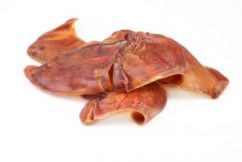
treats-smallNinety-three people have been infected with Salmonella in a 27-state outbreak linked to contact with pig ear dog treats, according to the latest update from the US Centers for Disease Control and Prevention (CDC).

Twenty of the outbreak victims have been admitted to hospital.

Pig ear dog treats sold from bulk bins at Pet Supplies Plus stores are thought to be behind the outbreak, which involves four different Salmonella serotypes, including: I 4,[5],12:i:-, Infantis, Newport, and London.

Lab testing (Whole Genome Sequencing) is in progress to determine whether the strains recovered from from the treats are a genetic match to those recovered from outbreak patients, according to FDA.

Testing carried out by the Michigan Department of Agriculture and Rural Development (MDARD) found three of the four serotypes in samples taken from bulk product in a Pet Supplies Plus store in that state.

On July 3rd, Pet Supplies Plus pulled bulk pig ear dog treats from their stores and stopped shipping the bulk product from their Distribution Center. The bulk treats had been distributed to stores in AL, AR, CA, CO, CT, DE, FL, GA, IA, IL, IN, KS, KY, MA, MD, MI, MN, MO, NC, NE, NH, NJ, NY, OH, OK, PA, RI, SC, TN, TX, VA, WI and WV.

Prepackaged pig ear dog treats are not implicated in this outbreak and remain on store shelves.

map-7-17-19Confirmed outbreak cases have been reported from Alabama (1), Arizona (1), California (1), Colorado (2), Florida (2), Georgia (1), Hawaii (1), Illinois (6), Indiana (4), Iowa (18), Kansas (3), Kentucky (4), Louisiana (1), Massachusetts (4), Michigan (9), Minnesota (1), Missouri (5), New York (11), North Carolina (1), North Dakota (1), Ohio (5), Oregon (2), Pennsylvania (3), South Carolina (1), Utah (1), Washington (1), and Wisconsin (3).

Pet Supplies Plus stores were located in most, but not all, of the states reporting outbreak cases.

A single, common source of the bulk pig ear dog treats has not yet been identified. It is possible that the same contaminated batch of treats also was supplied to other retailers.

Pets with Salmonella infections may be lethargic and have diarrhea or bloody diarrhea, fever, and vomiting. Some pets will have only decreased appetite, fever and abdominal pain. Infected but otherwise healthy pets can be carriers and infect other animals or humans.

The US Food and Drug Administration (FDA) has received “a few” complaints of sick dogs, and is in the process of evaluating these, according to a spokesperson for the agency.

FDA encourages consumers to report complaints electronically through the Safety Reporting Portal. FDA will evaluate any additional complaints it receives.

Veterinarians who wish to have pets tested for Salmonella may do so through the Veterinary Laboratory Investigation and Response Network (Vet-LIRN Network) if the pet is from a household with a person infected with Salmonella.


Papayas from Mexico blamed for another Salmonella outbreak

For the sixth time in eight years, papayas grown in Mexico have been linked to an outbreak of Salmonella.

The US Centers for Disease Control and Prevention (CDC) and the US Food and Drug Administration (FDA) are warning consumers in Connecticut, Massachusetts, New Jersey, New York, Pennsylvania, and Rhode Island to avoid eating any fresh papayas from Mexico until further notice.

No recall has been announced.

CDC reports 62 cases of Salmonella Uganda illnesses, including 23 hospitalizations, in eight states: Connecticut (14), Florida (1), Massachusetts (5), New Jersey (12), New York (24), Pennsylvania (4), Rhode Island (1), and Texas (1).

No deaths have been reported.

According to FDA, most people with salmonellosis develop diarrhea, fever, and abdominal cramps. More severe cases of salmonellosis may include a high fever, aches, headaches, lethargy, a rash, blood in the urine or stool, and in some cases may become fatal.

Children younger than five, the elderly, and people with weakened immune systems are more likely to have severe salmonellosis infections.

By the numbers

Epidemiological evidence gathered by CDC, and product distribution information obtained by FDA, point to papayas grown in Mexico and distributed in Connecticut, Massachusetts, New Jersey, New York, Pennsylvania, and Rhode Island.

Just over one-half of the victims are female, and approximately two-thirds of those interviewed are of Hispanic ethnicity. Ages of outbreak victims range from one to 86 years.

Of those victims who were interviewed, 76% reported having eaten papaya in the week before becoming ill.

The Florida victim reported having traveled to Connecticut in the week before becoming ill. It is unknown at this time whether the Texas victim had traveled to one of the six states to which the papayas were shipped.

FDA has not yet identified a source or grower of the contaminated papayas.

History

This is the sixth in a series of Salmonella outbreaks linked to papayas grown in Mexico and imported into the USA in the last eight years.

In 2011, Mexican papayas contaminated with Salmonella Agona were the source of a 25-state outbreak that sickened 106 individuals, sending 10 of them to hospital.

In 2017, history repeated itself four-fold. A total of 251 individuals were infected with one of several different strains of Salmonella after eating Mexico-grown papayas. Seventy-eight of the outbreak victims were hospitalized and two people died.

If history is any guide, it is likely that the number of cases and hospitalizations in this outbreak will increase.

What should consumers do?

  • If you have purchased a papaya grown in Mexico, throw it away.
  • Do not eat fruit salads or other mixes that include papayas from Mexico.
  • If you aren’t sure the papaya you bought is from Mexico, you can ask the place of purchase. When in doubt, don’t eat the papaya. Throw it out.
  • Wash and sanitize places where papayas were stored: countertops and refrigerator drawers or shelves. Follow these five steps to clean your refrigerator.

What should restaurants and retailers do?

In the event that restaurants, retailers and/or other food service operators are found to have handled potentially contaminated food in their facilities, they should:

  • Contact their local health department and communicate to their customers regarding possible exposure to a pathogen.
  • Wash the inside walls and shelves of the refrigerator, cutting boards and countertops, and utensils that may have contacted contaminated foods; then sanitize them with a solution of one tablespoon of chlorine bleach to one gallon of hot water; dry with a clean cloth or paper towel that has not been previously used.
  • Wash and sanitize display cases and surfaces used to potentially store, serve, or prepare potentially contaminated foods.
  • Wash hands with warm water and soap following the cleaning and sanitation process.
  • Conduct regular frequent cleaning and sanitizing of cutting boards and utensils used in processing to help minimize the likelihood of cross-contamination.


Possible Canadian Norovirus outbreak linked to imported raspberries

The Canadian Food Inspection Agency (CFIA) is conducting a food safety investigation into the possible Norovirus contamination of products containing Individual Quick Frozen (IQF) raspberries.

At least one product recall has been triggered by findings emanating from a foodborne disease outbreak investigation.

In response to an inquiry from eFoodAlert, a CFIA spokesperson stated that the recall in question was associated with raspberries from Québec.

The Ministre d’Agriculture, Pêcheries et Alimentation de Québec (MAPAQ) has posted recall notices indicating the origin of the raspberries to be Chile.

As of June 5, 2019, the following recalls are in effect:

The current situation is reminiscent of a 2017 Norovirus outbreak that also was traced to imported IQF raspberries.

Between March 2017 and July 2017, the consumption of frozen raspberries imported from China was blamed for 615 confirmed cases of Norovirus in Québec. Many of the cases occured in seniors’ residences and child daycare centers.

Symptoms of Norovirus infection include nausea, vomiting and copious watery diarrhea, typically lasting from 24 to 60 hours in healthy adults.

Young children and the elderly are susceptible to severe dehydration. Approximately 1% of Norovirus victims may require hospitalization as a result of their illness.

Consumers who have purchased any of the recalled products should either discard them or return them to the place of purchase.