 Forty-one people in 10 states have been infected with Salmonella Stanley after consuming imported dried wood ear mushrooms, according to a report just released by the US Centers for Disease Control and Prevention (CDC).
Four of the victims have been admitted to hospital.
Wood ear mushrooms are dried mushrooms, also commonly labelled or referred to as Kikurage, Dried Black Fungus, Dried Fungus, or Mu’er/Mu Er/Mu-Err, according to the Outbreak Investigation notice posted by the US Food and Drug Administration (FDA).
Illnesses have been reported in Arizona (1), California (25), Connecticut (1), Georgia (1), Illinois (5), Louisiana (1), New Jersey (2), New York City (1), Pennsylvania (2), and Wisconsin (2).
As of now, there have been no illnesses reported in Canada.
The mushrooms implicated in this outbreak were imported by Wismettac Asian Foods, Inc. of Santa Fe Springs, CA and sold to restaurants in 32 states and at least 3 Canadian provinces. The California Department of Public Health (CDPH) has released a list of restaurants that were supplied with the suspect mushrooms.
CDPH has recovered Salmonella from a sample of the mushrooms obtained from one of the restaurants where outbreak victims from that state reported eating. The genetic sequence of the Salmonella is being analyzed in order to determine whether it is a match for the outbreak strain recovered from patients.
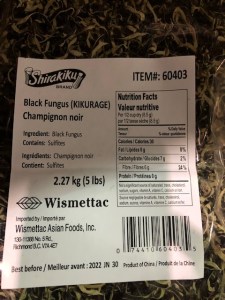 Wismettac Asian Foods has already initiated a recall of the implicated mushrooms in both the US and Canada.
Restaurants in the US should not prepare or serve the following product:
Shirakiku brand imported Dried Fungus (also known as Black Fungus or Kikurage), 5-lb bags:- UPC 00074410604035; All Lots with Item #60403 on the package; Product of China
Restaurants, hotels and institutions in Canada should not prepare or serve the following product:
Shirakiku brand Black Fungus (Kikurage), 2.27 kg:- UPC 0 74410 60403 5; All codes sold up to and including September 24, 2020; Product of China.
What consumers should know
Symptoms of Salmonella infections can include diarrhea, fever, and stomach cramps, beginning from 6 hours to 6 days after being exposed to the bacteria, and typically lasting from 4 to 7 days. Children, the elderly and people with compromised immune systems are susceptible to experiencing more severe illness and, in some cases, may require hospital treatment.
Consumers in the US and Canada are urged to take the following actions if they begin to experience symptoms of Salmonella infection:
- Talk to your healthcare provider.
- Write down what you ate in the week before you started to get sick.
- Report your illness to the health department.
- Assist public health investigators by answering questions about your illness.



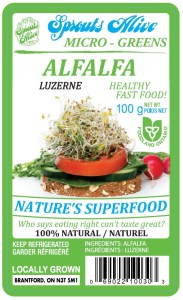 Alfalfa sprouts produced by Sunsprout Natural Foods of Brantford, Ontario have caused 37 people to be infected with

 eFoodAlert