Absence of pet food regulation puts Canadians and their pets at risk – Opinion

According to a spokesperson with the Canadian Food Inspection Agency (CFIA), the federal agency does not regulate the safety of domestic pet food.

As a result, the CFIA is sitting on the sidelines of the current investigation into an outbreak of extensively drug-resistant (XDR) Salmonella infections that has sickened forty individuals in six Canadian provinces since mid-2020 and sent thirteen of them to hospital.

Many of the outbreak victims are children under the age of five years.

Most of the illnesses have been linked to exposure to raw pet food or to dogs that were fed raw pet food. A few of the illnesses were linked to contact with cattle, particularly calves.

The outbreak strain was found in raw pet food from the home of one of the outbreak victims.

Even so, the CFIA has not initiated a food safety investigation, as no known food source meant for human consumption has been associated with the outbreak.

“Canadian pet food manufacturers and importers are responsible for the safety and hygiene of pet food, including recalling pet food when needed.” – CFIA spokesperson

Pet owners who want to “buy Canadian” must rely exclusively on so-called voluntary compliance to ensure the safety of the kibbled, canned, cooked or raw foods they feed their pets.

Those pet food manufacturers who are members of the Pet Food Association of Canada (PFAC) voluntarily follow the nutritional standards set out by the American Association of Feed Control Officials.

Although it is the policy of the PFAC that its members implement and follow a recognized food safety program, membership in this organization is completely voluntary. Most members companies are multinational.

Smaller, Canadian owned and operated pet food and pet treat manufacturers—including raw pet food manufacturers—are notable by their absence from the membership list.

Over and over again, consumers in Canada and the United States have been the victims of foodborne illness outbreaks as a result of contact with pet foods and pet treats.

When a pet food-related outbreak is detected and investigated in the United States and its source determined, the US Food and Drug Administration becomes directly involved in the investigation, including oversight of any product recalls.

In Canada, however, the CFIA only becomes directly involved in an outbreak investigation when it is clear that a food meant for human consumption is associated with the outbreak.

The CFIA does not conduct any investigation of pet foods or pet treats, even when they are identified as probable sources of human illness.

The CFIA does not inspect any pet food production facilities, even when the items produced there have been fingered as probable sources of human illness.

The CFIA does not oversee any recalls undertaken by pet food or pet treat manufacturers, even when these products have been identified as risks to human health.

This laissez-faire policy on the part of the Canadian government is reflected in the duration and magnitude of the current outbreak.

In short, when it comes to pet food safety, Canadian consumers and their companion animals are completely on their own.


“A complete and compelling account of the hidden and not-so-hidden ways the food we give our beloved pets can be contaminated.” JoNel Aleccia, Health Reporter, Food & Nutrition, The Associated Press.

“An invaluable resource for busy pet owners” – Food Safety News

Available from all major on-line retailers, including:

Mexican cantaloupes behind North American Salmonella outbreak—Updated

Malichita brand cantaloupes grown in Mexico are responsible for at least 57 confirmed cases of Salmonella in the United States and Canada, according to reports from the US Centers for Disease Control and Prevention (CDC) and the Public Health Agency of Canada (PHAC).

Twenty of the outbreak victims have been hospitalized.

The province of British Columbia was the first jurisdiction in either country to alert consumers to the outbreak. On November 15th, the BC Centre for Disease Control (BCCDC) reported eight cases of Salmonella in the province linked to consumption of Malichita cantaloupes, and urged consumers to avoid the produce.

Three of the eight cases reported by the BCCDC have been confirmed by the National Microbiology Laboratory to be part of a national outbreak. The other five BC cases are considered “probable” at the moment, according to a spokesperson for the BCCDC.

As of November 17th, three Canadian provinces have reported a total of 14 confirmed outbreak cases, with additional cases of Salmonella under investigation but not yet confirmed to be part of the outbreak, according to the PHAC.

The first Canadian victim fell ill during the week of October 15th.

Ontario has reported 3 cases linked to the outbreak, and Québec has confirmed 8 cases.

Outbreak victims range between 0 and 100 years of age, and three have been hospitalized.

The Canadian Food Inspection Agency (CFIA) found the outbreak strain in a sample of Malichita cantaloupe and shared its finding with the US Food and Drug Administration (FDA).

Although it is likely that more recalls will be announced, this is what we know so far.

Canadian distributors and retailers have recalled from the market all Malichita brand Cantaloupes sold between October 11, 2023 and November 14, 2023, inclusive, according to a recall notice from the CFIA. The recalled melons were distributed in Alberta, British Columbia, Manitoba, New Brunswick, Newfoundland and Labrador, Nova Scotia, Ontario, Prince Edward Island, and Quebec and may also have found their way into the rest of Canada.

The Pattison Food Group has recalled Urban Fare and Save on Foods brands of cut cantaloupe, fruit trays, and fruit platters that contained the recalled Malichita cantaloupes. Products included in this recall were distributed in Alberta, British Columbia, Manitoba, Saskatchewan, and Yukon.

Hector Larivee Inc. has recalled Fruit Pure brand fruit salad, Groupe Tomapure brand cantaloupe platters and unbranded cantaloupe pieces. The recalled products were distributed in Ontario and Québec to hotels, restaurants and institutions.

Sami Fruits has recalled cut cantaloupe and fruit platters containing cantaloupe. The recalled items were sold only at Sami Fruits in Montréal.

Fresh Start Foods has recalled Central Foods Co. and Fresh Start Foods brands of cut fruit. The recalled items were distributed in Alberta, British Columbia, and Manitoba, and may also have found their way into other provinces and territories. – added November 19, 2023.

As of November 18th, 43 individuals in 15 US states have been infected with the Salmonella outbreak strain, according to the CDC.

Confirmed cases have been reported in Arizona (7), California (1), Georgia (2), Illinois (4), Kentucky (3), Maryland (1), Minnesota (5), Missouri (5), Nebraska (4), Ohio (1), Oklahoma (1), Texas (3), Virginia (1), Washington (1), and Wisconsin (4).

The first US outbreak victim fell ill on October 17th.

Seventeen people have been hospitalized due to the severity of their symptoms.

Outbreak victims range in age from 1 to 100 years.

SOFIA PRODUCE, LLC (dba Trufresh) of Nogales, Texas, has recalled Malichita brand whole cantaloupes distributed between October 16, 2023 and October 23, 2023 under the sales order numbers 0128556, 0128624, 0128630, 0128632, 0128640, 0128643, 0128644, 0128646, 0128648, 0128651, -0128656, 0128669, 0128680, 0128682, 0128683, 0128700, 0225200, 0225201, 0225206, 0225214, 0225219, 0225222, 0225226, 0225227, 0225228, 0419611, 0419629, 0419630, 0419636, 0419671, 0419688, 0419693, 0419696, 0419697, 0419704, 0419710, 0419718, 0419772, 0516255, 0516268, 0516271, 0516279, 0516301, 0612143, 0612144, 0612148, 0612154, 0612156, 0612158, 0612171, 0612190, 0612191, 0612197, 0612198, 0612209, 0612225, 128663, 128712, 128713, 128662, 128680, 225252, 225231, 419719, 419721, 419828, 419803, 612235, and 612273. The melons were distributed directly to consignees in Arizona, California. Maryland, New Jersey, Tennessee, Illinois, Michigan, Wisconsin, Texas, Florida and Canada.

Vinyard Fruit and Vegetable Company of Oklahoma City, Oklahoma, has recalled twelve products, including: fruit cups, cut cantaloupe, fruit mixes, and melon variety packs that were prepared using the recalled Malichita cantaloupes. Distribution of the recalled Vinyard products was limited to Oklahoma.

ALDI Inc., in cooperation with Anthony Marano Co. and Market Cuts LLC, has recalled whole cantaloupes, cantaloupe chunks, and pineapple spears. The recalled products were sold at select ALDI stores in Illinois, Indiana, Iowa, Kentucky, Michigan, and Wisconsin.

It is likely that additional recall announcements will be made in the days to follow.

Consumers are advised to discard and not consume Malichita cantaloupes that have been recalled. If you have whole or pre-cut cantaloupes or fruit cups, fruit platters, or fruit medleys in your home and are unsure of their origin, discard them as a precaution.

Food contaminated with Salmonella may not look or smell spoiled but can still make you sick. Young children, pregnant women, the elderly and people with weakened immune systems may contract serious and sometimes deadly infections. Healthy people may experience short-term symptoms such as fever, headache, vomiting, nausea, abdominal cramps and diarrhea. Long-term complications may include severe arthritis.

If you feel unwell, and especially if you have symptoms like diarrhea or vomiting, do not cook or prepare food for other people.

If you suspect you are suffering from a Salmonella infection, consult your healthcare provider.


TAINTED formats 3
“Reads like a true crime novel” – Food Safety News

Interested in learning more about food safety and the history of foodborne disease outbreaks and investigations?

Click on the link to listen to a short excerpt, then follow the buy links to add a digital, print or audio copy to your personal library.

Chapter 6. Birth of a Pathogen

TAINTED is available in digital format from all major on-line retailers. Press the button to go directly to your preferred digital bookstore.

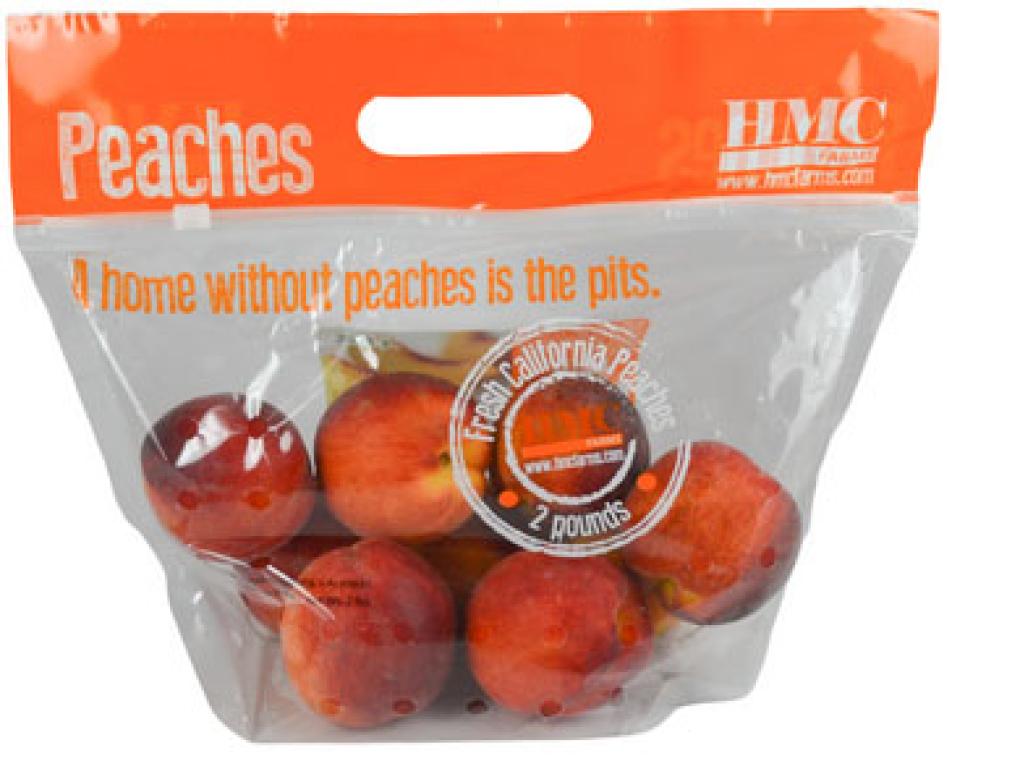
Recalled peaches linked to Listeria outbreak

The HMC Group Marketing, Inc. (dba HMC Farms) has recalled conventionally grown (not organic) whole peaches, plums, and nectarines due to potential contamination with Listeria monocytogenes.

According to the company’s news release, the recalled peaches have been linked to an eleven-case outbreak of Listeria monocytogenes illnesses in the United States.

On November 15, 2023, the FDA announced that it had opened an investigation into a new eleven-case “…outbreak of Listeria monocytogenes (ref #989) linked to a not yet identified product…” and that sample collection and analysis had been initiated.

Neither the company nor the FDA have indicated where in the United States the outbreak cases occurred, or whether any of the eleven victims were hospitalized.

The recalled fruit was sold in retail stores nationwide, either as individual pieces bearing PLU stickers or as packaged whole fruit, between May 1 and November 15, 2022 and between May 1 and November 15, 2023.

Although the recalled items are no longer available in retail stores, consumers may have frozen the recalled fruit at home for later use. Consumers are urged to check their freezers for the recalled fruit, not consume it, and discard it.

Listeria monocytogenes can cause serious and sometimes fatal infections in young children, frail or elderly people, and others with weakened immune systems. Although healthy individuals may suffer only short-term symptoms such as high fever, severe headache, stiffness, nausea, abdominal pain, and diarrhea. Listeria infection can cause miscarriages and stillbirths among pregnant women.


TAINTED formats 3
“Reads like a true crime novel” – Food Safety News

Interested in learning more about food safety and the history of foodborne disease outbreaks and investigations?

Click on the link to listen to a short excerpt, then follow the buy links to add a digital, print or audio copy to your personal library.

Chapter 6. Birth of a Pathogen

TAINTED is available in digital format from all major on-line retailers. Press the button to go directly to your preferred digital bookstore.