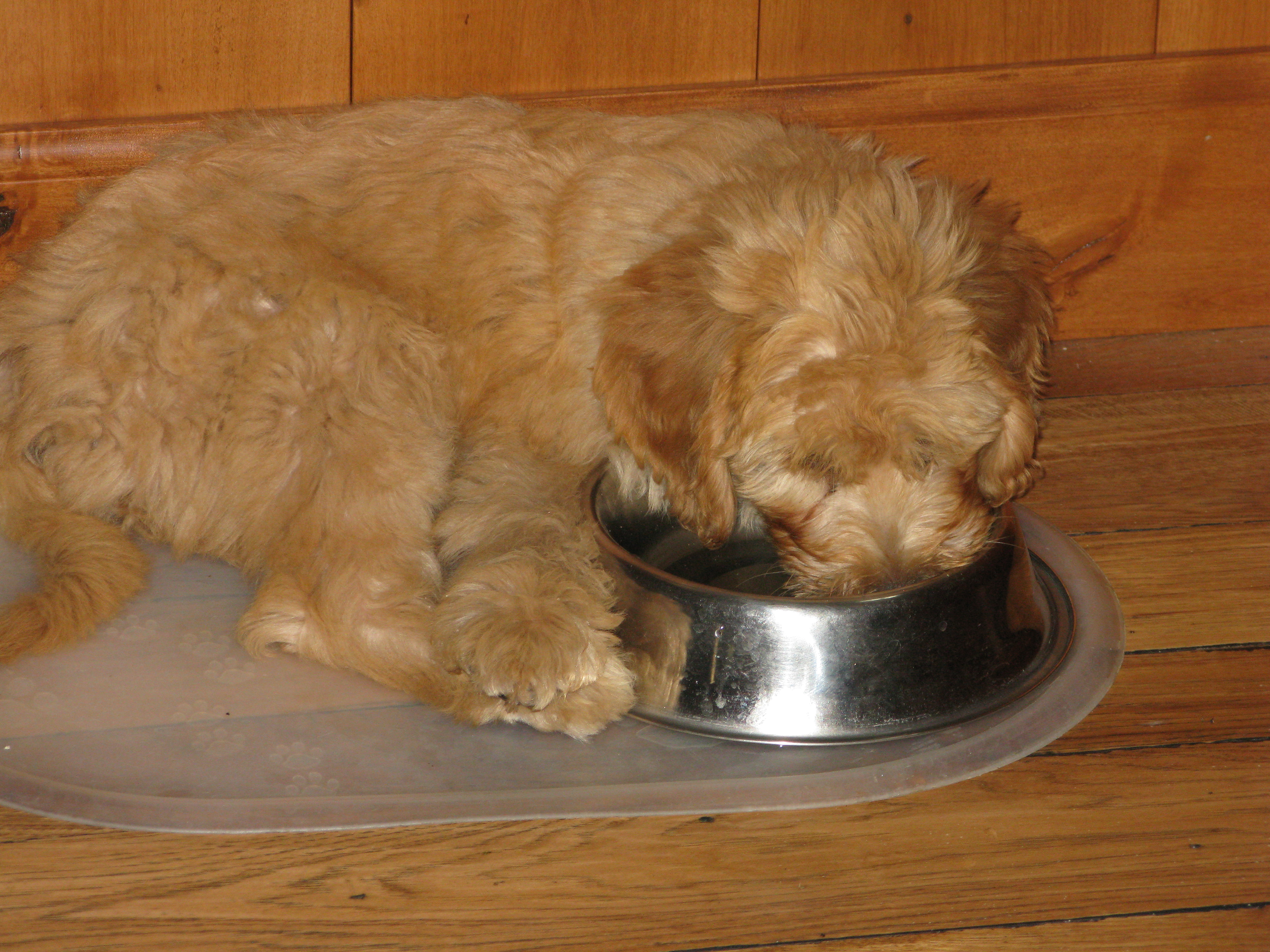
Canadian Salmonella outbreak blamed on unspecified dog food / dog treats

The Public Health Agency of Canada (PHAC) is alerting residents to an outbreak of Salmonella Oranienburg infections linked to contact with dog food and dog treats.

The PHAC has received reports of 27 laboratory-confirmed cases spread across four provinces and territories: Alberta (13), British Columbia (12), Ontario (1), and Northwest Territories (1).

Six people have been hospitalized.

Outbreak victims range from 0 to 87 years of age, and became sick between mid-February and mid-August 2025. There have been no deaths.

Although many of the victims reported handling dog food and treats prior to becoming ill, including kibble and dehydrated and freeze-dried treats, a common source or supplier has not been identified as yet.

Unlike the United States, the United Kingdom, and member countries of the European Union, Canada does not regulate or monitor the microbiological safety of pet foods or pet treats made in Canada for domestic consumption.

Only those Canadian-made pet foods/treats manufactured for export are subject to regulation.

The PHAC has investigated a number of outbreaks of human illness linked to pets, pet foods and pet treats in the past, including illnesses linked to raw pet foods, kibble, pet treats, and feeder rodents for snakes.

This outbreak investigation is ongoing.

To reduce your risk of becoming ill from contact with a dog, their food or treats, the PHAC recommends the following actions:

  • Always wash your hands thoroughly with soap and water immediately after handling any type of dog food or treat.
  • Teach children to wash their hands thoroughly, with soap and water, every time after touching dogs, their food or treats. 
  • Wash and sanitize any containers, utensils and surfaces that have come into contact with dog food or treats before using them again. This includes food and water bowls, countertops, microwaves and refrigerators.
  • Use dedicated dishes and utensils to serve your dog and wash them separately from other dishes and utensils.
  • Store all dog food and treats away from where human food is stored or prepared and away from reach of young children. Pick up food and treats containers when your pet is done with them.
  • Follow storage instructions found on the packaging of dog  food and treats, including proper refrigeration and freezing if needed, to prevent them from becoming spoiled.
  • Read the labels on dog food and treats to learn about the ingredients, the product’s expiry date, and if the food is cooked or raw. Raw pet food and treats may be fresh, frozen, dehydrated or freeze-dried. 
  • Wash your hands after contact with a dog and after handling their waste.


“A complete and compelling account of the hidden and not-so-hidden ways the food we give our beloved pets can be contaminated.” JoNel Aleccia, Health Reporter, Food & Nutrition, The Associated Press.

“An invaluable resource for busy pet owners” – Food Safety News

Manufacturer repeatedly shipped pet food after presumptive-positive pathogen test results

April 13, 2025

During the 2024 calendar year, Morasch Meats, Inc. (Portland, OR) sold dozens of batches of Northwest Naturals raw pet foods and pet treats after the finished products tested presumptive-positive for Salmonella or Listeria monocytogenes.

Instead of confirming the presumptive result as required by the test kit manufacturer, the company repeated the same rapid test on fresh samples. When the repeat test did not find the pathogen, Morasch released the production batch for sale.

This information came to light during an Establishment Inspection performed December 27, 2024 through February 7, 2025 in response to a consumer complaint of a cat that had contracted bird flu after consuming a Northwest Naturals pet food. The Inspectional Observations report (FDA Form 483) was obtained by eFoodAlert in response to a Freedom of Information Act request.

Morasch Meats, Inc. processes and packages meat for human consumption (under USDA inspection), and manufactures ready-to-eat raw pet foods and treats for dogs and cats.

In March 2018, the FDA conducted an inspection of the company’s pet food production facility in response to a finding of Listeria monocytogenes in a sample of Northwest Naturals Chicken and Salmon pet food chubs. The inspector found no objectionable conditions, and the inspection was classified as “No Action Indicated.”

In May 2024, an FDA investigator conducted an unannouced routine compliance inspection of Morasch’s pet food operations. Once again, the inspection was classified as “No Action Indicated.”

On December 20, 2024, the FDA was alerted by the Oregon Department of Agriculture (ODA) to the death (by euthanasia) of a three year old cat that had become infected with bird flu. The necropsy report summarized the diagnosis as: “severe necrotizing meningoencephalitis, bronchiolar necrosis to necrotizing bronchiolitis, and rare hepatic necrosis due to highly pathogenic avian influenza (HPAI).”

The ODA collected samples of the open package of Northwest Naturals Turkey Recipe raw cat food that had been fed to the cat. Molecular testing (PCR tests) detected the presence of Influenza A H5N1 nucleic acid in the pet food.

On December 27, 2024, the FDA initiated a new investigtion of Morasch Meat’s pet food operations. That investigation was completed on February 7, 2025.

In contrast to the May 2024 plant visit, the most recent inspection revealed a pattern of sloppy labwork on the part of the company.

Standard practice when using a test kit to detect pathogens is to begin with an enrichment culture (to allow the pathogen to reach a level that can be detected by the kit).

If the enrichment culture tests negative, all is well. But, if the test kit result is positive (ie., presumptive positive), the enrichment culture is supposed to be processed through conventional test methods to confirm that positive result.

Instead, the company discarded the presumptive positive enrichment cultures in favor of repeating the test kit on a new sample from the same production lot. When the repeat samples tested negative, the company ignored the first (positive) test results and released the products for distribution.

On reviewing the company’s lab test records, the FDA investigator documented dozens of occasions during the 2024 calendar year where the company released product that had previously tested positive for Salmonella or Listeria monocytogenes. These included (quoted verbatim from the FDA Form 483):

  • “At least 27 batches of frozen finished products tested [redacted] had a presumptive positive for the presence of a pathogen. The same batches were re-tested with a negative result…You explained these products were distributed into commerce without any additional processing to eliminate potential pathogens.”
  • “Your finished product testing for 2024 shows at least [redacted] batches of frozen finished products were tested [redacted] with presumptive positive pathogen (Salmonella or Listeria monocytogenes) results. These batches were retested [redacted] and all [redacted] from the initial [redacted] had negative pathogen results. You explained these products were distributed into commerce.”
  • “Your finished product testing for 2024 shows you had at least 109 batches of [redacted] products tested [redacted] with presumptive positive pathogen [E. coli O157:H7, Salmonella or Listeria monocytogenes) results. These batches were retested [readacted], and all [redacted] batches from the initial [redacted] had negative pathogen results. You explained these products were distributed into commerce.”

The inspector highlighted in her report that the manufacturing test kit instruction insert states, “Presumptive positive samples should be confirmed as per the laborator standard operating procedures or by following the appropriate reference method confirmation.” This instruction is consistent with standard FDA laboratory procedures as laid out in the agency’s Bacteriological Analytical Manual.

The company’s records also documented at least 20 locations in the production plant that were found to be positive for Salmonella or Listeria monocytogenes during the 2024 calendar year.

In addition to the persistent problem of pathogen contamination in the production environment and in finished products, the FDA inspection revealed several other concerns, all of which were documented in the Form 483 report. These included:

  • Condensate from the ceiling and from equipment dripping directly onto ready-to-eat finished products
  • Wood pallets in poor repair
  • Employees moving from handling processing equipment to touching finished product without changing gloves
  • Employees not washing hands
  • Deep gashes and missing sections in the area of the metal chopper, with areas with direct food contact filled with product during production and between batch runs.
  • Vitamin and mineral toxicities of concern were not identified in the hazard analysis
  • Drug residue concerns were not identified in the hazard analysis

The company acknowledged the validity of the FDA’s observations in a written response in which it promised:

  • “When conducting tests, we will count the first test as a positive result and not retest. We will use our validated interventions as necessary to accomplish a negative result. The product will be retested after the intervention and results will be logged.”
  • “When conducting environmental sampling for pathogens and the result of a test is positive, we will conduct a corrective action to determine cause and retest to confirm results.”
  • “Test procedures have been implemented to Homogenize thoroughly.”
  • “Vitamin and mineral toxicity have been added to the hazard analysis at the rework step.”

Morasch’s response claimed that the various sanitation observations were addressed during the inspection.

  1. During the May 2024 inspection, the FDA investigator noted that “Finished pet food product is released for distribution after microbiological analyses results are cleared.” This same investigator also reported having reviewed the environmental monitoring records for the firm’s sanitation program. How did he miss the all of those positive pathogen results?
  2. Duriung the May 2024 inspection, the FDA investigator did a “walk-through” of the production plant. How did he miss the physical deficiencies (dripping condensate, etc.) that were found only a few months later by a different FDA inspector?
  3. This facility is under daily oversight by the USDA. How were the physical deficiencies described in the FDA 483 report allowed to persist?

    It is a food safety axiom that a negative retest does not cancel out a previous positive result on the same production batch.

    Bacteria are not distributed uniformly through a solid food. Especially for low-level pathogen contamination, it is quite common for two different samples from the same batch to produce opposite results.

    The use of “retest and release if negative” has been proven over and over again to be not just poor practice.

    It is downright dangerous.


    “A complete and compelling account of the hidden and not-so-hidden ways the food we give our beloved pets can be contaminated.” JoNel Aleccia, Health Reporter, Food & Nutrition, The Associated Press.

    “An invaluable resource for busy pet owners” – Food Safety News
    Recalls and Alerts: April 10–11, 2025

    Here is today’s list of food safety recalls, product withdrawals, allergy alerts and miscellaneous compliance issues. The live links will take you directly to the official recall notices and company news releases that contain detailed information for each recall and alert.

    If you would like to receive automatic email alerts for all new articles posted on eFoodAlert, please submit your request using the sidebar link.


    “A complete and compelling account of the hidden and not-so-hidden ways the food we give our beloved pets can be contaminated.” JoNel Aleccia, Health Reporter, Food & Nutrition, The Associated Press.

    “An invaluable resource for busy pet owners” – Food Safety News


    Outbreak/Illness Investigations

    No Alerts

    United States

    Food Safety Recall: Duda Farm Fresh Foods, Inc. issues advisory for Marketside Celery Sticks – 4 inch (1.6 oz Bundle Pack; Lot code P047650; Best if used by 03/23/2025; UPC 6 81131 16151 0) due to Listeria monocytogenes contamination. This product is past its best if used by date and is no longer in stores. It was sold in Walmart stores in AL, CA, CO, DC, DE, FL, GA, HI, IA, IL, IN, KS, KY, MD, MI, MO, MT, NC, NJ, NY, OH, PA, SC, TN, TX, VA, WI, WV, and WY.

    Pet Food Safety Recall: Blue Ridge Beef recalls Kitten Mix raw pet food (2 lb logs; Lot #N26 0114) and Puppy Mix raw pet food (2 lb logs; Lot #N25 1230) due to Salmonella and Listeria contamination.

    Canada

    Allergy Alert: Legendary Trading Corp. recalls JHAÖQIA brand Taiwanese Style Rice Crackers (Egg Yolk Flavor) (300g; All batch codes; UPC 6 971646 649752) due to undeclared peanut.

    Advertisements

    Europe

    Allergy Alert (Ireland): Trade recalls Palm Sugar (200g; Batch No. 260724 & 301123; Best before 26/07/2026 & 30/11/2025, respectively; Product of Thailand) due to undeclared sulphur dioxide.

    Food Safety Recall (France): ALDI CENTRALE D’ACHAT ET COMPAGNIE ALDI recalls GOLDEN SEAFOOD brand CREVETTES TROPICALES ENTIERES CRUES SURGELEES / Frozen raw whole tropical shrimp (400g; Lot #VN 089 V 101NTSF17 ALDIFR 23057B; Best before 22/10/2025) due to Vibrio vulnificus contamination.

    Food Safety Recall (France): GAEC DES BREBIS EN FOLIE recalls Ferme des Brebis en folie brand faisselle, fromage blanc, bibeleskaes / cottage cheese (425g; Lot 23/03; Use by 22/04/2025) due to Salmonella contamination.

    Food Safety Recall (France): PRISSEDIS SUPER U PRISSE recalls VIANDE DE BOEUF LABEL ROUGE HACHEE SUR PLACE / Red label ground beef (Best by dates between 31/03/2025 and 03/04/2025) due to Salmonella contamination.

    Food Safety Recall (France): RIFCARN recalls Brochettes de filet de poulet mariné sauce andalouse / Chicken brochettes marinated in Andalusian sauce (Sold from 01/04/2025 to 03/04/2025) due to Salmonella contamination.

    Food Safety Recall (France): RIFCARN SAVEUR D’ORIENT recalls RIFCARN SAVEUR D’ORIENT brand Merguez sausage (Sold from 01/04/2025 to 03/04/2025) due to Salmonella contamination.

    Food Safety Recall (France): 3 D Boucherie d’Ici et d’Aujourd’hui recalls D’ici et d’aujourd’hui brand Caillette (Lot 1903; Use by 29/03/2025) due to Listeria monocytogenes contamination.

    Food Safety Recall (France): MAGASINS GALERIES LAFAYETTE GOURMET recalls TAFA brand BOBUN AU BOEUF / Beef Bobun (450g; Use by 28/03/2025) due to Listeria monocytogenes contamination.

    Food Safety Recall (France): FARMOR DOUX FARMOR QUIMPER recalls LE GAULOIS brand MAXI CORDON BLEU DE VOLAILLE / Poultry Cordon blue (1 kg; Lot 2Q735P0; Use by 02/04/2025) due to Listeria monocytogenes contamination.

    Food Safety Recall (France): SARL PALAIS DES METS recalls Palais des Mets brand Truite fumée / Smoked trout (4 slices / 120g; Lot 25083018; Use by 17/04/2025 & 19/04/2025) due to Listeria monocytogenes contamination.

    Food Safety Recall (Germany): Müller Handels GmbH & Co. KG recalls SilvaVit Indische Flohsamenschalen – fein vermahlen / SilvaVit Indian psyllium husks – finely ground (250g; Lot 29354; Best before 18.11.2026) due to Salmonella contamination.

    Food Safety Recall (Iceland): Arna recalls Protein drink with chocolate flavor, Protein drink with strawberry flavor and Protein drink with coffee flavor (Best before 15.04) due to Bacillus cereus contamination.

    Hong Kong and Singapore

    No Alerts

    Australia and New Zealand

    Food Safety Recall (New Zealand): Lianhua Supermarket  recalls Lianhua Supermarket brand ready-to-eat Whole Chicken and Pork Head Pieces (All batches) due to lack of required food safety controls.

    Advertisements

    TAINTED formats 3
    “Reads like a true crime novel” – Food Safety News

    Interested in learning more about food safety and the history of foodborne disease outbreaks and investigations?

    Click on the link to listen to a short excerpt, then follow the buy links to add a digital, print or audio copy to your personal library.

    Chapter 6. Birth of a Pathogen

    Advertisements

    Links to national recall sites

    Australia

    Austria

    Belgium

    Canada

    Czechia (Czech Republic)

    Denmark

    Finland

    France

    Germany

    Greece

    Hong Kong

    Hungary

    Iceland

    Ireland (Republic of)

    Israel

    Italy

    Lithuania

    Luxembourg

    Netherlands

    Norway

    Romania

    Singapore

    Slovakia (Slovak Republic)

    Spain (food safety alerts)

    Spain (allergy alerts)

    Sweden

    Switzerland

    United Kingdom

    United States of America (FDA)

    United States of America (USDA/FSIS)