eFoodAlert posts links to recalls for English-language countries only. If you are interested in recall information for other countries (including EU-member countries), please click on the Recall Link menu, above.
The live links in this post will take you directly to the official recall notices and company news releases that contain detailed information for each recall and alert.
If you would like to receive automatic email alerts for all new articles posted on eFoodAlert, please submit your request using the sidebar link.
Advertisements
“Reads like a true crime novel” – Food Safety News
Interested in learning more about food safety and the history of foodborne disease outbreaks and investigations?
Click on the link to listen to a short excerpt, then follow the buy links to add a digital, print or audio copy to your personal library.
EGYPT: Localized foodborne illness cluster reported in Mout, New Valley Governorate, Egypt
USA (Update): CDC reports two additional cases of E. coli O157:H7 infections in a three-state outbreak linked to raw cheese and raw milk sold by Raw Farm, LLC. Three of the nine outbreak victims have been hospitalized; one victim is suffering from HUS. The FDA has initiated an inspection of the Raw Farm, LLC facility.
Advertisements
United States
Public Health Alert: FSIS issues a public health alert for various raw beef and pork products that were produced without the benefit of federal inspection and may bear a false mark of inspection.
Food Safety Recall: Falcon Trading Company, Inc. recalls three items containing Organic Black Beans due to presence of pesticide residues.
Canada
Allergy Alert: Salsa le Marché (Roberval, QC) recalls multiple prepared dishes due to undeclared anchovies, wheat, soy, and/or sulphites.
Allergy Alert: Mauve Bonbon inc. (multiple locations) recalls Trésor caché framboises bleues et pêche de rêve / Hidden treasure blue raspberries and dream peach (45g; All lots) due to undeclared milk and soy.
Food Safety Recall: Agropur recalls certain Farmers, Natrel, and Québon milk products (2L cartons; Multiple Best before dates) due to possible foreign matter contamination (pieces of glass).
Advertisements
Ireland and United Kingdom
No Alerts
Hong Kong and Singapore
Food Safety Recall (Hong Kong): The Dairy Farm Company Limited recalls Homegrown brand 100% PURE NZ APPLE JUICE (1L; Best before May 14, 2026) due to patulin contamination in excess of legal limit.
Australia and New Zealand
Allergy Alert (Australia): Loco Love Pty Ltd recalls Classic Chewy Caramel 5 Pack (175g; Date marking 4 NOV 2026) due to undeclared peanut.
Advertisements
“A complete and compelling account of the hidden and not-so-hidden ways the food we give our beloved pets can be contaminated.” – JoNel Aleccia, Health Reporter, Food & Nutrition, The Associated Press.
“An invaluable resource for busy pet owners” – Food Safety News
The FDA and CDC are investigating an outbreak of seven cases of E. coli O157:H7 illnesses in three US states.
Outbreak cases have been reported in California (5), Florida (1), and Texas (1).
Four of the seven victims are three years old or younger, and two people have been hospitalized.
No deaths have been reported, and none of the victims have developed hemolytic uremic syndrome (HUS) as of March 14, 2026.
The first two illnesses associated with this outbreak were recorded in September 2025, and the other five in January and February of 2026.
The CDC warns that the number of outbreak illnesses is likely much higher than reported, as many individuals recover without seeking medical care and are not tested.
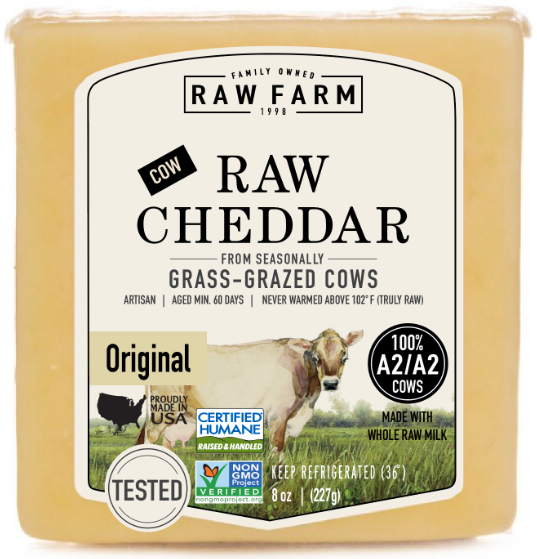
Three of the victims have been interviewed so far, and all three reported eating RAW FARM-brand cheddar cheese made from raw (unpasteurized) milk.
Testing of product samples is in progress, but results are not yet available.
The producer, RAW FARM, LLC (previously known as Organic Pastures), has declined the FDA’s recommendation that their raw cheese products be removed from the market.
RAW FARM’s checkered history
This is the second time in two years that RAW FARM-brand raw cheddar cheese has been linked epidemiologically to an outbreak of E. coli O157:H7 illnesses.
On March 26, 2024, the FDA and CDC reported an outbreak of 11 illnesses, including five hospitalizations. Outbreak were reported in California (4), Colorado (3), New Jersey (1), Texas (1), and Utah (2). Two of the outbreak victims developed HUS. There were no deaths.
Seven of the ten victims interviewed as part of the outbreak investigation specifically reported eating RAW FARM brand raw cheddar cheese prior to becoming ill.
The company initially recalled their raw cheddar cheese, but subsequently withdrew their recall after testing of cheese samples failed to find E. coli.
From October 2023 through May 2024, raw milk and cream produced by RAW FARM, LLC was implicated in a Salmonella Typhimurium outbreak that affected 171 individuals in the state of California primarily in the southern counties of the state. Children were affected disproportionately.
In addition to epidemiological evidence pointing to RAW FARM-brand raw milk as the source of the illnesses, the outbreak strain was recovered from three samples of raw milk and one sample of cheese made from the contaminated raw milk.
In October 2023, the company recalled all fluid raw whole milk and raw heavy cream (Best by dates from 10/11/2023 to 11/6/2023.
Even before this major outbreak, the company’s operations had come under scrutiny by the FDA. The federal agency conducted an inspection of Organic Pasture’s (as it was then known) production facility in February 2021, and issued a Form 483 listing several significant infractions, including inadequate sanitary handling procedures, flaws in the company’s hazard analysis for Salmonella and for Listeria monocytogenes, and inadequate record keeping relating to sanitation operations.
The FDA classified the result of the inspection as Official Action Indicated, a failing grade.
What consumers need to know
Although raw milk and other dairy products made with raw (unpasteurized) milk are not permitted to be shipped for retail sale across state lines, they are legal for retail sale within a number of states, including California.
If you consumed a RAW FARM, LLC cheese product and you develop symptoms of gastrointestinal upset within the few days following consumption, consider seeking medical treatment, especially if your symptoms include one or more of the following:
Diarrhea and a fever higher than 102°F
Diarrhea for more than 3 days that is not improving
Bloody diarrhea
So much vomiting that you cannot keep liquids down
Signs of dehydration, such as:
Not peeing much
Dry mouth and throat
Feeling dizzy when standing up
“Reads like a true crime novel” – Food Safety News
Interested in learning more about food safety and the history of foodborne disease outbreaks and investigations?
Click on the link to listen to a short excerpt, then follow the buy links to add a digital, print or audio copy to your personal library.
Once upon a time, raw milk was reasonably safe to drink. But, that was long, long ago.
An early scene in the movie “A League Of Their Own” (set in the 1940s) depicts two sisters sitting in a barn, each of them milking a cow.
In this idyllic scenario, the milk that flowed into scrupulously clean pails would be consumed fresh, churned into butter, or used to make cheese. None of this liquid gold (okay, white gold) would sit around in chilled bulk tanks waiting to be bottled.
Of course, even back then, raw milk was not without its problems. Dairy cows suffering from bovine tuberculosis could shed the bacteria in their milk. Likewise, undulating fever (brucellosis) could be transmitted to individuals who drank milk from an infected cow.
A growing milk market
In Spoiled. The Myth of Milk as Superfood, Anne Mendelson traced the evolution of Western civilization’s love affair with drinking milk.
As demand in cities grew for fresh milk, problems with purity, safety, and spoilage mounted exponentially. As the frequency and size of milk-borne epidemics increased, pasteurization gained reluctant acceptance as a means of ensuring a safe milk supply.
Nevertheless, now that collective memories of the ‘bad old days’ of milk-borne diseases have faded, a growing cadre of consumers have united in their desire to consume raw milk, cream, cheese, and butter.
And dairy farmers across the United States (and in Canada) have stepped up to fill this market niche.
Regulating raw milk
In September 1987, the US Food and Drug Administration (FDA) issued a Final Rule mandating that “…milk and milk products in final package form for human consumption in interstate commerce be pasteurized.”
The FDA does not regulate food products (including raw milk) that are produced and sold intrastate (ie., without crossing state lines). Oversight of those products is left to each individual state.
As of 2024, approximately 30 states permitted intrastate sale of raw milk, while 20 states prohibited it. Yet, raw milk can be purchased even in those 20 states through a loophole known as the “cow share program.”
According to the website, realmilk.com, a consumer can enter into a contract with a dairy farmer in which the consumer pays the farmer to feed, house, and care for Betsy. In turn, the consumer receives the output of the cow (milk, butter, cheese, etc.).
In practice, Betsy’s milk is mixed with milk from Elsie, Matilda, and all of the other members of the dairy herd, and the consumer receives a portion of that commingled output. Thus, if Betsy is one of 100 dairy cows in the herd, the consumer would be entitled to 1% of the total output of the herd.
If that’s more dairy product than one consumer’s family can handle, he or she could opt to purchase just a fraction of Betsy’s theoretical output. Perhaps just one-half or one-quarter of a cow.
The FDA compiled a list of 133 outbreaks associated with raw milk covering the period 1987 to 2010. These outbreaks caused 2,659 cases of illnesses, 269 hospitalizations, 3 deaths, 6 stillbirths, and 2 miscarriages.
The list of outbreaks continues to grow. Between 2009 and 2021, the CDC logged 143 enteric disease outbreaks that were confirmed or suspected to be associated with consumption of raw milk.
From October 18, 2023 through May 4, 2024, the California Department of Public Health and its partner agencies investigated an outbreak of Salmonella Typhimurium that encompassed 171 confirmed outbreak cases, the majority of them among children. Epidemiologic, laboratory, and traceback investigations identified Raw Farm brand raw milk as the source of the outbreak.
And in February/March 2024, the CDC advised consumers that eleven cases of E. coli O157:H7 infection had been traced to raw cheddar cheese, also manufactured by Raw Farm, LLC, a California-based raw dairy producer. Five of the eleven victims were hospitalized and two developed hemolytic uremic syndrome (HUS).
The company at first agreed to recall the implicated products, then reversed its position and cancelled the recall.
Raw Farm is owned and operated by Mike McAfee, and has a long history of regulatory disputes both with California regulators and with the FDA.
And if that wasn’t enough…
In March 2024, the bird flu virus, H5N1, was detected in the US cattle population for the first time. As infected cattle are able to shed live virus in their milk, this raised a concern about the safety of the commercial milk supply across the USA.
In response, the FDA carried out an initial sampling of retail (pasteurized) milk and reported that all 297 samples analyzed were negative for the H5N1 virus. A second follow-up survey showed similar results. The FDA also carried out a series of lab tests and confirmed that pasteurization inactivates the H5N1 virus.
To determine the extent to which the bird flu virus has contaminated raw milk, federal and state agencies are working cooperatively to test milk samples drawn from raw milk storage silos at dairy processing facilities. Analysis of these samples for the H5N1 virus is being carried out by the USDA’s National Veterinary Services Laboratory.
Why H5N1 in raw milk matters
There is a small but growing body of reports indicating that the bird flu virus can be transmitted to animals (and occasionally to humans) via ingestion. On January 17, 2025, the FDA notified the cat and dog food industry that manufacturers who are covered by the FDA Food Safety Modernization Act Preventive Controls for Animal Food (PCAF) rule and are using uncooked or unpasteurized materials derived from poultry or cattle must reanalyze their food safety plans to include Highly Pathogenic Avian Influenza virus (specifically H5N1) as a known or reasonably foreseeable hazard.
This notice followed reports of domestic cats that had become infected with the H5N1 virus after consuming a raw pet food that was later found to be contaminated with the virus.
Several cats also have become infected after drinking raw milk that was later recalled due to the presence of the H5N1 virus.
Raw milk and MAHA
If RFK, Jr. directs the FDA to rescind its 1987 Final Rule and allow the interstate shipment of retail-packaged raw milk across state lines, the impact on public health could be staggering. And negative.
Considering the decades-long history of foodborne illness outbreaks associated with raw milk consumption, expanding the availability of this commodity will inevitably increase the risk to consumers.
Furthermore, once a dairy product is shipped across state lines, the manufacturer of that product falls under FDA jurisdiction. The FDA’s budget already is inadequate to support its existing regulatory responsibilities. Adding an new industry sector to its workload will stretch resources to the breaking point, with disastrous effects on the entirely of the agency’s food safety activities.
“Reads like a true crime novel” – Food Safety News
Interested in learning more about food safety and the history of foodborne disease outbreaks and investigations?
Click on the link to listen to a short excerpt, then follow the buy links to add a digital, print or audio copy to your personal library.





 eFoodAlert