eFoodAlert posts links to recalls for English-language countries only. If you are interested in recall information for other countries (including EU-member countries), please click on the Recall Link menu, above.
The live links in this post will take you directly to the official recall notices and company news releases that contain detailed information for each recall and alert.
If you would like to receive automatic email alerts for all new articles posted on eFoodAlert, please submit your request using the sidebar link.
“Reads like a true crime novel” – Food Safety News
Interested in learning more about food safety and the history of foodborne disease outbreaks and investigations?
Click on the link to listen to a short excerpt, then follow the buy links to add a digital, print or audio copy to your personal library.
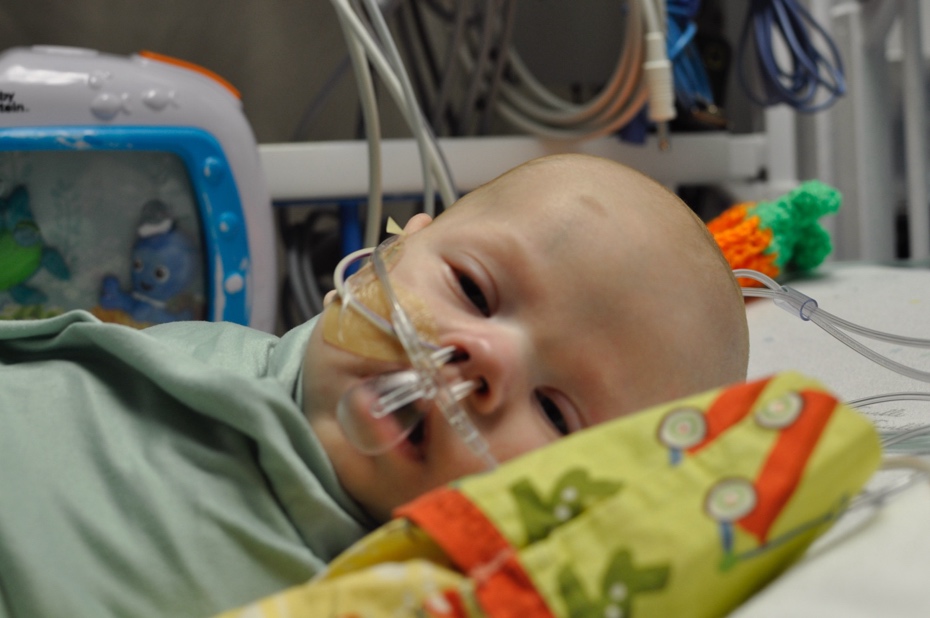
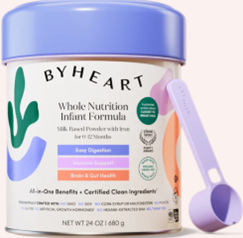
USA (Update): CDC and FDA have broadened the date range of the infant botulism outbreak linked to consumption of ByHeart powdered infant formula. As a result, the case count has increased to 51 confirmed and suspect cases in 19 states. All 51 victims have been hospitalized. No deaths have been reported.
USA: FDA is investigating a new outbreak of 11 cases of Salmonella Africana illnesses linked to an as yet unidentified food.
United States
Allergy Alert: Bakkavor USA recalls Meal Simple brand Red Lentil Dal Soup (16 oz; Best by 1/11/2026) due to undecalred milk.
Allergy Alert: Lunds & Byerlys recalls L&B Monster Cookies (available for purchase from November 15, 2025, through December 9, 2025) due to undeclared peanuts, egg, and soy.
Food Safety Recall: Vega Farms Inc recalls Vega Farms brand eggs (12-count cartons, 30-count flats; Julian dates 328 and prior; Sell by 12-22-25) due to possible Salmonella contamination.
Public Health Alert: New York State Department of Agriculture and Markets warns the public not to consume raw (unpasteurized) milk from Galen Burkholder (Yates County, NY) due to Salmonella contamination. The producer is now prohibited from selling raw milk until subsequent sampling indicates that the product is free of harmful bacteria.
Canada
Food Safety Recall: Vanilyne inc. (Saint-Léonard, QC) recalls cheesecake containing pistachios and various pastries containing pistachios (Sold between 6 May and 1 September 2025) due to possible Salmonella contamination.
Food Safety Recall: Multiple firmsrecall various pistachios and pistachio-containing products due to possible Salmonella contamination.
Food Safety Recall: Marché Cherry (Laval, QC) recalls Pistachios (Sold between 20 November 2024 and 9 December 2025) due to possible Salmonella contamination.
Advertisements
Ireland and United Kingdom
No Alerts
Hong Kong and Singapore
No Alerts
Australia and New Zealand
No Alerts
Advertisements
“A complete and compelling account of the hidden and not-so-hidden ways the food we give our beloved pets can be contaminated.” – JoNel Aleccia, Health Reporter, Food & Nutrition, The Associated Press.
“An invaluable resource for busy pet owners” – Food Safety News
eFoodAlert posts links to recalls for English-language countries only. If you are interested in recall information for other countries (including EU-member countries), please click on the Recall Link menu, above.
The live links in this post will take you directly to the official recall notices and company news releases that contain detailed information for each recall and alert.
If you would like to receive automatic email alerts for all new articles posted on eFoodAlert, please submit your request using the sidebar link.
“Reads like a true crime novel” – Food Safety News
Interested in learning more about food safety and the history of foodborne disease outbreaks and investigations?
Click on the link to listen to a short excerpt, then follow the buy links to add a digital, print or audio copy to your personal library.
USA (Update): CDC and FDA report 39 confirmed and suspected cases of infant botulism linked to consumption of ByHeart powdered infant formula. Illnesses have been reported in 18 states. All 39 infants were hospitalized.
USA: FDA is investigating a new outbreak of 44 confirmed Salmonella Saintpaul infections linked to a not yet identified food product.
United States
Food Safety Recall: Hale inc recalls Lotsa Pasta International Food Shop Roasted Garlic Infused Olive Oil and Lotsa Pasta International Food Shop Fresh Basil Infused Olive Oil (No batch codes applied) due to potential for Clostridium botulinum.
Pet Food Safety Recall: FROMM FAMILY FOODS recalls Bonnihill Farms BeefiBowls Beef Recipe gently cooked frozen dog food (16 oz chubs; Best by 12/25/2026 B01; UPC 072705135004) due to foreign matter contamination (plastic). The recalled product was distributed in IL, WI, TX, AR, MS, OK, LA, CA, NV, AZ, CO, OR, WA, AK and in Ontario, Canada.
Canada
Allergy Alert: Miel Morand inc. (Saint-Thomas, QC) recalls Les Caprices d’Angéline brand Raspberry vinaigrette and Miel Morand brand Orange, Balsamic, and Raspberry vinaigrettes (200 ml and 250 ml; All lots) due to undeclared sulphites.
Allergy Alert: Stickling’s Specialty Bakery Ltd. recalls Stickling’s brand Gluten-Free Low Carb Bread (550g; Best before 13JN26; UPC 7 75918 00601 6) due to undeclared gluten.
Food Safety Recall: Transhing Investment Inc. recalls Thit Ghe brand Frozen Crab Meat (400g; Lot #VN557IV287; Best before 2027AU22; UPC 8 934966 034910) due to Salmonella contamination.
Pet Food Safety Alert: FROMM FAMILY FOODS recalls Bonnihill Farms BeefiBowls Beef Recipe gently cooked frozen dog food (16 oz chubs; Best by 12/25/2026 B01; UPC 072705135004) due to foreign matter contamination (plastic). The recalled product was distributed in IL, WI, TX, AR, MS, OK, LA, CA, NV, AZ, CO, OR, WA, AK and in Ontario, Canada.
Advertisements
Ireland and United Kingdom
No Alerts
Hong Kong and Singapore
No Alerts
Australia and New Zealand
No Alerts
Advertisements
“A complete and compelling account of the hidden and not-so-hidden ways the food we give our beloved pets can be contaminated.” – JoNel Aleccia, Health Reporter, Food & Nutrition, The Associated Press.
“An invaluable resource for busy pet owners” – Food Safety News
On November 26th (Thanksgiving Day eve in the USA), the US Food and Drug Administration (FDA) released a fistful of Establishment Inspection Reports (EIRs) and Inspectional Observational reports (FDA Form 483s) pertaining to inspections carried out between 2022 and 2025 at ByHeart production and packaging locations in Reading (Pennsylvania), Portland (Oregon), and Allerton (Iowa).
This document dump did not include any preliminary information relating to the current investigation triggered by an outbreak of infant botulism in newborns and infants who were fed ByHeart Whole Nutrition Infant Formula.
Nevertheless, the EIRs provide a window into the company’s operations and its approach to food safety.
New kid on the block
In 2019, after some three years of developing and refining their formula, ByHeart acquired their manufacturing facility in Reading and according to the company’s website, “…upgraded it to provide the very best conditions…” for producing powdered infant formula base.
Reading, PA
Although the facility sailed through a FDA inspection in May/June 2022 with a classification of No Action Indicated, conditions in Reading were far from perfect.
At the completion of the May/June 2022 inspection, FDA investigators noted several “items for discussion,” including:
Incomplete environmental swabbing follow-up after a water leak from the roof that occurred;
The firm did not test for the same pathogens after the water event as they do during their Environmental Monitoring Program;
Production records revealed multiple cross-outs and corrections by the Quality department for incorrect lot codes of ingredients, job number, customer lot number, etc., and at times, the handwriting was too small to interpret;
Environmental swabbing recording form was not always fully completed; and
Drying time was not being documented on the Infant Formula Dryer Processing Report.
Management agreed to address all of the items; however, some issues remained when the FDA returned on December 21, 2022.
During that inspection, which was closed out on February 17, 2023, FDA investigators learned that the Reading location was notified in October 2022 that Cronobacter sakazakii had been found in a finished product for which Reading provided the base formula. Reading conducted a “root cause analysis” and concluded that the positive test was the result of an error on the part of the 3rd party contract lab.
The lab rebutted Reading’s contention, with a report that concluded “Laboratory error was not found or supported.”
This was not the only incident of Cronobacter sakazakii in the company’s product or the production environment. Nor was it the only issue highlighted during the FDA inspection. The outcome of the inspection was classified as Official Action Indicated.
On August 30, 2023, the FDA issued a Warning Letter to ByHeart citing “…significant violations of Title 21, Code of Federal Regulations, Part 106 (21 C.F.R. Part 106), Infant Formula Requirements Pertaining to Current Good Manufacturing Practice, Quality Control Procedures, Quality Factors, Records and Reports, and Notifications (“the Infant Formula Rule”).”
In September 2023, the company ceased production at its Reading facility and has not yet resumed operations.
The next inspection took place from December 11, 2023 to January 19, 2024, while the plant was shut down and consisted, for the most part, of a review of records.
Once again, the FDA investigators identified a list of violations, including mold contamination in a water tank, a history of multiple roof leaks and water leaks, significant insect activity, and inadequate or improper temperature monitoring and documentation, among others. The FDA issued a Form 483 list of Objectionable Conditions and the inspection was classified as Official Action Indicated.
Portland, OR
ByHeart purchased the Portland blending and packaging facility in January 2023.
Until December 1, 2023, Portland received powdered infant formula base from both Reading and Allerton, blended lactoferrin into the base powder, and filled the complete infant formula powder into cans. After that date, all base poiwder was supplied by Allerton.
The FDA conducted its first post-purchase inspection of the Portland location in April 2024, at which time the facility was in a scheduled shutdown. The inspection included a review of seven production batch records, as well as of documents pertaining to environmental monitoring, sanitation, water events, microbiological and nutrient testing, and so forth. No significant issues were recorded, and the inspection was classified as No Action Indicated.
In March 2025, the FDA carried out a more thorough inspection of the plant’s operations. Part of the inspection included a follow-up to consumer complaints received by the FDA and/or ByHeart since the previous inspection. Among these were ten complaints relating to gastrointestinal illnesses, including:
Eight Salmonella
One E. coli
One Campylobacter
In every case, the firm’s investigation (based solely on a review of records) concluded there was no evidence that the microbe had come from in the infant formula batch, and no further action was taken.
Allerton, IA
ByHeart announced its acquisition of the Allerton facility from Dairy Farmers of America in January 2023. In doing so, it purchased a peck of trouble.
The final FDA inspection (conducted in May-June 2022) of Allerton prior to ByHeart’s purchase highlighted problems with cleaning and sanitation, presence of Cronobacter sakazakii in the environment around a spray dryer, numerous roof leaks into the processing areas, a finding of Cronobacter in a batch of finished product, temperature chart calibration issues, and flow meter calibration issues.
The 2022 inspection was classified Voluntary Action Indicated. In June 2023, the FDA conducted a follow-up inspection in order to review the new owner’s corrective actions. Some of the issues were verified as corrected, whereas others would have to wait until the company began manufacturing. During the final meeting with Allerton’s management team, the FDA investigator stressed that “…continuous improvement and routine maintenance to [the] aging facility would be vital to prevent contamination of the powdered infant formula supply.”
In January 2024, with the facility now in full operation, the FDA team documented multiple improvements to the physical plant, although inspection of the internal surfaces of a spray dryer revealed multiple cracks, areas of denting, and weld spatter. The inspection was classified as No Action Indicated.
One year later, Allerton’s performance had deteriorated. An inspection conducted in February 2025 noted that the company had twelve confirmed Cronobacter sakazakii in environmetal samples from January 2024 to February 2025. In addition, the inspectors observed rusty surfaces in multiple on the floor of one of the dryer levels, documented that epoxied surfaces were peeling, and noted that the floor under one of the air duct had rust.
On reviewing the Allerton pest management program, inspectors documented multiple instances of rodent activity. Additionally, FDA inspectors took exception to the company’s approval and release for use on more than one occasion of an ingredient that was part of a shipment showing evidence of rodent activity, including rodent excreta and torn bags.
During the closeout discussion, Kathleen Whitesell, the Senior Director of Food Safety, who oversees food safety and quality for all three ByHeart locations, insisted that the rodent infestation did not represent a food safety concern, due to the existence of a ‘kill step.’ In response, the FDA investigators reminded the firm that “…although there may be a ‘kill step,’ it is not a good practice to add to the microbial load…” prior to that step.
The February 2025 inspection was classified Voluntary Action Indicated.
The take-aways
Old facilities are maintenance-intensive
ByHeart’s facility in Reading was built in 1993. The company purchased it from Sensory Effects Powder Systems in 2019.
The Allerton plant was purchased from Dairy Farmers of America in 2023 and was described by FDA investigators as an “aging facility” that would require “continuous improvement and routine maintenance.”
Both of these facilities have undergone prolonged production shutdowns for maintenance and repair since ByHeart acquired them.
FDA inspections are not created equal
Inspections conducted during production shutdowns are a waste of time. Very little is proved by a “review of records” other than the company’s diligence in record-keeping.
The June 2023 inspection of Allerton did not uncover the problems regarding cracks on the interior surface of the spray dryer. Yet a further inspection, conducted just six months later, found multiple issues of cracks and dents inside the dryer. What changed? The 2023 inspection was conducted during a production shutdown and was far less detailed than the 2024 inspection.
The level of scrutiny adhered to by FDA investigators during an inspection also is determined by the reason for the inspection. Routine surveillance inspections are less intensive than inspections conducted “for cause” (e.g., as part of a foodborne disease outbreak investigation). A clean inspection report (one classified as No Action Indicated) is no guarantee that everything is under control. Rather, it means that no problems were uncovered at the level of scrutiny practiced by the FDA inspector(s) during that inspection.
Could the botulism problem have been prevented?
All of the inspection reports released by the FDA for the three ByHeart locations predate the investigation into the ongoing infant botulism outbreak.
While it is impossible to draw conclusions based on the information available so far, one thing is clear.
Both the Reading and the Allerton production facilities were experiencing deteriorating sanitation, pest control, and microbiological safety conditions during the 2023-2025 period.
Corporate attitude is fundamental to food safety
ByHeart’s attitude to food safety and quality assurance was reflected in the statement of the company’s Senior Director of Food Safety (now Vice President, Quality), who expressed the view that evidence of rodent infestation in the ingredients was not a food safety concern as long as there was a ‘kill step’ in the production process to eliminate microbes.
“Reads like a true crime novel” – Food Safety News
Interested in learning more about food safety and the history of foodborne disease outbreaks and investigations?
Click on the link to listen to a short excerpt, then follow the buy links to add a digital, print or audio copy to your personal library.