

DOJ, FDA take raw pet food company to court

Manufacturer and owner of Darwin’s Natural Pet Products charged with six counts under Federal Food, Drug, and Cosmetic Act 
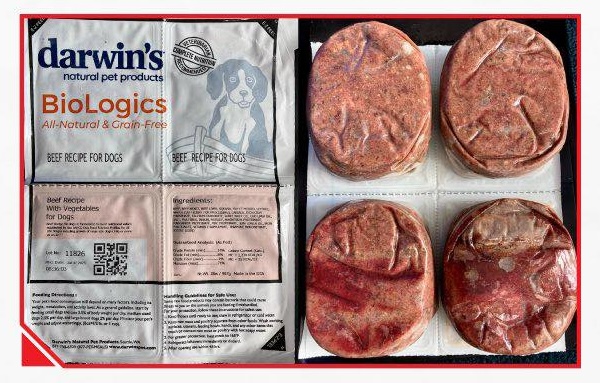
On August 7, 2026, the US Department of Justice (DOJ), acting on behalf of the US Food and Drug Administration, filed a Complaint in federal court against Arrow Reliance Inc. (d/b/a Darwin’s Natural Pet Products) (Darwin’s) and the company’s owner, Gary Tashjian.

The Complaint, which was filed in the United States District Court For The Western District Of Washington At Seattle, seeks to permanently enjoin the defendants from:

  • introducing or causing to be introduced, or delivering or causing to be delivered for introduction, into interstate commerce, articles of food that are adulterated;
  • by operating a facility that is not in compliance with preventive controls requirements;
  • doing acts that result in articles of food becoming adulterated while such food is held for sale after shipment in interstate commerce;
  • failing to register as a food facility as required; and
  • by introducing or causing to be introduced, or delivering or causing to be delivered for introduction, into interstate commerce, articles of drugs that are adulterated.

Darwin’s has been a manufacturer of raw pet food since 2004.

In 2011, the company’s production facility was inspected for the first time by the Washington State Department of Agriculture (WSDA). The sole purpose of the inspection was to determine compliance with rules for handling meat potentially contaminated with the agent that causes ‘mad cow disease.’

In 2014, Darwin’s moved to its present location in Tukwila, Washington. Two years later, the FDA and the WSDA conducted a joint inspection of the company’s manufacturing plant.

During the course of the inspection, the investigators collected two finished product samples for microbiological analysis. One of the samples was found to contain Salmonella. Fortunately, the production lot from which it came had not yet been shipped.

In October 2017, the WSDA received a communication from a consumer who complained that Darwin’s food had made her dog sick. The information was transmitted to the FDA, and a federal inspector collected the remaining food from the consumer’s home. The sample tested positive for both Salmonella and Listeria monocytogenes.

In November 2017, the company sent an email to its customers, advising them of a product recall. One of the customers, whose dog had been suffering from unexplained diarrhea for several months, decided to have her companion tested for Salmonella. When the result came back positive, she filed a complaint with the FDA.

On December 4, 2017, the FDA and WSDA began a joint intensive inspection of Darwin’s. The investigators documented multiple food safety infractions. Two samples collected during the course of the inspection were found to be contaminated with Listeria monocytogenes.

Since the inspection that began in December 2017 and was completed in 2018, the FDA inspected the Darwin’s facility multiple times: in 2018-2019, 2021, 2022, 2023, and 2024. The federal agency and its state partners also found pathogens on multiple occasions, including Salmonella, Listeria monocytogenes, and E. coli O128 (shiga toxin-producing E. coli, or STEC).

The FDA has received reports in past years of sick animals who had been fed a Darwin’s product.

In December 2018, after receiving a report of Salmonella infection in a sick dog, the agency collected unopened packages from three different lots of Darwin’s dog food from the pet owner’s home. They found Salmonella in all three samples.

In July 2022, the FDA was contacted by a cat owner whose three cats became sick after being fed Darwin’s raw cat food. Again, the agency collected unopened packages of three different lot codes from the cat owner’s home. Two of the three samples were found to contain Salmonella.

In September 2023, four cats in the same household became sick after eating a Darwin’s cat food. A sample of unopened food collected from the cat owner’s home was positive for Salmonella.

In August 2025, the FDA received a complaint of a dog death. Unopened packages collected from the pet owner’s home were found to contain Listeria monocytogenes in one instance and both Salmonella and Listeria monocytogenes in the other instance.

Overall, from 2016 through January 2026, the FDA received a total of 49 consumer complaints involving sick pets who had been fed a Darwin’s raw pet food. The list includes 34 sick dogs, including five that died, and 35 sick cats, including four deaths.

In June 2025, the FDA was informed of a four-year-old child who had become infected with E. coli O157:H7 the previous year and had developed hemolytic uremic syndrome (HUS). The child’s family fed its pet dog Darwin’s raw pet food. Third-party tests conducted on unopened Darwin’s food from the family’s home found Salmonella, and a sample from a different lot was contaminated with E. coli O157:H7.

The genetic profile of the E. coli O157:H7 isolated from the child’s stool was an exact match to the isolate recovered from the unopened Darwin’s pet food sample collected from the family’s home.

As part of its investigation, the FDA compared the genetic profile of isolates from Darwin’s pet foods against the profiles of clinical and food surveillance isolates in the public database maintained by the National Center for Biotechnology Information. Nine of the isolates from Darwin’s pet food samples collected in 2017, 2018, 2022, 2024, and 2025 matched human clinical isolates in the database.

On multiple occasions, Darwin’s has refused to initiate product recalls after the FDA or one of its partner state agencies documented the presence of a pathogen such as Salmonella, Listeria monocytogenes, or STEC in a sample of its pet food. In these cases, the FDA has resorted to public health notices instead.

On August 2, 2022, the company filed a Motion for a Temporary Restraining Order and Preliminary Injunction in federal court, asking that the FDA be prevented from posting a notice to alert the public to the presence of a pathogen in a Darwin’s product.

The Court rejected the motion and the FDA was able to post its public health notice three days later.

Darwin’s has repeatedly denied that its products were adulterated, claiming, among other arguments, that the presence of Salmonella in raw meat or poultry is natural, and is allowed by the USDA.

In April 2018, the FDA issued a Warning Letter to the company, advising that its products were adulterated under the Federal Food, Drug, and Cosmetic Act. The Warning Letter noted the presence of Salmonella and STEC in samples of the company’s products.

The agency issued a second Warning Letter in February 2023, noting that the company’s pet food was contaminated with Salmonella.

Neither Warning Letter had the desired effect.

Adulteration due to containing a poisonous or deleterious substance.

Food is adulterated if it bears or contains a poisonous or deleterious substance, such as Salmonella or STEC.

Adulteration due to production under insanitary conditions

Darwin’s manufactured, packed, and held ready-to-eat raw pet food without eliminating Salmonella, STEC and/or Listeria monocytogenes from the finished food as part of the manufacturing process.

The FDA recovered Salmonella from an environmental swab sample during their 2024 inspection of the company’s manufacturing facility. The inspection team also noted dirty water and debris from dirty equipment pooling on top of containers of cleanser and sanitizer and falling into the opening of those containers. Also, the floor throughout the production room and the base of a pillar were damaged and pitted, with water, blood, and raw ingredients accumulating in the damaged areas.

Failure to follow preventive controls regulation

The company identified contamination of their pet food with Salmonella, E. coli, and Listeria monocytogenes as possible hazards, but failed to identify adequate preventive controls to minimize or prevent the hazards from occurring.

FDA made the company aware of the repeated presence of pathogens in their raw pet food products, but Darwin’s has not remedied their conduct.

Failure to register as a food facility

Darwin’s meets the definition of a food facility, which is an “establishment, structure, or structures under one ownership at one general physical location…that manufactures/processes, packs, or holds food for consumption in the United States.

Despite the notification contained in the FDA’s February 16, 2023, Warning Letter, the company’s owner, Gary Tashjian has failed to register Darwin’s facility.

Introduction of unapproved New Animal Drug into interstate commerce

Statements on the company’s website include claims that Darwin’s raw pet food is intended to prevent, cure, and/or treat disease in animals. The company’s claims qualify the raw pet food products as drugs “…intended for use in the diagnosis, cure, mitigation, treatment, or prevention of disease in animals.”

Ongoing conduct

Based on the experience and evidence accumulated over a period of almost ten years, the FDA believes that the company will continue to violate the Federal Food, Drug, and Cosmetics Act and regulations unless restrained by the Court.

The DOJ, acting on behalf of the FDA has asked the court to:

  1. Order the company, Gary Tashjian, and any and all persons in active concert or participation with them to “…cease manufacturing, processing, preparing, packing, holding, or distributing articles of animal food, unless and until Defendants’ facilities, methods, processes, and controls used to manufacture, process, prepare, pack, hold, and distribute articles of animal food are established, operated, and administered in conformity with the FDCA and applicable regulations, in a manner acceptable to FDA.”
  2. Permanently restrain and enjoin the company, Gary Tashjian, and any and all persons in active concert or participation with them from directly or indirectly
    1. introducing or or delivering into interstate commerce any adulterated animal food
    2. operating a food facility without complying with preventive controls
    3. causing animal food held for sale after shipment to become adulterated
    4. operating a food facility without registering
    5. introducing or delivering into interstate commerce any adulterated new animal drug
  3. Authorize the FDA to inspect Darwin’s place of business and all records relating to the manufacture, processing, preparing, packing, holding, and distribution of the company’s products to ensure continuing compliance with the terms of the injunction, with the company bearing the costs of such inspections.
  4. Award costs to Plaintiff (FDA) incurred to date, including the costs of the investigation to date.


“A complete and compelling account of the hidden and not-so-hidden ways the food we give our beloved pets can be contaminated.” JoNel Aleccia, Health Reporter, Food & Nutrition, The Associated Press.

“An invaluable resource for busy pet owners” – Food Safety News

FDA stonewalls on source of deadly 2024 romaine lettuce outbreak

The US Food and Drug Administration (FDA) has declined to identify the source of E. coli O157:H7-contaminated romaine lettuce that sickened 89 people across 15 states in November 2024.

Seven of the outbreak victims developed hemolytic uremic syndrome (HUS), and one person died. Thirty-six individuals were hospitalized.

Outbreak cases were reported from Arkansas (2), Colorado (1), Illinois (7), Indiana (8), Kansas (1), Kentucky (1), Missouri (50), Montana (1), North Dakota (2), Nebraska (3), Ohio (8), Pennsylvania (1), South Dakota (1), Tennessee (1), and Wisconsin (2).

Information about the outbreak investigation was obtained from the FDA in response to a Freedom of Information Act (FOIA) request filed by eFoodAlert.

The US Centers for Disease Control and Prevention (CDC) identified seven subclusters in the multistate outbreak, including events linked to a Missouri-based caterer, and Ohio school, an Indiana restaurant, an Illinois restaurant, and an Illinois event catered by a different Missouri-based caterer.

Ninety-five percent (95%) of victims who responded to questionnaires reported consuming leafy greens prior to illness. Romaine lettuce was consumed by 88% of the outbreak victims who were able to remember the exact type of leafy green consumed.

The FDA was notified of the outbreak by the US Centers for Disease Control and Prevention on November 25, 2024. Traceback investigations by the FDA ultimately identified a single processor and a single grower as the source of Romaine lettuce supplied to all of the events that formed part of the outbreak.

On January 15, 2025, the FDA’s Coordinated Outbreak Response and Evaluation (CORE) team supplied the following traceback summary to the CDC:

A traceback investigation was initiated in response to a E. coli O157 outbreak with leafy greens as the suspected vehicle. Each case included in the traceback investigation reported consumption of leafy greens prior to illness onset. Based on information available at the points of service (POS), the traceback focused on iceberg and romaine lettuce. The investigation consisted of [redacted] traceback legs representing twenty-eight cases and [redacted] POS. The [redacted] traceback legs identified [redacted] distribution centers, [redacted] broker, [redacted] processors, [redacted] grower, and [redacted] ranch. The traceback investigation determined that a sole processor sourced romaine lettuce from [redacted] grower that would have been available at all points of service during the timeframe of interest. Additionally, romaine lettuce supplied to [redacted] POS was traced back to a common ranch and lot. Through analysis of records, [redacted] lot of romaine lettuce were implicated, resulting in confirmation of romaine lettuce as the vehicle.

The following traceback diagram included in the full CORE report illustrates the supply chain involved in the outbreak.

During the course of its investigtion, the FDA collected a total of twelve (12) environmental and water samples, but did not recover the outbreak strain from any of them.

The CORE report does not indicate whether the samples were collected at the grower or at the processor of the romaine lettuce.

The FOIA request filed by eFoodAlert sought “complete CORE investigation report and any documents related to this outbreak investigation, including Establishment Inspection Report(s), FDA Form 483(s), if issued, results of lab analyses, correspondence between FDA and CDC relating to this investigation.”

We received ONLY the CORE investigation Executive Summary and two emails.

We did NOT receive the requested results of lab analyses.

We did NOT receive a copy of any Establishment Inspection Report (either for the grower or the processor), which would have provided the identity of the establishment(s).

According to the CORE report, no [adverse] observations were noted (ie., no FDA Form 483 issued).

The CDC never posted a public notice for this outbreak.

The FDA chose not to release the name of the grower or the processor because “…there was no product remaining in commerce.”

The victims of this outbreak have a right to know the source of the product that made them ill, and have the right to seek compensation.

The restaurants and caterers who purchased the produce deserve to know the source of the contaminated romaine lettuce so that the can choose to use different suppliers in future.

Finally, deterrence is—or should be—a weapon in the food safety arsenal. If a grower, processor, or manufacturer of any food product knows that they will be identified by name in the event that their product is the source of a foodborne disease outbreak, they will be more likely to take steps to avoid supplying contaminated product to the public.


TAINTED formats 3
“Reads like a true crime novel” – Food Safety News

Interested in learning more about food safety and the history of foodborne disease outbreaks and investigations?

Click on the link to listen to a short excerpt, then follow the buy links to add a digital, print or audio copy to your personal library.

Chapter 6. Birth of a Pathogen

Recalls and Alerts: April 30–May 1, 2024

Here is today’s list of food safety recalls, product withdrawals, allergy alerts and miscellaneous compliance issues. The live links will take you directly to the official recall notices and company news releases that contain detailed information for each recall and alert.

If you would like to receive automatic email alerts for all new articles posted on eFoodAlert, please submit your request using the sidebar link.


“A complete and compelling account of the hidden and not-so-hidden ways the food we give our beloved pets can be contaminated.” JoNel Aleccia, Health Reporter, Food & Nutrition, The Associated Press.

“An invaluable resource for busy pet owners” – Food Safety News
Available from all major on-line retailers, including:


United States

OUTBREAK INVESTIGATION: CDC and FDA are investigating an outbreak of 12 confirmed cases of E. coli O157:H7 illnesses in California and Washington state. Seven of the outbreak victims have been hospitalized, two with hemolytic uremic syndrome (HUS). Ten of the 10 people interviewed reported having eaten walnuts; almost all reported buying organic walnuts from bulk bins in food co-ops or natural food stores. FDA traceback identified Gibson Farms, Inc. as the common supplier of nuts in this outbreak. The company has announced a product recall.

Food Safety Alert: New York State Department of Agriculture and Markets warns the public not to consume unpasteurized raw milk from Sunset View Creamery LLC due to possible Campylobacter jejuni contamination. The producer is now prohibited from selling raw milk until subsequent sampling indicates that the product is free of this harmful bacteria.

Food Safety Recall: Gibson Farms recalls Organic Light Halves and Pieces shelled walnuts (25 lbs bulk boxes; Lots 3325-043 & 3341-501; Expiration dates 5/21/25 & 6/7/25) due to possible E. coli O157:H7 contamination.

Food Safety Recall: Cargill Meat Solutions recalls approximately 16,243 pounds of raw ground beef products due to possible E. coli O157:H7 contamination. Please refer to the recall notice for a complete list of affected products, which were shipped to Walmart retail locations nationwide.

FDA Warning Letter: FDA issues Warning Letter to Korean Food, Inc. citing serious violations of the Standards for the Growing, Harvesting, Packing, and Holding of Produce for Human Consumption (Produce Safety Rule).

Advertisements

Canada

Allergy Alert: Fruiterie Milano inc. (Montréal, QC) recalls ESCALOPE DE POULET / Chicken breast and LASAGNA À LA BOLOGNESE PETIT / Small lasagna bolognese due to undeclared allergens.

Food Safety Recall: Centennial General Partner Inc. recalls Centennial Food Service brand Ground Pork (5 kg; Code 54655; Production dates 2023 NO 06 & 2023 NO 08) due to foreign matter contamination (pieces of metal).

Food Safety Recall: Boucherie Champfleuri (Montréal, QC) recalls all products sold up to and including 30 April 2024, because the products were prepared, stored and packaged under insanitary conditions and represent a hazard to human health.

Advertisements

Europe

Allergy Alert (Netherlands): Jumbo Supermarkten recalls mini chocoladebollen / Mini chocolate balls (Best before 13-05-2024) due to undeclared soy.

Allergy Alert (Spain): INÉS ROSALES SAU recalls Extra virgin olive oil cakes (180g; Batch code L-24103103; Expiration date 12/01/2024) due to undeclared milk.

Allergy Alert (Spain): Distributor recalls HACENDADO brand MARIA COOKIES GLUTEN FREE/DAIRY FREE (205g; Lot 05/29/25 060 20:52 1; Best before 05/29/2025) due to undeclared milk.

Allergy Alert (Spain): Manufacturer recalls FITSTYLE brand Gluten-free whole oatmeal DINO COOKIES (500g; Batch code J290224A; Best before 01/31/2025) due to undeclared gluten, sulfites, mustard and nuts.

Allergy Alert (Spain): Manufacturer recalls PROTELLA brand Oatmeal cookies (1000g; Batch codes L040324A and M020424A; Best before 02/28/2025) due to undeclared egg, sulfites, mustard and nuts.

Allergy Alert (Spain): Manufacturer recalls IRON SUPPLEMENTS brand JUST ISOLATE WHEY 90% Chocomilk Flavor (2000g; Batch codes M120324D & V220923C; Best before 06/15/2025 & 09/30/2025, respectively) due to undeclared mustard.

Allergy Alert (Spain): Manufacturer recalls PROCELL brand OATCELL whole oatmeal flour (1.5 kg; Best before 12/16/2024, 12/26/2024 and 02/24/2025) due to undeclared mustard and nuts.

Allergy Alert (Spain): Manufacturer recalls ZERONUTRITION brand CREATINE MONOHIDRATE PRO (300g; Batch code M050324A; Best before 06/26/2025) due to undeclared soy, sulfites, mustard and nuts.

Allergy Alert (Spain): Manufacturer recalls IRON SUPPLEMENTS brand BCAA+GLUTAMINE STRAWBERRY ACID FLAVOR (400g; Batch code X210224D; Best before 10/31/2025) due to undeclared soy.

Food Safety Recall (France): FROMAGERIE SAINTE GODELEINE recalls FRERES BERNARD brand LA BOITE CHAUDE / Cheese (230g; Lot 07524; Best before 24/04/2024) due to Listeria monocytogenes contamination.

Food Safety Recall (France): FROMAGERIE SAINTE GODELEINE recalls FRERES BERNARD brand FRUITE DU CAP GRIS NEZ / Cheese (230g; Lot 07524; Best before 24/04/2024) due to Listeria monocytogenes contamination.

Food Safety Recall (France): FROMAGERIE SAINTE GODELEINE recalls LE BOCAGE VERT / Cheese (230g; Lot 07524; Use by 16/04/2024) due to Listeria monocytogenes contamination.

Food Safety Recall (France): MAISON MILHAU recalls MAISON MILHAU brand Pâté de tête aux cornichons / Head cheese with pickles (200g; Lot 110400; Use by 25/05/2024) due to Listeria monocytogenes contamination.

Food Safety Recall (Italy): FRoSTA Srl recalls La Valle degli Orti brand Minestrone Classico (850g; Lot L4043F10; Best before 08.2025) due to foreign matter contamination (glass).

Food Safety Recall (Spain): Manufacturer recalls Tugas brand Alfalfa Sprouts (50g; Batch code 5140012S106E; Expiration date 05/03/2024) due to Salmonella contamination.

Australia and New Zealand

Allergy Alert (Australia): HenKing Foods Pty Ltd recalls Mr Lees Noodles Henking Coconut Chicken Laksa (65g; Best before 14/06/24) due to undeclared milk.

Allergy Alert (New Zealand): Rogers Distribution Limited recalls Mrs Rogers Naturals brand Gluten Free Batter Mix (400g; Batch code 7093; Best before 26/01/26) due to undeclared wheat and gluten.

Food Safety Recall (Australia): Arrotex Pharmaceuticals recalls 28GO Go Bar – Triple Choc Protein (55g; Best before 28/06/2024) due to foreign matter contamination (plastic).


TAINTED formats 3
“Reads like a true crime novel” – Food Safety News

Interested in learning more about food safety and the history of foodborne disease outbreaks and investigations?

Click on the link to listen to a short excerpt, then follow the buy links to add a digital, print or audio copy to your personal library.

Chapter 6. Birth of a Pathogen

TAINTED is available in digital format from all major on-line retailers. Press the button to go directly to your preferred digital bookstore.

Advertisements