
FDA, state investigate Darwin’s pet food after illnesses, death

The Food and Drug Administration and the Washington State Department of Agriculture are investigating what FDA describes as a “pattern of Salmonella and Listeria monocytogenes contamination in raw pet foods manufactured by Arrow Reliance Inc.”

FDA has received a total of six complaints of illness in animals who were fed the raw pet foods, including the death of one kitten. Salmonella recovered from the kitten was indistinguishable from the Salmonella found in a closed package of Darwin’s food from the same lot that was fed to the animal, according to the agency.

People who handle contaminated pet food and anything it touches, including counter tops, utensils and pet bowls, are at risk of contracting infections from pathogens such as Salmonella. Infected pets, which don’t always show symptoms, can transfer Salmonella infection to people.

In addition to the reports of sick pets, FDA reports it is aware of at least three animals that were reported to have been injured by bone shards in Darwin’s pet food.

Arrow Reliance Inc., doing business as Darwin’s Natural Pet Food, issued the latest in a series of recall notices on Saturday.

The company notified its customers of the recall by emails sent only to those customers who purchased the recalled products. No public recall notice was issued, company officials told the FDA, because they only sell products online through direct-to-customer sales.

Included in the Saturday recall were:

  • ZooLogics Chicken Meals for Dogs, 2-pound, with the lot number 41567, and  manufacture date of Nov. 2, 2017; and
  • ZooLogics Duck Meals for Dogs, 2-pound, lot number 41957, and manufacture date of Nov 16, 2017.

Since October 2016, the company has recalled a total of nine batches of its Natural Selections and Zoologics brands of Meals for Dogs and Meals for Cats, including four batches of its Natural Selections brand of Meals for Dogs recalled on Dec. 4, 2017.

Shortly after the December 2017 recall, one of Darwin’s customers learned that her German Shepherd, Blitz, had become infected with Salmonella. Judy, who asked that her last name not be published, registered a formal complaint with FDA.

Follow-up testing of Blitz by FDA’s Veterinary Laboratory Investigation and Response Network confirmed that the dog was infected with Salmonella. In addition, lab analysis of closed packages of Darwin’s pet food obtained by FDA from Judy on Jan. 24 found Salmonella in the product.

“Darwin’s told me it was safe to feed Blitz the (ZooLogics) food because it wasn’t on the recall list they were dealing with back in November/December. Now, three to four months later, they tell me that the same food they assured is safe to eat now has Salmonella,” Judy told Food Safety News.

FDA has conducted two inspections of Darwin’s manufacturing facility since mid-2016. The first was completed on June 30, 2016, and the second on May 31, 2017, according to information received in response to a Freedom of Information Act (FOIA) request. Both inspections were classified “No Action Indicated.”

Darwin’s first series of product recalls encompassed three lots of Meals for Dogs manufactured on July 20, July 21 and July 25 in 2016, less than one month following the June 2016 inspection. The company next recalled one batch of Meals for Cats, manufactured on June 1, 2017, one day after the completion of the 2017 FDA inspection.

Based on information received in response to the FOIA request, it does not appear that FDA conducted an inspection following the Meals for Cats recall.

FDA advice to consumers
Consumers should not feed their pets recalled lots of raw pet food manufactured by Arrow Reliance Inc. Consumers who purchased this raw pet food should throw it away. People who think they or their pets have become ill from exposure to contaminated raw pet food should talk to their health care providers or veterinarians.

Consumers who had the recalled Darwin’s products in their homes should clean their refrigerator and clean and disinfect all bowls, utensils, food prep surfaces, pet bedding, toys, floors, and any other surfaces that the food or pet may have had contact with.

Animals can shed the bacteria when they have bowel movements, so it’s particularly important to clean up animal feces in yards or parks where people or other animals may become exposed.

Pet owners who opt to feed their pets a raw diet should consult FDA’s “Tips to Prevent Foodborne Illness from Raw Pet Food.”

Salmonella infection symptoms in people can include diarrhea that lasts for more than three days, or is accompanied by high fever, blood in the stool, or so much vomiting that you cannot keep liquids down and you pass very little urine.

People who think their pets have become ill after consuming contaminated raw pet food should contact their veterinarians. Veterinarians who wish to have dogs tested for Salmonella may do so through the Vet-LIRN Network if the pet is from a household with a person infected with Salmonella.

The FDA encourages consumers to report complaints about this and other pet food products electronically through the Safety Reporting Portal or by calling their state’s FDA Consumer Complaint Coordinators.


This article first appeared on Food Safety News and is reposted here with permission.

Outbreaks in Quebec, Twin Cities Traced to Chinese Raspberries

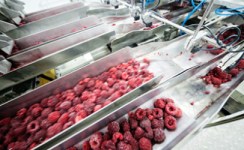
Frozen raspberries imported from China were the source of 615 confirmed cases of norovirus in Quebec between March and July of this year, and of 15 cases in Minnesota in August of 2016.

The Quebec outbreak included clients and staff at seven seniors’ residences, two daycare centers and one hotel in four separate administrative regions of the province, according to a spokesperson for Quebec’s Ministry of Health and Social Services (MSSS).

Confirmed cases were documented in Mauricie at 6 seniors’ residences, in Laurentides at a conference at a hotel, in Chaudieres-Appalaches at a daycare center, and in Capitale-Nationale at a daycare center and a seniors’ residence.

Of the 615 outbreak victims, 141 were employees of at least two of the seniors’ residences. Four were employees at one of the affected daycare centers. Citing privacy concerns, MSSS declined to provide any further details on the victims by gender, age or geographic location. However, extrapolation of data provided by the provincial health agency suggests about 250 of the outbreak victims were seniors, and 33 were children.

The Minnesota outbreak was linked to ice cream manufactured by Sebastian Joe’s, a Minneapolis-based company, according to a spokesperson from the Minnesota Department of Health (MNDOH). The company supplied the ice cream to multiple venues within the Minneapolis-St. Paul area.

Norovirus illnesses were linked to consumption of raspberry chocolate chip flavor ice cream consumed at two Sebastian Joe’s venues, one private gathering, and one area restaurant. Of the 15 confirmed cases, 10 were female. One person was hospitalized.

The ice cream contained frozen raspberries imported from China. Analyses conducted by the Food and Drug Administration confirmed the presence of norovirus matching the case specimens in samples of the raspberries.

The Twin Cities and Quebec outbreaks occurred more than six months apart and appear to have been independent of each other, though frozen raspberries from China were implicated in both. Taian Runko, the company identified by the FDA during its analytical sampling, was not involved in the Quebec outbreak, according to the CFIA.

Product recalls lacked transparency
The Canadian Food Inspection Agency (CFIA) issued 14 recall notices, from June 20 through Aug. 21 this year. The agency disseminated 11 of the recalls only to businesses in the food industry, with no public warning released. Recall notices dated Aug. 11, 16 and 21 were released to the public, and alluded to the existence of “…reported illnesses associated with the consumption…” of the recalled products.
From June 23 through Aug. 14, Quebec’s Ministry of Agriculture, Fisheries and Food (MAPAQ) issued a series of six public alerts and product recalls, which included numerous bakery products manufactured with the individually quick frozen (IQF) raspberries. Each of the MAPAQ alerts warned of “many” illnesses associated with the consumption of products containing the IQF raspberries.

The U.S. Food and Drug Administration carried out analytical sampling and laboratory analysis when advised of the Minnesota outbreak, according to an agency spokesperson. As a result of the FDA investigation, the agency added IQF raspberries from Taian Runko Industry International Trade Co. Ltd. to the Import Alert 99-35 “Detention Without Physical Examination” list (Red List) on May 2 this year. Sebastian Joe’s initiated a product withdrawal as a result of the 2016 Minnesota outbreak.

Canadian health agency never issued alert
The Public Health Agency of Canada (PHAC) never issued a public health alert in conjunction with the IQF-raspberry norovirus outbreak. A spokesperson for PHAC explained the agency’s silence was because of the outbreak having been confined to a single province.

In Quebec, the provincial health department responsible for investigating the 5-month outbreak did not issue any news releases or public health alerts either. According to a MSSS spokesperson, food recalls are the responsibility of MAPAQ and CFIA. The spokesperson added that MSSS worked in collaboration with MAPAQ and other federal authorities on the investigation.

The first public notice of the Quebec outbreak was contained in a public warning and recall notice issued by MAPAQ on June 23. The CFIA did not include a similar warning with its recall notices until Aug. 11.

No public health alerts were posted on the Minnesota Department of Health website regarding the norovirus illnesses or ice cream recall in that state.

What consumers should know about norovirus
Norovirus is the leading cause of outbreaks from contaminated food in the United States, according to the Centers for Disease Control and Prevention. It accounts for approximately about half of all foodborne illnesses in the country every year.

Symptoms of norovirus infection include nausea, vomiting, diarrhea and stomach pain. The symptoms usually develop within 12 to 24 hours after exposure to the virus and last one to three days days.

Although extremely unpleasant, most cases of Norovirus are self-limiting, and do not present a long-term health risk, according to the CDC. Nevertheless, seniors and young children are at heightened risk of severe dehydration if infected with the virus.

Most cases of norovirus illness in the population at large are shrugged off as so-called stomach flu. Victims are usually not seen by doctors, and the infections go unreported.

A national survey carried out in the United Kingdom in 2011 determined that only one in every 23 people with norovirus consulted a physician. Overall, for every 288 cases of norovirus occurring in the general population, only one was reported to national surveillance authorities.

Timeline for Quebec, Minnesota outbreaks
August 4-14, 2016: Norovirus illnesses associated with consumption of raspberry chocolate chip ice cream at four Minneapolis-St. Paul area venues.

March-May 2017: Three separate outbreak clusters involving six seniors’ residences, all of which were serviced by a single central kitchen.

May 2, 2017: Individually quick frozen (IQF) Red Raspberries from Taian Runko Industry International Trade Co. Ltd. in Taian, Shandong China, is added to the Red List of Import Alert 99-35, citing norovirus GII contamination.

May 31, 2017: CFIA is notified by Quebec authorities that norovirus outbreak clusters appear to be linked to raspberries, and initiates a food safety investigation.

June 2017: Two additional outbreak clusters occur, one at a daycare center and the other at a hotel.

June 20, 2017: CFIA issues first product recall notice for IQF raspberries imported from China.

June 23, 2017: MAPAQ issues first consumer alert and recall notice for IQF raspberries and some products containing the raspberries, reporting for the first time the existence of “many” illnesses associated with consumption of IQF raspberries.

July 2017: Two additional outbreak clusters are reported, one at a daycare center and the other at a seniors’ residence.

This story first appeared in Food Safety News and is reproduced here with permission.

More pentobarbital-contaminated dog food reported

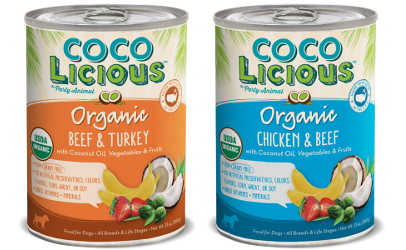
Two varieties of Party Animal canned dog food may be contaminated with pentobarbital, according to a test report from Texas A&M University released this week.

The report was provided to blogger Susan Thixton of Truth About Pet Food by a consumer who arranged for the testing after a family pet became ill. The consumer has not been identified. The test report was supplied by Thixton to the Food and Drug Administration April 17.

“The FDA has received test results of this food and is aware of the public statement from Party Animal, and is following up as appropriate,” according to a spokesperson with FDA.

A statement posted on the Party Animal Pet Food website confirms that it was informed by a retailer of the problem on April 13. The company has contacted the two Texas retailers who may have sold the food to the customer, and has requested that all remaining cans of the implicated production lots be isolated and returned for independent third-party testing. Party Animal also will be retrieving all remaining nationwide stock of the two production lots.

Party Animal Inc. is incorporated in California and is headquartered in West Hollywood, CA. Its principals are Chief Executive Officer and Secretary Daryl Alan Abrams and Chief Financial Officer Shawna Denae Abrams.

The implicated products, which the company reports were manufactured in 2015, are:

  • Cocolicious Beef & Turkey, Lot #0136E15204 04
  • Cocolicious Chicken & Beef, Lot #0134E15 237 13

In 2015, Party Animal canned pet foods were manufactured by Evanger’s Dog & Cat Food Co. according to an interview published in Pet Product News. Earlier this year, Evangers recalled several months worth of three beef-based canned dog foods after samples from two different products were determined to contain pentobarbital. The recalled products were manufactured in 2015.

According to the statement on its website, Party Animal has “… submitted many recent lots of [its] beef flavors for testing and all have tested negative for any pentobarbital.”

“We have also had extensive discussions with our manufacturer regarding the potential cause of the reported contamination of the 2015 lots,” the company states, “and we will continue with such discussions even as we await testing results for the 2015 lots. In order to ensure adherence to our commitment to the safety of pets, we are also actively re-examining our manufacturing processes.”

This story first appeared in Food Safety News and is reposted here with permission.