‘Indiscriminate’ layoffs at FDA prompt food head to resign

February 18, 2025

Jim Jones, the FDA’s Deputy Commissioner for Human Foods, resigned in protest yesterday after dozens of staff members were terminated over the holiday weekend.

In his letter of resignation, quoted in part on several news sites, Jones pointed out that the fired employees were individuals with “highly technical expertise in nutrition, infant formula, food safety response,” and included ten staffers responsible for reviewing potentially unsafe ingredients in food.

During the first Trump administration, FDA Commissioner Scott Gottlieb eliminated the position of Deputy Commissioner for Food, resulting in a fragmention of responsibilities and authority within this important sector of the FDA.

The 2022 Cronobacter sakazakii outbreak that was linked to Abbott Nutrition’s powdered infant formula products exposed serious flaws in the FDA’s organization and reporting structures.

In February 2023, FDA Commissioner Robert Califf revealed a rough plan for reorganizing the food side of the agency, including restoring the position of Deputy Commissioner for Human Food.

Jim Jones assumed that post in September 2023 with a mandate to implement the restructuring program.

The Cronobacker sakazakii outbreak occurred in part because the FDA did not have enough trained personnel to provide effective oversight of the infant formula industry.

How does it make sense to terminate staffers with special expertise in infant formula oversight?

RFK, Jr., the newly confirmed Secretary for Health and Human Services, has touted his support for healthy eating, for reducing the number of additives in foods, and for tackling the role of processed foods in childhood obesity.

How does it make sense to terminate staffers with expertise in nutrition?

The FDA food safety investigation staff already was spread thin, and recalls and foodborne illnesses were up in 2024 over the previous year.

How does it make sense to terminate food safety response staffers?

Just as the body of a rattlesnake will continue to writhe after it is has been decaptitated, the FDA’s human food program will muddle on for a while.

Just don’t expect it to know where it’s going.

Italian mini-pastries sicken 87 in USA and Canada. CDC silent.

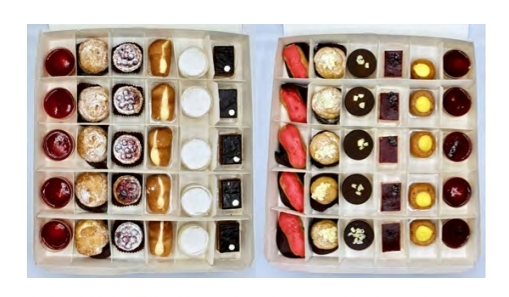
The US Food and Drug Administration (FDA) has traced a US outbreak of Salmonella Enteritidis to consumption of frozen mini-pastries imported from Italy.

Eighteen (18) people in California, Illinois, Massachusetts, North Carolina, New Jersey, New York, and Pennsylvania have been infected with the outbreak strain, which is identical to the strain that has infected 69 individuals in Canada.

One person in the US and 22 in Canada required hospitalization.

The US Centers for Disease Control and Prevention (CDC) has not posted any notice of this outbreak on its website.

The CDC website is currently undergoing modification, according to a notice featured prominently on each page of the agency website.

The Public Health Agency of Canada (PHAC) first reported on this illness outbreak on January 19, 2025, and updated its report on January 29th.

Outbreak cases in Canada have been reported in British Columbia (4), Alberta (3), Ontario (24), Québec (37), and New Brunswick (1).

The Canadian Food Inspection Agency (CFIA) linked the Canadian illnesses to consumption of Sweet Cream brand mini pastries, imported from Italy.

The Sweet Cream brand mini pastries were recalled in Canada on January 18, 2025. On January 29, 2025, a separate recall of certain D. Effe T. brand pastries (also from Italy) was announced after one of the outbreak illnesses was believed to be associated with consumption of this brand.

According to the FDA, these same pastries were imported into the US by two distributors, both of whom were contacted by the agency. One of the distributors had no remaining product on hand; the other quarantined all remaining product on hand and informed all of their downstream customers of the recall.

In the US, the mini pastries were distributed in Florida, New Jersey, New York, and Pennsylvania to food service locations such as hotel cafes, bakeries, institutions, and restaurants. The mini pastries were also served at catered events.

According to the FDA, the recalled products should no longer be available for sale.

  • Food service customers who received the recalled product should follow FDA’s safe handling and cleaning recommendations and use extra care in cleaning and sanitizing any surfaces and containers that may have come in contact with recalled products to reduce the risk of cross-contamination.
  • Contact your healthcare provider if you think you may have developed symptoms of a Salmonella infection.

The following advice applies to individuals, as well as retailers, distributors and food service establishments such as grocery stores, bakeries, hotels, restaurants, cafeterias as well as facilities such as hospitals and retirement residences across Canada: 

  • Check to see if you have the recalled products in your home or establishment by looking for the specific product name and size, UPC and codes in the recall alert.
  • Do not consume, serve, use, sell or distribute recalled products.
  • Throw out or return recalled products to the location where they were purchased. Consumers or establishments who are unsure if they have purchased the recalled products are advised to contact their retailer or supplier where the products were purchased.
  • Do not cook food for other people if you’ve been diagnosed with a Salmonella infection or any other gastrointestinal illness.
  • Contact your health care provider if you think you’re experiencing symptoms of Salmonella infection.

“Reads like a true crime novel” – Food Safety News

Interested in learning more about food safety and the history of foodborne disease outbreaks and investigations?

Click on the link to listen to a short excerpt, then follow the buy links to add a digital, print or audio copy to your personal library.

Chapter 6. Birth of a Pathogen

TAINTED is available in digital format from all major on-line retailers. Press the button to go directly to your preferred digital bookstore.

FDA finds Salmonella, Listeria monocytogenes in ANSWERS raw dog foods. Issues Advisory

September 23, 2024

The US Food and Drug Administration (FDA) today issued an Advisory to pet owners, recommending that they not feed certain ANSWERS raw dog foods to their pets.

The FDA collected and analyzed unopened retail samples of these products following receipt of three consumer complaints about sick dogs.

Two of the following products were found to be contaminated with Salmonella, one with Listeria monocytogenes, and one with both Salmonella and Listeria monocytogenes. All four products were packaged in 4-lb. (half-gallon) cartons.

  • Answers Pet Food Raw Beef Detailed Formula for Dogs
    • UPC/bar code number: 856554002102
    • BUBD: May 06 2026
  • Answers Pet Food Raw Beef Straight Formula for Dogs
    • UPC/bar code number: 856554002072
    • BUBD: Jan 31 2026
  • Answers Pet Food Straight Chicken Formula for Dogs
    • UPC/bar code number: 856554002065
    • BUBD: Jan 02 2026
  • Answers Pet Food Straight Chicken Formula for Dogs
    • UPC/bar code number: 856554002065
    • BUBD: Mar 11 2026

ANSWERS raw pet foods are manufactured by Lystn LLC. The products are sold on-line and in retail stores across the United States.

Lystn, LLC, dba ANSWERS Pet Food announced a voluntary withdrawal of the four contaminated product batches, but stopped short of initiating a full recall. In announcing the product withdrawal, the company took pains to state that, “No illnesses associated with these lots have been confirmed.

The FDA has not revealed whether one or more of the BUBD dates of the products in which it found Salmonella and Listeria monocytogenes corresponds to products consumed by the sick dogs. (Note: ANSWERS does not use lot codes. Instead, a “Best If Used By” date (BUBD) is stamped on each package.)

As is usual in this type of situation, the FDA requests/recommends that a manufacturer initiate a voluntary product recall. This action triggers a standard oversight and follow-up by the agency to ensure that all of the contaminated product has been removed from the marketplace. The FDA also oversees the safe disposal of recalled product that has been recovered by the manufacturer.

In this instance, the company has declined to initiate a formal recall.

Due to concerns that a product withdrawal might not be adequate to ensure the safety of pets and their human companions, the FDA has reached out directly to consumers, explaining that, “To date, the firm has not initiated an adequate recall of the affected products.

If you have any of the Answers Pet Food products listed above, stop feeding it to your pets and throw it away in a secure container where other animals, including wildlife, cannot access it. Do not donate the food.

The Best Used By Date can be found on a sticker on the carton. If you no longer have the packaging or can’t read the Best Used By Date, throw the food away. 

Consumers who have had these products in their homes should clean and disinfect all pet supplies, including all storage containers, bowls, utensils, food prep surfaces, pet bedding, litter boxes, toys, floors, and any other surfaces that the food or pet may have had contact with, including your refrigerator or freezer. Clean up the pet’s feces in places where people or other animals may become exposed. Consumers should thoroughly wash their hands after handling the product or cleaning up potentially contaminated items and surfaces.

People who think their pets have become ill after consuming contaminated pet food should first contact their veterinarians. Veterinarians who wish to have pets tested for Salmonella and L. mono may do so through the Veterinary Laboratory Investigation and Response Network (Vet-LIRN Network) if the pet is from a household with a person infected with Salmonella or L. mono

The FDA encourages consumers to report complaints about pet food products electronically through the Safety Reporting Portal. Additionally, consumers can visit the SmartHub – Safety Intake Portal – Report a Product Problem (fda.gov) to obtain electronic assistance with submitting a report.


“A complete and compelling account of the hidden and not-so-hidden ways the food we give our beloved pets can be contaminated.” JoNel Aleccia, Health Reporter, Food & Nutrition, The Associated Press.

“An invaluable resource for busy pet owners” – Food Safety News

Available from all major on-line retailers, including: