
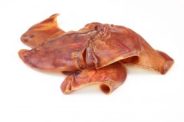
Pig ear pet treats blamed for human Salmonella outbreak

Pig ear pet treats have been linked to an outbreak of multidrug-resistant Salmonella infections in 13 states, according to an investigation report released today by CDC.

Forty-five individuals in California (1), Illinois (3), Indiana (3), Iowa (12), Kansas (3), Massachusetts (2), Michigan (7), Missouri (3), New York (6), North Dakota (1), Pennsylvania (2), South Carolina (1) and Wisconsin (1) have been infected with the outbreak strain, identified as Salmonella I 4,[5],12:i:-.

Twelve outbreak victims were hospitalized.

According to CDC, epidemiological evidence points to pig ear pet treats as a likely source of the illnesses.

Of the outbreak victims interviewed, 89% reported contact with a dog before getting sick and 71% reported contact with pig ear dog treats or with dogs who were fed pig ear dog treats.

In comparison, only 61% of healthy individuals reported contact with a dog, and only 16% reported having handled dog treats such as pig ears in the week before the interview.

Pig ear pet treats obtained from bulk bins at two Michigan retailers have tested positive for a number of different Salmonella strains, according to a report from the Michigan Department of Agriculture and Rural Development (MDARD).

According to FDA, MDARD found four different strains – Salmonella London, Salmonella Typhimurium, Salmonella Newport, and Salmonella Infantis – in the pig ear samples.

FDA is working with CDC and state health partners to determine whether any human or animal cases of Salmonella illness may be linked to the strains found in the treats tested by MDARD.

Other brands of individually wrapped or bagged pig ears sold at multiple retail locations in the state tested negative for Salmonella.

Pet Supplies Plus (Livonia, MI) issued a voluntary recall after learning that MDARD found Salmonella in “…aging bulk pig ear product…” in one of the company’s stores.

The contaminated bulk pig ears were stocked in open bins in Pet Supplies Plus stores in AL, AR, CA, CO, CT, DE, FL, GA, IA, IL, IN, KS, KY, MA, MD, MI, MN, MO, NC, NE, NH, NJ, NY, OH, OK, PA, RI, SC, TN, TX, VA, WI and WV. Prepackaged pig ears are unaffected by the recall.

The company has removed bulk pig ear treats from all of its stores and has stopped shipping these treats from its distribution center.

FDA is working to identify the source of the pig ear treats, how they became contaminated, and where they were distributed.

What consumers need to know

Salmonella can cause illness in both humans and animals. People infected with Salmonella can develop diarrhea, fever and abdominal cramps. Most individuals recover without treatment. However, in some cases, the diarrhea may be so severe that hospitalization is needed.

In severe cases, without antibiotic treatment the infection may spread from the intestines into the blood stream and from there to other parts of the body.

Pets do not always display symptoms when infected with Salmonella, but signs can include vomiting, diarrhea (which may be bloody), fever, loss of appetite and/or decreased activity level. Infected pets can shed the bacteria in their feces and saliva without showing signs of being sick.

If you or a household member is suffering from symptoms of Salmonella, consult a healthcare provider.

If you believe your pet may be infected with Salmonella, consult your veterinarian.

How to alert FDA to a problem

Veterinarians who wish to have pets tested for Salmonella may do so through the Veterinary Laboratory Investigation and Response Network (Vet-LIRN Network) if the pet is from a household with a person infected with Salmonella.

FDA encourages consumers to report complaints about pet food products electronically through the Safety Reporting Portal. This information helps FDA further protect human and animal health.

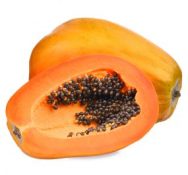
Mexican government dismisses as ‘premature’ CDC’s link of Salmonella outbreak to imported papayas

In a July 1, 2019 news release, El Servicio Nacional de Sanidad, Inocuidad y Calidad Agroalimentaria de Mexico / The National Service of Health, Safety and Agri-Food Quality (Senasica) has described as “premature” CDC’s June 28, 2019 report of a link between Mexican papayas and a current outbreak of Salmonella Uganda illnesses.

Senasica points out that the outbreak strain has not been recovered from a papaya sample, nor has Salmonella Uganda been isolated from papayas in Mexico.

According to Senasica, until the outbreak strain has been found in a papaya sample, Mexico does not consider CDC’s findings to be conclusive.

The outbreak under investigation comprises 62 illnesses in eight US states: Connecticut (14), Florida (1), Massachusetts (5), New Jersey (12), New York (24), Pennsylvania (4), Rhode Island (1), Texas (1). Twenty-three people have been hospitalized.

Two people who lived in different households got sick in Connecticut after eating papayas purchased from the same grocery store location in the week before becoming ill.

According to CDC, epidemiological evidence, including interviews conducted with some of the outbreak victims, points to papayas as the source of the outbreak.

FDA is conducting a traceback investigation to establish the source of the papayas. Early product distribution information indicates that they were imported from Mexico.

Senasica’s official response to CDC’s report is reminiscent of the initial Mexican response to the 2011 outbreak of Salmonella Agona illnesses caused by contaminated papayas imported from Mexico.

Back then, Mexico vehemently denied responsibility for the outbreak, even after FDA found the outbreak strain in samples of the imported papayas.

What will it take for Senasica to acknowledge reality?

And, what will it take for FDA to impose a complete embargo on the importation of papayas from Mexico?

What consumers should do

  • If you have purchased a papaya grown in Mexico, throw it away.
  • Do not eat fruit salads or other mixes that include papayas from Mexico.
  • If you aren’t sure the papaya you bought is from Mexico, you can ask the place of purchase. When in doubt, don’t eat the papaya. Throw it out.
  • Wash and sanitize places where papayas were stored: countertops and refrigerator drawers or shelves. Follow these five steps to clean your refrigerator.

What restaurants and retailers should do

In the event that restaurants, retailers and/or other food service operators are found to have handled potentially contaminated food in their facilities, they should:

  • Contact their local health department and communicate to their customers regarding possible exposure to a pathogen.
  • Wash the inside walls and shelves of the refrigerator, cutting boards and countertops, and utensils that may have contacted contaminated foods; then sanitize them with a solution of one tablespoon of chlorine bleach to one gallon of hot water; dry with a clean cloth or paper towel that has not been previously used.
  • Wash and sanitize display cases and surfaces used to potentially store, serve, or prepare potentially contaminated foods.
  • Wash hands with warm water and soap following the cleaning and sanitation process.
  • Conduct regular frequent cleaning and sanitizing of cutting boards and utensils used in processing to help minimize the likelihood of cross-contamination.

Papayas from Mexico blamed for another Salmonella outbreak

For the sixth time in eight years, papayas grown in Mexico have been linked to an outbreak of Salmonella.

The US Centers for Disease Control and Prevention (CDC) and the US Food and Drug Administration (FDA) are warning consumers in Connecticut, Massachusetts, New Jersey, New York, Pennsylvania, and Rhode Island to avoid eating any fresh papayas from Mexico until further notice.

No recall has been announced.

CDC reports 62 cases of Salmonella Uganda illnesses, including 23 hospitalizations, in eight states: Connecticut (14), Florida (1), Massachusetts (5), New Jersey (12), New York (24), Pennsylvania (4), Rhode Island (1), and Texas (1).

No deaths have been reported.

According to FDA, most people with salmonellosis develop diarrhea, fever, and abdominal cramps. More severe cases of salmonellosis may include a high fever, aches, headaches, lethargy, a rash, blood in the urine or stool, and in some cases may become fatal.

Children younger than five, the elderly, and people with weakened immune systems are more likely to have severe salmonellosis infections.

By the numbers

Epidemiological evidence gathered by CDC, and product distribution information obtained by FDA, point to papayas grown in Mexico and distributed in Connecticut, Massachusetts, New Jersey, New York, Pennsylvania, and Rhode Island.

Just over one-half of the victims are female, and approximately two-thirds of those interviewed are of Hispanic ethnicity. Ages of outbreak victims range from one to 86 years.

Of those victims who were interviewed, 76% reported having eaten papaya in the week before becoming ill.

The Florida victim reported having traveled to Connecticut in the week before becoming ill. It is unknown at this time whether the Texas victim had traveled to one of the six states to which the papayas were shipped.

FDA has not yet identified a source or grower of the contaminated papayas.

History

This is the sixth in a series of Salmonella outbreaks linked to papayas grown in Mexico and imported into the USA in the last eight years.

In 2011, Mexican papayas contaminated with Salmonella Agona were the source of a 25-state outbreak that sickened 106 individuals, sending 10 of them to hospital.

In 2017, history repeated itself four-fold. A total of 251 individuals were infected with one of several different strains of Salmonella after eating Mexico-grown papayas. Seventy-eight of the outbreak victims were hospitalized and two people died.

If history is any guide, it is likely that the number of cases and hospitalizations in this outbreak will increase.

What should consumers do?

  • If you have purchased a papaya grown in Mexico, throw it away.
  • Do not eat fruit salads or other mixes that include papayas from Mexico.
  • If you aren’t sure the papaya you bought is from Mexico, you can ask the place of purchase. When in doubt, don’t eat the papaya. Throw it out.
  • Wash and sanitize places where papayas were stored: countertops and refrigerator drawers or shelves. Follow these five steps to clean your refrigerator.

What should restaurants and retailers do?

In the event that restaurants, retailers and/or other food service operators are found to have handled potentially contaminated food in their facilities, they should:

  • Contact their local health department and communicate to their customers regarding possible exposure to a pathogen.
  • Wash the inside walls and shelves of the refrigerator, cutting boards and countertops, and utensils that may have contacted contaminated foods; then sanitize them with a solution of one tablespoon of chlorine bleach to one gallon of hot water; dry with a clean cloth or paper towel that has not been previously used.
  • Wash and sanitize display cases and surfaces used to potentially store, serve, or prepare potentially contaminated foods.
  • Wash hands with warm water and soap following the cleaning and sanitation process.
  • Conduct regular frequent cleaning and sanitizing of cutting boards and utensils used in processing to help minimize the likelihood of cross-contamination.