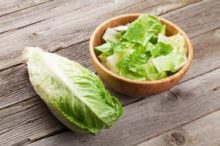
Epidemiological evidence in both countries has linked consumption of Romaine lettuce to an outbreak of E. coli O157:H7 illnesses in eleven US states and two Canadian provinces.
Traceback investigations are in progress to determine the source of the contaminated Romaine.
The following US supermarket chains and food stores have alerted customers to the illness outbreak and, in many cases, have removed all products containing Romaine from their stores:
Kroger family of stores, including Kroger, Baker’s, Dillons, Gerbes, Fred Meyer, Fry’s, Gerbes, Owen’s, Pay-Less, Ralphs, Smith’s, Food4Less, FoodsCo, QFC, King Soopers, City Market, Jay C, Harris Teeter, Pick n Save, Metro Market, Copps and Marianos stores.
The following Canadian supermarket chains and food stores have alerted customers to the illness outbreak and, in many cases, have removed all products containing Romaine from their stores:
Sobeys, including Sobeys, Safeway, IGA, Thrifty Foods, Foodland, FreshCo and Lawton’s Drug Stores
Do not consume any romaine lettuce or any product containing romaine lettuce. Please follow the live links to your retailer’s web page for a complete list of affected products sold by that retailer.
This opinion piece by Coral Beach first appeared on Food Safety News and is reposted here with permission.
ALERT: Federal officials in the U.S. and Canada have announced a new E. coli outbreak linked to romaine lettuce and recommend that consumers, retailers and foodservice operators not eat, sell or serve any romaine. As of Nov. 20, a total of 50 people across 11 U.S. states and two Canadian provinces had been confirmed with the outbreak strain of E. coli O157:H7.
Leafy greens growers, facing terrible news yesterday about another E. coli outbreak linked to romaine lettuce, did the right thing. They called for an immediate, voluntary industry-wide recall of all brands and forms of romaine.
That’s exactly what the U.S. Food and Drug Administration suggested industry do when it posted a notice Tuesday announcing the new outbreak. Officials from industry and government say they haven’t been able to identify any specific growers or other entities in the supply chain as the source of the E. coli O157:H7.
“At this stage in the investigation, the most efficient way to ensure that contaminated romaine is off the market would be for industry to voluntarily withdraw product from the market, and to withhold distribution of romaine until public health authorities can ensure the outbreak is over and/or until FDA can identify a specific source of contamination,” according to the FDA’s notice.
“Until then, the FDA advises that consumers should not eat and discard romaine, or any mixed salads containing romaine, until more information on the source of the contamination and the status of the outbreak can be determined.”
It’s encouraging to see the largest and most influential fresh produce and leafy greens organizations act quickly. Their plea for a voluntary industry-wide recall is what the public, legislators, and consumer advocates wanted them to do this past spring when health officials announced an E. coli outbreak linked to romaine. Ultimately 210 people across 36 states were confirmed infected in that outbreak. Five of the patients died.
We don’t yet know how long officials have been investigating the current outbreak — which they say involves a different strain of E. coli O157:H7 than this spring’s outbreak — or when they informed the leafy greens industry of the romaine connection. But, the fact that industry leaders are telling romaine growers and processors to take the economic hit right now and pull back their products is good news.
Of course, one could argue that it’s a smart business strategy at this point for the leafy greens industry to do what many people perceive as the right thing. Consumer’s trust, and more importantly their romaine purchases, dropped significantly earlier this year because the romaine industry failed to act in the public’s best interest. Growers and processors kept doing what they do even after everyone knew the implicated romaine was coming from the Yuma, AZ, area.
So, today I tip my hat to the following groups: Arizona Leafy Greens Marketing Agreement; California Leafy Greens Marketing Agreement (LGMA); Produce Marketing Association; United Fresh Produce Association; Western Growers; Yuma Safe Produce Council; and Yuma Fresh Vegetable Association. Their joint statement Tuesday afternoon did not mince words.
“In light of today’s announcement by government health agencies in the U.S. and Canada of an E. coli outbreak linked to romaine, a group of produce industry associations is relying on producers and retail/restaurant customers to support the government health agency advisories and is urging an industry-wide voluntary withdrawal of all romaine currently in marketing channels and held in inventory,” according to the statement posted on the California LGMA website.
“… We believe a withdrawal of romaine lettuce is the fastest way to clear up the supply chain of any romaine that could be responsible for illnesses and to make a hard, convincing and clean break from harvesting and shipping romaine lettuce until this outbreak is declared over or the source of the implicated produce can be identified. Additionally, we are calling on handlers to clean and sanitize any equipment that may have been used in recent weeks to prevent cross-contamination of product during future harvest, processing and distribution activities.
“… In order to be sure that any romaine lettuce that may have been responsible for illnesses is completely gone, we are urging full compliance with the government’s request for a voluntary withdrawal of all romaine.”
The industry groups did not shy away from encouraging consumers to throw out any romaine they have on hand. The produce community also urged the public, retailers and foodservice operators to thoroughly clean and sanitize any surfaces, containers, utensils or appliances that had come into contact with romaine.
That’s standard advice during foodborne illness outbreaks and food recalls. But, such advice makes it perfectly clear that there was danger associated with the implicated food, and that’s something food businesses usually soft pedal. Kudos to the fresh produce folks for telling the public up front that there are important steps to take to prevent additional infections.
Few specifics available yet, but industry is looking for them Government and industry officials said the outbreak earlier this year involved romaine grown around the Yuma, AZ, area. That determination was initially based on the timing — Yuma growers harvest from late fall through mid-spring, wrapping up between mid-March and the end of April. At that same time growers in Southern California are beginning their harvest, with Northern growing areas in the state following.
“Northern California is essentially done,” Scott Horsfall of the California LGMA told Food Safety News. “The desert region, which includes California’s Imperial Valley as well as Arizona and Northern Mexico, is where most romaine is coming from now. … but the transition from north to south is well underway.”
The FDA included this Google Earth view in its memorandum on the environmental assessment related to the E. coli outbreak. It shows a section of the Wellton canal that is adjacent to a 100,000-head feedlot. Portions of this image (in gray) were redacted by the government. However, the FDA report says the image shows the locations of the feedlot, sites where E. coli-positive water samples were collected, unlined sections of the irrigation canal, and a retention pond at the feedlot. The water in the canal flows from west to east.
Horsfall, who is CEO of the California organization, and other leaders in the industry who include Teressa Lopez from the Arizona LGMA, have been working with a task force of academic researchers, the FDA, USDA, CDC, and state health and agriculture departments since spring. The group’s efforts led to changes in growing and harvesting practices that were in place for the Yuma planting season this fall and are in place for California growers in 2019. The new practices weren’t adopted by the LGMA in time for the Northern California season this year.
One of the changes is an increase in the width of buffer zones between feedlots and leafy greens growing fields from 400 feet to 1,600 feet. The Yuma fields are adjacent to and near McElhaney Feedyard, which has a capacity of more than 100,000 head.
That setback change was spurred by previous research and the fact that the most likely scenario developed by outbreak investigators and scientists is that dust or runoff from the feedlot contaminated water in an open canal that produce growers use for irrigation.
It their statement Tuesday, the produce industry groups said the task force work will continue.
“A group of food safety experts from the produce industry is coming together as quickly as possible to closely examine information that may help pinpoint the specific source of the outbreak utilizing the extensive traceback information maintained by leafy greens producers,” according to the statement from the product groups.
“The goal of this effort is to learn any information about the geographic region or specific farms that may be tied to this outbreak. Government agencies have indicated the E. coli isolate involved in this outbreak has been closely related by Whole Genome Sequencing data to two past outbreaks linked to leafy greens in 2016 and 2017.”
The genetic strain of E. coli O157:H7 recovered from patients appears to be the same as the strain implicated in a 2017 outbreak of E. coli O157:H7 illnesses linked to leafy greens in the USA and to romaine lettuce in Canada.
The current outbreak appears to be linked to romaine lettuce, based on epidemiological evidence. FDA is conducting lab tests and traceback investigations to determine the source or sources of the lettuce.
CDC reports 32 cases in 11 states: California (10), Connecticut (1), Illinois (2), Massachusetts (2), Maryland (1), Michigan (7), New Hampshire (2), New Jersey (3), New York (2), Ohio (1), and Wisconsin (1). Thirteen people have been hospitalized.
In Canada, confirmed outbreak cases have been reported in Ontario (3) and Quebec (15). Six people have been hospitalized, one of them suffering from hemolytic uremic syndrome (HUS).
The outbreak began in October in both countries, with the onset of the first case in the US on October 6th; the initial cases in Canada developed the week of October 14th. Additional cases are expected in both countries.
CDC is advising U.S. consumers not eat any romaine lettuce, and retailers and restaurants not serve or sell any, until more is learned about the outbreak. The CDC investigation is ongoing and the agency will issue updates as more information is available.
PHAC recommends that consumers in Ontario and Quebec should avoid eating romaine lettuce and salad mixes containing romaine lettuce until more is known about the outbreak and the cause of contamination.
FDA recommends that consumers not eat romaine lettuce or any mixed salads containing romaine, until more information on the source of the contamination and the status of the outbreak can be determined. Consumers are advised to discard any romaine lettuce or mixed salads containing romaine.

 Retailers across the USA and Canada are removing Romaine lettuce and products containing Romaine lettuce from their stores in response to alerts issued today by the US Food and Drug Administration (FDA), the US Centers for Disease Control and Prevention (CDC) and the Public Health Agency of Canada (PHAC).
 “Until then, the FDA advises that consumers should not eat and discard romaine, or any mixed salads containing romaine, until more information on the source of the contamination and the status of the outbreak can be determined.”


 The current outbreak appears to be linked to romaine lettuce, based on epidemiological evidence. FDA is conducting lab tests and traceback investigations to determine the source or sources of the lettuce.
 eFoodAlert