Salmonella outbreak investigation triggers massive Canadian deli meat recall

An outbreak of Salmonella infections in Canada has increased to encompass 87 confirmed cases in four provinces according to an update report from the Public Health Agency of Canada (PHAC) released on July 19, 2025.

Outbreak-related illnesses have been reported in Alberta (68), British Columbia (1), Manitoba (1), and Ontario (17). Nine people have been hospitalized. The British Columbia case is related to travel to Alberta.

Victims range in age from one to over 100 years.

Many people who became sick reported eating salami in prepared sandwiches or purchased from deli counters where the recalled products were served.

Marini Foods Limited, the producer of the implicated meats, has expanded its initial recall to include 13 different brands of salami and cacciatore products. The recalled items were distributed to grocery stores, specialty markets, restaurants and cafés, delis, and butcher shops in Alberta, British Columbia, Manitoba, Ontario, Quebec, and Saskatchewan.

The recalled brands include:

  • Bona
  • Cosmo’s Smoked Meats
  • Imperial Meats 
  • Longos
  • Luc’s European Meats Cheese & Eats
  • Marini Salumi
  • Naturissimo
  • P&E Foods
  • Rea
  • Speziale Fine Foods
  • Superior Meats 
  • T.J. Meats 
  • Vince’s Cured Meats Corp.

Please follow the live link for a detailed list of affected products and lot codes.

  • Check to see if you have the recalled products in your home or establishment by looking for the specific product name and size, UPC and codes in the recall alerts.
  • Do not consume, serve, use, sell or distribute recalled products or any product made with them.
  • Throw out or return recalled products to the location where they were purchased. Consumers or establishments who are unsure if they have purchased the recalled products are advised to contact their retailer or supplier where the products were purchased.
  • Consumers who have purchased a prepared sandwich or meal and are unsure if it contains recalled products are advised to contact the retailer where the item was purchased.
  • Do not cook food for other people if you’ve been diagnosed with a Salmonella infection or any other gastrointestinal illness.
  • Contact your health care provider if you think you’re experiencing symptoms of Salmonella.

Most people who become ill from a Salmonella infection will recover fully after a few days without treatment, but it can also cause severe illness and hospitalization.

The Salmonella strain associated with this outbreak investigation is multi drug-resistant, which means it’s resistant to certain antibiotics (streptomycin, kanamycin, ampicillin, and sulfisoxazole). Other antibiotics are available to treat illnesses associated with this outbreak strain, if antibiotic treatment is considered necessary.


TAINTED formats 3
“Reads like a true crime novel” – Food Safety News

Interested in learning more about food safety and the history of foodborne disease outbreaks and investigations?

Click on the link to listen to a short excerpt, then follow the buy links to add a digital, print or audio copy to your personal library.

Chapter 6. Birth of a Pathogen

Mini-pastries from Italy trigger Canadian Salmonella outbreak

The Public Health Agency of Canada (PHAC) is investigating an outbreak of Salmonella Enteritidis infections in multiple provinces.

Sixty-one laboratory-confirmed cases have been reported to date in British Columbia (4), Alberta (2), Ontario (21), Quebec (33), and New Brunswick (1). Outbreak victims range in age from 3 to 88 years old.

Seventeen people have been hospitalized.

The outbreak began in late September 2024; the most recent case was reported in December 2024. Many of the victims reported eating mini pastries at catered events or other establishments.

PHAC advises that the investigation is ongoing and more cases may come to light.

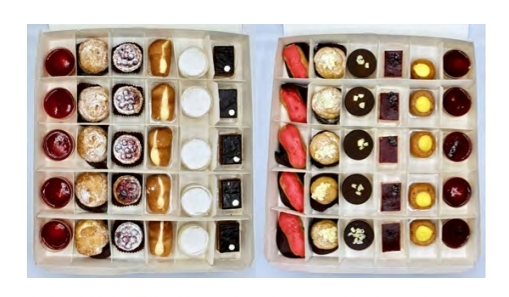
The illnesses have been linked to consumption of Sweet Cream brand mini pastries.

Importations Piu Che Dolci Inc. has recalled the following Sweet Cream brand mini-pastries:

  • Mini Patisserie (~4 kg (4 boxes of 30 pieces); UPC 8 058302 730028; All best before dates from 2025/06/17 up to and including 2025/11/15; Product of Italy)
  • Mini Patisserie – Tray A (1 kg (30 pieces); UPC 8 058302 730004; All best before dates from 2025/06/17 up to and including 2025/11/15; Product of Italy)
  • Mini Patisserie – Tray B (1 kg (30 pieces) UPC 8 058302 730011; All best before dates from 2025/06/17 up to and including 2025/11/15; Product of Italy)

The mini-pastries may have been sold clerk-served or in smaller packages, with or without a label that may not bear the same brand, product name, or best before date.

The recalled products were distributed to bakeries, hotels, restaurants, cafeterias, hospitals, retirement residences, and the general public in Alberta, British Columbia, Nova Scotia, Ontario, and Quebec, and may also have been distributed in other Canadian provinces and territories. The pastries also were served at catered events.

The following advice from the PHAC applies to individuals, as well as retailers, distributors, and food service establishments (bakeries, hotels, restaurants, and cafeterias), as well as facilities such as hospitals and retirement residences across Canada:

  • Contact your health care provider if you think you’re experiencing symptoms of Salmonella infection.
  • Check to see if you have the recalled products in your home or establishment by looking for the specific product name and size, UPC and codes in the recall alert.
  • Do not consume, serve, use, sell or distribute recalled products.
  • Throw out or return recalled products to the location where they were purchased. Consumers or establishments who are unsure if they have purchased the recalled products are advised to contact their retailer or supplier where the products were purchased.
  • Do not cook food for other people if you’ve been diagnosed with a Salmonella infection or any other gastrointestinal illness.

Salmonellosis has a wide range of symptoms. You may not get sick at all. However, if you do get sick, symptoms usually start within 6 to 72 hours after exposure.

You may experience one or more of the following symptoms: chills, fever, nausea, diarrhea, vomiting, stomach cramps, and a sudden headache. Most symptoms end within 4 to 7 days.

While most people recover completely on their own, some people may have a more serious illness that requires hospital care, possibly leading to long-lasting health effects or death.


TAINTED formats 3
“Reads like a true crime novel” – Food Safety News

Interested in learning more about food safety and the history of foodborne disease outbreaks and investigations?

Click on the link to listen to a short excerpt, then follow the buy links to add a digital, print or audio copy to your personal library.

Chapter 6. Birth of a Pathogen

TAINTED is available in digital format from all major on-line retailers. Press the button to go directly to your preferred digital bookstore.

E. coli O157:H7 outbreak in Canada

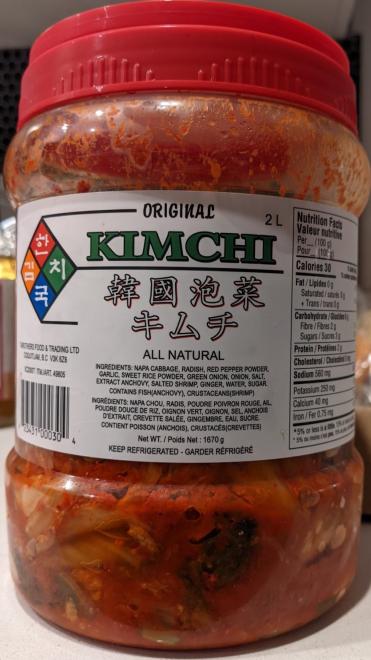
The Public Health Agency of Canada (PHAC) is alerting Canadians to an outbreak of fourteen cases of E. coli O157:H7 illnesses linked to consumption of Hankook brand kimchi products.

As of today, outbreak cases have been confirmed in Alberta (13) and Saskatchewan (1).

The first case was reported during the week of December 5, 2021, and the most recent case during the week of January 2, 2022.

Hankook Original Kimchi, 1670 g - UnitThe Canadian Food Inspection Agency (CFIA) issued a recall warning for the following product on January 28, 2022.

  • Hankook (Korean characters only) brand Original Kimchi, 1670g. UPC 6 23431 00030 4. Best before 22JA29.

The recalled product was sold in British Columbia, Alberta, Saskatchewan and Manitoba.

The CFIA is conducting a food safety investigation, which may result in the recall of additional products.

People infected with E. coli O157:H7 can develop a wide range of symptoms, which can appear between one day and ten days after consuming a contaminated food. Some do not get sick at all, though they can still spread the infection to others. Others may feel as though they have a bad case of upset stomach. In some cases, individuals become seriously ill and must be hospitalized.

Symptoms of an E. coli O157:H7 infection may include:

  • nausea
  • vomiting
  • headache
  • mild fever
  • severe stomach cramps
  • watery or bloody diarrhea

The following advice from the PHAC applies to individuals, as well as retailers, distributors, manufacturers and food service establishments such as hotels, restaurants, cafeterias, hospitals and long-term care homes, across Canada:

  • Do not eat, use, sell or serve the recalled kimchi or any products made with the kimchi. Check to see if you have recalled food products at home. If you do, throw them out and wash your hands.
  • Clean and sanitize all surfaces and storage areas that recalled kimchi or any products made with the recalled kimchi may have come in contact with, including countertops, containers, utensils, freezers, and refrigerators.
  • If you have been diagnosed with an E. coli infection or any other gastrointestinal illness, do not cook food for other people.
TAINTED
Your authoritative and easy-to-digest source for food safety information.