Papaya pathogen problems persist

Little appears to have changed since 2011 outbreak, despite efforts of U.S., Mexican governments
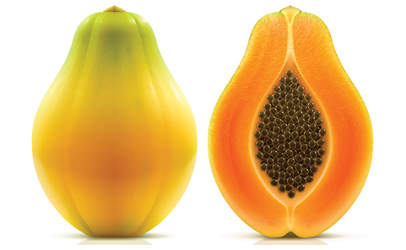
The CDC posted this photo with its outbreak notice, describing maradol papayas as large, oval fruits that weigh 3 or more pounds, with green skins that turn yellow when the fruit is ripe. The flesh inside the fruit is salmon-colored. Photo courtesy of CDC

Salmonella — the pathogen behind an ongoing foodborne illness outbreak that has sickened 173 people across 21 states, killing one — is a normal inhabitant of the intestinal tract of many birds, reptiles and mammals.

The possibility that an agricultural product such as papayas may be contaminated with Salmonella is impossible to eradicate; however, the risk of widespread contamination can be controlled through careful attention to current best sanitary practices in the cultivation, harvesting and packing of raw produce. Failure to do so can result in a vicious cycle of contamination in fields, packing houses and the distribution system.

Cultivation, harvesting and packing
The papaya is a fast-growing, tree-like herbaceous plant, which is at home in tropical and semi-tropical climates and is cultivated extensively across southeastern Mexico, according to a report issued by the University of Florida IFAS Extension Service. The most recent report from Mexico’s Secretaría de Agricultura, Ganadería, Desarrollo Rural, Pesca y Alimentación (Ministry of Agriculture, Livestock, Rural Development, Fisheries and Food) shows Mexico to be the fifth largest producer of papayas in the world.
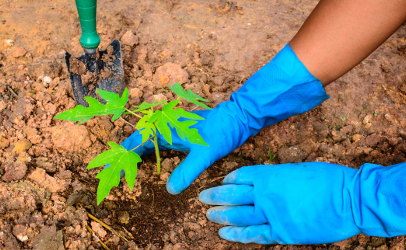
Papaya trees are propagated from seeds. When seedlings are large enough, they are transplanted by hand into growing fields.

The papaya plant is propagated from seeds, with seedlings transplanted into fields when they are of sufficient size. The plant matures in six to nine months in warmer regions. Susceptible to a variety of plant diseases and pests, such as root rot, powdery mildew, papaya ringspot virus, fruit fly and white fly, papaya plants usually have an abbreviated commercial lifespan of two to three years, according to information from the University of Hawaii. It is not unusual for a papaya plant to only produce a single crop in its lifetime.

Once harvested and delivered to the packing house, each papaya is graded according to ripeness and size. Next, the fruit is sorted according to size a second time, as well as shape, and color. It is also examined for insect or mechanical damage.

The sorted fruit is generally washed in large vats of chlorinated tap water to remove dirt, debris and insect contamination. Depending upon the condition of the fruit and the expected final destination, it may be subjected to additional treatments, including a hot water bath or a fungicide dip. After air-drying, the fruit is packed for shipment.

2011 Salmonella Agona outbreak
In 2011, the Centers for Disease Control and Prevention and the Food and Drug Administration investigated a Salmonella Agona outbreak that was traced to contaminated papayas imported from Mexico. The papayas were grown and packed by Agromod SA de CV of Chiapas, Mexico, and distributed by Agromod Produce Inc. of McAllen, Texas.

Photo illustration

The Agromod papaya plantation had an interconnected drainage ditch system, according to information presented in 2013 during the annual educational conference of the National Environmental Health Association (NEHA).

The marsh-like environment of the drainage ditches was a haven for waterfowl, frogs and other wildlife, and provided perfect growth conditions for pathogenic bacteria. During heavy rain and flooding, the ditches overflowed into the soil surrounding the trees, impregnating the soil with pathogens from the water.

During an on-site inspection of Agromod’s plantation and packing house, investigators from FDA recovered a full two dozen different types of Salmonella, including the Salmonella Agona outbreak strain. Salmonella-positive samples were drawn from fields where the papaya grew and from packing-house drains.

The crops at Agromod were harvested by two-person teams. One person worked at tree level, picking fruit and handing or tossing it to the other person below. The second person laid each papaya onto a piece of poly foam on the unprotected soil. The foam was wrapped around the fruit, which was loaded into foam-lined bins for transport to the packing house.

It was common practice at Agromod for the sheets of poly foam to be reused for up to 15 days before being discarded, helping to spread contamination from the fields to the fruit, packing house and back again.

Photo illustration

Once in the packing house, the fruit was washed in large vats of water. The level of chlorine in the wash water was not properly monitored or controlled, allowing Salmonella to spread throughout an entire batch of papayas.

The wash water was discharged into the drainage ditch system, returning Salmonella to the fields in a vicious cycle of contamination.

Import Alert
In response to the extent of Salmonella contamination brought to light during the investigation of the 2011 outbreak, FDA instituted Import Alert #21-17, “Countrywide Detention Without Physical Examination Of Papaya From Mexico.” Firms that provided documentation of five consecutive Salmonella-negative commercial shipments qualified for an exemption from the automatic detention at the U.S. border.

Concurrent with FDA’s initiation of the Import Alert, Mexico’s Servicio Nacional de Sanidad, Inocuidad y Calidad Agroalimentaria (National Service for Health, Safety and Agrifood Quality) (SENASICA ) unveiled a plan to assist that country’s papaya growers, packers and shippers in addressing the issues of safe growing and handling of the fruit.

History repeats
Notwithstanding the efforts of multiple agencies in both countries, the United States is once again in the throes of an outbreak of Salmonella that is associated with consumption of fresh, whole papayas imported from Mexico.

To view a larger version of the map on the CDC’s website, please click on the image.

As of Aug. 18 when the CDC posted it’s most recent outbreak update, 173 people had been confirmed sick across 21 states, with 58 hospitalizations, and one death on New York City. The CDC warns that the number of confirmed illnesses is likely to increase.

Thus far FDA has identified one farm in connection with the contaminated papaya. That farm, Carica de Campeche, has been supplying papayas to the U.S. market under an Import Alert exemption since 2015.

According to a spokesperson from FDA, at present there are no specific ongoing testing or inspection requirements that a producer must meet in order to maintain an exemption from automatic detention, although a firm is expected to “… continue to provide the commodity in a wholesome manner and follow all the regulatory requirements of FDA.”

The FDA revoked the exemption granted to Carica de Campeche under Import Alert 21-17 on Aug. 7.

This article first appeared in Food Safety News and is reposted here with permission.

Recalls and Alerts: August 25 – 27, 2017

Here is today’s list of food safety recalls, product withdrawals, allergy alerts and miscellaneous compliance issues. The live links will take you directly to the official recall notices and company news releases that contain detailed information for each recall and alert.

If you would like to receive automatic email alerts for all new articles posted on eFoodAlert, please submit your request using the sidebar link.

United States

Allergy Alert: Blossom Foods, LLC recalls approximately 15,092 pounds of beef, chicken and pork products due to undeclared soy and wheat. Please refer to the recall notice for a detailed list of recalled products, which were shipped to institutional locations in California and Ohio.

Allergy Alert: DiLuigi Foods Inc. recalls TRADER JOE’S CHICKEN BREAKFAST SAUSAGE (1-lb vacuum-sealed packages; produced and packaged from Aug. 10, 2017 to Aug. 24, 2017) due to undeclared soy lecithin. The recalled products were shipped to Trader Joe’s retail locations in Connecticut, Delaware, Maine, Maryland, Massachusetts, New Hampshire, New Jersey, New York, Pennsylvania, Rhode Island, Vermont, Virginia and Washington D.C.

Food Safety Recall: Ronald A. Chisholm, Ltd. recalls FLANC PORC, PORK BELLY (40-lb cardboard box; produced and packaged from June 27, 2017 to July 20, 2017) produced without benefit of import inspection. The recalled items were shipped to restaurants in Hawaii.

Canada

Allergy Alert: Soo Jerky Ltd. recalls Sue’s Jerky brand Sweet Sesame Pork Jerky (40g; Product codes 778085, 775687; UPC 0 65717 61053 9) and Sue’s Jerky brand Variety Pack (12 x 40g; Product codes 776382, 777186, 778086, 776087, 776287, 777288; UPC 0 65717 62005 7) due to undeclared fish. The recalled products were distributed to retailers in British Columbia and Ontario.

Allergy Alert: Loblaw Companies Limited recalls President’s Choice® Blue Menu Trail Mix (250g; Best before 2018 JN 14; UPC 0 60383 18390 5) due to undeclared wheat and soy. The recalled product was distributed to consumers nationwide.

Europe

Allergy Alert (Denmark): Storstrøms Ost A/S recalls Fransk Smelteost m/valnød / French melt cheese with walnuts (All sizes; All Best by dates) due to undeclared hazelnuts.

Food Safety Recall (Denmark): Lidl Danmark K/S recalls Guld Gryden Lammeculotte / Gold Pot Lamb Culotte (450-650 g; Best before 23/9-2017) due to an incorrect ‘Best before’ date. The correct date should be 25/8-2017.

Food Safety Recall (Germany): Merschbrock-Wiese Gewürz GmbH recalls Organic Ground Fennel and various fine spice mixes due to Salmonella contamination. Please refer to the recall notice for a complete list of affected products.

Food Safety Recall (Germany): Firma Schnitzer GmbH & Co. KG recalls Schnitzer Organic Baguette Classic (360g; Best before 03.01.2018; Batch 30118) due to pieces of hard plastic.

Food Safety Recall (Germany): GAEC CAPERAN recalls various goat milk cheeses (various weights; Lot #162 to 215; Best by 10/08/17 to 04/10/17; Product of France) due to possible Listeria monocytogenes contamination. Please refer to the recall notice for a complete list of affected products.

Food Safety Recall (Germany): Roos-Ruhlmann GmbH recalls  various goat milk cheeses (various weights; Lot #162 to 215; Best by 10/08/17 to 04/10/17; Product of France) due to possible Listeria monocytogenes contamination. Please refer to the recall notice for a complete list of affected products.

Asia, Africa and the Pacific Islands

Food Safety Recall (Hong Kong): The Dairy Farm Company Limited recalls PRESHAFRUIT brand Cold Pressed Apple & Strawberry bottled fruit juice drink (1 Liter; Use by September 6, 2017; Product of Australia) due to patulin contamination.

Australia and New Zealand

Allergy Alert (Australia): COYO Corporate Pty Ltd recalls COYO Sea Salted Caramel Coconut Milk Ice Cream Alternative (125 mL and 500 mL; Best before 08/04/18, 29/05/18, 27/06/18, 02/08/18) due to undeclared gluten. The products have been available for sale at independentretailers in NSW, QLD, VIC, SA, WA.

Allergy Alert (New Zealand): Importers recall various Chung Jung One brand Sunchange Ssamjang seasoned bean pastes due to undeclared peanuts. Please refer to the recall notice for a complete list of affected products and package sizes.


Some supermarket chains post recall notices on their web sites for the convenience of customers. To see whether a recalled food was carried by your favorite supermarket, follow the live link to the supermarket’s recall website.

*The Kroger umbrella encompasses numerous supermarket, marketplace and convenience store chains
**Includes Safeway, Vons, Pavilions, Dominick’s, Genuardi’s, Randalls, Tom Thumb, Carrs and Pak N’ Save.

Recalls and Alerts: August 23 – 24, 2017

Here is today’s list of food safety recalls, product withdrawals, allergy alerts and miscellaneous compliance issues. The live links will take you directly to the official recall notices and company news releases that contain detailed information for each recall and alert.

If you would like to receive automatic email alerts for all new articles posted on eFoodAlert, please submit your request using the sidebar link.

United States

Food Safety Recall: Ripley Dairy LLC recalls Hillcrest Dairy brand Old Fashioned Raw Milk Monterey Jack, Horseradish Monterey Jack, and Chipotle Adobo Monterey Jack cheeses (Mfg. Date 5/17/17) due to possible Listeria monocytogenes contamination.

Food Safety Recall: Expresco Foods, Inc. (Montreal, QC, Canada) recalls WEST END CUISINE GRILLED MEDITERRANEAN STYLE CHICKEN SKEWERS HAND-MADE WITH CHICKEN BREAST (1.31-lb. packages; lot codes 172562, 172640, 172571 and 172704; UPC 621588314947) and EXPRESCO GRILLED Garlic & Herb CHICKEN SKEWERS (1.09-lb packages; lot codes 172563, 172668, 172669 and 172670; UPC 621588315555) due to possible Listeria monocytogenes contamination. The recalled products were shipped to retail locations in Arizona, Connecticut, Florida, Illinois, Maryland, Michigan and Texas.

Food Safety Recall: Sunrise Growers Inc. recalls Great Value Organic Dark Sweet Pitted Cherry products (32 ounce printed plastic zip top bags; Best By 08/10/19; Lot code FED722211 or FED722212; UPC 078742126166) due to possible Listeria monocytogenes contamination. The recalled products were distributed to a customer distribution center in Louisiana and may have been redistributed to stores in Louisiana and Mississippi.

Pharmaceutical Products Safety Recall: Centurion Labs recalls Ninjacof (473 mL bottles; Lot# 200N1601; Expiration date 11/2018) and Ninjacof A (473 mL bottles; Lot# 201NA1601; Expiration date 11/2018) due to possible contamination with Burkholderia cepacia. The recalled products were manufactured by Vilvet and distributed by Centurion in Alabama, Arkansas, Florida, Georgia, Louisiana, Missouri, Mississippi, New Jersey, North Carolina, Ohio, Oklahoma, South Carolina, Tennessee, and Texas.

Canada

Allergy Alert: Juliang Healthy Food recalls Juliang brand Peach Blossom Powder for Beautifying Face (300g; All lot codes; UPC 6 944922 800734) due to undeclared soy.

Food Safety Recall: Weddel Ltd. recalls Hereford brand Chopped Ham (340g pkgs; Product codes 06/26/2020, 08/13/2020, 09/10/2020; UPC 8 85512 90152 2) due to possible bone fragments in the product. The recalled product was supplied to retailers nationwide.

Food Safety Recall: Folie en Vrac inc. recalls various products, as the items in question were not prepared or processed in a manner that would ensure their safety for consumption. Please refer to the recall notice for a complete list of affected products.

Food Recall: Nutrisoya Foods Inc. recalls Kirkland Signature brand Organic Fortified Soy Beverage Original (946 mL; Best by 2018MA06; Lot no. 710059211; UPC 0 96619 67324 7), because the Tetra Pak cartons may swell due to a microbiological spoilage issue. The recalled product was supplied to retailers nationwide.

Europe

Allergy Alert (UK): Frohwein’s recalls Frohwein’s Beef Sausages (varying weights; all Use By dates from 4 August through 26 August 2017) due to undeclared mustard and soya, and also recalls Frohwein’s Beef Pickled Briskets (flat and rolled; varying weights; all Use By dates from 10 August through 31 August 2017) due to undeclared mustard and celery.

Food Safety Recall (Austria, France, Germany): FROMI GmbH recalls Morbier coque – Morbier Tradition raw cow’s milk cheese (Lot 150; Best by 26.08.17 – 28.08.17 – 29.08.17 – 04.09.17; Manufactured in France by Monts de Joux) due to possible contamination with Shiga-toxin producing Escherichia coli 026:H11.

Food Safety Recall (Sweden): Salico AB recalls pre-cut apple slices (Best before August 23, 24, 25 and 26, 2017; sold in bags to McDonalds in the Nordic region) due to metal particles.

Some supermarket chains post recall notices on their web sites for the convenience of customers. To see whether a recalled food was carried by your favorite supermarket, follow the live link to the supermarket’s recall website.

*The Kroger umbrella encompasses numerous supermarket, marketplace and convenience store chains
**Includes Safeway, Vons, Pavilions, Dominick’s, Genuardi’s, Randalls, Tom Thumb, Carrs and Pak N’ Save.