Recalls and Alerts: February 4 – 6, 2019

Here is today’s list of food safety recalls, product withdrawals, allergy alerts and miscellaneous compliance issues. The live links will take you directly to the official recall notices and company news releases that contain detailed information for each recall and alert.

If you would like to receive automatic email alerts for all new articles posted on eFoodAlert, please submit your request using the sidebar link.

United States

Allergy Alert: Frito-Lay recalls Stacy’s Simply Naked Pita Chips (7 1/3 oz. bags; Mfg code 65M127902; Use by 23 APR 2019; UPC 028400564632) due to undeclared milk.

Allergy Alert: The Santa Rosa Whole Foods Market recalls Hipster Chipster cookies (Sell by dates through 02/04/19) due to undeclared walnut, milk and eggs.

Food Safety Recall: Richwell Group, Inc. recalls approximately 55,300 pounds of Siluriformes fish products that were not presented for import re-inspection into the United States. Please refer to the recall notice for a complete list of affected products.

Food Safety Recall: Q’s American Best Trading Inc. recalls approximately 1,008 pounds of imported Siluriformes fish products that were not presented for import re-inspection into the United States. Please refer to the recall notice for a complete list of affected products.

Canada

Allergy Alert: La Cuisine Meraki recalls Polpette / Meatballs (1L; all batches and dates) due to undeclared wheat, milk, soy, sesame seeds, nuts and peanuts.

Food Safety Recall: Boulangerie & pâtisserie Kubera inc. recalls various bread products that were manufactured or packaged under conditions that may not ensure food safety. Please refer to the recall notice for a complete list of affected products.

Europe

Allergy Alert (Belgium): AFSCA recalls Lucky Duck brand Cha Siu marinated roast pork (400g; Lots 51700,141700,211700,341700, 351700, 411700, 481700, 491700, 501800, 541800, 561700, 631800, 671700, 701800, 751800, 771700, 771800, 771800, 771800, 841700, 841800, 881700, 1051700, 1061800, 1091700, 1111700, 1161700, 1181700, 1191700, 1251700, 1441801, 1891800, 3211800, 3431800, 3511800, 3581800 & 3651800) due to undeclared sesame seeds.

Allergy Alert (Finland): Leivon Leipomo Oy recalls Lemon Cheesecake (Batch #05.02.2019) due to undeclared peanut oil.

Allergy Alert (France): Bonvita BV recalls various Bonvita brand Glace Bon Ice products due to undeclared milk. Please refer to the recall notice for a complete list of affected products.

Allergy Alert (Italy): LUCKY DUCK INTERNATIONAL FOOD B.V. recalls Lucky Duck brand CHA SIU – ROASTED PORK (400g; Lot #201846013; Best before 27/05/2020) due to undeclared sesame seed.

Allergy Alert (Luxembourg): Bonvita recalls various Bonvita brand Glace Bon Ice products due to undeclared milk. Please refer to the recall notice for a complete list of affected products.

Allergy Alert (UK – Northern Ireland specific): The Village Bakery Markethill recalls various own-branded bakery products due to undeclared soya, mustard, sesame, celery, milk, wheat (gluten), oats (gluten) and/or barley (gluten). Please refer to the recall notice for a complete list of affected products.

Food Safety Recall (France): La Société ANNE ROZES recalls Anne Rozes brand Tomato Sauce (Glass jars; Lot #15101811; Expiry 15/10/2022) due to foreign matter (glass splinters) contamination.

Food Safety Recall (France): Auchan recalls Auchan brand Rösti surgelé (1Kg; Lot 182606; Best if used by 09/2020) due to possible foreign matter contamination.

Food Safety Recall (Italy): IGOR SRL recalls IGOR BLU Gorgonzola DOP Dolce (150g; Lot #00716005; Best before 16.02.2019) due to Listeria monocytogenes contamination.

Food Safety Recall (Italy): IGOR SRL recalls Novari’ GORGONZOLA DOP dolce (1.5 kg; Lot #0074027; Best before 07/03/2019) due to Listeria monocytogenes contamination.

Food Safety Recall (Italy): IGOR SRL recalls IGOR BLU Gorgonzola DOP Dolce (1.5 kg; Lots #0073033- 0073034 – 0073036; Best before 07/03/2019) due to Listeria monocytogenes contamination.

Food Safety Recall (Italy): IGOR SRL recalls Bella Italia Gorgonzola DOP Dolce (1.5 kg; Lot #0074040; Best before 07/03/2019) due to Listeria monocytogenes contamination.

Food Safety Recall (Italy): IGOR SRL recalls Casa Leonardi Gorgonzola DOP Dolce (1.5 kg; Lot #0074035; Best before 07/03/2019) due to Listeria monocytogenes contamination.

Food Safety Recall (Italy): IGOR SRL recalls Colle Maggio Gorgonzola DOP Dolce (~300g; Lot #0088003; Best before 17/02/2019) due to Listeria monocytogenes contamination.

Food Safety Recall (Italy): IGOR SRL recalls Casa Leonardi Gorgonzola DOP Dolce (1.5 kg; Lot #0083002; Best before 08.03.2019) due to Listeria monocytogenes contamination.

Food Safety Recall (Italy): GASTRONOMIA TOSCANA SPA recalls GASTRONOMIA TOSCANA brand Crostini alla Toscan (220g; Lot #190123; Best before 06,07,09/02/19) due to foreign matter (plastic pieces) contamination.

Food Safety Recall (Italy): Conserve Italia soc. coop. AGRIC recalls Fruttissima brand FRUTTISSIMA ACE (200 ml; Lot #LA194; Best before 10/2019) due to foreign matter (glass) contamination.

Food Safety Recall (Luxembourg): Auchan recalls Auchan brand Rösti surgelé (1Kg; Lot 182606; Best if used by 09/2020) due to possible foreign matter contamination.

Food Safety Recall (Luxembourg): Auchan recalls Auchan brand sauerkraut (370g; Lots #011015, 011024, 011029; Best before 09/02/19,18/02/19, 23/02/19) due to foreign matter (rubber) contamination.

Food Safety Recall (Sweden): Grönsaksmästarna recalls Beetroot sprouts (Best before 2019-02-07) due to Salmonella contamination.

Pet Food Safety Recall (Luxembourg): Hill’s recalls various Hill’s brand canned pet foods due to elevated levels of vitamin D. Please refer to the recall notice for a complete list of affected products.

Australia and New Zealand

Food Safety Recall (Australia): Maleny Cheese recalls Maleny Herb and Garlic Feta (Various weight; Use By 21 MAY 19) due to E. coli contamination.


Beach Beat: Can you see me now?

This opinion piece by Coral Beach first appeared in Food Safety News and is reposted here with permission

Once again science trumps government when it comes to open, easy and meaningful access to the information we need. A Listeria monocytogenes outbreak and related recall of pasteurized chocolate milk in Canada was ever so lightly reported by public health agencies back in 2016.

We covered the recall, expanded recall, and government warning in June 2016. The situation pretty much fell off radar screens after that.

This week, thanks to the journal Emerging Infectious Diseases from the U.S. Centers for Disease Control and Prevention, we’ve seen the rest of the story.

The outbreak, linked to Neilson brand chocolate milk sold by Montreal-based Saputo Inc., sickened at least 34 people, killing four. All but two of the victims were so sick they had to be hospitalized. All of the confirmed victims lived in Ontario. Most were elderly people, though their ages ranged from less than 1 to 90 years old.

People were sickened in two waves, but all are considered part of the single outbreak linked to Neilson brand partially skimmed chocolate milk. Illness onset dates for the first wave of victims were Nov. 14, 2015, through Feb. 14, 2016. The victims in the second wave became sick between April 11 and June 20, 2016.

There’s little doubt that more people were sickened by the milk sold by Saputo Inc. It can take up to 70 days after exposure to Listeria monocytogenes for the symptoms of listeriosis to develop.

Do you remember what you ate and drank 7 days ago? How about 70 days ago? 

Epidemiologists know about the limitations of human memory when it comes to such details. But, being scientists, they almost never speculate about possible cases. They deal in facts, and the fact is only 34 people were diagnosed, underwent confirmation testing, and had their cases reported to public health officials.

Of the confirmed sick people, many bought the implicated milk at the same grocery stores. Lab tests showed the outbreak strain of Listeria monocytogenes in the milk and in the facility where it was produced, according to the research report published in the CDC’s Emerging Infectious Diseases journal.

“Environmental sampling at the manufacturer confirmed the presence of the outbreak strain within a post-pasteurization pump dedicated to chocolate milk and on nonfood contact surfaces. This post-process contamination of the chocolate milk line was believed to be the root cause of the outbreak,” according to the research report.

“A harborage site might have been introduced by a specific maintenance event or poor equipment design. The equipment was subsequently replaced, and corrective measures were implemented to prevent reoccurrence. Chocolate milk production was resumed after vigorous testing for L. monocytogenes under regulatory oversight.”

Forget Waldo, where’s the info?
Considering the striking information reported by researchers, I started crawling around on various websites of public health and food safety agencies in Canada. There was little to find. I contacted Public Health Ontario.

A “communications advisor” got back to me in a couple of hours. That’s impressive in terms of response time in these situations.

The response itself was much less impressive. It turns out there is “an internal final summary of the outbreak.” That’s gov’mint speak for “the public can’t see it.” 

The health department press officer provided a link to the research reported in the journal Emerging Infectious Diseases in case I wanted additional details. Umm, that journal article is what sent me knocking on your email door.

I specifically asked why the release of the information was delayed.

Answer: “The Ministry of Health and Long-Term Care (MOHTLC), the organization that informs the public during provincial outbreak investigations, released a joint statement from the Minister of Health and the Chief Medical Officer of Health (CMOH) about the outbreak on Jan. 20, 2016, and the CMOH issued a follow-up statement on June 12, 2016 after the cause of the outbreak was identified and the chocolate milk was recalled. Public Health Ontario also posted a notice on our website, which was regularly updated between January and October 2016. The final notice remains on our website. We suggest contacting the MOHTLC if you have more questions about this.” 

To save you a click, here what the “final notice” says:

“The provincial outbreak of Listeria monocytogenes which began in November 2015 was declared over on July 29, 2016. A total of 34 cases were linked to the outbreak with the majority being older adults. The cases were from 16 public health units in Ontario. The source of the outbreak was determined to be Neilson brand partly skimmed milk”

Call me a reporter, call me instinctively curious, call me anything you want, but shouldn’t a final report on any outbreak be more than 58 words? Shouldn’t  such a report include whether anyone died, and if there were deaths, how many? 

Shouldn’t such information be less difficult to find with the naked eye? Or, do we need to develop a device to reveal public safety information the way microscopes reveal bacteria such as Listeria monocytogenes.  

It’s like all the best food safety nerds and activists say: If you don’t look for it, you won’t find it.

Note from the FoodBugLady: Here is a link to the report in Emerging Infectious Diseases

Belgian child sick; link to Salmonella in infant formula

This story by Joe Whitworth first appeared in Food Safety News and is reposted here with permission

Belgium has reported a case of Salmonella in an infant linked to an outbreak in France.

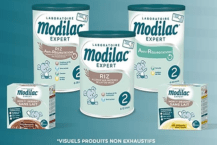
The Federal Agency for the Safety of the Food Chain (FASFC) said it was informed of two sick babies in Belgium who had, among other things, consumed infant nutrition products of the Modilac brand bought in France, a few hours before the onset of symptoms.

Following an investigation, it appears the consumption of Modilac branded products was the cause of symptoms in one of the two sick children.

Four babies were sickened in France by Salmonella Poona with a link to consumption of Modilac branded products, marketed by Sodilac, a subsidiary of Savencia SA. Three other cases remain under investigation with sequencing ongoing.

The four confirmed patients, aged between two months and 10 months, fell ill between August and the end of December 2018. For probable cases, the age range extends to 18 months and illness onset up to January 2019.

Lactalis recalled 16,300 boxes of Picot AR milk as it was made at the same Spanish factory as the Modilac products but no illnesses have been linked to any Lactalis products.

Implicated Modilac products are not distributed on the Belgian market. They are distributed in France in pharmacies only and via charitable associations or marketed via online sales. Items have also been sent to Vietnam, Morocco, Algeria, and Tunisia.

FASFC asked parents who bought the products in France or online not to use them. The agency has contacted French authorities and the situation is being monitored.

The agency advised consumers to be aware that online shopping abroad is not always safe and people should look out for possible risks by checking the websites of foreign health authorities.

Santé Publique France, the public health agency, reported the four cases of Salmonella in infants with genome sequences (cgMLST) belonging to the same cluster.

The European Centre for Disease Prevention and Control (ECDC) said it had not found matches with the French isolate in its database. No other countries have reported matches so far but genome sequencing analyses are ongoing and additional cases may be reported.

Salmonella Poona is the 36th most common serotype in the European Surveillance System (TESSy). It was reported by 23 EU countries in 2013-2017 with 147 to 206 cases per year. In the five-year period, France accounted for 34 percent of cases, followed by the UK with 26 percent and the most common age group were children 0-4 years old (37 percent of all cases).