Memo to RFK, Jr: Raw milk not worth the risk

Once upon a time, raw milk was reasonably safe to drink. But, that was long, long ago.

An early scene in the movie “A League Of Their Own” (set in the 1940s) depicts two sisters sitting in a barn, each of them milking a cow.

In this idyllic scenario, the milk that flowed into scrupulously clean pails would be consumed fresh, churned into butter, or used to make cheese. None of this liquid gold (okay, white gold) would sit around in chilled bulk tanks waiting to be bottled.

Of course, even back then, raw milk was not without its problems. Dairy cows suffering from bovine tuberculosis could shed the bacteria in their milk. Likewise, undulating fever (brucellosis) could be transmitted to individuals who drank milk from an infected cow.

In Spoiled. The Myth of Milk as Superfood, Anne Mendelson traced the evolution of Western civilization’s love affair with drinking milk.

As demand in cities grew for fresh milk, problems with purity, safety, and spoilage mounted exponentially. As the frequency and size of milk-borne epidemics increased, pasteurization gained reluctant acceptance as a means of ensuring a safe milk supply.

Nevertheless, now that collective memories of the ‘bad old days’ of milk-borne diseases have faded, a growing cadre of consumers have united in their desire to consume raw milk, cream, cheese, and butter.

And dairy farmers across the United States (and in Canada) have stepped up to fill this market niche.

In September 1987, the US Food and Drug Administration (FDA) issued a Final Rule mandating that “…milk and milk products in final package form for human consumption in interstate commerce be pasteurized.”

The FDA does not regulate food products (including raw milk) that are produced and sold intrastate (ie., without crossing state lines). Oversight of those products is left to each individual state.

As of 2024, approximately 30 states permitted intrastate sale of raw milk, while 20 states prohibited it. Yet, raw milk can be purchased even in those 20 states through a loophole known as the “cow share program.”

According to the website, realmilk.com, a consumer can enter into a contract with a dairy farmer in which the consumer pays the farmer to feed, house, and care for Betsy. In turn, the consumer receives the output of the cow (milk, butter, cheese, etc.).

In practice, Betsy’s milk is mixed with milk from Elsie, Matilda, and all of the other members of the dairy herd, and the consumer receives a portion of that commingled output. Thus, if Betsy is one of 100 dairy cows in the herd, the consumer would be entitled to 1% of the total output of the herd.

If that’s more dairy product than one consumer’s family can handle, he or she could opt to purchase just a fraction of Betsy’s theoretical output. Perhaps just one-half or one-quarter of a cow.

Raw (unpasteurized) milk and dairy products made with raw milk have been the source of multiple outbreaks of Salmonella, Campylobacter, Listeria monocytogenes, and E. coli O157:H7 infections.

The FDA compiled a list of 133 outbreaks associated with raw milk covering the period 1987 to 2010. These outbreaks caused 2,659 cases of illnesses, 269 hospitalizations, 3 deaths, 6 stillbirths, and 2 miscarriages.

The list of outbreaks continues to grow. Between 2009 and 2021, the CDC logged 143 enteric disease outbreaks that were confirmed or suspected to be associated with consumption of raw milk.

From October 18, 2023 through May 4, 2024, the California Department of Public Health and its partner agencies investigated an outbreak of Salmonella Typhimurium that encompassed 171 confirmed outbreak cases, the majority of them among children.  Epidemiologic, laboratory, and traceback investigations identified Raw Farm brand raw milk as the source of the outbreak. 

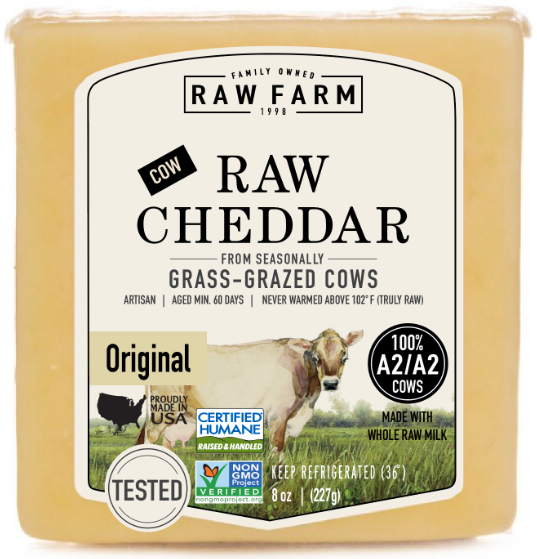
And in February/March 2024, the CDC advised consumers that eleven cases of E. coli O157:H7 infection had been traced to raw cheddar cheese, also manufactured by Raw Farm, LLC, a California-based raw dairy producer. Five of the eleven victims were hospitalized and two developed hemolytic uremic syndrome (HUS).

The company at first agreed to recall the implicated products, then reversed its position and cancelled the recall.

Raw Farm is owned and operated by Mike McAfee, and has a long history of regulatory disputes both with California regulators and with the FDA.

In March 2024, the bird flu virus, H5N1, was detected in the US cattle population for the first time. As infected cattle are able to shed live virus in their milk, this raised a concern about the safety of the commercial milk supply across the USA.

In response, the FDA carried out an initial sampling of retail (pasteurized) milk and reported that all 297 samples analyzed were negative for the H5N1 virus. A second follow-up survey showed similar results. The FDA also carried out a series of lab tests and confirmed that pasteurization inactivates the H5N1 virus.

To determine the extent to which the bird flu virus has contaminated raw milk, federal and state agencies are working cooperatively to test milk samples drawn from raw milk storage silos at dairy processing facilities. Analysis of these samples for the H5N1 virus is being carried out by the USDA’s National Veterinary Services Laboratory.

There is a small but growing body of reports indicating that the bird flu virus can be transmitted to animals (and occasionally to humans) via ingestion. On January 17, 2025, the FDA notified the cat and dog food industry that manufacturers who are covered by the FDA Food Safety Modernization Act Preventive Controls for Animal Food (PCAF) rule and are using uncooked or unpasteurized materials derived from poultry or cattle must reanalyze their food safety plans to include Highly Pathogenic Avian Influenza virus (specifically H5N1) as a known or reasonably foreseeable hazard. 

This notice followed reports of domestic cats that had become infected with the H5N1 virus after consuming a raw pet food that was later found to be contaminated with the virus.

Several cats also have become infected after drinking raw milk that was later recalled due to the presence of the H5N1 virus.

If RFK, Jr. directs the FDA to rescind its 1987 Final Rule and allow the interstate shipment of retail-packaged raw milk across state lines, the impact on public health could be staggering. And negative.

Considering the decades-long history of foodborne illness outbreaks associated with raw milk consumption, expanding the availability of this commodity will inevitably increase the risk to consumers.

Furthermore, once a dairy product is shipped across state lines, the manufacturer of that product falls under FDA jurisdiction. The FDA’s budget already is inadequate to support its existing regulatory responsibilities. Adding an new industry sector to its workload will stretch resources to the breaking point, with disastrous effects on the entirely of the agency’s food safety activities.


TAINTED formats 3
“Reads like a true crime novel” – Food Safety News

Interested in learning more about food safety and the history of foodborne disease outbreaks and investigations?

Click on the link to listen to a short excerpt, then follow the buy links to add a digital, print or audio copy to your personal library.

Chapter 6. Birth of a Pathogen

TAINTED is available in digital format from all major on-line retailers. Press the button to go directly to your preferred digital bookstore.

Bird flu and household pets

Highly pathogenic avian influenze (HPAI), more commonly known as bird flu, not only infects poultry flocks (backyard and commercial) and dairy herds.

The influenza A H5N1 virus (the current prevalent variety of bird flu virus in circulation) has been found in a range of wildlife species in addition to wild birds. From deer mice to dolphins, from cougars to coyotes, no mammalian species is completely immune from infection.

In recent weeks, it has become clear that household pets also are at risk.

In April 2023, a domestic dog tested postive in Canada for the H5N1 virus after chewing on a wild goose. The dog died a few days later.

Household pets that spend unsupervised time outdoors are at risk of coming into contact with infected wildlife, such as a sick or dead bird or rodent.

The risk is increased if the household also maintains a backyard poultry flock.

Caged birds may also be at risk, if they are allowed to fly free from time to time and come into contact with a wild bird.

Yet, even pets that are kept largely indoors and are under supervision while outside can become infected with the bird flu virus.

Cats are more susceptible to bird flu infections than dogs. There have been several reports of barn cats and feral cats becoming as a result of exposure to H5N1 on dairy farms.

Domestic indoor cats also are at risk.

Recently, Food Safety News reported on a case involving three cats in one household that were fed raw milk from the California company, Raw Farm LLC in late 2024. Two of the cats died and a third became seriously ill. A fourth cat in the household, which did not drink any of the raw milk, remained healthy.

On December 3, 2024, Raw Farm LLC recalled all raw milk and cream products after the California Department of Food and Agriculture found multiple instances of H5N1 virus in the company’s raw milk.

The dairy’s owner, Mark McAfee, denied that his milk was the source of the virus that killed the cats, claiming that the H5N1 virus cannot survive for long periods in cold milk. However, a recent study funded by the National Institutes of Health determined that the H5N1 virus remained viable in refrigerated raw milk for five weeks with only a minor decline in virus levels.

The H5N1 virus can also be present in raw pet food.

On December 24, 2024, Northwest Naturals recalled one batch of Northwest Naturals brand 2lb Feline Turkey Recipe raw frozen pet food after it tested positive for highly pathogenic avian influenza (HPAI) virus. Testing was initiated after a cat that had been fed the raw pet food developed bird flu and died.

On December 31, 2024, the Los Angeles County Department of Health advised the public not to feed Monarch Raw Pet Food to their pets after the H5N1 virus was detected in a sample. Again, testing was initiated after a cat that had been fed the product became ill and was confirmed to be infected with the virus.

On January 3, 2025, Monarch Raw Pet Food Company issued a statement claiming that there was no scientific evidence to substantiate the link between their pet food and the cat illness.

eFoodAlert reached out to the FDA Center for Veterinary Medicine (CVM) and received the following statement from a CVM spokesperson:

The FDA is tracking cases of Highly Pathogenic Avian Influenza in domestic and wild cats in California, Colorado, Oregon and Washington State that appear to be linked to eating contaminated food products. No human illness has been reported from handling these foods or through contact between people and the animals.

Some of the animals were fed raw poultry or raw poultry pet food, while others ate unpasteurized milk. The FDA is working with state and federal counterparts to gather more specific information about what animals ate which foods and when, and to coordinate test results of the animals and the suspect foods.

The FDA and state authorities routinely work together to surveil the animal food supply, including pet food. This includes conducting risk-based facility inspections and collecting animal food samples to help ensure safety.  The FDA may also collect samples “for cause,” such as when a pet food is suspected of being associated with human or animal illness. State authorities also regularly collect samples from retail settings and share test results with the agency. HPAI is an emerging contaminant in animal food. Analytical capacity is limited and pathogens like H5N1 can be difficult to detect because they might not be evenly distributed throughout the product (increasing the possibility of a false negative result).

Part of a pet food manufacturer’s responsibility is to bring a safe, wholesome product to market that is not adulterated under the Federal Food, Drug, and Cosmetic Act. As we learn more about the transmission of H5N1 in animal food, there are several practices that the FDA is encouraging pet food manufacturers and others in the supply chain to use to prevent HPAI transmission through animal food. These practices could include seeking poultry from flocks that are documented as having remained healthy throughout processing, and taking processing steps, such as heat treatment, that are capable of inactivating viruses and other hazards. 

All recent detections of H5N1 in cats had these things in common: the infected cats ate wild birds, unpasteurized milk, raw poultry, and/or raw poultry pet food. We know that cats are particularly sensitive to HPAI, and that very young, very old or immune-compromised animals are at greater risk of infection. The FDA continues to recommend that consumers avoid feeding pets any products that are recalled or from affected farms if those products have not been thoroughly cooked or pasteurized to inactivate the virus. If consumers are unsure of the origin of those products, it’s safest to follow the USDA guidelines for handling and thorough cooking before feeding. Animals should also be kept from hunting and eating wild birds.

Symptoms of a bird flu infection vary with the species. Here is a short list of what to watch for. Contact your veterinarian if you suspect one of your pets may be infected with bird flu. If you or a household member begins to exhibit symptoms associated with the bird flu virus, contact your healthcare provider.

  • Sudden death with no prior signs
  • Low energy or appetite
  • Purple discoloration or swelling of various body parts
  • Reduced egg production, or soft-shelled/misshapen eggs
  • Nasal discharge, coughing, or sneezing
  • Lack of coordination
  • Diarrhea
  • Fever
  • Lethargy
  • Low appetite
  • Reddened or inflamed eyes
  • Discharge from the eyes and nose
  • Difficulty breathing
  • Neurologic signs, like tremors, seizures, incoordination, or blindness

In humans

  • Eye redness or discharge
  • Cough
  • Sore throat
  • runny or stuffy nose
  • Diarrhea
  • Vomiting
  • muscle or body aches
  • Headaches
  • Fatigue
  • trouble breathing
  • Fever

“Reads like a true crime novel” – Food Safety News

Interested in learning more about food safety and the history of foodborne disease outbreaks and investigations?

Click on the link to listen to a short excerpt, then follow the buy links to add a digital, print or audio copy to your personal library.

Chapter 6. Birth of a Pathogen

TAINTED is available in digital format from all major on-line retailers. Press the button to go directly to your preferred digital bookstore.

Recalls and Alerts: February 7 – 9, 2019

Here is today’s list of food safety recalls, product withdrawals, allergy alerts and miscellaneous compliance issues. The live links will take you directly to the official recall notices and company news releases that contain detailed information for each recall and alert.

If you would like to receive automatic email alerts for all new articles posted on eFoodAlert, please submit your request using the sidebar link.

United States

OUTBREAK ALERT: CDC alerts consumers to potential exposures to a drug-resistant Brucella strain RB51 (RB51) in 19 states, connected to consuming raw (unpasteurized) milk from Miller’s Biodiversity Farm in Quarryville, Pennsylvania. One case of RB51 infection (brucellosis) has been confirmed in New York.

Allergy Alert: Birdseed Food Co. recalls Craft Granola Goldenola Turmeric & Ginger (11oz and 3oz pkgs; All expiration dates up to and including 061419) due to undeclared cashews.

Allergy Alert: Don Paco Lopez Panaderia Inc. recalls Sweet Bread (16-oz packages; all batches and dates) due to undeclared milk. The recalled products were distributed in New York State.

Canada

Allergy Alert: Boucherie-charcuterie Piano & Fils inc. recalls three prepared foods due to undeclared wheat, milk, eggs, soy and sulfites.

Allergy Alert: Fumeur en nord recalls Beef jerky (variable sizes; product sold up to 4 February 2019) due to undeclared barley, soy and fish.

Allergy Alert: Indigo Natural Foods Inc. recalls Indigo Packaged Goodness brand Brewers Yeast Debittered (400g; All units sold from October 24, 2018 up to and including February 7, 2019; UPC 6 99692 00659 1) due to undeclared peanut.

Allergy Alert: Industry recalls certain Ottogi brand noodle products due to undeclared egg. Please refer to the recall notice for a complete list of affected products.

Allergy Alert: Industry recalls certain RXBAR brand Protein Bars due to undeclared peanut. Please refer to the recall notice for a complete list of affected products.

Food Safety Recall: Industry recalls Betty brand and Nancy’s Fancy Yummy-in-the-Tummy brand bakery products from the marketplace due to possible contamination from mice infestation. Please refer to the recall notice for a complete list of affected products, which were distributed in Ontario and Québec. The bakery products were manufactured by Les Services alimentaires Firouz inc.

Food Safety Recall: Les Services alimentaires Firouz inc recalls numerous breads and baked goods that were manufactured or packaged under conditions that threaten food safety. Please refer to the recall notice for a complete list of affected products.

Food Safety Recall: Renard bleu inc. recalls Spaghetti sauce (500 mL and 1L jars; All product sold up to and including 6 February 2019), which was prepared and packaged under conditions that threaten food safety.

Europe

Allergy Alert (Belgium): AFSCA recalls various BonVita brand ice cream products due to undeclared milk. Please refer to the recall notice for a complete list of affected products.

Food Safety Recall (France): La société Thalassa Excellence recalls Fumage du val de lys brand Flétan fumé tranché / Sliced smoked halibut (150g; Lot #19025024; Best before 14/02/19) due to Listeria monocytogenes contamination.

Allergy Alert (Sweden): RYDBERGS recalls Rydbergs Rhode Island Dressing (50g; Best before 08.04.2019) due to undeclared milk.

Allergy Alert (UK): Rayan Patisserie recalls Rayan Patisserie Assorted Baklawah (200g and 500g; All dates up to and including 07 May 2019) due to undeclared milk and wheat.

Food Safety Recall (Germany): Ökoland GmbH North recalls Lamb salami air-dried (150 g; Batch #23394; Best before 07.03.2019) and Colbassa salami air-dried (150g; Batch 23395; Best before 07.03.2019) due to foreign matter (small blue plastic particles) contamination.

Food Safety Recall (Ireland): Dunnes Stores recalls Dunnes Stores Poached Side of Salmon (400g; Use by 19/02/19) due to uncorrect ‘Use by’ date.

Food Safety Recall (Sweden): Grönsaksmästarna recalls Nyttogrönt brand Beetroot sprouts (Best before 2019-02-07 through 2019-02-12) due to Salmonella contamination.

Pet Food Safety Recall (Belgium): Hill’s Pet Products (Benelux) NV-SA recalls certain Hill’s canned dog food products due to elevated Vitamin D levels. Please refer to the recall notice for a complete list of affected products.

Australia and New Zealand

Food Safety Recall (New Zealand): Riverside Milk recalls Riverside Milk brand raw (unpasteurized) milk, sold from a vending machine (Batches purchased between 28 January and 7 February 2019), due to Campylobacter contamination.

Food Safety Recall (New Zealand): New World Greymouth recalls certain New World Greymouth brand Hot cross bun products (Best before: 08.02.2019) due to foreign matter (glass) contamination. Please refer to the recall notice for a complete list of affected products.