Salmonella, Listeria found in Performance Dog Raw Pet Food

The US Food and Drug Administration (FDA) is alerting pet owners not to feed Performance Dog brand frozen raw pet food to their companion animals.

FDA issued the warning after finding Salmonella and/or Listeria monocytogenes in portions of two different finished products, sampled during an inspection of the manufacturer’s production facility.

The situation

Performance Dog raw pet food, lot code 072219 was found to contain both Salmonella and Listeria monocytogenes. This product, which has already entered the marketplace, was sold to customers frozen in two-pound pouches.

The second sample, which tested positive for Salmonella only, has not yet been distributed.

As Performance Dog products do not have lot code information printed on retail packaging, FDA is cautioning pet owners not to use Performance Dog frozen raw pet food produced on or after July 22, 2019.

Performance Dog raw pet food is manufactured by Bravo Packing, Inc. of Carney’s Point, New Jersey.

Bravo Packing has not announced a product recall as of this writing.

The history

This is the third occasion in recent years in which Bravo Packing has shipped contaminated product.

On September 12, 2018, the company recalled all Performance Dog frozen raw pet food products after FDA found Salmonella in a sample collected during an agency inspection.

In January 2016, FDA analyzed a sample of horse meat pursuant to a complaint from one Bravo Packing’s customers. According to the complaint, four exotic cats fell ill after being fed the meat. Two of the animals had to be euthanized.

The sample of horse meat, as well as a pre-euthanasia blood sample from one of the animals, tested positive for pentobarbital.

The risk

Salmonella

Dogs are less likely than humans to show symptoms of Salmonella infection. Nevertheless, they can carry Salmonella in their digestive system for an extended period of time, and can shed the pathogen into the environment, putting people and other companion animals at risk of illness.

Symptoms of Salmonella infections in humans typically include abdominal pain, diarrhea and a low-grade fever. Occasionally, the pathogen can enter the bloodstream and travel to other organs, producing a dangerous illness.

Listeria monocytogenes

Although dogs may become infected with Listeria monocytogenes, they show symptoms only infrequently. However, even asymptomatic animals are able to transmit the bacteria to their human companions.

Symptoms of Listeria monocytogenes in humans are varied, but are usually mild. Pregnant women who acquire an infection may transmit the disease to the fetus, resulting in premature delivery, stilbirth, or an infected newborn. The elderly, the very young, and people with weakened immune systems are at risk of more severe illness, too.

What consumers should do

  • If you have any of the affected product, stop feeding it to your pets and throw it away in a secure container where other animals, including wildlife, cannot access it.
  • Clean refrigerators/freezers where the product was stored and clean and disinfect all bowls, utensils, food prep surfaces, pet bedding, toys, floors, and any other surfaces that the food or pet may have had contact with.
  • Because animals can shed the bacteria in the feces when they have bowel movements, it’s particularly important to clean up the animal’s feces in yards or parks where people or other animals may become exposed, in addition to cleaning items in the home.
  • Consumers should thoroughly wash their hands after handling the affected product or cleaning up potentially contaminated items and surfaces.
  • If you think you have symptoms of Salmonella or Listeria monocytogenes infection, consult your health care provider.
  • If you think your pet has symptoms of Salmonella or Listeria monocytogenes infection, consult your veterinarian. Veterinarians who wish to have pets tested for Salmonella may do so through the Veterinary Laboratory Investigation and Response Network (Vet-LIRN) if the pet is from a household with a person infected with Salmonella.
  • FDA encourages consumers to report complaints about pet food products electronically through the Safety Reporting Portal. This information helps FDA further protect human and animal health.

Recalls and Alerts: September 22 – 25, 2019

Here is today’s list of food safety recalls, product withdrawals, allergy alerts and miscellaneous compliance issues. The live links will take you directly to the official recall notices and company news releases that contain detailed information for each recall and alert.

If you would like to receive automatic email alerts for all new articles posted on eFoodAlert, please submit your request using the sidebar link.

United States

Allergy Alert: Weaver Fundraising, LLC recalls Trail’s End Chocolatey Caramel Crunch (15 oz. tins; distributed to consumers through Boy Scout councils located in Houston, Texas and Corpus Christi, Texas beginning August 9, 2019) due to undeclared almonds, cashews and pecans.

Allergy Alert: California New Foods recalls various flavors and date codes of Carolyn’s Cookie Co. frozen cookie dough and Country Baking Company refrigerated cookie dough due to undeclared peanuts and walnuts. Please refer to the recall notice for a complete list of affected products.

Food Safety Recall: Euphoria Fancy Food Inc recalls “CAPITAN K” salmon slightly salted pieces (7.05 oz; Container code 070519; Best before 01/30/20; UPC 607059000362) due to Listeria monocytogenes contamination.

Pet Treat Safety Recall: TDBBS, LLC recalls TDBBS, LLC USA Thick Pig Ear (8 Pack; Lot codes 1129T1 & 1549T1; Best by 4/22/2021 & 6/06/2021; UPC X001768PNB; Product of USA) and TDBBS, LLC USA Thick Pig Ear (20 Pack; Lot codes 1129T1, 1339T1 & 2179T1; Best by 4/22/2021, 5/13/2021 & 8/05/2021; UPC X000RBC5VF; Product of USA) due to Salmonella contamination.

Canada

Health Product Safety Recall: RW Consumer Products Ltd. recalls Gripe Water – Alcohol And Preservative Free, sold under various brand names, because company testing showed microbial contamination. Please refer to the recall notice for a complete list of affected products.

Food Safety Recall: Randsland Farms Inc. recalls Randsland brand Super Salad Kit (454g; Product code 2919071 100119; UPC 0 57225 00005 6) and Randsland brand Kale (340g; Product code 2919071 100119; UPC 0 57225 00006 3) due to Listeria monocytogenes contamination.

Food Safety Recall: Alpha Meat Packers Ltd. recalls various Alpha Meat Packers Ltd. brand Beef Burgers and Lean Ground Beef due to E. coli O157:H7 contamination. Please refer to the recall notice for a complete list of affected products.

Food Safety Recall: Alpha Meat Packers Ltd. recalls various Alpha Meat Packers Ltd. brand Ground beef, Ground pork and burger products due to E. coli O157:H7 contamination. Please refer to the recall notice for a complete list of affected products.

Food Safety Recall: Ryding-Regency Meat Packers Ltd. recalls Ryding-Regency Meat Packers Ltd. brand Beef Cheek Meat Less Than 5% Water Retention (Variable weight; PACKED 19/03/22) due to E. coli O157:H7 contamination.

Food Safety Recall: Ryding-Regency Meat Packers Ltd. recalls three Ryding-Regency Meat Packers Ltd. brand beef and veal products due to E. coli O157:H7 contamination. Please refer to the recall notice for a complete list of affected products.

Food Safety Recall: Compagnie nationale d’importation de harengs ltée recalls tartinade de truite fumée / smoked trout tartinade (160g; All best before dates up to 24 October 2019) due to Listeria monocytogenes contamination.

Food Safety Recall: Poissonnerie Québec Océan recalls specific lot codes of two products due to inadequate labeling to specify storage temperature. Please refer to the recall notice for a complete list of affected products.

Europe

Allergy Alert (Belgium): Thomas Tucker recalls Toy Story 4 Sweet & Salty Popcorn (25g; Best before 23/02/2020) and LOL Surprise Sweet & Salty (25g; Best before 23/02/2020) due to undeclared milk.

Allergy Alert (Finland): Atria Suomi Oy recalls Atria Kunnon Arki Juustokerrosburgeri / Cheeseburger (180g; All expiry dates up to 6.10.2019) and Atria Wilhelm Porilainen (148g; All expiry dates up to 6.10.2019) due to undeclared sesame seeds.

Allergy Alert (France): Industry recalls Naturli’ brand Pâte tartinable Vegan avec colza, noix de coco, karité et amande / Vegan spread with rapeseed, coconut, shea and almond (All Best before dates between 30/08/19 and le 27/11/19) due to undeclared milk.

Allergy Alert (Luxembourg): Cactus recalls Zwan brand Pâté de foie / liver pâté (3 x 43g) due to undeclared butter, milk and eggs.

Allergy Alert (Netherlands): Streeckgenoten recalls Streeckgenoten brand de lekkerste gehaktbal / The tastiest meatballs (120g; Best before 06-10-2019) due to undeclared gluten.

Allergy Alert (Netherlands): Struik Foods recalls Struik Hollandse Hachee (400g; Lot code 13219; Expiry MRT2022) due to undeclared milk.

Allergy Alert (Sweden): Axfood recalls Garant Salta chips (200g; Best before 28.02.2020) due to undeclared milk

Allergy Alert (UK – Northern Ireland specific): Lidl Northern Ireland recalls three products due to lack of English-language allergen labeling for presence of milk, wheat and eggs. Please refer to the recall notice for a complete list of affected products.

Food Safety Recall (UK – Northern Ireland specific): Lidl Northern Ireland recalls three products due to lack of English-language cooking instructions. Please refer to the recall notice for a complete list of affected products.

Food Safety Recall (Belgium): Polak recalls Ryki brand Gouda fromage coupé / sliced Gouda cheese (135g; Lot #180359; Best before 18/10/2019) due to Listeria monocytogenes contamination.

Food Safety Recall (France): Intermarché recalls COMPTOIR DES AFFINEURS brand Bethmale au lait cru / raw milk cheese (190g wedges; various lot codes and Best before dates) due to Listeria monocytogenes contamination. Please refer to the recall notice for a complete list of affected lot codes.

Food Safety Recall (France): Netto recalls Fromapac brand BETHMALE cheese (200g wedges; Lots #001010965, 001011576 & 001008988; Best before 21/09/2019, 23/09/2019 & 13/09/2019) due to Listeria contamination.

Food Safety Recall (France): Intermarché recalls CAPITOUL brand Bethmale au lait cru / raw milk cheese (180g; various lot codes and Best before dates) due to Listeria monocytogenes contamination. Please refer to the recall notice for a complete list of affected lot codes.

Food Safety Recall (France): Intermarché recalls COMPTOIR DES AFFINEURS brand Bethmale au lait cru / raw milk cheese (sold by the slice between from 31/07/2019 to 20/09/2019) due to Listeria monocytogenes contamination.

Food Safety Recall (Luxembourg): Industry recalls LES FROMAGERIES OCCITANES (LFO) brand BETHMALE / BAMALOU cheese (Lot 2019226114 & 2019205124; Best before 23/10/2019 & 02/10/2019; Product of France) due to Listeria monocytogenes contamination.

Food Safety Recall (Luxembourg): Industry recalls Bicky brand Oignons frits / fried onions (500g; Lots L9156 – L9158 – L9162; Best before 03/06/2020) due to foreign matter (metal pieces) contamination.

Food Safety Recall (Netherlands): ALDI Nederland on behalf of Delizza GmbH recalls Trader Joe’s brand Gebakken Uitjes “Röstzwiebeln” / Roasted onions (200g; Best before 14/06/2020) due to foreign matter (small pieces of metal) contamination.

Food Safety Recall (Netherlands): Liroy B.V. recalls Liroy ME Pineapple Pieces (3kg; Expiry January 2022) due to foreign matter (pieces of metal wire) contamination.

Asia, Africa and the Pacific Islands

Allergy Alert (Israel): Diplomat Distributors (1968) Ltd. recalls dark chocolate cream filled wavy wafer rolls (150g; All batches; Manufactured by Golden Break Greece company) due to undeclared hazelnuts.

Australia and New Zealand

Allergy Alert (New Zealand): St Veyron Trading Ltd recalls Uni-President (TY) Soup Daren brand Instant Noodles – all batches and various flavours due to undeclared soy, egg, fish and sesame. Please refer to the recall notice for complete details on the recalled products.


In my opinion: Tularemia and pet food

There are many problems within the pet food industry: Salmonella, pentobarbital, substandard ingredients, unsanitary production environments, to name a few.

Pet food blogger Susan Thixton would like you to believe that tularemia should be added to the list.

In her post titled The Deadly Pet Food Bacteria Cover-up dated September 6, 2019, Thixton alleges that the US Food and Drug Administration (FDA) and the US Centers for Disease Control and Prevention (CDC) are covering up a deadly outbreak of tularemia linked to a defunct Mars PetCare production facility in Joplin, Missouri.

According to Thixton, the most recent diagnosis was in August 2019.

The facility was closed down in 2013.

The article alleges that “multiple individuals have been diagnosed (confirmed through blood testing) with tularemia that either worked for, delivered to, or is a family member (of someone who worked for or delivered to) the closed Mars Petcare pet food plant located in Joplin, MO.” (emphasis hers)

According to Thixton, “the Centers for Disease Control (CDC) and the Kansas Health Department confirmed to multiple individuals they were exposed to the deadly bacteria at the pet food plant(emphasis hers)

She has published these allegations without providing any data or other substantiating information to support her claims.

Thixton claims that the exposure to Francisella tularensis, the bacterium that causes tularemia, was through “…exposure to rendered pet food ingredients”. She also states that  the microbe “…can survive for decades in soil and water.”

Let me shine the light of science on these allegations.

A few facts about tularemia and Francisella tularensis

  1. The incubation period (the time between exposure and onset of illness) for this disease is typically 3-5 days in most cases, although infections can take up to 14 days to develop.
  2. Francisella tularensis is endemic in the rabbit and small rodent population in parts of the United States and elsewhere around the world. The most common source of transmission is via bites from ticks and deer flies.
  3. Francisella tularensis also can be transmitted in food and water, by contact with infected sick or dead animals, and by exposure to aerosols (notably during grass cutting and haying operations)
  4. Francisella tularensis can survive for weeks (not decades) in water and soil.

How common is tularemia in the United States?

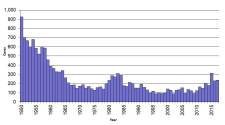
  • There were 198 diagnosed cases of tularemia in the United States in 2018. There have been 144 cases so far this year.
  • The incidence of tularemia in the US has been dropping since 1950 (the first year for which data are readily available), during which 927 cases were reported to CDC.
  • The five states with the highest incidence of tularemia (reported as cases per 100,000 population) during the period 2000-2017 are: South Dakota (1.49), Oklahoma (1.04), Arkansas (1.03), Kansas (1.00), and Montana (0.57).

Is tularemia likely to be transmitted by rendered pet ingredients?

  1. Francisella tularensis can be killed by heating to 50ºC (122ºF) for 15 minutes.
  2. Temperatures used in the rendering process typically reach 115-145ºC (245-290ºF) for 40-90 minutes.

THE BOTTOM LINE

  1. Francisella tularensis does not survive rendering.
  2. Francisella tularensis survives weeks – not decades – in soil and water.
  3. Francisella tularensis has an incubation period of 1-14 days.
  4. Francisella tularensis is a rare disease that has been relatively stable in its incidence for several decades.

Thixton’s allegations do not hold water on several fronts.

  • She claims the problem to be ongoing, yet states that the exposure was at the Mars PetCare plant that closed down in 2013. Anyone exposed to Francisella tularensis in 2013 would have developed symptoms within two weeks of exposure – not six years later.
  • She claims – without supporting data – that the source of the exposure was rendered pet food ingredients. Yet, Francisella tularensis cannot survive temperatures far milder than those used in rendering.
  • She claims the bacteria survive in soil and water for decades, whereas the scientific literature reports survival in terms of weeks.

Don’t take my word for this. Go to the sources

I have spent four decades working in and writing about food safety, including pet food safety.

I am always prepared to call out misbehavior on the part of companies large and small. I did so in the pentobarbital scandals.

I am not prepared to stand by while the credibility of food safety advocates such as myself is damaged by the publication of allegations not supported by documentation or scientific research.