


Salmonella, Listeria found in Performance Dog Raw Pet Food

The US Food and Drug Administration (FDA) is alerting pet owners not to feed Performance Dog brand frozen raw pet food to their companion animals.

FDA issued the warning after finding Salmonella and/or Listeria monocytogenes in portions of two different finished products, sampled during an inspection of the manufacturer’s production facility.

The situation

Performance Dog raw pet food, lot code 072219 was found to contain both Salmonella and Listeria monocytogenes. This product, which has already entered the marketplace, was sold to customers frozen in two-pound pouches.

The second sample, which tested positive for Salmonella only, has not yet been distributed.

As Performance Dog products do not have lot code information printed on retail packaging, FDA is cautioning pet owners not to use Performance Dog frozen raw pet food produced on or after July 22, 2019.

Performance Dog raw pet food is manufactured by Bravo Packing, Inc. of Carney’s Point, New Jersey.

Bravo Packing has not announced a product recall as of this writing.

The history

This is the third occasion in recent years in which Bravo Packing has shipped contaminated product.

On September 12, 2018, the company recalled all Performance Dog frozen raw pet food products after FDA found Salmonella in a sample collected during an agency inspection.

In January 2016, FDA analyzed a sample of horse meat pursuant to a complaint from one Bravo Packing’s customers. According to the complaint, four exotic cats fell ill after being fed the meat. Two of the animals had to be euthanized.

The sample of horse meat, as well as a pre-euthanasia blood sample from one of the animals, tested positive for pentobarbital.

The risk

Salmonella

Dogs are less likely than humans to show symptoms of Salmonella infection. Nevertheless, they can carry Salmonella in their digestive system for an extended period of time, and can shed the pathogen into the environment, putting people and other companion animals at risk of illness.

Symptoms of Salmonella infections in humans typically include abdominal pain, diarrhea and a low-grade fever. Occasionally, the pathogen can enter the bloodstream and travel to other organs, producing a dangerous illness.

Listeria monocytogenes

Although dogs may become infected with Listeria monocytogenes, they show symptoms only infrequently. However, even asymptomatic animals are able to transmit the bacteria to their human companions.

Symptoms of Listeria monocytogenes in humans are varied, but are usually mild. Pregnant women who acquire an infection may transmit the disease to the fetus, resulting in premature delivery, stilbirth, or an infected newborn. The elderly, the very young, and people with weakened immune systems are at risk of more severe illness, too.

What consumers should do

  • If you have any of the affected product, stop feeding it to your pets and throw it away in a secure container where other animals, including wildlife, cannot access it.
  • Clean refrigerators/freezers where the product was stored and clean and disinfect all bowls, utensils, food prep surfaces, pet bedding, toys, floors, and any other surfaces that the food or pet may have had contact with.
  • Because animals can shed the bacteria in the feces when they have bowel movements, it’s particularly important to clean up the animal’s feces in yards or parks where people or other animals may become exposed, in addition to cleaning items in the home.
  • Consumers should thoroughly wash their hands after handling the affected product or cleaning up potentially contaminated items and surfaces.
  • If you think you have symptoms of Salmonella or Listeria monocytogenes infection, consult your health care provider.
  • If you think your pet has symptoms of Salmonella or Listeria monocytogenes infection, consult your veterinarian. Veterinarians who wish to have pets tested for Salmonella may do so through the Veterinary Laboratory Investigation and Response Network (Vet-LIRN) if the pet is from a household with a person infected with Salmonella.
  • FDA encourages consumers to report complaints about pet food products electronically through the Safety Reporting Portal. This information helps FDA further protect human and animal health.

In my opinion: Tularemia and pet food

There are many problems within the pet food industry: Salmonella, pentobarbital, substandard ingredients, unsanitary production environments, to name a few.

Pet food blogger Susan Thixton would like you to believe that tularemia should be added to the list.

In her post titled The Deadly Pet Food Bacteria Cover-up dated September 6, 2019, Thixton alleges that the US Food and Drug Administration (FDA) and the US Centers for Disease Control and Prevention (CDC) are covering up a deadly outbreak of tularemia linked to a defunct Mars PetCare production facility in Joplin, Missouri.

According to Thixton, the most recent diagnosis was in August 2019.

The facility was closed down in 2013.

The article alleges that “multiple individuals have been diagnosed (confirmed through blood testing) with tularemia that either worked for, delivered to, or is a family member (of someone who worked for or delivered to) the closed Mars Petcare pet food plant located in Joplin, MO.” (emphasis hers)

According to Thixton, “the Centers for Disease Control (CDC) and the Kansas Health Department confirmed to multiple individuals they were exposed to the deadly bacteria at the pet food plant” (emphasis hers)

She has published these allegations without providing any data or other substantiating information to support her claims.

Thixton claims that the exposure to Francisella tularensis, the bacterium that causes tularemia, was through “…exposure to rendered pet food ingredients”. She also states that  the microbe “…can survive for decades in soil and water.”

Let me shine the light of science on these allegations.

A few facts about tularemia and Francisella tularensis

  1. The incubation period (the time between exposure and onset of illness) for this disease is typically 3-5 days in most cases, although infections can take up to 14 days to develop.
  2. Francisella tularensis is endemic in the rabbit and small rodent population in parts of the United States and elsewhere around the world. The most common source of transmission is via bites from ticks and deer flies.
  3. Francisella tularensis also can be transmitted in food and water, by contact with infected sick or dead animals, and by exposure to aerosols (notably during grass cutting and haying operations)
  4. Francisella tularensis can survive for weeks (not decades) in water and soil.

How common is tularemia in the United States?

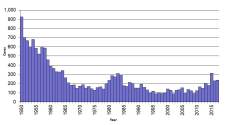
  • There were 198 diagnosed cases of tularemia in the United States in 2018. There have been 144 cases so far this year.
  • The incidence of tularemia in the US has been dropping since 1950 (the first year for which data are readily available), during which 927 cases were reported to CDC.
  • The five states with the highest incidence of tularemia (reported as cases per 100,000 population) during the period 2000-2017 are: South Dakota (1.49), Oklahoma (1.04), Arkansas (1.03), Kansas (1.00), and Montana (0.57).

Is tularemia likely to be transmitted by rendered pet ingredients?

  1. Francisella tularensis can be killed by heating to 50ºC (122ºF) for 15 minutes.
  2. Temperatures used in the rendering process typically reach 115-145ºC (245-290ºF) for 40-90 minutes.

THE BOTTOM LINE

  1. Francisella tularensis does not survive rendering.
  2. Francisella tularensis survives weeks – not decades – in soil and water.
  3. Francisella tularensis has an incubation period of 1-14 days.
  4. Francisella tularensis is a rare disease that has been relatively stable in its incidence for several decades.

Thixton’s allegations do not hold water on several fronts.

  • She claims the problem to be ongoing, yet states that the exposure was at the Mars PetCare plant that closed down in 2013. Anyone exposed to Francisella tularensis in 2013 would have developed symptoms within two weeks of exposure – not six years later.
  • She claims – without supporting data – that the source of the exposure was rendered pet food ingredients. Yet, Francisella tularensis cannot survive temperatures far milder than those used in rendering.
  • She claims the bacteria survive in soil and water for decades, whereas the scientific literature reports survival in terms of weeks.

Don’t take my word for this. Go to the sources

I have spent four decades working in and writing about food safety, including pet food safety.

I am always prepared to call out misbehavior on the part of companies large and small. I did so in the pentobarbital scandals.

I am not prepared to stand by while the credibility of food safety advocates such as myself is damaged by the publication of allegations not supported by documentation or scientific research.


Recalls and Alerts: September 1 – 4, 2019

Here is today’s list of food safety recalls, product withdrawals, allergy alerts and miscellaneous compliance issues. The live links will take you directly to the official recall notices and company news releases that contain detailed information for each recall and alert.

If you would like to receive automatic email alerts for all new articles posted on eFoodAlert, please submit your request using the sidebar link.

United States

OUTBREAK ALERT UPDATE: CDC reports that the Salmonella outbreak linked to backyard poultry has expanded to encompass every state except Alaska, and has grown to 1003 confirmed cases. Two people have died and 175 have required hospitalization. The outbreak includes 12 different strains of Salmonella.

Allergy Alert: Great One Trading Inc. recalls several QQ Fish brand fishball products due to undeclared egg. Please refer to the recall notice for a complete list of affected products.

Pet Food Safety Recall (Update): Dog Goods USA LLC expands its earlier recall to include all 30-packs of “Berkley & Jensen” brand pig ears sold at BJ’s Wholesale Club stores due to Salmonella contamination. Please refer to the updated recall notice for a list of all pig ear products recalled by Dog Goods USA.

Canada

Food Safety Recall Update: Maître Saladier Inc. recalls St-Hubert brand Chicken Breast Nuggets (680g; Product codes B29084 12 39J, B29084 13 39J, B29084 14 39J, B29084 15 39J, B29084 24 39J; UPC 0 66701 00504 1) due to foreign matter (bone fragments) contamination.

Europe

Allergy Alert (France): Industry recalls certain DE NEUVILLE brand Chocolate-coated confectionery (Various packaging formats and bulk sale; All Best before dates) due to undeclared sesame. Please refer to the recall notice for a complete list of affected products.

Allergy Alert (France): Primark recalls Thomas Tucker Ltd. brand Toy Story 4 Popcorn, sugared and salted (25g; Best before between 23 August 2019 and 23 February 2020) due to undeclared milk.

Allergy Alert (Germany): real,- Handels GmbH recalls real BIO brand Dinkelbrötchen dunkel / Dark spelt buns (4 x 50g; Lot #6-3-8703-30; Best before 25.10.2019) due to undeclared oats and sesame.

Allergy Alert (Ireland): Stafford’s recalls Stafford’s Quality Cakes 5” Carrot Cake (550g; All Best before dates up to 14/09/2019) and Stafford’s Luxury Coffee Gateau (925g; All Best before dates up to 27/09/2019) due to undeclared walnuts.

Allergy Alert (Italy) IPAFood Srl recalls CONAD SCARL brand FARINA DI FARRO BIOLOGICA / Organic spelt flour (400g; Lot #19091; Best before 30-04-2020) due to undeclared soy.

Food Safety Recall (France): Auchan recalls Capitoul brand Bethmale au lait cru / raw milk cheese (180g; Lot #19191110; Best before 29.08.2019) due to Listeria monocytogenes contamination.

Food Safety Recall (France): Le Dauphine recalls various La ferme du Verdoulet brand dairy products due to Salmonella contamination. Please refer to the recall notice for a complete list of affected products.

Food Safety Recall (Germany): WestfalenLand Fleischwaren GmbH recalls Gut Ponholz Rinderhackfleisch / Gut Ponholz brand ground beef (500g; Best before 06.09.2019) due to foreign matter (red plastic body) contamination.􏰕􏰚􏰛􏰕􏰜􏰛􏰝􏰕

Food Safety Recall (Germany): WestfalenLand Fleischwaren GmbH recalls Landjunker Rinderhackfleisch / Landjunker ground beef (500g; Best before 04.09.2019 and 06.09.2019) and Landjunker SELECTION Rinderhackfleisch von der Färse / Landjunker SELECTION ground beef from heifer (400g; Best before 07.09.2019) due to foreign matter (red plastic body) contamination.

Food Safety Recall (Italy): Sanorice Italia S.r.l. recalls Matt brand Matt non solo pane Le Mais Bio – Galletta di Mais bio / Organic maize galletta (130g; Best before 12-06-2020) due to foreign matter (metal) contamination.

Food Safety Recall (Luxembourg): Cora recalls BROCHETTE CAMPAGNE (2-pack & 6-pack; Lot 135; Best before 01/09/2019) due to Salmonella contamination.

Asia, Africa and the Pacific Islands

Allergy Alert (Hong Kong): Chef’s Garden Ltd recalls The Big Night In brand Cinema Sweet Popcorn (250g bucket; Best before November 21, 2019; Product of United Kingdom) due to undeclared milk.

Allergy Alert (Israel): Vega company Ltd recalls Vegan Buttery Spread (225g; Expiry date 13/1/2020; Product of Denmark) due to undeclared milk.