

Raw pet food company Hare Today alleges FDA mishandling of samples; FDA responds

This story by Phyllis Entis first appeared in Food Safety News and is reposted here with permission

For the second time in less than a month, a raw pet food company has accused a government agency of mishandling product samples and has refused to recall a contaminated product.

On Jan. 23, 2019, the U.S. Food and Drug Administration (FDA) cautioned pet owners not to feed one lot of Hare Today Gone Tomorrow Ground Chicken/Bones/Organs pet food to their pets after the agency found Salmonella and Listeria monocytogenes in samples of the product.

FDA acted in response to a consumer complaint about a kitten that became sick with Salmonella after eating the company’s product.

According to the FDA alert, the specific batch of product consumed by the kitten was no longer available for testing. FDA collected samples from a different bunch of the same product.

The strain of Salmonella found in the batch of product analyzed by FDA was different from the strain recovered from the sick kitten.

When advised by FDA of the test results, Hare Today’s management refused to initiate a recall of the contaminated product.

In a Facebook post, the company supported its decision by claiming that there were no government seals on the samples when they were received by the lab, that FDA could not provide Hare Today with information on the temperature of the sample at the time of testing and, therefore, that the products “…were compromised and any results are null and void.”

The company also alleged that FDA is unfairly targeting raw pet food manufacturers.

According to an FDA spokesperson, sampling was carried out under the requirements set out in the agency’s Investigations Operations Manual. The inspector obtained ten random unopened packages from a single batch of frozen product (processing date 12.04.2018). Each box was placed into a separate container, which was taped shut.

The ten individual packages, plus two controls, were placed in a cooler for shipment to the laboratory. The boxes were sent frozen at the time of sampling and received frozen in the FDA lab.

FDA always prefers to test the specific lot associated with a case, the agency spokesperson told Food Safety News. However, the consumer did not have any opened or unopened product left from the suspect batch.

Due to the length of time that elapsed between the feeding of the kitten and the submission of the complaint and associated records to FDA, none of the implicated material was available from the manufacturer either.

The feces sample from the sick kitten was collected in May 2018, according to the sample record archived in the National Center for Biotechnology Information database.

Hare Today sells all of its products through direct orders placed with the company via its website and does not use third-party distributors or retailers.

The Hare Today allegations echo similar statements made by Lystn, dba Answers Pet Food earlier this month.

After the Nebraska Department of Agriculture (NDA) recovered Salmonella from a sample of A+ Answers Pet Food, the company accused the state of mishandling the sample.

A spokesperson for the NDA refuted the company’s allegations, stating that all “chain of custody” procedures had been followed, that the sample was shipped in dry ice and arrived frozen in the lab, and that all procedures had been followed to prevent cross-contamination.

The presence of Salmonella in a pet food represents a hazard to both people and pets, regardless of whether the food is raw, dry, or cooked.

People infected with Salmonella may suffer from diarrhea, abdominal cramps, and fever. Young children, the elderly, and individuals with weakened immune systems are susceptible to more severe symptoms, including dehydration, and may require hospitalization.

Infected pets may exhibit symptoms including vomiting, diarrhea (sometimes bloody), fever and loss of appetite or decreased activity. Pets that are infected can shed Salmonella in their feces even without showing any evidence of being sick.

FDA recommends that people who think their pets have become ill after consuming contaminated pet food should first contact their veterinarians. Veterinarians who wish to have pets tested for Salmonella may do so through the Vet-LIRN Network if the pet is from a household with a person infected with Salmonella. Veterinarians who wish to have pets tested for other pathogens when there is an associated human case may also contact Vet-LIRN.

The FDA encourages consumers to report complaints about this and other pet food products electronically through the Safety Reporting Portal or by calling their state’s FDA Consumer Complaint Coordinators.

Human Salmonella illnesses linked to raw pet food; Woody’s launches recall

This story by Phyllis Entis first appeared in Food Safety News and is reposted here with permission

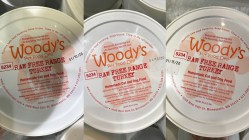
Woody’s Pet Food Deli is recalling three date codes of raw turkey pet food found by the Minnesota Department of Agriculture to be contaminated with Salmonella. The agriculture department initiated testing after the Minnesota Department of Health identified a human case of Salmonella Reading linked to the pet food.

Public health officials discovered during their investigation that Woody’s Pet Deli raw turkey pet food was fed regularly to a pet in the household of the infected individual. The pet tested positive for a different strain of Salmonella.

Woody’s is a small Minnesota-based chain of pet food shops, with locations in Minneapolis, St. Paul, and Woodbury.

The recalled product was sold in 5-pound plastic containers, identified as “Woody’s Pet Food Deli Raw Free Range Turkey,” and bearing one of the following Use By dates: 01/10/20, 01/12/20, 01/15/20.

The U.S. Centers for Disease Control and Prevention is investigating an ongoing multi-state outbreak of Salmonella Reading infections linked to raw turkey products from multiple sources. The outbreak has been in progress since November 2017. As of Dec. 18, 2018, there had been 216 cases of Salmonella Reading illnesses reported in 38 states. One person has died and 84 have been hospitalized. 

The Public Health Agency of Canada (PHAC) has been tracking 33 Salmonella illnesses in six provinces. Those patients are linked to raw turkey and raw chicken products. The same outbreak strain of Salmonella Reading has been recovered from both Canadian and U.S. patients.

No single source or supplier in either the United States or Canada of raw turkey products or of live turkeys has been identified that could account for the whole outbreak.

In November 2018 and again in December 2018, Jennie-O-Turkey Store Sales in Wisconsin and Minnesota respectively recalled nearly 128 tons of raw ground turkey products that were associated with the Salmonella Reading outbreak.

This is the second pet food recall linked to the Salmonella Reading outbreak. In February 2018, Raws for Paws recalled about 4,000 pounds of ground turkey pet food after two children were infected with Salmonella Reading. The outbreak strain was recovered from samples of the Raws for Paws food fed to pets in the household where the children lived. One of the two children was hospitalized with osteomyelitis.

Symptoms of Salmonella infection in people usually include diarrhea, abdominal pain and fever. Infected pets may experience diarrhea, fever and vomiting, or may be without symptoms. Even asymptomatic pets may shed Salmonella in their feces, spreading the infection in the environment.

Individuals who have purchased the recalled Woody’s product should throw it out or return it for a full refund. Consumers with questions should telephone their Woody’s store or contact the company by email at info@woodyspetdeli.com.

Frozen, raw chicken nuggets sicken 54 in Canada

The Public Health Agency of Canada (PHAC) and the Canadian Food Inspection Agency (CFIA) are investigating a new Salmonella outbreak linked to raw chicken.

As of January 25, 2019, 54 Canadians from ten provinces and three territories have become infected with Salmonella Enteritidis after consuming a frozen, raw breaded chicken product. None of the outbreak victims have been hospitalized in this latest outbreak.

Since mid-2017, PHAC has received reports of 529 laboratory-confirmed cases of Salmonella illness linked to raw chicken, including frozen, raw breaded chicken. To date, three people are dead, and 90 victims needed to be hospitalized. The deaths cannot be attributed directly to the Salmonella infection.

The outbreak investigations triggered recalls of eleven different brands and varieties of  frozen, raw breaded chicken products.

In response to findings by CFIA during its investigation of the most recent outbreak, Sofina Foods Inc. has recalled the following product:

Crisp & Delicious brand Chicken Breast Nuggets – Uncooked Seasoned Breaded Chicken Cutlettes, 1.6 kg packages:- Product code 2019 JL 19; UPC 0 69299 11703 5)

The recalled product is known to have been distributed to retailers in British Columbia, Manitoba, Ontario and Quebec, and may have been available nationwide, according to the recall notice.

Illnesses in the current outbreak have been confirmed in British Columbia (42), Alberta (81), Saskatchewan (18), Manitoba (25), Ontario (187), Quebec (111), New Brunswick (27), Nova Scotia (17), Prince Edward Island (5), Newfoundland and Labrador (12), Northwest Territories (1), Yukon (1), and Nunavut (2).

Symptoms of Salmonella infection may include nausea, vomiting, stomach cramps, diarrhea, chills, headache and low grade fever. The very young, the elderly, and individuals with weakened immune systems are more susceptible to severe symptoms, and secondary complications.

The public is advised not to consume the recalled product, and retailers and restaurants are advised to not sell or serve the recalled product.

PHAC recommends that consumers and food handlers observe the following precautions when preparing and handling frozen, raw breaded chicken products

  • Do not eat raw or undercooked frozen breaded chicken products. Cook all frozen raw breaded chicken products to an internal temperature of at least 74°C (165°F) to ensure that they are safe to eat. Use a digital food thermometer to verify the temperature. Insert the digital food thermometer through the side of the product, all the way to the middle. Oven-safe meat thermometers that are designed for testing whole chicken and roasts during cooking are not suitable for testing nuggets, strips or burgers.
  • Microwave cooking of frozen raw breaded chicken products—including chicken nuggets, strips, burgers, popcorn chicken or chicken fries—is not recommended because of the possibility of uneven heating.
  • Always follow the cooking instructions on the package, including for products labelled Uncooked, Cook and Serve, Ready to Cook, and Oven Ready.
  • Wash your hands thoroughly with soap and warm water before and after handling frozen raw breaded chicken products.
  • Use a separate plate, cutting board and utensils when handling frozen raw breaded chicken products to prevent the spread of harmful bacteria.
  • Do not re-use plates, cutting boards or utensils that have come in contact with frozen raw breaded chicken products to serve the cooked product unless they have been thoroughly washed.