
Category: food safety

McDonald’s E. coli O157:H7 outbreak grows. Taylor Farms recalls slivered onions
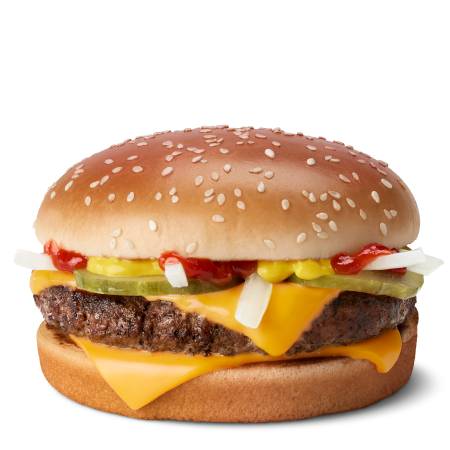
The E. coli O157:H7 outbreak linked to consumption of McDonald’ Quarter Pounder hamburgers has spread to three more states.
The CDC reports that 75 outbreak cases have now been confirmed in 13 states. A second patient has developed hemolytic uremic syndrome (HUS). Twenty-two people have been hospitalized.
The death toll remains at one resident of Colorado.
Cases have now been reported in Colorado (26), Iowa (1), Kansas (1), Michigan (2), Missouri (4), Montana (13), Nebraska (11), New Mexico (5), Oregon (1), Utah (5), Washington (1), Wisconsin (1), and Wyoming (4).
Victims range in age from 13 to 88 years old, with a median age of 29 years. Sixty percent of the victims are male.
Of the 42 people interviewed, all 42 (100%) reported eating at McDonald’s, and 39 people reported eating a beef hamburger. Of 36 people who remembered the specific beef hamburger they ate at McDonald’s, 31 (86%) reported eating a Quarter Pounder hamburger. Some people in this outbreak reported traveling to other states before their illness started. At least three people ate at McDonald’s during their travel.
The USDA-FSIS is investigating whether beef patties supplied to McDonalds may be behind the outbreak.
Concurrently, the FDA is investigating whether slivered onions supplied by Taylor Farms is the source of the outbreak.
Although the investigation is still in progress, Taylor Farms has recalled some onions supplied to McDonald’s and to additional food service customers.
McDonald’s stores in Colorado, Kansas, Utah, Wyoming, and portions of Idaho, Iowa, Missouri, Montana, Nebraska, Nevada, New Mexico, and Oklahoma have temporarily stopped using Quarter Pounder slivered onions and beef patties.
Important information from FDA for consumers and food service operators
- Consumers who have already eaten at McDonald’s and have symptoms of E. coli infection should contact their health care provider to report their symptoms and receive care immediately.
- McDonald’s stores in affected states have temporarily stopped using Quarter Pounder slivered onions and beef patties. Diced onions and other types of beef patties used at McDonald’s have not been implicated in this outbreak.
- Food service customers should not eat, sell, or serve Taylor Farms recalled yellow onions and should follow FDA’s safe handling and cleaning advice and use extra care in cleaning and sanitizing any surfaces and containers that may have come in contact with recalled product to reduce the risk of cross-contamination. Customers should also ensure that they did not freeze recalled onions or foods containing recalled onions.

Interested in learning more about food safety and the history of foodborne disease outbreaks and investigations?
Click on the link to listen to a short excerpt, then follow the buy links to add a digital, print or audio copy to your personal library.
TAINTED is available in digital format from all major on-line retailers. Press the button to go directly to your preferred digital bookstore.
Share this:

Inspection results show Arrow Reliance (Darwin’s) is a repeat offender

Observations recorded by FDA investigators during an August 26—September 18, 2024, inspection of the Arrow Reliance Inc. (Darwin’s Natural Pet Products) pet food production facility in Tukwila, Washington reveal that the company has failed to correct siginificant food-safety violations, some of which date back to 2018.
This information was obtained by eFoodAlert in response to a Freedom of Information Act request.
The repeat offenses
Darwin’s has not identified and implemented adequate controls to ensure that any hazards requiring a preventive control are significantly minimized or prevented (repeat observation from inspection conducted in 2023)
As evidence, FDA investigators cited:
- Six finished product samples confirmed to contain Salmonella, one of which also contained Listeria monocytogenes
- Lack of documentation to support use of peroxyacetic acid to control Listeria effectively
- Employees not following the company’s written procedures for conducting swabbing to verify effectiveness of cleaning and sanitizing in production room
Operations not conducted in accordance with current good manufacturing practices; adequate precautions not taken to prevent contamination of food or to conduct manufacturing under conditions to protect against contamination (repeat observation from inspection conducted in 2018)
FDA investigators cited multiple examples, including:
- The peroxyacetic acid additive used by Darwin’s to control pathogens in its raw, ready-to-eat pet foods is not been used in a manner consistent with the ingredient labeling and is not generally recognized as safe for use in animal food
- During a sanitation shift, aerosolized waster was being blown throughout the room and onto exposed ready-to-eat product on the uncovered packaging line and in an open hopper
- Aerosolized water from a sink hose was blowing throughout the room where exposed product was being prepared for rework
- An employee was handling multiple items, including soiled paper towel, filler hose, and finished product without changing gloves or cleaning them in a hand dip
- Water from a hose was spraying onto boxed ingredients staged for production
The company had not maintained food contact surfaces to protect food from being contaminated (repeat observation from inspection conducted in 2018)
FDA investigators observed the following:
- White plastic cutting board portion of meat prep table contained deep cut marks that appeared to remain discolored even after cleaning and sanitation
- A grinder used to grind raw meat and poultry ingredients appeared damage, with numerous gouges and scratches throughout
- A blade housing with visible apparent rust
- Several parts stored on shelving units appeared pitted, damaged or rusty even after cleaning and sanitizing. These parts were considered by the company to be clean and ready for use
Additional observations
Maintenance issues
- The floor through the production room appeared damaged and pitted. There was an accumulation of water, blood, and raw ingredients across the floor during production.
- There was damage around the entire base of a pillar near the meat prep table, with accumulation of water, blood, and raw ingredients in the crevaces. Thawed, boxed raw proteins for processing are staged against this pillar.
Design deficiencies
- Plant was not constructed or designed to facilitate cleaning, maintenace and pest control
- Visible condensation and apparent dust build-up on the production room ceiling, including over the uncovered packaging line
- Drops of condensate observed falling from the ceiling into clean/sanitized vemag carts (wheeled bins used to move bulk product and ingredients from place to place in the plant)
HACCP plan deficiencies
- Company did not identify drug residues associated with incoming raw meat and poultry as a known or reasonably foreseeable hazard
- Company did not identify specific vitamin/mineral toxicities and deficiences of concern for dogs and cats as a known or reasonably foreseeable hazard for those pet foods manufactured and labeld as “complete diets”
Pathogens
Finished product testing
On August 27, 2024, the FDA sampled six finished products for pathogen testing. The samples were collected from Darwin’s third-party cold storage facility. Salmonella was recovered from all six products. In addition, Listeria monocytogenes was found in one of the products. A second species of Listeria (L. innocua) was found in one product.
- Natural Selections Antibiotic & Grain-free CHICKEN RECIPE FOR CATS, Lot No. 10832:- Salmonella detected
- Natural Selections Antibiotic & Grain-free CHICKEN RECIPE FOR CATS, Lot No. 10856:- Salmonella detected
- Natural Selections Antibiotic & Grain-free CHICKEN RECIPE FOR CATS, Lot No. 10890:- Salmonella detected
- Natural Selections Antibiotic & Grain-free CHICKEN RECIPE FOR DOGS, Lot No. 10828:- Salmonella and Listeria monocytogenes detected
- Natural Selections Antibiotic & Grain-free CHICKEN RECIPE FOR DOGS, Lot No. 10844:- Salmonella detected
- Natural Selections Antibiotic & Grain-free CHICKEN RECIPE FOR DOGS, Lot No. 10887:- Salmonella and Listeria innocua detected
Environmental testing
FDA collected 63 environmental swab samples during the course of the inspection and submitted these for Listeria monocytogenes analysis. No Listera were found in any of the 63 environmental samples.
FDA collected 101 environmental swab samples during the course of the inspection and submitted these for Salmonella analysis. Salmonella Typhimurium was found in one of the swab samples.
What next for Arrow Reliance/Darwin’s?
The FDA has classified the results of this inspection as “Official Action Indicated.” This can mean anything from a Warning Letter up to and including legal action to halt the company’s operations until it complies with FDA regulations.
On two past occasions—in April 2018 and February 2023—the FDA has issued Warning Letters citing a long list of violations. These have been totally ineffective.
Pet families can only hope that the FDA will take a firmer hand this time around.

“A complete and compelling account of the hidden and not-so-hidden ways the food we give our beloved pets can be contaminated.” – JoNel Aleccia, Health Reporter, Food & Nutrition, The Associated Press.
“An invaluable resource for busy pet owners” – Food Safety News
Available from all major on-line retailers, including:


