
Memo to RFK, Jr: Raw milk not worth the risk

Once upon a time, raw milk was reasonably safe to drink. But, that was long, long ago.

An early scene in the movie “A League Of Their Own” (set in the 1940s) depicts two sisters sitting in a barn, each of them milking a cow.

In this idyllic scenario, the milk that flowed into scrupulously clean pails would be consumed fresh, churned into butter, or used to make cheese. None of this liquid gold (okay, white gold) would sit around in chilled bulk tanks waiting to be bottled.

Of course, even back then, raw milk was not without its problems. Dairy cows suffering from bovine tuberculosis could shed the bacteria in their milk. Likewise, undulating fever (brucellosis) could be transmitted to individuals who drank milk from an infected cow.

In Spoiled. The Myth of Milk as Superfood, Anne Mendelson traced the evolution of Western civilization’s love affair with drinking milk.

As demand in cities grew for fresh milk, problems with purity, safety, and spoilage mounted exponentially. As the frequency and size of milk-borne epidemics increased, pasteurization gained reluctant acceptance as a means of ensuring a safe milk supply.

Nevertheless, now that collective memories of the ‘bad old days’ of milk-borne diseases have faded, a growing cadre of consumers have united in their desire to consume raw milk, cream, cheese, and butter.

And dairy farmers across the United States (and in Canada) have stepped up to fill this market niche.

In September 1987, the US Food and Drug Administration (FDA) issued a Final Rule mandating that “…milk and milk products in final package form for human consumption in interstate commerce be pasteurized.”

The FDA does not regulate food products (including raw milk) that are produced and sold intrastate (ie., without crossing state lines). Oversight of those products is left to each individual state.

As of 2024, approximately 30 states permitted intrastate sale of raw milk, while 20 states prohibited it. Yet, raw milk can be purchased even in those 20 states through a loophole known as the “cow share program.”

According to the website, realmilk.com, a consumer can enter into a contract with a dairy farmer in which the consumer pays the farmer to feed, house, and care for Betsy. In turn, the consumer receives the output of the cow (milk, butter, cheese, etc.).

In practice, Betsy’s milk is mixed with milk from Elsie, Matilda, and all of the other members of the dairy herd, and the consumer receives a portion of that commingled output. Thus, if Betsy is one of 100 dairy cows in the herd, the consumer would be entitled to 1% of the total output of the herd.

If that’s more dairy product than one consumer’s family can handle, he or she could opt to purchase just a fraction of Betsy’s theoretical output. Perhaps just one-half or one-quarter of a cow.

Raw (unpasteurized) milk and dairy products made with raw milk have been the source of multiple outbreaks of Salmonella, Campylobacter, Listeria monocytogenes, and E. coli O157:H7 infections.

The FDA compiled a list of 133 outbreaks associated with raw milk covering the period 1987 to 2010. These outbreaks caused 2,659 cases of illnesses, 269 hospitalizations, 3 deaths, 6 stillbirths, and 2 miscarriages.

The list of outbreaks continues to grow. Between 2009 and 2021, the CDC logged 143 enteric disease outbreaks that were confirmed or suspected to be associated with consumption of raw milk.

From October 18, 2023 through May 4, 2024, the California Department of Public Health and its partner agencies investigated an outbreak of Salmonella Typhimurium that encompassed 171 confirmed outbreak cases, the majority of them among children.  Epidemiologic, laboratory, and traceback investigations identified Raw Farm brand raw milk as the source of the outbreak. 

And in February/March 2024, the CDC advised consumers that eleven cases of E. coli O157:H7 infection had been traced to raw cheddar cheese, also manufactured by Raw Farm, LLC, a California-based raw dairy producer. Five of the eleven victims were hospitalized and two developed hemolytic uremic syndrome (HUS).

The company at first agreed to recall the implicated products, then reversed its position and cancelled the recall.

Raw Farm is owned and operated by Mike McAfee, and has a long history of regulatory disputes both with California regulators and with the FDA.

In March 2024, the bird flu virus, H5N1, was detected in the US cattle population for the first time. As infected cattle are able to shed live virus in their milk, this raised a concern about the safety of the commercial milk supply across the USA.

In response, the FDA carried out an initial sampling of retail (pasteurized) milk and reported that all 297 samples analyzed were negative for the H5N1 virus. A second follow-up survey showed similar results. The FDA also carried out a series of lab tests and confirmed that pasteurization inactivates the H5N1 virus.

To determine the extent to which the bird flu virus has contaminated raw milk, federal and state agencies are working cooperatively to test milk samples drawn from raw milk storage silos at dairy processing facilities. Analysis of these samples for the H5N1 virus is being carried out by the USDA’s National Veterinary Services Laboratory.

There is a small but growing body of reports indicating that the bird flu virus can be transmitted to animals (and occasionally to humans) via ingestion. On January 17, 2025, the FDA notified the cat and dog food industry that manufacturers who are covered by the FDA Food Safety Modernization Act Preventive Controls for Animal Food (PCAF) rule and are using uncooked or unpasteurized materials derived from poultry or cattle must reanalyze their food safety plans to include Highly Pathogenic Avian Influenza virus (specifically H5N1) as a known or reasonably foreseeable hazard. 

This notice followed reports of domestic cats that had become infected with the H5N1 virus after consuming a raw pet food that was later found to be contaminated with the virus.

Several cats also have become infected after drinking raw milk that was later recalled due to the presence of the H5N1 virus.

If RFK, Jr. directs the FDA to rescind its 1987 Final Rule and allow the interstate shipment of retail-packaged raw milk across state lines, the impact on public health could be staggering. And negative.

Considering the decades-long history of foodborne illness outbreaks associated with raw milk consumption, expanding the availability of this commodity will inevitably increase the risk to consumers.

Furthermore, once a dairy product is shipped across state lines, the manufacturer of that product falls under FDA jurisdiction. The FDA’s budget already is inadequate to support its existing regulatory responsibilities. Adding an new industry sector to its workload will stretch resources to the breaking point, with disastrous effects on the entirely of the agency’s food safety activities.


TAINTED formats 3
“Reads like a true crime novel” – Food Safety News

Interested in learning more about food safety and the history of foodborne disease outbreaks and investigations?

Click on the link to listen to a short excerpt, then follow the buy links to add a digital, print or audio copy to your personal library.

Chapter 6. Birth of a Pathogen

TAINTED is available in digital format from all major on-line retailers. Press the button to go directly to your preferred digital bookstore.

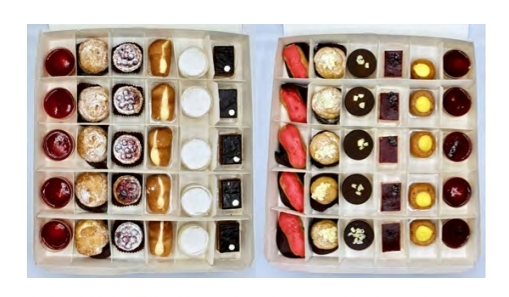
Mini-pastries from Italy trigger Canadian Salmonella outbreak

The Public Health Agency of Canada (PHAC) is investigating an outbreak of Salmonella Enteritidis infections in multiple provinces.

Sixty-one laboratory-confirmed cases have been reported to date in British Columbia (4), Alberta (2), Ontario (21), Quebec (33), and New Brunswick (1). Outbreak victims range in age from 3 to 88 years old.

Seventeen people have been hospitalized.

The outbreak began in late September 2024; the most recent case was reported in December 2024. Many of the victims reported eating mini pastries at catered events or other establishments.

PHAC advises that the investigation is ongoing and more cases may come to light.

The illnesses have been linked to consumption of Sweet Cream brand mini pastries.

Importations Piu Che Dolci Inc. has recalled the following Sweet Cream brand mini-pastries:

  • Mini Patisserie (~4 kg (4 boxes of 30 pieces); UPC 8 058302 730028; All best before dates from 2025/06/17 up to and including 2025/11/15; Product of Italy)
  • Mini Patisserie – Tray A (1 kg (30 pieces); UPC 8 058302 730004; All best before dates from 2025/06/17 up to and including 2025/11/15; Product of Italy)
  • Mini Patisserie – Tray B (1 kg (30 pieces) UPC 8 058302 730011; All best before dates from 2025/06/17 up to and including 2025/11/15; Product of Italy)

The mini-pastries may have been sold clerk-served or in smaller packages, with or without a label that may not bear the same brand, product name, or best before date.

The recalled products were distributed to bakeries, hotels, restaurants, cafeterias, hospitals, retirement residences, and the general public in Alberta, British Columbia, Nova Scotia, Ontario, and Quebec, and may also have been distributed in other Canadian provinces and territories. The pastries also were served at catered events.

The following advice from the PHAC applies to individuals, as well as retailers, distributors, and food service establishments (bakeries, hotels, restaurants, and cafeterias), as well as facilities such as hospitals and retirement residences across Canada:

  • Contact your health care provider if you think you’re experiencing symptoms of Salmonella infection.
  • Check to see if you have the recalled products in your home or establishment by looking for the specific product name and size, UPC and codes in the recall alert.
  • Do not consume, serve, use, sell or distribute recalled products.
  • Throw out or return recalled products to the location where they were purchased. Consumers or establishments who are unsure if they have purchased the recalled products are advised to contact their retailer or supplier where the products were purchased.
  • Do not cook food for other people if you’ve been diagnosed with a Salmonella infection or any other gastrointestinal illness.

Salmonellosis has a wide range of symptoms. You may not get sick at all. However, if you do get sick, symptoms usually start within 6 to 72 hours after exposure.

You may experience one or more of the following symptoms: chills, fever, nausea, diarrhea, vomiting, stomach cramps, and a sudden headache. Most symptoms end within 4 to 7 days.

While most people recover completely on their own, some people may have a more serious illness that requires hospital care, possibly leading to long-lasting health effects or death.


TAINTED formats 3
“Reads like a true crime novel” – Food Safety News

Interested in learning more about food safety and the history of foodborne disease outbreaks and investigations?

Click on the link to listen to a short excerpt, then follow the buy links to add a digital, print or audio copy to your personal library.

Chapter 6. Birth of a Pathogen

TAINTED is available in digital format from all major on-line retailers. Press the button to go directly to your preferred digital bookstore.

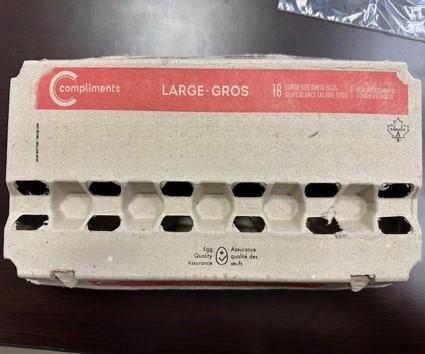
Eggs recalled in Canada due to Salmonella contamination

Burnbrae Farms has recalled certain lot codes of six brands of shell eggs due to possible Salmonella contamination.

The recall was triggered by test results. No illnesses have been linked to the recalled products.

The following list of recalled eggs are known to have been distributed in British Columbia, Manitoba, and Ontario, and may have been distributed in other Canadian provinces and territories.

  • Compliments brand Extra Large Size White Eggs (12/pkg; UPC 0 55742 35751 6; Lot code BB 2025 FE 22; from 8 P**0021320 up to and including 8 P**0021720 (**= 03 to 32))
  • Compliments brand Large Size White Eggs (12/pkg; UPC 0 55742 35750 9; Lot code BB 2025 MR 01; from 8 P**0101145 up to and including 8 P**0101800 (** = 03 to 32))
  • Compliments brand Large Size White Eggs (18/pkg; UPC 0 55742 35756 1; Lot code BB 2025 MR 01; from 8 P**0101145 up to and including 8 P**0101800 (**= 03 to 32))
  • Foremost brand Large Size Eggs (18/pkg; UPC 0 61483 05666 3; Lot codes BB 2025 FE 22; from 8 P**0021320 up to and including 8 P**0021720 (** = 03 to 32) and BB 2025 MR 01; from 8 P**0101145 up to and including 8 P**0101800 (** = 03 to 32))
  • Golden Valley Eggs brand Extra Large Size Eggs (30/pkg; UPC 0 55799 10301 2; Lot code BB 2025 MR 01 * 010 (*= C, D, E, F or H); from C6 1145 010 up to and including C6 1800 010)
  • Golden Valley Eggs brand Jumbo Size Eggs (20/pkg; UPC 0 55799 10310 4; Lot code BB 2025 FE 22 * 002 (*= A, C, D, E or F); from 1320 Est 8 up to and including 1720 Est 8)
  • Golden Valley Eggs brand Large Size Eggs (2 x 30/pkg; UPC 0 55799 10503 0; Lot code BB 2025 FE 22 * 002 (* = A, C, D, E or F); from 1320 Est 8 up to and including 1720 Est 8)
  • Golden Valley Eggs brand Large Size Eggs (30/pkg; UPC 0 55799 10303 6; Lot codes BB 2025 MR 01 * 010 (* = C, D, E, F or H); from C6 1145 010 up to and including C6 1800 010 and BB 2025 MR 01 * 010 (* = C, D, E, F or H); from C4 1145 010 up to and including C4 1800 010)
  • Golden Valley Eggs brand White Extra Large Size Eggs (18/pkg; UPC 0 55799 11101 7; Lot code BB 2025 MR 01; from 8 P**0101145 up to and including 8 P**0101800 (**= 03 to 32))
  • Golden Valley Eggs brand White Large Size Eggs (12/pkg; UPC 0 55799 10103 2; Lot code BB 2025 MR 01; from 8 P**0101145 up to and including 8 P**0101800 (** = 03 to 32))
  • IGA brand Extra Large Eggs (12/pkg; UPC 0 55742 05119 3; Lot code BB 2025 FE 22; from 8 P**0021320 up to and including 8 P**0021720 (** = 03 to 32))
  • no name brand Large Size Eggs (12/pkg; UPC 0 60383 66414 5; Lot code BB 2025 MR 01; from 8 P**0101145 up to and including 8 P**0101800 (**= 03 to 32))
  • no name brand Large Size Eggs (30/pkg; UPC 0 60383 22293 2; Lot codes BB 2025 FE 22 * 002 (*= C, D, E, F or H); from C6 1320 002 up to and including C6 1720 002, BB 2025 MR 01 * 010 (*= C, D, E, F or H); from C6 1145 010 up to and including C6 1800 010, and BB 2025 MR 01 * 010 (*= C, D, E, F or H); from C4 1145 010 up to and including C4 1800 010)
  • no name brand Large Size Eggs (30/pkg; UPC 0 60383 22293 2; Lot code BB 2025 FE 16 BW24 354 M)
  • Western Family brand Extra Large Size White Eggs (12/pkg; UPC 0 62639 41011 7; Lot codes BB 2025 FE 22; from 8 P**0021320 up to and including 8 P**0021720 (** = 03 to 32) and BB 2025 MR 01; from 8 P**0101145 up to and including 8 P**0101800 (** = 03 to 32))
  • Western Family brand Large Size White Eggs (30/pkg; UPC 0 62639 39498 1; Lot code BB 2025 MR 01 * 010 (* = C, D, E, F or H); from C4 1145 010 up to and including C4 1800 010)

The Canadian Food Inspection Agency (CFIA) is verifying that all recalled product has been removed from the market and is conducting a food safety investigation that may lead to additional recalls.

  • If you think you became sick from consuming a recalled product, contact your healthcare provider
  • Check to see if you have recalled products
  • Do not consume, serve, use, sell, or distribute recalled products
  • Recalled products should be thrown out or returned to the location where they were purchased
  • Consumers who are unsure if they have purchased the recalled products are advised to contact their retailer

Food contaminated with Salmonella may not look or smell spoiled but can still make you sick. Young children, pregnant women, the elderly and people with weakened immune systems may contract serious and sometimes deadly infections. Healthy people may experience short-term symptoms such as fever, headache, vomiting, nausea, abdominal cramps and diarrhea. Long-term complications may include severe arthritis.


“Reads like a true crime novel” – Food Safety News

Interested in learning more about food safety and the history of foodborne disease outbreaks and investigations?

Click on the link to listen to a short excerpt, then follow the buy links to add a digital, print or audio copy to your personal library.
Chapter 6. Birth of a Pathogen

TAINTED is available in digital format from all major on-line retailers. Press the button to go directly to your preferred digital bookstore.