
Darwin’s Pet Food pathogen problems ongoing for 14 months

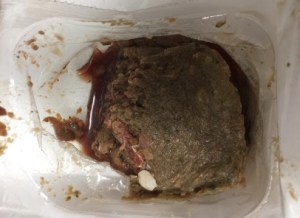
Judy, who owns Blitz the German shepherd, took this photo of Darwin’s brand raw dog food when she opened it and noticed it was off-color.

Since October 2016, Darwin’s Natural Pet Food has recalled eight production lots of raw pet food. In all, the manufacturer recalled more than 23 tons of cat and dog food during a 14-month period.

The recalls include seven dog foods and one cat food. Customers who purchased the recalled products were notified of the recalls by email — two to three months after the production dates of each batch. No recall notices were posted for the general public on the company’s website or the Food and Drug Administration’s website.

Darwin’s has not responded to a request for comment on their recalls or their follow-up actions.

The company, incorporated under the name Arrow Reliance Inc., recalled the pet foods because of positive test results showing Salmonella and/or Listeria monocytogenes. The bacteria can cause serious infections in people who handle the pet food. It can also contaminate surfaces, containers and utensils, which can spread the bacteria to foods, hands and anything coming into contact with the contaminated items.

Several of Darwin’s customers say there were product safety and package quality issues that predate the latest round of recalls.
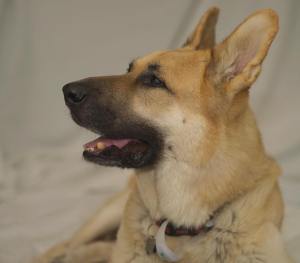
Blitz

Judy’s story
Judy adopted Blitz, an abandoned German shepherd, from an Orange County, California rescue organization in June 2012. Described by his owner as a gentle giant, he is thought to be 7 to 9 years old. About a year ago, he became partially paralyzed after developing inter-vertebral disk disease. He gets around with the aid of a special wheelchair and loves to swim.

Judy has been a customer of Darwin’s since 2012-2013. The food agreed with Blitz. His coat was soft, his stools were normal, and he didn’t itch.

About a year ago, Judy noticed a change in the Darwin’s products. The packaging was leaky, and the meat quality appeared to have deteriorated. She reported her concern to a company representative, who offered to reimburse her for the leaky packages of dog food.

According to Judy, Blitz began to suffer bad bouts of diarrhea in April 2017. He was treated with antibiotics on the assumption he was infected with giardia. Despite treatment, Blitz continued to suffer cycles of diarrhea, and was recently lab-diagnosed with a Salmonella infection.

Judy was never notified of the recalls, as she had not received any of the recalled production lots. Upon contacting the company by email after learning about the recalls, she was assured that leaky and off-color packages of meat she had been sold were “good to use.” She is now working directly with the Food and Drug Administration regarding the situation.

“I just want good, healthy food for my dog,” Judy said. “Is that so much to ask?”

Jerry’s story
Jerry volunteers at the German shepherd rescue center where Blitz was adopted. His 7-year-old German shepherd, Yavol, was 4-months-old when Jerry rescued her.

Yavol has been eating Darwin’s products for more than a year. She has suffered many bouts of lethargy, lack of appetite, diarrhea and vomiting. Yavol has been treated multiple times with generic flagyl and, on a few occasions, with antibiotics, but her digestive problems have persisted.

For the past six months or more, the Darwin’s products Jerry has been getting have had leaking packages and off-colored meat. He reported the issues to the company on multiple occasions. After being told at first that the product was safe to use, he persisted and was eventually supplied with replacement packages as compensation for the off-color and leaky packages.

Jerry did not receive notification of any recalls from the company.

Darwin’s recalled products as of Dec. 21, 2017
Darwin’s Natural Selections brand, frozen, raw Turkey with Organic Vegetable Meals for Dogs

  • Package size: 2 lbs.
  • Number of packages recalled: 1192
  • Date recall initiated: 10/17/2016
  • Manufacturing date: 7/20/2016
  • Lot number: 3142070
  • Reason for recall: Listeria monocytogenes

Darwin’s Natural Selections brand, frozen, raw Beef with Organic Vegetables Meals for Dogs

  • Package size: 2 lbs.
  • Number of packages recalled: 2391
  • Date recall initiated: 10/17/2016
  • Manufacturing date: 7/21/2016
  • Lot number: 3146070
  • Reason for recall: Listeria monocytogenes

ZooLogics brand, frozen, raw Turkey with Vegetable Meals for Dogs

  • Package size: 2 lbs.
  • Number of packages recalled: 1337
  • Date recall initiated: 10/17/2016
  • Manufacturing date: 7/25/2016
  • Lot number: 3155070
  • Reason for recall: Listeria monocytogenes

Natural Selections Duck Meals for Cats, frozen

  • Package size: 2 lb. net weight flexible film, partitioned into 4 quadrants
  • Number of packages recalled: 1560
  • Date recall initiated: 9/8/2017
  • Manufacturing date: 06/01/2017
  • Lot number: 38277
  • Reason for recall: Salmonella

Natural Selections Chicken with Organic Vegetables Meals for Dogs

  • Package size: 2 lb. net weight flexible film, partitioned into 4 quadrants
  • Number of packages recalled: 6,306
  • Date recall initiated: 12/4/2017
  • Manufacturing date: 09/26/2017
  • Lot number: 40727
  • Reason for recall: Salmonella and Listeria monocytogenes

Natural Selections Duck With Organic Vegetables Meals for Dog

  • Package size: 2 lb. net weight flexible film, partitioned into 4 quadrants
  • Number of packages recalled: 3,924
  • Date recall initiated: 12/4/2017
  • Manufacturing date: 09/29/2017
  • Lot number: 40487
  • Reason for recall: Salmonella

Natural Selections Turkey With Organic Vegetables Meals for Dogs

  • Package size: 2 lb. net weight flexible film, partitioned into 4 quadrants
  • Number of packages recalled: 7123
  • Date recall initiated: 12/4/2017
  • Manufacturing date: 08/24/2017 and 09/20/2017
  • Lot number: 39937 and 40507
  • Reason for recall: Salmonella

What consumers need to know
Consult the list of recalled products and do not feed your pet any food that has been recalled by the manufacturer.

Do not feed your pet any food that appears to be spoiled, off-color, off-odor, or otherwise defective.

Take special care to avoid any drippings from thawed food that could contaminate your work surfaces.

If your pet is suffering from diarrhea, be extra careful about washing your hands before handling or preparing food.

FDA tips on using raw pet food
Because raw pet food is more likely than other types of pet food to contain Salmonella, Listeria monocytogenes and other pathogens, the single best thing consumers can do to prevent infection is to not feed pets a raw diet. However, the FDA Center for Veterinary Medicine is aware that some people prefer to feed their pets this type of diet.

If you choose to feed raw pet food to your pet, be aware that you can infect yourself with Salmonella or Listeria by spreading microscopic amounts of the bacteria from the contaminated food to your mouth.

For instance, you may accidentally ingest the bacteria if you touch your mouth while preparing the raw food or after handling a contaminated utensil. If you get Salmonella or Listeria on your hands or clothing, you can’t see it or smell it, but you can spread the bacteria to other people, objects and surfaces.

To prevent infection with Salmonella and Listeria

  • Thoroughly wash your hands with soap and water for at least 20 seconds after handling raw pet food, and after touching surfaces or objects that have come in contact with the raw food. Potential contaminated surfaces include countertops and the inside of refrigerators and microwaves. Potential contaminated objects include kitchen utensils, feeding bowls and cutting boards.
  • Thoroughly clean and disinfect all surfaces and objects that come in contact with raw pet food. First wash with hot soapy water and then follow with a disinfectant. A solution of 1 tablespoon of bleach to 4 cups of water is an effective disinfectant. For a larger supply of the disinfectant solution, add ¼ cup bleach to 1 gallon water. You can also run items through the dishwasher after each use.

This article first appeared on Food Safety News and is reposted here with permission.

Dog food recalled for Salmonella, Listeria monocytogenes; pet owners also at risk

Darwin’s Natural Pet Products has recalled specific production lots of its Natural Selections brand Meals for Dogs after laboratory testing detected Salmonella and Listeria monocytogenes in samples of the products.

People who have handled the dog food are at risk of Salmonella infection and are advised to seek medical attention immediately if they develop symptoms of salmonellosis. Symptoms can include nausea, vomiting, abdominal cramps, diarrhea that is watery or bloody, fever and headache.

recalled-Darwins-Natural-Selections-raw-dog-foodCountertops, utensils and pet food and water bowls should be throughly washed to prevent cross-contamination.
A search of the US Food and Drug Administration (FDA) Enforcement Report web page revealed the following products have been recalled by direct email communication with customers:

  • Natural Selections Duck Meals for Cats, frozen (2-lb. packages; Lot #38277; Mfg. Date: 06/01/17 ) – contaminated with Salmonella
  • Natural Selections Chicken with Organic Vegetables Meals for Dogs (2-lb. packages; Lot #40727; Mfg. Date: 09/26/17) – contaminated with Salmonella and Listeria monocytogenes
  • Natural Selections Duck With Organic Vegetables Meals for Dogs (2-lb. packages; Lot #40487; Mfg. Date: 09/29/17) – contaminated with Salmonella
  • Natural Selections Turkey With Organic Vegetables Meals for Dogs (2-lb. packages; Lot #39937 & #40507; Mfg. Dates 08/24/17 & 09/20/17) – contaminated with Salmonella.

Darwin sells and ships its products directly to customers. Its trademark is held by a Tukwila, WA, company, Arrow Reliance Inc. Darwin’s brand products are not available in stores, nor sold to distributors, according to the company. The recalled products were shipped to customers in September and early October.

Customers who were supplied with the affected products were notified of the recalls by email, with telephone follow-up where necessary, according to the company. No public recall notice was issued, although some information regarding the recall has been posted on Darwin’s Facebook page.

According to information posted on Darwin’s Facebook page, the company does not test “each and every batch of product” at present, but is re-evaluating its current processes in light of the current situation.

The Food and Drug Administration is aware of the recall, according to an agency spokesperson.

Between October 2010 and July 2012, FDA surveyed more than 1,000 samples of pet foods and pet treats for the presence of food-borne disease bacteria, including Salmonella. Of the 196 samples of raw pet food tested during the study, 15 were positive for Salmonella.

On July 16, 2013, FDA issued a “Compliance Policy Guide for Salmonella in Food for Animals,” affirming a zero-tolerance policy for Salmonella in pet food due to the risk to human health.

This report first appeared in Food Safety News and is reposted here with updates with permission.

Papaya pathogen problems persist

Little appears to have changed since 2011 outbreak, despite efforts of U.S., Mexican governments

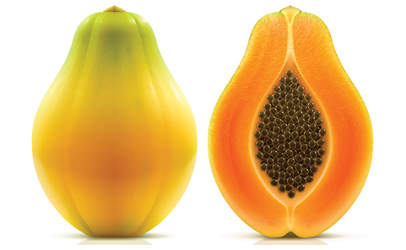
The CDC posted this photo with its outbreak notice, describing maradol papayas as large, oval fruits that weigh 3 or more pounds, with green skins that turn yellow when the fruit is ripe. The flesh inside the fruit is salmon-colored. Photo courtesy of CDC

Salmonella — the pathogen behind an ongoing foodborne illness outbreak that has sickened 173 people across 21 states, killing one — is a normal inhabitant of the intestinal tract of many birds, reptiles and mammals.

The possibility that an agricultural product such as papayas may be contaminated with Salmonella is impossible to eradicate; however, the risk of widespread contamination can be controlled through careful attention to current best sanitary practices in the cultivation, harvesting and packing of raw produce. Failure to do so can result in a vicious cycle of contamination in fields, packing houses and the distribution system.

Cultivation, harvesting and packing
The papaya is a fast-growing, tree-like herbaceous plant, which is at home in tropical and semi-tropical climates and is cultivated extensively across southeastern Mexico, according to a report issued by the University of Florida IFAS Extension Service. The most recent report from Mexico’s Secretaría de Agricultura, Ganadería, Desarrollo Rural, Pesca y Alimentación (Ministry of Agriculture, Livestock, Rural Development, Fisheries and Food) shows Mexico to be the fifth largest producer of papayas in the world.

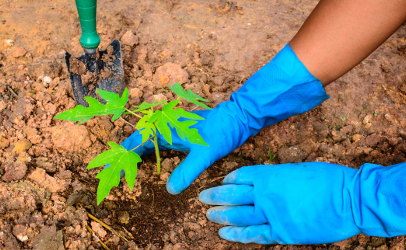
Papaya trees are propagated from seeds. When seedlings are large enough, they are transplanted by hand into growing fields.

The papaya plant is propagated from seeds, with seedlings transplanted into fields when they are of sufficient size. The plant matures in six to nine months in warmer regions. Susceptible to a variety of plant diseases and pests, such as root rot, powdery mildew, papaya ringspot virus, fruit fly and white fly, papaya plants usually have an abbreviated commercial lifespan of two to three years, according to information from the University of Hawaii. It is not unusual for a papaya plant to only produce a single crop in its lifetime.

Once harvested and delivered to the packing house, each papaya is graded according to ripeness and size. Next, the fruit is sorted according to size a second time, as well as shape, and color. It is also examined for insect or mechanical damage.

The sorted fruit is generally washed in large vats of chlorinated tap water to remove dirt, debris and insect contamination. Depending upon the condition of the fruit and the expected final destination, it may be subjected to additional treatments, including a hot water bath or a fungicide dip. After air-drying, the fruit is packed for shipment.

2011 Salmonella Agona outbreak
In 2011, the Centers for Disease Control and Prevention and the Food and Drug Administration investigated a Salmonella Agona outbreak that was traced to contaminated papayas imported from Mexico. The papayas were grown and packed by Agromod SA de CV of Chiapas, Mexico, and distributed by Agromod Produce Inc. of McAllen, Texas.

Photo illustration

The Agromod papaya plantation had an interconnected drainage ditch system, according to information presented in 2013 during the annual educational conference of the National Environmental Health Association (NEHA).

The marsh-like environment of the drainage ditches was a haven for waterfowl, frogs and other wildlife, and provided perfect growth conditions for pathogenic bacteria. During heavy rain and flooding, the ditches overflowed into the soil surrounding the trees, impregnating the soil with pathogens from the water.

During an on-site inspection of Agromod’s plantation and packing house, investigators from FDA recovered a full two dozen different types of Salmonella, including the Salmonella Agona outbreak strain. Salmonella-positive samples were drawn from fields where the papaya grew and from packing-house drains.

The crops at Agromod were harvested by two-person teams. One person worked at tree level, picking fruit and handing or tossing it to the other person below. The second person laid each papaya onto a piece of poly foam on the unprotected soil. The foam was wrapped around the fruit, which was loaded into foam-lined bins for transport to the packing house.

It was common practice at Agromod for the sheets of poly foam to be reused for up to 15 days before being discarded, helping to spread contamination from the fields to the fruit, packing house and back again.

Photo illustration

Once in the packing house, the fruit was washed in large vats of water. The level of chlorine in the wash water was not properly monitored or controlled, allowing Salmonella to spread throughout an entire batch of papayas.

The wash water was discharged into the drainage ditch system, returning Salmonella to the fields in a vicious cycle of contamination.

Import Alert
In response to the extent of Salmonella contamination brought to light during the investigation of the 2011 outbreak, FDA instituted Import Alert #21-17, “Countrywide Detention Without Physical Examination Of Papaya From Mexico.” Firms that provided documentation of five consecutive Salmonella-negative commercial shipments qualified for an exemption from the automatic detention at the U.S. border.

Concurrent with FDA’s initiation of the Import Alert, Mexico’s Servicio Nacional de Sanidad, Inocuidad y Calidad Agroalimentaria (National Service for Health, Safety and Agrifood Quality) (SENASICA ) unveiled a plan to assist that country’s papaya growers, packers and shippers in addressing the issues of safe growing and handling of the fruit.

History repeats
Notwithstanding the efforts of multiple agencies in both countries, the United States is once again in the throes of an outbreak of Salmonella that is associated with consumption of fresh, whole papayas imported from Mexico.

To view a larger version of the map on the CDC’s website, please click on the image.

As of Aug. 18 when the CDC posted it’s most recent outbreak update, 173 people had been confirmed sick across 21 states, with 58 hospitalizations, and one death on New York City. The CDC warns that the number of confirmed illnesses is likely to increase.

Thus far FDA has identified one farm in connection with the contaminated papaya. That farm, Carica de Campeche, has been supplying papayas to the U.S. market under an Import Alert exemption since 2015.

According to a spokesperson from FDA, at present there are no specific ongoing testing or inspection requirements that a producer must meet in order to maintain an exemption from automatic detention, although a firm is expected to “… continue to provide the commodity in a wholesome manner and follow all the regulatory requirements of FDA.”

The FDA revoked the exemption granted to Carica de Campeche under Import Alert 21-17 on Aug. 7.

This article first appeared in Food Safety News and is reposted here with permission.