Pre-cooked lobster with a side order of Listeria

Greenhead Lobster Products LLC‘s (Greenhead) ready-to-eat (RTE) seafood processing facility in Bucksport, Maine, suffers from a chronic environmental contamination with Listeria monocytogenes, according to information extracted from US Food and Drug Administration’s website.

The persistent presence of the pathogen in the production environment has been known to the company and the FDA for at least the last two years.

The FDA first visited the Bucksport facility in December 2020, issuing a list of adverse Inspectional Observations (FDA Form 483) upon completion of the inspection.

According to the agency’s inspection citations database, the FDA investigators cited four violations, including:

  • Failure to implement the monitoring procedures listed in the company’s HACCP plan;
  • Failure of the HACCP plan to list the food safety hazards that are reasonably likely to occur;
  • Failure to monitor the sanitation conditions and practices with sufficient frequency to assure conformance with Current Good Manufacturing Practices including prevention of cross-contamination from insanitary objects; and
  • A corrective action plan not in accordance with regulatory requirements to ensure that a potentially hazardous product is not entered into commerce.

After giving Greenhead a grace period of several months to bring its food safety programs into compliance, the FDA performed a follow-up inspection in September-October 2021.

During the 2021 inspection, FDA investigators conducted extensive environmental sampling of the facilities production areas, including food-contact surfaces, and found Listeria monocytogenes in a floor drain.

Upon reviewing the company’s environmental monitoring records, the agency noted the presence of thirteen (13) recurring L. monocytogenes positive swabs between May 2021 and August 2021 from the RTE (ready-to-eat) processing room, including eleven (11) swabs collected from food-contact surfaces.

Although the company’s records indicated that the relevant areas were cleaned and sanitized following each positive finding, Greenhead did not conduct any root cause analysis to establish and eliminate the source or sources of the contamination.

On October 2, 2021, while the FDA inspection was still in progress, Greenhead initiated a voluntary product recall, encompassing 5,749 lbs. of frozen cooked lobster meat. The recall cited a “…potential for contamination … noted after a routine sampling program by the company revealed the presence of Listeria monocytogenes.”

Once again, the FDA issued a Form 483 upon completion of the inspection, this time classifying the situation as “Official Action Indicated.”

On January 24, 2022, after exchanges of communcations regarding the company’s plans for correcting the various deviations, the FDA issued a formal Warning Letter, giving Greenhead a deadline to respond to all outstanding issues.

The Warning Letter reiterated the list of observations included in the Form 483, providing examples to support each item. These included:

  • Ongoing serious concerns with the company’s HACCP plan
  • Ongoing concerns about the company’s inability to control Listeria monocytogenes in the production environment
  • Significant deviations from requirements of the Seafood HACCP plan
  • Insufficient monitoring of sanitation conditions and practices during processing
  • Inadequate control of the hazard of Clostridium botulinum in high pressure processed (HPP) lobster products.

In July 2022, the FDA returned to Bucksport yet again to follow up on Greenhead’s response to the Warning Letter.

And yet again, the company’s performance was found wanting.

The Form 483 issued upon completion of the July 2022 inspection listed four main concerns:

  • Greenhead’s HACCP plan did not list the food safety hazards that were reasonably likely to occur
  • The HACCP plan listed a critical limit that failed to ensure control of one or more hazards
  • The company did not take corrective action to prevent potentially hazardous product from entering into commerce, and did not correct the cause of the deviation
  • The company was not monitoring sanitation conditions and practices with sufficient frequency to ensure compliance with current Good Manufacturing Practices.

At the close of inspection, company management agreed to make the necessary corrections and the FDA classified the results of the inspection as “Voluntary Action Indicated.”

Just over one year later, on October 20, 2023, Greenhead announced another voluntary product recall, this time encompassing “…all frozen and refrigerated cooked lobster meat products produced from May 9, 2023, through October 19, 2023.”

The reason given for the recall was the presence of Listeria monocytogenes in the production environment.

Although the environment was contaminated, the pathogen was not found in finished products, and there were no illnesses associated with the recalled products.

The recall encompassed eleven ready-to-eat, refrigerated or frozen lobster products. Please refer to the recall notice for a detailed list of affected products.

The recall notice made no reference to the FDA. Nor has the FDA posted information on a 2023 inspection in its Inspection Citations database.

Nevertheless, past experience suggests that another follow-up inspection is either still in progress or has been completed recently.

Although constituted as a regulatory agency, the FDA has a history and a philosophy of giving the food companies it regulates multiple chances to self-correct.

Sometimes, this works well. Other times, it does not.

Greenhead has now been inspected on at least three (and possibly four) separate occasions, and its HACCP and sanitation programs were found wanting each time.

The FDA has the power to demand compliance (via a Warning Letter), to mandate recalls (when circumstances demand), and even to shut down a facility by suspending its registration.

Except for the issuance of a Warning Letter, the agency rarely makes use of these regulatory powers.

Will Greenhead prove to be one of those rare occasions, or will the FDA sit on its hands until one or more illnesses are linked to the company’s products?

Stay tuned.


TAINTED formats 3
“Reads like a true crime novel” – Food Safety News

Interested in learning more about food safety and the history of foodborne disease outbreaks and investigations?

Click on the link to listen to a short excerpt, then follow the buy links to add a digital, print or audio copy to your personal library.

Chapter 6. Birth of a Pathogen

TAINTED is available in digital format from all major on-line retailers. Press the button to go directly to your preferred digital bookstore.

Raw oysters linked to cross-border Norovirus outbreak

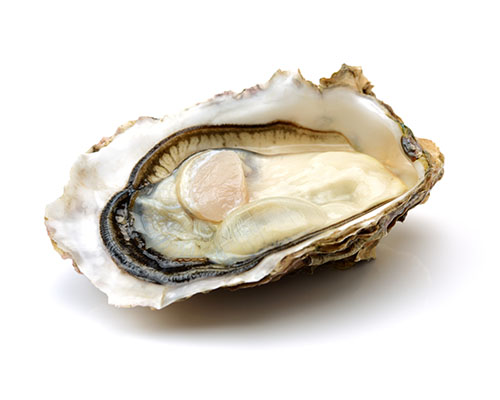
Oysters from British Columbia, Canada, have been linked to at least 326 cases of norovirus gastroenteritis since mid-January in four Canadian provinces and two US states.

Image courtesy of Public Health Agency of Canada

Norovirus cases linked to consumption of raw or lightly cooked oysters have been reported in British Columbia (262), Alberta (1), Saskatchewan (1), and Ontario (15), according to the Public Health Agency of Canada (PHAC).

On March 18, 2022, the BC Centre for Disease Control alerted restaurants and retail establishments in the province to “reports of norovirus illness associated with the consumption of raw and lightly cooked oysters,” adding that the province was investigating the illness reports.

The Minnesota Department of Health has confirmed 29 outbreak cases. All twenty-nine victims became ill after eating raw oysters at Travail Kitchen in Robbinsdale, MN on March 20. The oysters served were Stellar Bay Gold oysters harvested on March 10 from Deep Bay 14-8 CLF #1407063 in British Columbia, Canada.

Eighteen residents of Washington reported norovirus-like illness after eating BC oysters from harvest area BC 14-8 since March 7, 2022, according to the Washington State Department of Health.

On February 18, 2022, the Canadian Food Inspection Agency (CFIA) announced the first in a series of recalls of raw oysters harvested from “Subarea 14-8.” This harvest subarea is located on the east coast of Vancouver Island, and facing the west coast of Denman Island.

Additional recalls were issued through March 2022, expanding the recall to an additional subharvest area (14-15) and to multiple harvest and processing dates.

Consult the following individual recall notices for additional details on harvest dates, lot codes and product distribution.

The outbreak and product traceback investigations are ongoing, and there may be additional recalls. Follow eFoodAlert to stay informed.

What is norovirus?

Norovirus is a common cause of gastrointestinal illness, and is highly contagious. It can be transmitted by eating a contaminated food, or by touching a contaminated surface and then handling food without washing your hands.

Norovirus symptoms can begin as soon as 12 hours after exposure to the virus, and usually consist of diarrhea, vomiting, nausea and stomach cramps. In most cases, the illness is of short duration, lasting just a day or two.

Although the symptoms are of relatively short duration and are self-limiting, pregnant women, people with compromised immune systems, young children and the elderly are at risk for developing more serious complications, like dehydration.

PHAC recommends:

  • Do not eat, use, sell, or serve the recalled oysters. 
  • Avoid eating raw or undercooked oysters to reduce your risk of foodborne illness and follow proper food handling practices. 
  • Cook oysters to an internal temperature of 90° Celsius (194° Fahrenheit) for a minimum of 90 seconds.
  • Discard any oysters that did not open while cooking.
  • Eat oysters right away after cooking and refrigerate leftovers.
  • Always keep raw and cooked oysters separate to avoid cross-contamination. 
  • Do not use the same plate or utensils for raw and cooked shellfish, and wash counters and utensils with soap and warm water after preparation.
  • Wash your hands well with soap before and after handling any food. Be sure to clean and sanitize cutting boards, counters, knives and other utensils after preparing raw foods.

If you develop symptoms of norovirus

  • Thoroughly clean contaminated surfaces, and disinfect using chlorine bleach, especially after an episode of illness.
  • After vomiting or diarrhea, immediately remove and wash clothing or linens that may be contaminated with the virus (use hot water and soap).
  • If you have been diagnosed with norovirus illness or any other gastrointestinal illness, do not prepare food or pour drinks for other people while you have symptoms, and for the first 48 hours after you recover.

Find more information on the risks associated with eating raw and undercooked food in TAINTED. From Farm Gate to Dinner Plate, Fifty Years of Food Safety Failures, available in digital, print and audiobook editions.

TAINTED formats 3
“Reads like a true crime novel” – Food Safety News

Recalls and Alerts: February 5 – 6, 2017

Here is today’s list of food safety recalls, product withdrawals, allergy alerts and miscellaneous compliance issues. The live links will take you directly to the official recall notices and company news releases that contain detailed information for each recall and alert.

If you would like to receive automatic email alerts for all new articles posted on eFoodAlert, please submit your request using the sidebar link.

United States

Food Safety Recall: Johnson’s Sausage Shoppe, Inc. (Rio, WI) recalls several varieties of North Oak, Johnson’s Sausage Shoppe Inc., and Twisted Oak Farms Beef Jerky (Wisconsin legend with the number 293 on the label or the package) because the jerky was not properly inspected prior to sale. The products were sold at retail stores (quarter-pound packages) and through distributors (no pre-printed weight) on or before January 5, 2017).

Food Safety Recall: Following the closure by the Oregon Department of Agriculture of the commercial crab fishery from the north jetty of Coos Bay to Heceta Head, north of Florence, due to elevated levels of domoic acid in crab viscera, Pacific Seafood and Hallmark Fisheries have recalled Whole, wild-caught, cooked Dungeness Crab. Consumers who purchased this product from Fred Meyer stores (February 3rd – 4th), QFC stores (February 1st – 3rd) or Haggen Northwest Fresh stores in Washington, Oregon and California (February 1st – 3rd) should discard the product or return it to the place of purchase for a full refund.

Canada

Allergy Alert: Bramic Sales Inc. recalls Chiffon brand Margarine (227g; UPC 7 52046 32111 2; all lot codes where milk is not declared) due to undeclared milk. The product was distributed to retailers in Alberta and Ontario.

Allergy Alert: Castle Cheese (West) Inc. recalls Garden Choice brand Cheeses due to undeclared wheat. The recalled products were distributed to hotels, restaurants and institutions in Alberta, British Columbia, Ontario and Quebec. Please refer to the notice for a detailed list of products.

Safety Recall: National Smokeless Tobacco Co. recalls certain NSTC Copenhagen and Skoal products after receiving complaints from US consumers of metal objects, including sharp metal objects, found in select cans. The recalled products were sold in Canada by Costco Wholesale. Please refer to the recall notice for a detailed list of affected products.

Europe

Food Safety Recall Update (Ireland): Avoca updates its recall notice for Avoca Hummus (264g) and Avoca Colcannon (550g) to correct the Hummus Use by date to 09.02.17. The recall was initiated due to possible contamination with Listeria monocytogenes.


Some supermarket chains post recall notices on their web sites for the convenience of customers. To see whether a recalled food was carried by your favorite supermarket, follow the live link to the supermarket’s recall website.

*The Kroger umbrella encompasses numerous supermarket, marketplace and convenience store chains
**Includes Safeway, Vons, Pavilions, Dominick’s, Genuardi’s, Randalls, Tom Thumb, Carrs and Pak N’ Save.