

Bravo Packing enjoined from producing raw pet food

Company and the US Food and Drug Administration enter into consent decree
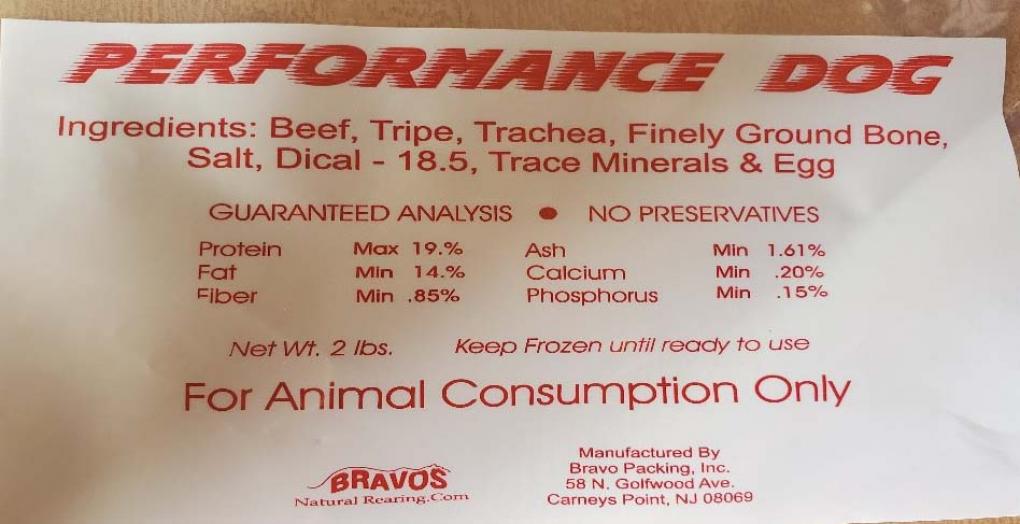
A federal judge has entered a consent decree of permanent injuction against Bravo Packing, Inc., a manufacturer and distributor of raw pet food based in Carney’s Point, New Jersey.

(Bravo Packing is not related in any way to Bravo LLC / Bravo Pet Foods, located in Manchester, Connecticut)

The consent decree requires that Bravo “stop selling, manufacturing and distributing raw pet food and come into compliance with the Federal Food, Drug, and Cosmetic Act (FD&C Act).”

The backstory

On September 12, 2018, Bravo Packing announced a voluntary recall of Performance Dog frozen, raw pet food (manufacturing date code 071418) after the FDA found Salmonella in a sample of the product during an inspection of the manufacturing facility.

In addition to the Salmonella-positive sample, FDA Investigator Michael Rosner also documented several issues of concern, including:

  • Some condensate drip and ice buildup was observed on several boxes of finished dog food product in one of the firm’s freezers. 
  • The air curtains entering the dog food processing room were observed to be soiled and in disrepair. 
  • The firm was using a santiizer product at an incorrect dilution level, which reduced the sanitizer’s effectiveness.
  • Some of the claims on the firm’s website were potentially misleading.

By the time the FDA returned to Bravo’s manufacturing facility in July 2019, the situation had deteriorated. This time, the FDA labs found Salmonella and Listeria monocytogenes in samples collected during an investigation that lasted from July 22nd to August 6th.

According to the Inspection Observations report (FDA Form 483), issued by Investigators Teigan Mule and Kyle Coville,

  • after cleaning had been completed, the elbow portion of the feeder pipe from the mixer still had a buildup of dried, dark, crusty meat-like material
  • a film residue remaining on the sides of a mixer exit chute after cleaning
  • greasy buildup of animal fat remaining at the output of a grinder after cleaning
  • black residue on the inside surface of buckets used to hold cut meat
  • condensate drip and ice buildup on boxes of finished raw dog food products in a freezer
  • cardboard boxes used to pack finished product observed to have bird droppings on the tops and sides
  • apparent mammalian (rodent?) droppings adjacent to stored, palletized boxes
  • inadequate training of employees on how to clean and degrease processing equipment after processing.

Although Bravo agreed to recall the contaminated Performance Dog Food product, the company never provided the FDA with the usual draft customer notification letter, distribution list, or draft press release.

In the absence of documentation from the company, the FDA issued its own Consumer Advisory on September 26, 2019, cautioning pet owners “not to feed their pets any Performance Dog frozen raw pet food.”

The FDA followed up its actions with a formal Warning Letter, issued on March 16, 2020. The letter reiterated and expanded upon the observations contained in the inspection report and requested a written response from the company within fifteen working days of receipt.

Downward slide accelerates

On March 3, 2021, Bravo issued yet another recall notice after Salmonella and Listeria monocytogenes were found once again in the company’s products.

The recall was expanded on March 16th to include all pet food and bones in all package sizes.

When the FDA returned to inspect Bravo’s production plant in May 2021, Investigators Kyle Covill and Sean Duke found a situation that had deteriorated further.

  • a shovel used to push meat into the grinder was covered with residual dried, black meat-like material from the handle down to the shaft and all the way to the end of the blade
  • a meat hook covered with cobwebs and other extraneous material was used to move deboned meat from raw ingredient barrels into the grinder during production
  • the grinder contained heavy rust on the inside walls, basins and screw augur
  • a piece of meat from a prior production run was left in the exit portion of the mixer, which also contained a pooled black liquid and white fat-like deposits, and the mixer was subsequently used during production without any further cleaning
  • one of the owners was seen spitting chewing tobacco on the floor of the deboning room
  • two cats were observed urinating on the outside of a raw ingredient barrel that was subsequently used (without undergoing cleaning and sanitizing) to produce Performance Dog ready-to-eat raw dog food
  • the floors in multiple rooms of the production plant, including the processing room, had large cracks, holes and depressions, which contained pooled blood and water
  • uncovered barrels of deboned meat were stored directly beneath a metal beam and brackets covered with flaking rust.

The bottom line

The consent decree prohibits the defendants (including the company’s owner and secretary, Joseph Merola, and its president, Amanda Lloyd) from receiving, preparing, processing, packing, holding, labeling, and/or distributing pet food unless and until the company undertakes and completes a comprehensive list of corrective actions.

The decree also allows the FDA to order a shutdown, recall, or other corrective action in the event of future violations and requires the defendants to pay the costs of inspections performed pursuant to the decree. Failure to abide by the agreement can also lead to civil or criminal penalties.

In commenting on the consent decree, Steven Solomon, DVM, MPH, director of FDA’s Center for Veterinary Medicine, said,

The food we give our pets should be safe for them to eat and safe for people to handle. The FDA has taken this action to protect public health because, despite multiple inspections, notifications of violations, and recalls, this firm continued to operate under insanitary conditions and produce pet food contaminated with harmful bacteria. We will not tolerate firms that put people or animals at risk and will take enforcement actions when needed.”

FDA, CDC investigating Salmonella outbreak linked to shell eggs

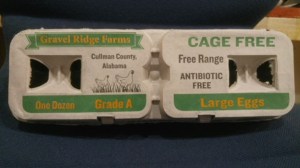
Raw shell eggs from Gravel Ridge Farms (Cullman County, Alabama) are being blamed for 14 cases of Salmonella Enteritidis illnesses in Tennessee and Alabama according to reports from FDA and CDC.
Illnesses started on dates ranging from July 10, 2018 to August 7, 2018; two victims were hospitalized.

Thirteen of the 14 outbreak patients reported eating restaurant dishes made with eggs. FDA and state partners traced the source of the shell eggs supplied to these restaurants to Gravel Ridge Farms.

On September 8th, Gravel Ridge Farms recalled Gravel Ridge Farms Large Cage Free Eggs (Single Dozen and 2.5 Dozen Flats; Use by 7/25/18 through 10/3/18; UPC 7-06970-38444-6), and has ceased the production and distribution of the product while FDA and the company investigate the source of the contamination.

Recalled product was distributed between 6/25/2018 and 9/6/2018. These products were packaged in a cardboard container and sold primarily in restaurants and retail stores in AL, GA, and TN.

The following retail stores carried the recalled eggs:

Atlanta
Candler Park Market
Grant Park Market
Westview Corner Market
Sevananda Natural Foods
The Merchantile

Birmingham
Piggly Wiggly Clairemont
Piggly Wiggly River Run
Piggly Wiggly Crestline
Piggly Wiggly Bluff Park
Piggly Wiggly Dunnavent Valley
Piggly Wiggly Warrior
Piggly Wiggly Homewood
Western Market Mt. Brook
Western Market Rocky Ridge
Foodland Eva
Warehouse Discount Grocery Hanceville
Warehouse Discount Grocery Cullman 2 locations
Foodland Priceville
Star Market Huntsville
Manna Grocery Tuscaloosa

Consumers who have purchased these products should return them to the store for refund or discard the product immediately. If any consumers have Gravel Ridge Farms eggs in their refrigerator, they should be discarded, regardless of the date stamped on the package. Consumers with questions may call Dustin Smith at 205-363-1105 M-F Between 8AM and 4PM Central Time.

Salmonella Outbreak Exposes Flaw in FDA ‘Import Alert’ System

The Food and Drug Administration (FDA), the Centers for Disease Control and Prevention (CDC), the Maryland Department of Health (MDH) and other state and local agencies continue to investigate the  outbreak of Salmonella Kiambu illnesses, which has sickened 47 people and has already claimed one life.

The CDC posted this photo with the outbreak notice, describing maradol papayas as large, oval fruits that weigh 3 or more pounds, with green skins that turn yellow when the fruit is ripe. The flesh inside the fruit is salmon-colored.” Photo courtesy of CDC

Based on sampling and analysis reported by MDH, the outbreak appears to be linked to consumption of Maradol papayas, imported from Mexico. On July 26, 2017, Grande Produce (San Juan, TX) recalled Caribeña brand Maradol papayas that were shipped to an unnamed Maryland distributor center between July 10 and July 19.

The introduction of Salmonella-contaminated papayas into the US retail market occurred despite the issuance in August 2011 of Import Alert 21-17, COUNTRYWIDE DETENTION WITHOUT PHYSICAL EXAMINATION OF PAPAYA FROM MEXICO.

What is an Import Alert?

An Import Alert informs “…FDA field staff and the public that the agency has enough evidence to allow for Detention Without Physical Examination (DWPE) of products that appear to be in violation of FDA laws and regulations.” It can be very narrow (apply to a single company or importer) or extremely broad, as in the case of Import Alert 21-17. The purpose of the Import Alert is to place the burden of proving product safety on the shoulders of the producer or importer. The first Import Alert was issued in 1974.

History of Import Alert 21-17

Mexican papayas were the source of a Salmonella Agona outbreak that sickened 106 people in 25 US states between January 1 and August 25, 2011. The outbreak was traced to several brands of papayas distributed in the USA and Canada by Agromod Produce, Inc.

During the investigation into the source of the outbreak, FDA analyzed 211 samples of Mexican papayas, finding Salmonella in 33 (15.6 percent) of them. The positive samples came from 28 different firms and nearly all the major papaya-growing regions of Mexico. In response to the extent of the contamination, FDA issued Import Alert 21-17 on August 25, 2011.

Are there any exceptions to the Import Alert?

FDA policy allows for exemptions to an Import Alert, if a company can provide evidence that their products are likely to remain in compliance with FDA laws and regulations. In the case of Import Alert 21-17, FDA considers Salmonella-negative test results from five consecutive shipments over a period of time to be evidence of probable compliance. Entities able to meet these criteria may apply for an exemption. If accepted, they are added to  the Green List appended to the Import Alert.

How does the Green List Work?

At last count, FDA has granted 98 exemptions in the nearly six years during which the Import Alert has been in force. Once granted, exemptions remain in effect unless FDA receives evidence of lack of compliance, such as a result of a consumer complaint, a Salmonella-positive routine retail surveillance sample. There is no requirement for inspection of the exempt entity’s operations, for routine or periodic submission of lab test results, or for any other form or recertification. A Green-listed entity under Import Alert 21-17 has carte-blanche to ship papayas from Mexico into the USA.

What Happens to Detained Shipments under Import Alert 21-17?

Entities whose products are detained without physical examination may apply to have those products released by submitting evidence from a third-party laboratory that the product is not contaminated with Salmonella. Otherwise, the product either will be refused entry into the USA, or will be destroyed.

The action taken last week by Grande Produce represents the second time in recent years that Caribeña brand Mexican papayas have been recalled due to Salmonella contamination. The first recall took place in May 2012 after routine testing by Caribe Produce, LTD CO discovered Salmonella contamination.

A recent search of Texas Secretary of State corporate filings revealed Raul Cano to be both the registered agent for Caribe Produce and a Managing Member/Director of Grande Produce. Both companies currently share the same street address. According to a May 2017 article published in Texas Border Business, Grande Produce is owned jointly by Raul Cano and his brother, Juan Cano.

While the identity of the Mexican grower who supplied the recalled papayas has not been determined, Chiapas-based Finca Monte Verde identifies its US distributor to be Grande Produce and identifies Caribe Produce as its contact point in the USA. Finca Monte Verde is on the Import Alert 21-17 Green List and, therefore, is exempt from automatic detention.

There is no information on either the Finca Monte Verde or the Grande Produce websites to indicate whether or not Finca Monte Verde is the sole supplier of papayas to Grande Produce. While FDA is conducting a traceback investigation of the recalled Caribeña papayas, its investigators also are working with CDC and state agencies to determine whether other brands of papayas may be implicated in the Salmonella outbreak.

Although the investigating state and federal agencies have not yet determined the origin of the contaminated papayas, or the point in the tree-to-table distribution chain at which they may have become contaminated, one thing is certain. Either the papayas entered the USA under the aegis of a Green-Listed entity or the produce was admitted as a result of a third-party lab analysis certifying a Salmonella-negative result.

As food safety advocate Bill Marler pointed out in his recent opinion piece, ‘Why the US imports tainted food that can kill you,’ FDA’s ability to carry out proactive inspections of foreign growers and packers is severely limited by budget constraints, forcing the agency to rely on the good faith and probity of these entities and of their third-party testing laboratories to deliver a safe product to US consumers.

In this case, it seems the outcome was a large gap in the food safety border wall—maybe large  enough to drive a refrigerated 18-wheeler through.

This article first appeared on Food Safety News and is reposted here with permission. Attorney Bill Marler is the publisher of Food Safety News.