

Evangers denied knowledge of horse meat despite its license

This story by Phyllis Entis first appeared in Food Safety News and is reposted here with permission.
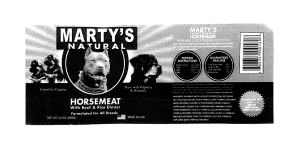
Even though the owners of Evanger’s Dog and Cat Food Co. Inc. had a state license to process horse meat from Feb. 14, 2016, through Aug. 17, 2017, they denied any knowledge of how horse meat found its way into their products.

The pet food company’s license application submitted to the Illinois Department of Agriculture described Evanger’s operations as “canning of pet food” and indicated the horse meat would be sold as “canned pet food” according to information obtained from the department in response to a Freedom of Information Act request.

It is not illegal to use horse meat as pet food in the United States, as long as it’s presence is disclosed on the labeling, a spokesperson for the Food and Drug Administration said.

Evanger’s horse meat processing activities predated the issuance of the state license.

In April 2015, the Illinois agriculture department received a complaint from the Wheeling, IL, fire marshal about improper food storage and disposal, clogged and maggot-filled grease traps, and other unsanitary conditions at Evanger’s Wheeling Road facility. The state initiated an inspection of the facility on May 27, 2015.

During the investigation of the company’s operations, inspectors noted the manufacture of a dog food with horse meat as an ingredient.

As a result of conditions observed during the May inspection, the state of Illinois filed a formal complaint against Evanger’s, charging the company with violations of the Illinois Commercial Feed Act of 1961, the Illinois Food, Drug, and Cosmetic Act, and the Illinois Horse Meat Act.

The complaint stated that Evanger’s “… canned, packed or otherwise processed or prepared for sale a pet food with horsemeat listed as its main ingredient” without having secured a license to do so, and that the company did so under unsanitary conditions.

According to information contained in the report on a follow-up inspection, conducted in January 2016, Evanger manufactured only canned dog and cat foods in the Wheeling facility, receiving raw and frozen pork, chicken, beef and horse meats. The horse meat was imported from foreign countries, the report stated.

One year later, in January 2017, FDA launched an investigation into pentobarbital contamination in a canned, wet dog food manufactured by Evanger’s in June 2016. The investigation was in response to a consumer complaint following the death of a dog who had been fed some “Evanger’s Hunk of Beef au Jus” dog food. 

During the investigation, FDA arranged for lab tests to determine the species of meats present in several samples of the same batch of food eaten by the dead dog. Traces of horse antigens were found in one of the samples.

As reported by Food Safety News in February 2017, those level of horse antigens would be consistent with incidental cross-contamination if horse meat was processed in the same facility as the beef-based dog food.

The owners of Evanger’s denied any knowledge of how horse meat had found its way into their products, and cast blame on their beef supplier, Bailey Farms LLC. On April 25, 2017, Evanger’s filed a lawsuit against Bailey, alleging that it had shipped pentobarbital-contaminated horsement instead of the “pet food quality beef” ordered by Evanger’s.

At the time the lawsuit was filed, and throughout the entire period during which the company manufactured dog food that was later found to be adulterated with pentobarbital, Evanger’s license to process horse meat was active and in force. 

Evanger’s horse meat license expired in August 2017 and has not been renewed.

Recalls and Alerts: July 16 – 18, 2018

Here is today’s list of food safety recalls, product withdrawals, allergy alerts and miscellaneous compliance issues. The live links will take you directly to the official recall notices and company news releases that contain detailed information for each recall and alert.

If you would like to receive automatic email alerts for all new articles posted on eFoodAlert, please submit your request using the sidebar link.

United States

OUTBREAK ALERT / Food Safety Recall: FDA and CDC are investigating a multi-state outbreak of Salmonella Sandiego infections linked to Hy-Vee Spring Pasta Salad. CDC reports that 21 people in 5 states (IA, MN, MO, NE, SD) have become ill. There have been 5 hospitalizations and no deaths. Hy-Vee, Inc. recalls Spring Pasta Salad (1-lb and 3-lb containers; produced between June 1, 2018, and July 13, 2018) due to potential Salmonella contamination. The recalled products were distributed to all of Hy-Vee’s 244 grocery stores across Iowa, Illinois, Missouri, Kansas, Nebraska, South Dakota, Minnesota and Wisconsin.

Allergy Alert: New Seasons Market recalls NEW SEASONS SESAME NOODLE CHICKEN SALAD (24-oz clear plastic container; Best by 07/18/2018) due to undeclared peanuts. The recalled product was shipped to retail locations in Oregon and Washington.

Allergy Alert: Portland French Bakery recalls Seattle Sourdough Pub Buns (16-oz 6-pack; Best before JUL- 03-18 and JUL-31-18) and Franz Premium Pub Buns (32-oz 12-pack; Best before JUL- 03-18 and JUL-31-18) due to undeclared soy.

Allergy Alert: The Pictsweet Company recalls Pictsweet Farms Steam’ables Baby Brussels Sprouts (12 oz; Production codes beginning with 1508K; Best if used by MAY 30, 2020; UPC 0 70560 97731 9) due to undeclared milk and soy. The recalled product was distributed are as follows: Alabama, California, Delaware, District of Columbia, Georgia, Illinois, Indiana, Kentucky, Louisiana, Maryland, Michigan, Nevada, North Carolina, Ohio, Pennsylvania, South Carolina, Tennessee, Texas, Virginia, West Virginia, and Wisconsin.

Food Safety Recall: Smithfield Packaged Meats Corp., doing business as Stefano Foods recalls Stefano’s Calzone PEPPERONI FIVE CHEESE STUFFED WITH PEPPERONI AND A FIVE CHEESE BLEND (8-oz. deli tray; Lot #14318B; Best by 1/18/2019) due to foreign matter (pieces of hard, sharp, clear plastic particles). The recalled product was shipped to retail stores nationwide.

Food Safety Recall: ALDI recalls AnnaSea Wasabi Ahi Poke Hawaiian Poke Kits and Limu Ahi Poke Hawaiian Poke Kits (best by dates of 5/23/2020. 6/11/2020, 6/12/2020, and 6/14/2020) sold in certain stores due to incorrect storage temperature. Please refer to the recall notice for details on the affected stores.

Canada

Food Safety Recall: Poissons frais des Îles inc. (Îles-de-la-Madeleine, QC) recalls TOMALI DE HOMARD DES ÎLES-DE-LA-MADELEINE (120 ml; All lots sold up to July 16, 2018) due to improper processing.

Europe

Allergy Alert (Denmark): Unilever recalls Frisco brand Vienetta Chocolate ice cream (650 ml; Lots L8047BA004, L8047CA004, L8047AA004 and L8048AA004; Best by 02/2020) due to undeclared hazelnuts.

Allergy Alert (Finland): Unilever Finland Oy recalls Frisco brand Vienetta Chocolate ice cream (650 ml; Lots L8047BA004, L8047CA004, L8047AA004 and L8048AA004; Best by 02/2020) due to undeclared hazelnuts.

Allergy Alert (France): Gruppo Fini spa recalls Le conserve della nonna Sauce with clams (Lot #12 LA017; Best by 31/07/2020) due to undeclared egg.

Allergy Alert (Italy): ANTAAR&S S.p.A. recalls Organic Babykiss Lenticchie (Lot #L05271; Best before  21 02 19) due to undeclared gluten.

Allergy Alert (Netherlands): Jan Linders recalls Corn Gold giant raisin currant buns (Best by 25-7-2018) due to undeclared oat flakes, almonds, hazelnuts and barley.

Food Safety Recall (Denmark): Capella Trading recalls Smoked salmon (250g; Lot #2134-188; Best before 8/8-2018) due to Listeria monocytogenes contamination.

Food Safety Recall (France): Manufacturer recalls Gel Manche brand Seafood delight (2.2kg; various lot numbers and best before dates) due to Listeria contamination. Please refer to the recall notice for a complete list of affected product.

Food Safety Recall (France): Intermarché recalls Monique Ranou brand Chicken bowl with vegetables (250g; various lot numbers and best before dates) due to Listeria contamination. Please refer to the recall notice for a complete list of affected product.

Food Safety Recall (France): Carrefour recalls Carrefour brand part-skim milk (50 cl bottle; Lot #18 124 L9; Best before 04/09/2018) due to foreign matter (pieces of black plastic) contamination.

Food Safety Recall (Italy): C.I.R. sas di Mecarelli C. & C. recalls Salsa fegato Take Away (1.2 kg; Batch codes/Best by dates 14/07/2018, 15/07/2018, 16/07/2018, 17/07/2018 and 10/08/2018) due to Listeria monocytogenes contamination.

Food Safety Recall (Netherlands): Fresh Fruit Express recalls Veggie Express Green Smoothie mix (Batch codes L18068A1 & L18068B1; Best by 09-03-2020) and Veggie Express Red Smoothie mix (Batch code  L18123B2; Best by 03-05-2020) due to Listeria monocytogenes contamination.

Food Safety Recall (Netherlands): Albert Heijn recalls AH Beenham (Best by 29-07-2018) due to Listeria monocytogenes contamination.

Food Safety Recall (UK): Health Leads UK Ltd recalls several batches of Bitter Apricot Kernels due to high levels of hydrocyanic acid (cyanide). Please refer to the recall notice for a complete list of affected products.

Australia and New Zealand

Allergy Alert (Australia): Sarric PTY Ltd trading as Serendipity Ice Cream recalls Serendipity Vanilla Bean Ice Cream (500 ml; Best before 14/06/19) due to undeclared milk and egg.

Allergy Alert (Australia): Jimmy Brings recalls Jimmy Brings Wine Mount Emmy Pinot Grigio – 2017 (750mL; all stock) and Jimmy Brings Wine Lily of the Valley Pinot Grigio  – 2018 (750mL; all stock) due to undeclared sulphites, milk and egg.

Food Safety Recall (Australia): Mushroom Exchange recalls Sliced Mushrooms – Brown and White (various brands) due to foreign matter (large pieces of white plastic) contamination. Please refer to the recall notice for details on the affected products.

FDA investigates Smucker-owned Big Heart over pentobarbital

This story by Phyllis Entis first appeared in Food Safety News and is reposted here with permission

An investigation into pentobarbital adulteration in canned, wet pet food manufactured by Big Heart Pet Brands Inc. remains “open and ongoing” according to a spokesperson for the U.S. Food and Drug Administration.

Big Heart is a wholly owned subsidiary of The J.M. Smucker Company Inc.

On Feb. 16, FDA alerted pet owners to the possible presence of pentobarbital in certain canned dog foods, including Gravy Train, Kibbles ’N Bits, Ol’ Roy and Skippy products, after a media outlet reported having found the chemical in several samples of Gravy Train canned, wet dog food.

Upon learning of the findings, Smucker initiated a product withdrawal pending the outcome of an internal investigation. The withdrawal was upgraded to a voluntary recall after the company verified the presence of pentobarbital in its finished products and in beef tallow, an ingredient common to all of the affected products.

Pentobarbital is a barbiturate used to euthanize animals. FDA considers a pet food to be adulterated if it contains even a trace amount of the drug.

On Feb. 23, FDA initiated an inspection of the Big Heart manufacturing facility in Bloomsburg, PA. The inspection was conducted jointly with the Pennsylvania Department of Agriculture (PDA) and was completed on March 12th.

According to information contained in the Establishment Inspection Report (EIR), obtained by Food Safety News in response to a Freedom of Information Act request, Big Heart produces dog food under contract for third-parties in addition to manufacturing the Gravy Train, Ol’ Roy, Kibbles ’N Bits, and Skippy dog food brands as well as several brands of cat food.

A spokesperson for FDA, citing the ongoing status of the investigation, declined to comment on whether any of the private-labeled products were evaluated for possible pentobarbital contamination. Nor would the spokesperson comment on whether FDA conducted its own independent analysis of any ingredients or finished products as part of its investigation.

Big Heart did not test any other ingredients for pentobarbital once it found the chemical in the beef tallow ingredient.

All of the beef tallow used in the adulterated pet food was obtained from a single supplier.

Big Heart notified its supplier of the test results and followed up with an inspection of the supplier’s facility. Concluding that the supplier did not have adequate controls over its supply chain, Big Heart management switched to a different tallow supplier. In addition, the company reconfigured some product formulas to eliminate beef tallow.

A class action lawsuit filed in Northern California on May 1 against Big Heart Pet Brands Inc. alleges that the tallow was supplied by MOPAC, an eastern Pennsylvania rendering facility belonging to JBS USA Holdings Inc.

JBS operates two facilities in eastern Pennsylvania, one in Souderton and the other in Elizabethville. FDA declined to comment on whether either or both of these facilities were included in the investigation.

According to information contained in Establishment Inspection Reports obtained in response to a Freedom of Information Act request, the Elizabethville location manufactures poultry feed.

JBS Souderton is a rendering operation. It receives bovine, porcine and avian trimmings, bone, hides, offal, and blood from its nearby slaughter/meat packing facility and from other slaughter facilities, and also receives used cooking oil and yellow grease from restaurants.

Souderton produces a number of animal feed ingredients, including tallow, blood-meal, feather-meal, bone-meal and animal protein.

During the February-March inspection of Big Heart, FDA and PDA investigators were denied access to several documents, according to the EIR.

On instruction from the Smucker corporate headquarters, Big Heart management refused to furnish PDA and FDA investigators with qualitative or quantitative product formulae and refused to permit them to review either the company’s consumer complaint files or its Standard Operating Procedures for retaining samples.

The Plant Director, Dave Brookover, also declined to sign, or even to read, an FDA Affidavit (FDA Form 463a) setting out the information supplied by him during the course of the inspection. On instructions from the corporate office, Brookover left the room when the FDA investigator recited the contents of the Affidavit.

Some companies have specific policies on what they will or will not share with FDA, a spokesperson for the agency explained, adding that the nature and number of refusals were not out of the ordinary and did not obstruct the investigation.