Here is today’s list of food safety recalls, product withdrawals, allergy alerts and miscellaneous compliance issues. The live links will take you directly to the official recall notices and company news releases that contain detailed information for each recall and alert.
If you would like to receive automatic email alerts for all new articles posted on eFoodAlert, please submit your request using the sidebar link.
United States
OUTBREAK ALERT: FDA reminds parents not to feed honey to children younger than one year old. Honey Pacificers purchased in Mexico suspected in four cases of infant botulism in Texas.
OUTBREAK ALERT/Food Safety Recall: Jennie-O Turkey Store Sales, LLC recalls 91,388 pounds of raw ground turkey products due to possible contamination with Salmonella Reading. The contaminated turkey meat may be linked to a 35-state outbreak of Salmonella Reading illnesses, including one death, 164 illnesses and 63 hospitalizations.
OUTBREAK ALERT (UPDATE): CDC reports outbreak of Salmonella Newport infections linked to ground beef recalled by JBS Tolleson, Inc. has grown to 246 confirmed cases (59 hospitalized) in 25 states.
Allergy Alert: Chukar Cherries recalls Amaretto Rainier Chocolate Cherries (7.5 oz; Best By date of 09/2019; UPC 0 11261 22307 7) due to undeclared milk.
Allergy Alert: Nor Cal Food Solutions, LLC recalls Pumpkin Pesto Tapenade, manufactured by Purveyors Kitchen (7.75oz glass jars with a black metal lid; Lot codes PKPP17179A, PKPP17179B, PKPP17179C and PKPP17230B; Best before June 2019 and August 2019 (Lot code PKPP17230B)) due to undeclared walnuts.
Food Safety Recall: The Quaker Oats Company recalls 21 boxes of Cap’n Crunch’s Peanut Butter Crunch cereal (17.1 oz; Best Before JUL 30 19 or JUL 31 19; UPC 0 30000 6211 1) due to possible Salmonella contamination. The recalled product was supplied to five Target stores. Please refer to the recall notice for a list of the affected locations.
Food Safety Recall: Majestic Meat Company recalls approximately 532 pounds of bulk ground beef, ground beef patties, and meatballs due to possible contamination with E. coli O157:H7. Please refer to the recall notice for a complete list of affected products, which were shipped to restaurants in the state of Utah.
Food Safety Recall: Green Cedar Dairy recalls Green Cedar Ackawi cheese (Sell by March 26, 2019 or later) due to possible Listeria monocytogenes contamination. The recalled product was distributed at retail locations East Dearborn and Dearborn Heights Michigan.
Canada
Allergy Alert: Paradise Kosher recalls various baked goods due to undeclared wheat, gluten, eggs, sesame seeds, mustard and soy. Please refer to the recall notice for a complete list of affected products.
Allergy Alert: Industry recalls Ottogi brand Jin Ramen Spicy (600g; BEST BEFORE AUG.20.2019) and Ottogi brand Jin Ramen Mild (600g; BEST BEFORE AUG.19.2019) due to undeclared egg.
Food Safety Recall: L’Intermarché Lagoria recalls sardines due to elevated levels of histamine. Please refer to the recall notice for a complete list of affected products.
Food Safety Recall: Chez Hector Prêt à manger recalls JAMBON À LA BIÈRE ET SIROP D’ÉRABLE (500 mL; All product sold up to and including 16 November 2018) because the product may be unsafe for consumption.
Europe
Allergy Alert (Belgium): Colruyt recalls Everyday mélange à la noix muscade (100g; Lot #P101372; Best before 08/2022) due to undeclared milk and mustard.
Allergy Alert (Ireland): Allergy Alert (UK): Nisa recalls Heritage Dark Chocolate (90g; Best before 5 December 2019) due to undeclared milk.
Allergy Alert (Ireland): Clive’s recalls Clive’s Bombay Vegetables with Daal Tarts (190g; all Best before dates; All batch codes) due to undeclared mustard and sesame.
Allergy Alert (UK): Nisa recalls Heritage Dark Chocolate (90g; Best before 5 December 2019) due to undeclared milk.
Allergy Alert (UK): Clive’s recalls Clive’s Bombay Vegetables with Daal Tarts, chilled (190g; all dates up to and including 24 November 2018) and Clive’s Bombay Vegetables with Daal Tarts, frozen (190g; all dates up to and including 24 May 2019) due to undeclared mustard and sesame.
Food Safety Recall (Denmark): Salling Group recalls Bakersfield Skagenslapper frozen rolls (10 pieces/750g; Best before 01/10/2019, 02/10/2019) due to foreign matter (blue plastic pieces) contamination.
Food Safety Recall (Denmark): Dagrofa ApS recalls Gestus Pasta with hot-smoked salmon (360g; All dates from 15.11.2018 to 28.11.2018) due to Listeria contamination.
Food Safety Recall (France): Bergams recalls Bergams brand Purée de carotte, boeuf, épices cajun, patate douce (Best before 13/10 to 06/11, inclusive) due to Listeria monocytogenes contamination.
Food Safety Recall (France): Bergams recalls Bergams brand Wrap chaud, bœuf, légumes à l’orientale (Best before 12/10 to 05/11, inclusive) due to Listeria monocytogenes contamination.
Food Safety Recall (France): Intermarché recalls Maredoc brand clams (1kg and 3kg; Sold November 6 – 12, 2018) due to Salmonella contamination.
Food Safety Recall (Germany): Ferme Chapuis recalls Perle de Compostelle raw milk cheese (Best before 16.11.2018; Product of France) due to verotoxin-producing E. coli.
Food Safety Recall (Ireland): Caffreys recalls Confectionery Halloween Bloodie Mallows (All batches; Best before 30 January 2019) due to possible Salmonella contamination.
Food Safety Recall (Ireland): Aldi recalls The Deli Green Pesto (140g; Use by 23.11.2018) due to Salmonella contamination.
Food Safety Recall (Ireland): Goldsmith Goats recalls Goldsmith Goats Raw Goats Milk (All batch codes; All use-by dates) due to contamination with Escherichia coli O157 vt1.
Food Safety Recall (UK-England): Booths recalls Booths mince pies (4-pack; Batch code P/463246; Best before 12 January 2019) due to foreign matter (pieces of white plastic) contamination.
Food Safety Recall (UK-Northern Ireland): Caffreys recalls Confectionery Halloween Bloodie Mallows (All batches; Best before 30 January 2019) due to possible Salmonella contamination.
Pet Food Safety Recall (UK-England): The Raw Factory Ltd recalls various raw pet food products containing tripe and/or pork due to Salmonella contamination. Please refer to the recall notice for a complete list of affected products.
Asia, Africa and the Pacific Islands
Food Safety Recall (Hong Kong): Angliss Hong Kong Food Service Ltd recalls Casa Modena brand Mortadella Bologna IGP con pistacchio (Use by November 28, 2018; Product of Italy) due to possible Listeria monocytogenes contamination.
Australia and New Zealand
Food Safety Recall (Australia): My Queen Pty Ltd recalls Mini Cici Jelly and Mini Cici Jelly with dairy (360g; All Best before dates; Product of China) due to a choking hazard.


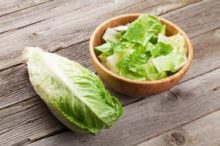 The current outbreak appears to be linked to romaine lettuce, based on epidemiological evidence. FDA is conducting lab tests and traceback investigations to determine the source or sources of the lettuce.