

October 25, 2026
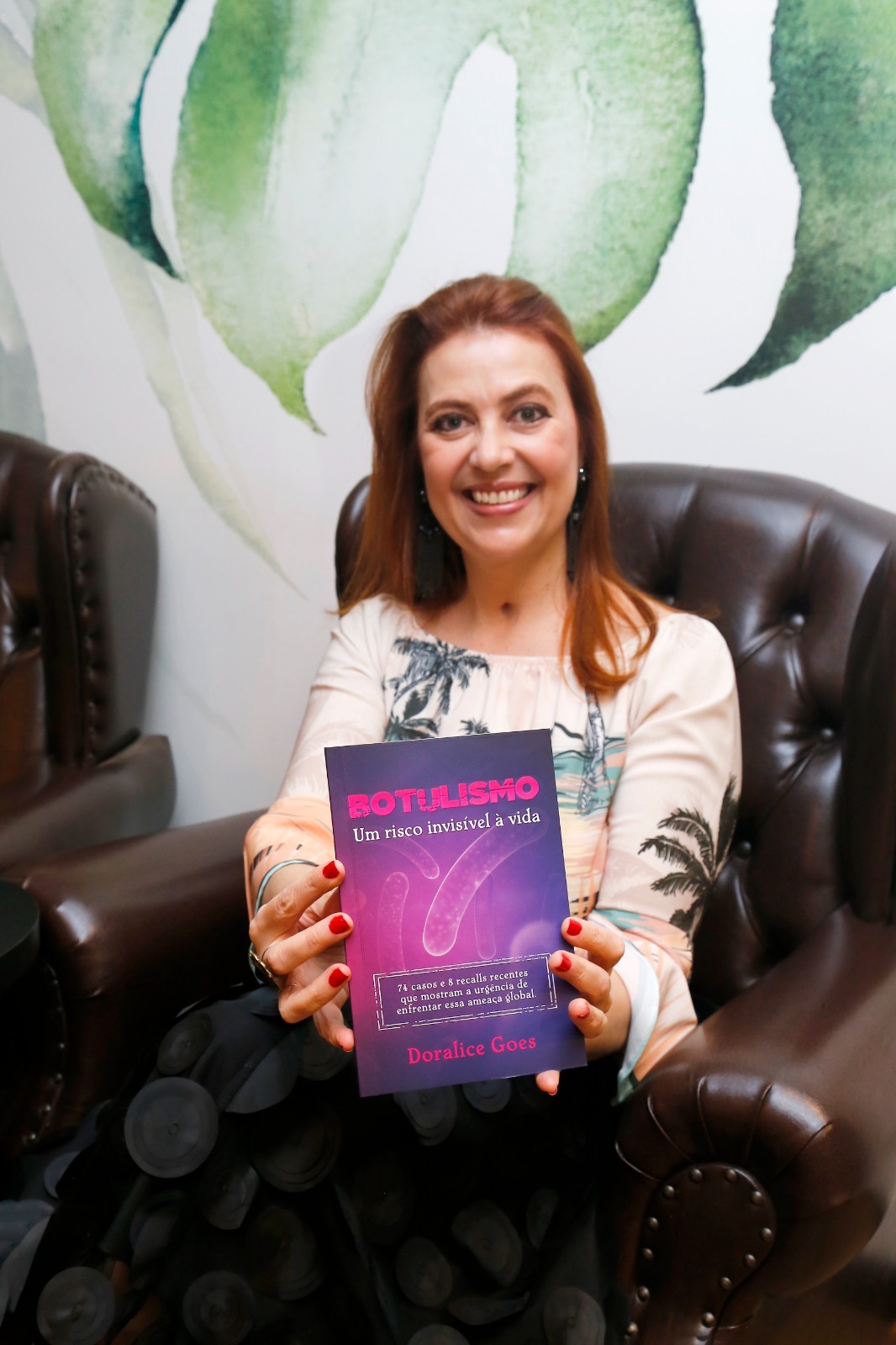
Doralice Goes is an inspirational and tireless advocate working to raise awareness about foodborne botulism. Her personal experience with the disease, including the challenges of obtaining a diagnosis and the lack of preparedness for such a situation, motivated her to investigate the study of this condition and to track recent cases worldwide. She gives presentations within the food industry, sharing not only her story of survival but also critical information regarding the symptoms of botulism and the vital importance of food safety. With sensitivity and impact, she addresses how minor lapses in food handling can lead to serious health consequences, offering a unique opportunity to promote a sense of responsibility in both food production and consumption. She also speaks at universities and hospitals, demystifying the disease and highlighting the importance of early diagnosis.
eFoodAlert is pleased to share with our readers this contribution from Doralice Goes, in her own words.
Botulism is a serious, non-contagious, potentially fatal neuroparalytic disease caused by neurotoxins produced by strains of Clostridium botulinum, Clostridium baratii, and Clostridium butyricum. While commonly found in the soil, the bacteria only multiply and produce their toxin under favorable conditions.
Five forms of botulism have been recognized: infant botulism, foodborne botulism, wound botulism, iatrogenic botulism (as a result of injections with Botox), and adult intestinal toxemia. Although rare, the disease has been observed in all five contemporary forms across six continents, necessitating efficient monitoring by health authorities.
Among the five known types, foodborne botulism caused by Clostridium botulinum is the most prevalent, affecting homemade, artisanal, and industrial products alike. This spore-forming bacterium is found in soil and is far more heat resistant than more common foodborne disease organisms. It is able to multiply in food when favorable growth conditions are present: an anaerobic (oxygen-free) environment, the presence of moisture and sugar, a water activity level between 0.93 and 0.97, and a pH greater than 4.6.
An analysis of cases recorded over the last three years across six continents points to various sources. In 2023, these included canned sardines served at a restaurant, sun-dried tomatoes, and chicken pot pies. In 2024, cases were linked to artisanal pesto sauce sold at a street market, artichoke soup, homemade cactus-based products, industrially canned mackerel, canned beans, chicken mortadella, pickled eggs, almond milk, and mayonnaise. In 2025, instances involved carrot cake, garlic confit, Neapolitan-style broccoli in sandwiches, chicken pie from a bakery, and avocado pulp.
These occurrences emphasize the need to broaden our understanding of the foods associated with this disease, which extend well beyond the common perception of canned goods, cured meats, preserves, and hearts of palm. Such awareness is essential for preventing further contamination, minimizing associated risks, and executing product recalls, all of which are vital to upholding the fundamental right to healthy and safe food.
Most importantly, the disease can be prevented by adopting food safety practices, such as heating canned or preserved foods to at least 80°C for 10 minutes before consumption , as well as by paying proper attention to expiration dates and ensuring proper storage, especially in tropical countries where temperatures can easily reach 30°C or 40°C.
Botulinum toxin causes paralysis of organs and muscles and typically requires a long hospital stay, including support for breathing, urinating, and eating. Following hospital discharge, the patient must remain off work to focus on motor rehabilitation. There is only one antidote—botulinum antitoxin—which is stored in strategic locations and distributed on request by health authorities.The antitoxin is not kept on-site at individual hospitals and must be administered within seven days of the onset of intoxication. Currently, the case fatality rate is approximately 5% to 10%.
I experienced this lack of preparedness firsthand during a year spent in the ICU after contracting foodborne botulism here in Brazil. It was then that I decided to study this disease in depth, raise awareness, become a reference on the subject, and offer support to people around the world going through the same thing.
As soon as I left the hospital, I began researching botulism. It has been nearly four years of study. I am currently pursuing a master’s degree, with plans to continue into a PhD and postdoctoral research. I want to advance botulism diagnosis and treatment globally. Above all, I want to prevent this terrible disease that shatters lives.
Every week, I receive inquiries from all over the world. From people who have used Botox and are still experiencing symptoms of botulism but have not received timely diagnosis or treatment. From people who contracted foodborne botulism and endured the unimaginable with receiving any proper care—both during the acute phase and in the subsequent, long-term stages. Recently, for example, I heard from a person in Crimea.
I don’t speak English, though I am currently learning the language. Thanks to Google Translate, I can communicate with anyone, in any language. Since contracting botulism, I sometimes struggle with typing, and because the keys on my phone are so close together, I often hit the wrong one. As a result, my texts sometimes contain errors. But none of that matters when you can simply be human and help others. I truly believe I have made a difference regarding botulism.
People who had never heard of it are now paying attention. Doctors who previously failed to diagnose it now consider it when treating patients in the ICU. Academics are delving deeper into the scientific literature. And those living with the disease anywhere in the world now have someone they can turn to. I feel useful! This goes far beyond just “work.” It is my life’s purpose. Even on a Sunday, I am here, fully committed to this cause.
Doralice Goes is a Brazilian master’s student in health sciences and is dedicated to researching botulism. She is also a survivor of the disease. In 2022, she spent 314 days hospitalized in an intensive care unit (ICU), completely quadraplegic and dependent on a ventilator. Her book, BOTULISMO. Um risco invisível à vida, was published in 2024. It is now out of print.
You can connect with Doralice on Instagram at @doralice.goes and on LinkedIn at Doralicegoes.


