Company agrees to pay almost $385 million without admitting fault
September 14, 2026
The US Department of Justice (DoJ) and Abbott Laboratories have agreed to settle a federal lawsuit that was filed by the DoJ in November of 2025.
The lawsuit alleged that Abbott had “…caused government programs to purchase powder infant formula manufactured at the Sturgis facility despite the products’ failure to meet statutory, regulatory, and contractual requirements.”
In its November 2025 filing, the DoJ alleged that the company
failed to maintain its Sturgis, Michigan facility in a clean and sanitary condition
knowingly operated deteriorated major manufacturing equipment (spray dryers)
failed to validate key manufacturing processes
failed to maintain adequate testing records and failed to investigate positive results
avoided testing for the presence of microorganisms
failed to disclose to the FDA that the Sturgis facility had a recurring presence of microorganisms and failed to disclose positive test results to the FDA
falsely certified compliance with statutory, regulatory, and contractual requirements for WIC powder infant formula manufactured at the Sturgis facility
The backstory in a nutshell
On February 17, 2022, the FDA issued a warning to consumers not to use multiple Similac, Alimentum, or EleCare powdered infant formulas in response to reports of four illnesses among infants who had been fed the indicated products. Abbott initiated a voluntary recall of the products and suspended production pending the outcome of an FDA investigation.
The complaints spanned a period of time from September 6, 2021 to December 18, 2021, and were reported from Minnesota (1), Ohio (1) and Texas (2). Three of the infants were infected with Cronobacter sakazakii, and one with Salmonella Infantis. One of the infected infants died.
During its follow-up investigation of the company’s Sturgis manufacturing facility, the FDA uncovered multiple serious violations of good manufacturing practices, which were included in the DoJ’s list of allegations (see above).
In May 2022, the FDA and Abbott entered into a consent decree designed to allow Abbott to resume production under the close supervision of the FDA.
A tale of two news releases
The DoJ takes a victory lap
In its news release announcing the settlement agreement with Abbott, the DoJ took a victory lap while also summarizing some of the many maintenance and production flaws in general terms.
“Today’s settlement is a victory for American families and makes clear the safety of our children is not negotiable,” said Acting Deputy Attorney General Trent McCotter. “Abbott will pay a substantial sum to resolve serious allegations it violated federal health and safety requirements designed to protect babies. The Justice Department will act decisively against anyone who puts American families at risk and ensure misconduct carries serious consequences.”
“No company should be gambling on the health and safety of our Nation’s infants by allowing unsanitary conditions to persist at a facility manufacturing baby formula,” said Associate Attorney General Stanley E. Woodward, Jr. “The Department will hold accountable bad actors that knowingly misrepresent compliance with essential health and safety standards designed to protect American families.”
“It is critical that infant formula manufacturers adhere to regulatory and contractual requirements to ensure that the products they manufacture are safe for the babies who consume them,” said U.S. Attorney Timothy VerHey for the Western District of Michigan. “This settlement demonstrates our commitment to holding manufacturers accountable when the United States pays for noncompliant products.”
“Parents rely on companies like Abbott Laboratories to responsibly follow the rules and ensure their products – especially baby formula – are safe. USDA OIG remains vigilant against those that would compromise public health and safety by failing to comply with legal standards and put infants at risk,” said USDA Inspector General John Walk. “This behavior is inexcusable and will not be condoned.”
Abbott’s reply
Abbott’s news release disclaimed any finding of fault or liability and made no reference to the numerous violations documented during the FDA’s 2022 investigation and listed in the DoJ’s 2025 complaint.
Instead, while not denying the presence of Cronobacter sakazakii in its production environment, the company took pains to state that the strains of Cronobacter sakazakii found in the Sturgis production environment were different from the strains recovered from the sick infants, and that “no unopened, distributed Abbott infant formulas have ever tested positive for Cronobacter sakazakii.”
Abbott’s statement also underlined that other producers of powdered infant formula have reported “Cronobacter-related findings” in their manufacturing facilities, and that Cronobacter is found naturally in the environment.
The settlement
Most of the money from the settlement agreement ($348,700,868) will go to the federal government to resolve allegations under the False Claims Act. The remaining $36,298,172 will be distributed to certain States for claims settled by their State Medicaid and WIC programs.
“Reads like a true crime novel” – Food Safety News
Interested in learning more about food safety and the history of foodborne disease outbreaks and investigations?
Click on the link to listen to a short excerpt, then follow the buy links to add a digital, print or audio copy to your personal library.
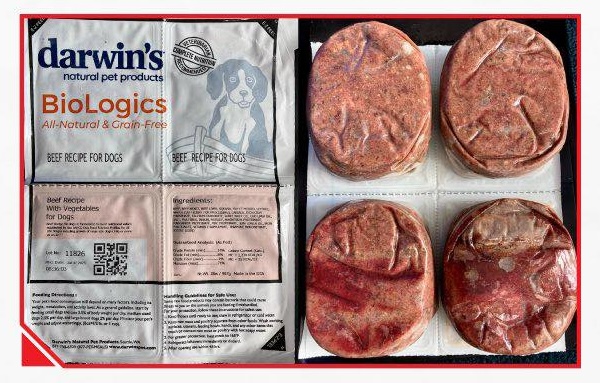
Manufacturer and owner of Darwin’s Natural Pet Products charged with six counts under Federal Food, Drug, and Cosmetic Act
On August 7, 2026, the US Department of Justice (DOJ), acting on behalf of the US Food and Drug Administration, filed a Complaint in federal court against Arrow Reliance Inc. (d/b/a Darwin’s Natural Pet Products) (Darwin’s) and the company’s owner, Gary Tashjian.
The Complaint, which was filed in the United States District Court For The Western District Of Washington At Seattle, seeks to permanently enjoin the defendants from:
introducing or causing to be introduced, or delivering or causing to be delivered for introduction, into interstate commerce, articles of food that are adulterated;
by operating a facility that is not in compliance with preventive controls requirements;
doing acts that result in articles of food becoming adulterated while such food is held for sale after shipment in interstate commerce;
failing to register as a food facility as required; and
by introducing or causing to be introduced, or delivering or causing to be delivered for introduction, into interstate commerce, articles of drugs that are adulterated.
Darwin’s has been a manufacturer of raw pet food since 2004.
In 2011, the company’s production facility was inspected for the first time by the Washington State Department of Agriculture (WSDA). The sole purpose of the inspection was to determine compliance with rules for handling meat potentially contaminated with the agent that causes ‘mad cow disease.’
In 2014, Darwin’s moved to its present location in Tukwila, Washington. Two years later, the FDA and the WSDA conducted a joint inspection of the company’s manufacturing plant.
During the course of the inspection, the investigators collected two finished product samples for microbiological analysis. One of the samples was found to contain Salmonella. Fortunately, the production lot from which it came had not yet been shipped.
In October 2017, the WSDA received a communication from a consumer who complained that Darwin’s food had made her dog sick. The information was transmitted to the FDA, and a federal inspector collected the remaining food from the consumer’s home. The sample tested positive for both Salmonella and Listeria monocytogenes.
In November 2017, the company sent an email to its customers, advising them of a product recall. One of the customers, whose dog had been suffering from unexplained diarrhea for several months, decided to have her companion tested for Salmonella. When the result came back positive, she filed a complaint with the FDA.
On December 4, 2017, the FDA and WSDA began a joint intensive inspection of Darwin’s. The investigators documented multiple food safety infractions. Two samples collected during the course of the inspection were found to be contaminated with Listeria monocytogenes.
Since the inspection that began in December 2017 and was completed in 2018, the FDA inspected the Darwin’s facility multiple times: in 2018-2019, 2021, 2022, 2023, and 2024. The federal agency and its state partners also found pathogens on multiple occasions, including Salmonella, Listeria monocytogenes, and E. coli O128 (shiga toxin-producing E. coli, or STEC).
Sick pets
The FDA has received reports in past years of sick animals who had been fed a Darwin’s product.
In December 2018, after receiving a report of Salmonella infection in a sick dog, the agency collected unopened packages from three different lots of Darwin’s dog food from the pet owner’s home. They found Salmonella in all three samples.
In July 2022, the FDA was contacted by a cat owner whose three cats became sick after being fed Darwin’s raw cat food. Again, the agency collected unopened packages of three different lot codes from the cat owner’s home. Two of the three samples were found to contain Salmonella.
In September 2023, four cats in the same household became sick after eating a Darwin’s cat food. A sample of unopened food collected from the cat owner’s home was positive for Salmonella.
In August 2025, the FDA received a complaint of a dog death. Unopened packages collected from the pet owner’s home were found to contain Listeria monocytogenes in one instance and both Salmonella and Listeria monocytogenes in the other instance.
Overall, from 2016 through January 2026, the FDA received a total of 49 consumer complaints involving sick pets who had been fed a Darwin’s raw pet food. The list includes 34 sick dogs, including five that died, and 35 sick cats, including four deaths.
Sick people
In June 2025, the FDA was informed of a four-year-old child who had become infected with E. coli O157:H7 the previous year and had developed hemolytic uremic syndrome (HUS). The child’s family fed its pet dog Darwin’s raw pet food. Third-party tests conducted on unopened Darwin’s food from the family’s home found Salmonella, and a sample from a different lot was contaminated with E. coli O157:H7.
The genetic profile of the E. coli O157:H7 isolated from the child’s stool was an exact match to the isolate recovered from the unopened Darwin’s pet food sample collected from the family’s home.
As part of its investigation, the FDA compared the genetic profile of isolates from Darwin’s pet foods against the profiles of clinical and food surveillance isolates in the public database maintained by the National Center for Biotechnology Information. Nine of the isolates from Darwin’s pet food samples collected in 2017, 2018, 2022, 2024, and 2025 matched human clinical isolates in the database.
Company push-back
On multiple occasions, Darwin’s has refused to initiate product recalls after the FDA or one of its partner state agencies documented the presence of a pathogen such as Salmonella, Listeria monocytogenes, or STEC in a sample of its pet food. In these cases, the FDA has resorted to public health notices instead.
On August 2, 2022, the company filed a Motion for a Temporary Restraining Order and Preliminary Injunction in federal court, asking that the FDA be prevented from posting a notice to alert the public to the presence of a pathogen in a Darwin’s product.
The Court rejected the motion and the FDA was able to post its public health notice three days later.
Darwin’s has repeatedly denied that its products were adulterated, claiming, among other arguments, that the presence of Salmonella in raw meat or poultry is natural, and is allowed by the USDA.
In April 2018, the FDA issued a Warning Letter to the company, advising that its products were adulterated under the Federal Food, Drug, and Cosmetic Act. The Warning Letter noted the presence of Salmonella and STEC in samples of the company’s products.
The agency issued a second Warning Letter in February 2023, noting that the company’s pet food was contaminated with Salmonella.
Neither Warning Letter had the desired effect.
The charges (and brief explanations)
Adulteration due to containing a poisonous or deleterious substance.
Food is adulterated if it bears or contains a poisonous or deleterious substance, such as Salmonella or STEC.
Adulteration due to production under insanitary conditions
Darwin’s manufactured, packed, and held ready-to-eat raw pet food without eliminating Salmonella, STEC and/or Listeria monocytogenes from the finished food as part of the manufacturing process.
The FDA recovered Salmonella from an environmental swab sample during their 2024 inspection of the company’s manufacturing facility. The inspection team also noted dirty water and debris from dirty equipment pooling on top of containers of cleanser and sanitizer and falling into the opening of those containers. Also, the floor throughout the production room and the base of a pillar were damaged and pitted, with water, blood, and raw ingredients accumulating in the damaged areas.
Failure to follow preventive controls regulation
The company identified contamination of their pet food with Salmonella, E. coli, and Listeria monocytogenes as possible hazards, but failed to identify adequate preventive controls to minimize or prevent the hazards from occurring.
FDA made the company aware of the repeated presence of pathogens in their raw pet food products, but Darwin’s has not remedied their conduct.
Failure to register as a food facility
Darwin’s meets the definition of a food facility, which is an “establishment, structure, or structures under one ownership at one general physical location…that manufactures/processes, packs, or holds food for consumption in the United States.“
Despite the notification contained in the FDA’s February 16, 2023, Warning Letter, the company’s owner, Gary Tashjian has failed to register Darwin’s facility.
Introduction of unapproved New Animal Drug into interstate commerce
Statements on the company’s website include claims that Darwin’s raw pet food is intended to prevent, cure, and/or treat disease in animals. The company’s claims qualify the raw pet food products as drugs “…intended for use in the diagnosis, cure, mitigation, treatment, or prevention of disease in animals.”
Ongoing conduct
Based on the experience and evidence accumulated over a period of almost ten years, the FDA believes that the company will continue to violate the Federal Food, Drug, and Cosmetics Act and regulations unless restrained by the Court.
The bottom line
The DOJ, acting on behalf of the FDA has asked the court to:
Order the company, Gary Tashjian, and any and all persons in active concert or participation with them to “…cease manufacturing, processing, preparing, packing, holding, or distributing articles of animal food, unless and until Defendants’ facilities, methods, processes, and controls used to manufacture, process, prepare, pack, hold, and distribute articles of animal food are established, operated, and administered in conformity with the FDCA and applicable regulations, in a manner acceptable to FDA.”
Permanently restrain and enjoin the company, Gary Tashjian, and any and all persons in active concert or participation with them from directly or indirectly
introducing or or delivering into interstate commerce any adulterated animal food
operating a food facility without complying with preventive controls
causing animal food held for sale after shipment to become adulterated
operating a food facility without registering
introducing or delivering into interstate commerce any adulterated new animal drug
Authorize the FDA to inspect Darwin’s place of business and all records relating to the manufacture, processing, preparing, packing, holding, and distribution of the company’s products to ensure continuing compliance with the terms of the injunction, with the company bearing the costs of such inspections.
Award costs to Plaintiff (FDA) incurred to date, including the costs of the investigation to date.
“A complete and compelling account of the hidden and not-so-hidden ways the food we give our beloved pets can be contaminated.” – JoNel Aleccia, Health Reporter, Food & Nutrition, The Associated Press.
“An invaluable resource for busy pet owners” – Food Safety News
Three weeks after the July 17, 2026 recall of iceberg lettuce linked to this summer’s massive Cyclospora outbreak(s), we finally know more about the scope of the recall, thanks to the release of the first FDA Enforcement Report.
Specifically, we have learned that the recall encompassed 236,192 cases of produce (consisting of iceberg lettuce and salad mixes), and we know the primary links in the supply chain.
Almost one-half of the recalled product (109,476 cases) was supplied to Walmart under its Marketside brand.
Approximately 19,000 cases were supplied directly to restaurant chains:
Subway received 8,075 cases
Jack In the Box received 5,130 cases
Yum! (owners of Taco Bell, KFC, and Pizza Hut) received 5,900 cases
The remaining 107,611 cases were distributed to foodservice entities, including:
US Foods: (Cross Valley Farms brand): 19,016 cases
Markon: 7,459 cases
Performance Food Service (Peak Fresh Produce brand): 720 cases
Sysco: 11,519 cases
Taylor Farms: 68,897 cases
The lettuce and salad mixes supplied to foodservice entities would have been distributed, either directly or through intermediaries, to restaurants, catering operations, hospitals, longterm care facilities, and so forth.
Only 2.5% of the recalled lettuce was supplied to Taco Bell and other members of the YUM! family of restaurant chains.
The July 17th Taylor Farms de Mexico recall included products distributed from June 29th through July 16th, with Best If Used By dates of 7/16/26 through 8/3/26. The CDC‘s current start date for the Taylor Farms lettuce outbreak is June 22nd.
Both the company and the FDA have been silent on the distribution pattern of Taylor Farms de Mexico lettuce distributed PRIOR TO June 29th. We do not know whether the earlier batches of lettuce were supplied to the same consignees in the same proportions as the recalled batches.
Once again, we are left guessing.
And this is what sticks in my craw.
Taylor Farms de Mexico knows where all of its lettuce was shipped. The FDA should also know where that lettuce was shipped. Why is this information being withheld from consumers?
For that matter, why did FDA wait three weeks to inform the public which companies received the recalled lettuce? It wasn’t a secret. Alabama released the information on July 20th.
The current administration promised “radical transparency.” So far, all we have seen is smoke and mirrors.
“Reads like a true crime novel” – Food Safety News
Interested in learning more about food safety and the history of foodborne disease outbreaks and investigations?
Click on the link to listen to a short excerpt, then follow the buy links to add a digital, print or audio copy to your personal library.