

The CDC has added more than 300 confirmed cases to the tally for the multistate outbreak of Cyclospora illnesses linked to shredded iceberg lettuce served at Taco Bell outlets.
The total number of confirmed cases is now “at least 1,947” according to the July 24, 2026 updated posted on the CDC website. Ninety-eight people have been hospitalized.
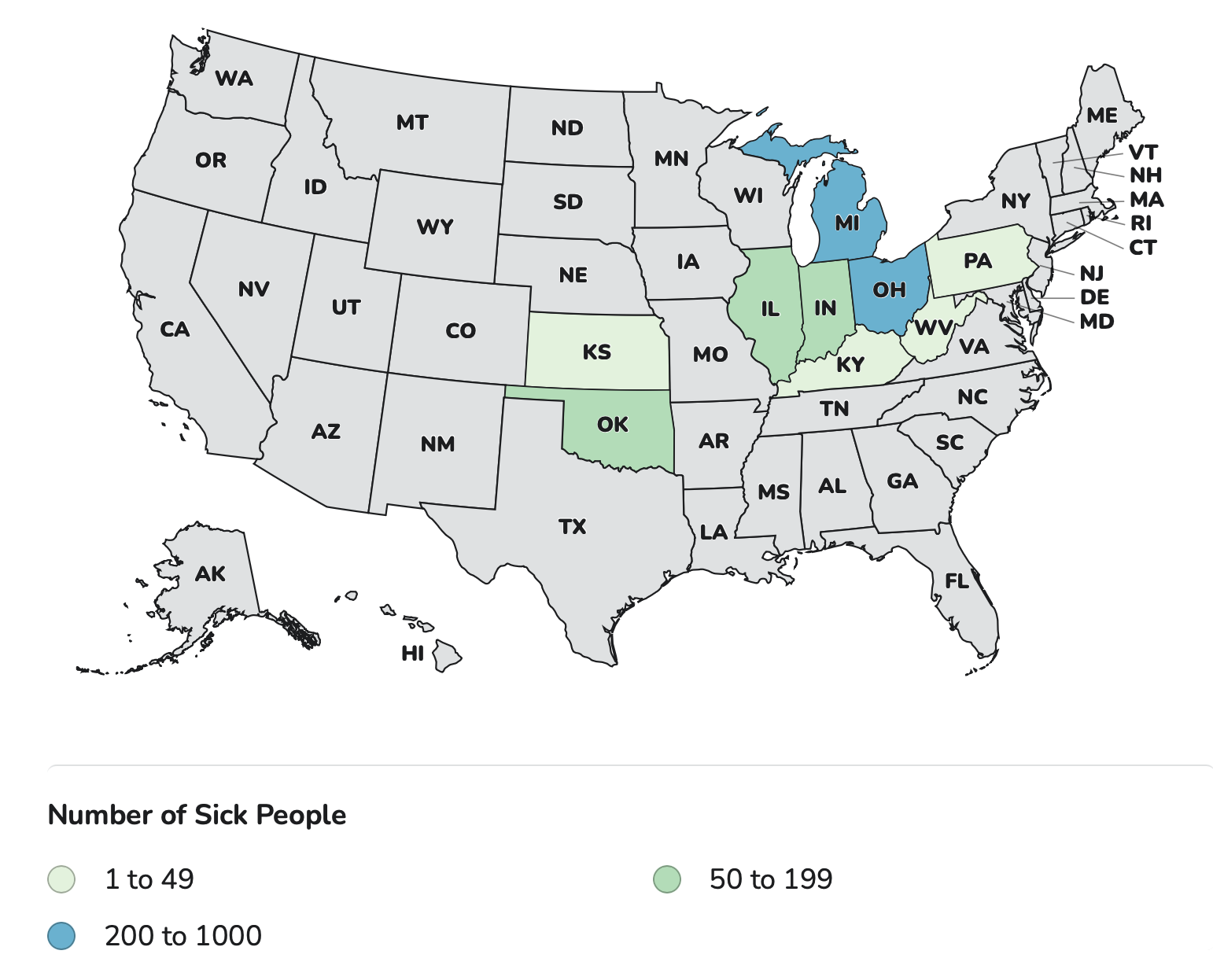
Illnesses associated with this outbreak have now been confirmed in nine states: Illinois (77), Indiana (124), Kansas (9), Kentucky (46), Michigan (931), Ohio (639), Oklahoma (55), Pennsylvania (24), and West Virginia (42).
The outbreak cases have been linked epidemiologically to lettuce grown and processed by Taylor Farms de Mexico. The company recalled all lettuce sourced from central Mexico on July 17, 2026.
The recalled lettuce was supplied to Walmart stores in multiple states and sold under Walmart’s Marketside brand. Walmart has posted a recall notice on its website.
According to information released by the Alabama Department of Public Health on July 20th, Taylor Farms also supplied the recalled lettuce to KFC, Pizza Hut, Subway, Trader Joe’s, Walmart, Sysco, Cross Valley Farms, and Peak Fresh Produce.
Sysco is one of the top two suppliers to the foodservice industry. Cross Valley Farms is a brand offered exclusively by US Foods, the other of the top two foodservice industry suppliers. Peak Fresh Produce is sold by Performance Foodservice, yet another large supplier to the industry.
These companies supply restaurants, hospitals, nursing facilities, among other locations.
Are we there yet?
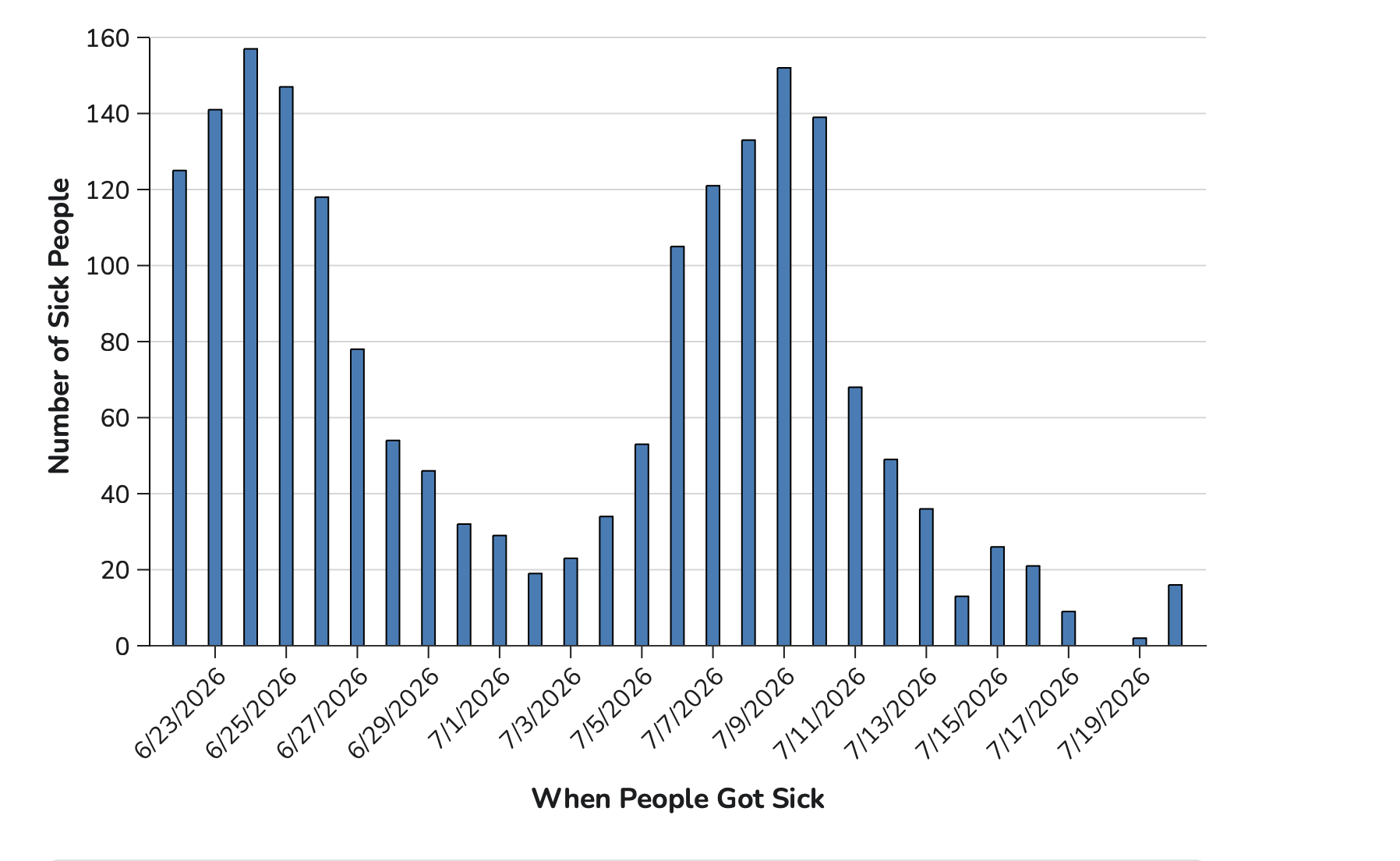
The outbreak likely began in May, as the first group of confirmed victims began suffering symptoms of their illness on June 22, 2026. Initial reports peaked on June 24th, then fell off substantially over the following week, reaching a low on July 2nd before starting to climb to a second peak on July 9th.
The daily number of new cases has fallen off again since July 9th. Nevertheless, in contradiction to HHS Secretary Kennedy’s assertions, this outbreak is NOT under control and is far from over, and we can expect the number of confirmed cases to continue to rise for the next several weeks. It can take as long as six weeks to determine whether someone who is ill with Cyclospora is part of the outbreak.
The CDC also advises that the actual number of illnesses is probably far higher than the number reported, as people suffering only mild symptoms typically do not visit a doctor.
The wider problem
In addition to the nearly 2000 confirmed cases associated with the “Taco Bell outbreak,” the CDC is tracking thousands more cases, reported from 41 states. As of July 24th, there have been 4,173 domestically acquired, lab-confirmed cases of cyclosporiasis reported to the CDC, and the agency is aware of more than 7,400 additional cases that have not yet been lab-confirmed. Three hundred and eight (308) people have been hospitalized due to the severity of their symptoms. Fortunately, no one has died.
Even these numbers, as shocking as they are, underestimate the likely level of Cyclospora illnesses in the US this summer. The Michigan Department of Health and Human Services has been updating its website daily. As of July 24th, the state is reporting 8,176 cases of cyclosporiasis, including 160 hospitalizations. Lucas County, Ohio, reports 1,113 cases in that county alone, and 2508 cases across the northwest portion of the state.
The CDC claims to be investigating other Cyclospora illness “clusters.” It is unclear whether those cases, or the numbers reported for the 9-state “Taco Bell outbreak,” have been included in the 4,173 total of lab-confirmed cases. According to the CDC’s own data tables, Ohio has reported 639 outbreak cases, but only “301 to 500” cases are shown for the state in the surveillance table. Similarly West Virginia has confirmed 42 outbreak cases, but the surveillance table reports “11 to 30” lab-confirmed cases in the state.
The FDA has five active Cyclospora outbreak investigations, totaling 102 cases, in progress in addition to the “Taco Bell outbreak,” but has not provided any details on those investigations as of July 24th.

Interested in learning more about food safety and the history of foodborne disease outbreaks and investigations?
Click on the link to listen to a short excerpt, then follow the buy links to add a digital, print or audio copy to your personal library.


