

9-state E. coli outbreak linked to raw milk cheese

8 hospitalized, 3 with HUS
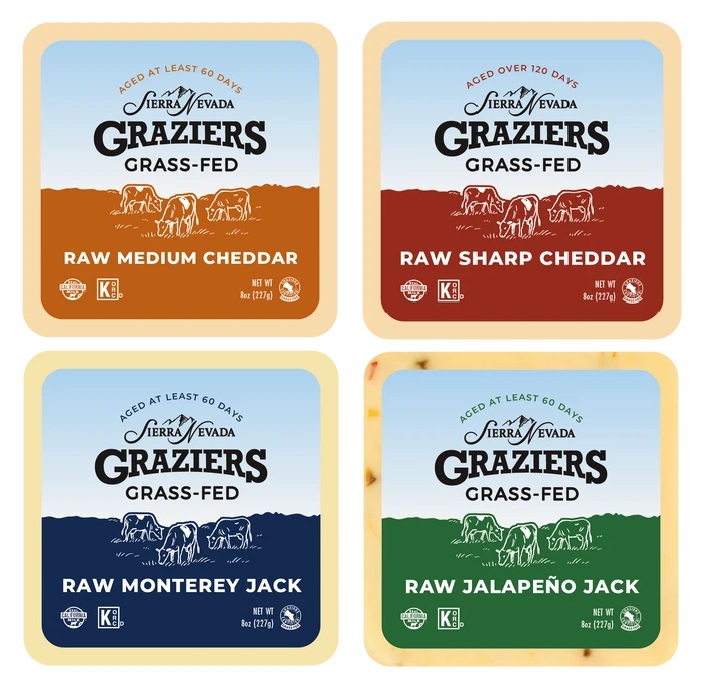
Thirteen people have become infected with shiga toxin-producing E. coli O26:H11 after consuming Graziers raw milk cheeses made and sold by the Sierra Nevada Cheese Company.

More than one half of the thirteen victims are children 5 years old and younger, according to the CDC.

The outbreak has been percolating since early July of this year, with the first victim developing symptoms on July 7th.

The raw milk cheese implicated in the outbreak was distributed across the United States. When contacted by the FDA, the company agreed to recall several varieties of cheese and posted a notice on social media and is cooperating with the FDA’s ongoing investigation.

Outbreak cases have been reported in California (3), Colorado (1), Georgia (1), Kentucky (1), Michigan (1), Nevada (3), Oregon (1), Tennessee (1), and Utah (1). Two of the three California victims live in San Diego County and are less than five years old.

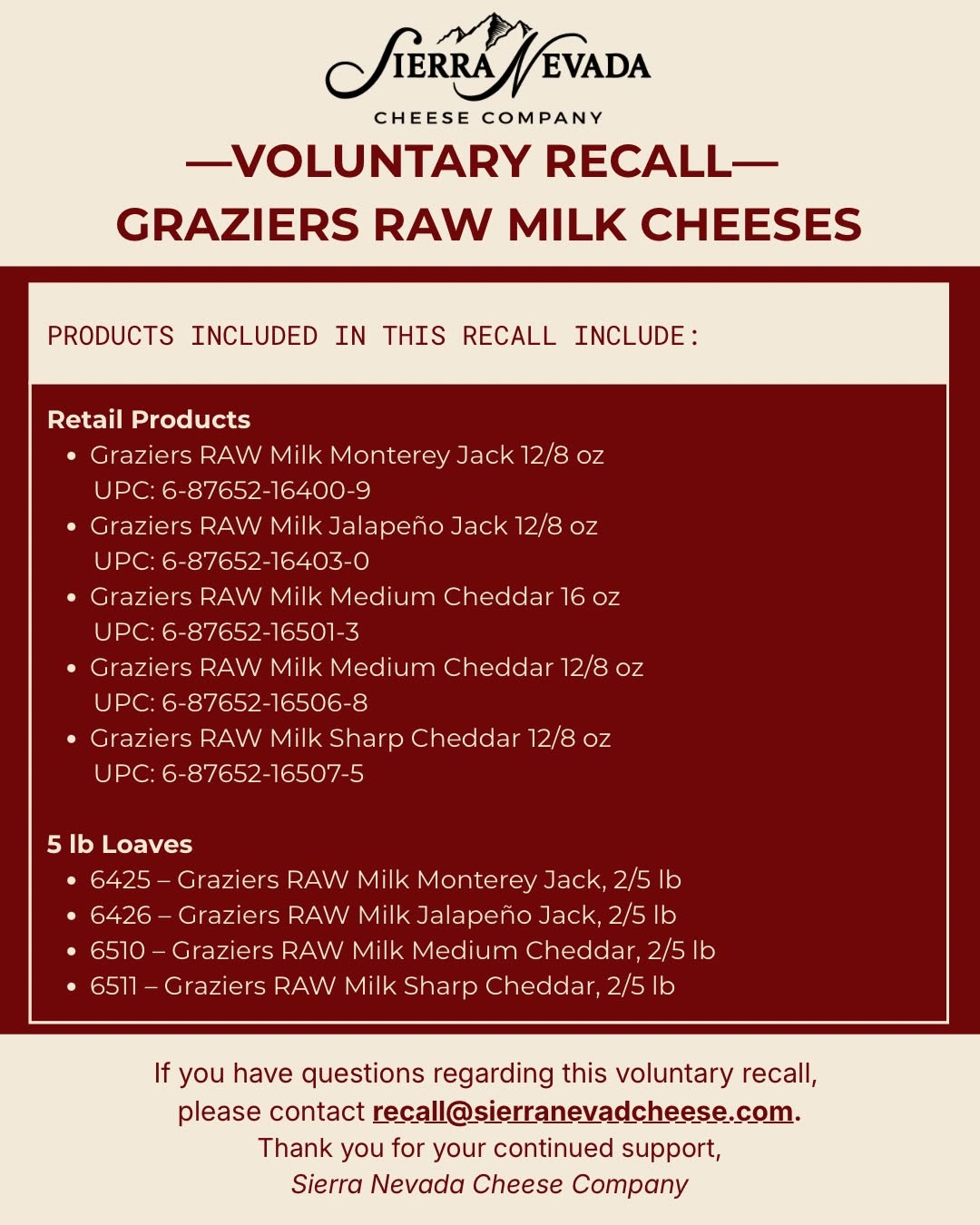
Although the outbreak appears to be associated with Graziers Raw Milk Medium Cheddar, the company has recalled all Graziers Raw Milk cheeses, as indicated in this recall notice posted on the company’s Facebook page.
This is the second multistate outbreak linked to consumption of raw milk cheeses this year, and the third since 2024.

In March 2026, the CDC notified the public of an outbreak of E. coli O157:H7 infections in three states. Those cases were linked to consumption of raw cheddar cheese and raw milk from Raw Farm, LLC, a California dairy. Raw cheddar cheese from the same dairy was also linked to a five-state outbreak of E. coli O157:H7 in 2024.

Although cheeses from Sierra Nevada Cheese Company have not been linked to an illness outbreak in the past, a specific lot code of the company’s raw goat milk cheese was the subject of a California-wide recall and quarantine order in August 2025 after the state found Listeria monocytogenes in a sample of the cheese.

Consuming cheese made from raw (unpasteurized) milk bears a heightened risk of foodborne illnesses, including those caused by Salmonella, Listeria monocytogenes, and shiga toxin-producing E. coli. Aging a cheese for six months is not a “kill step,” and does not eliminate the risk.

Children, especially those under the age of five years, pregnant women, the elderly, and immunocompromised individuals are at an elevated risk of serious illness as a result of a foodborne disease, and should avoid consuming raw dairy products, including raw milk cheeses.

  • Do not eat, serve, or sell recalled Sierra Nevada Graziers grass-fed raw milk cheeses (medium cheddar, sharp cheddar, jalapeno jack, or Monterey jack varieties). Consumers who purchased recalled cheese may return it to the place of purchase for a refund.
  • This product has a long shelf life. Check your refrigerators and freezers for the recalled raw milk cheeses and throw them away. If you refrigerated or froze cheese without the original packaging and can’t tell if it’s part of the recall, throw it away.   
  • Consumers, restaurants, retailers, and foodservice customers who purchased or received recalled raw milk cheese, including wholesale products, should carefully clean and sanitize any surfaces or containers that it touched. Follow FDA’s safe handling and cleaning advice to reduce the risk of cross-contamination.
  • Retailers that received recalled product and repackaged it for individual sale should not sell it and remove the product from the market.  
  • Consult your health care provider immediately if you ate recalled this brand of cheese and have any symptoms of an E. coli infection.

TAINTED formats 3
“Reads like a true crime novel” – Food Safety News

Interested in learning more about food safety and the history of foodborne disease outbreaks and investigations?

Click on the link to listen to a short excerpt, then follow the buy links to add a digital, print or audio copy to your personal library.

Chapter 6. Birth of a Pathogen

Recalls and Alerts: September 10-11, 2026

eFoodAlert posts links to recalls for English-language countries only. If you are interested in recall information for other countries (including EU-member countries), please click on the Recall Link menu, above.

The live links in this post will take you directly to the official recall notices and company news releases that contain detailed information for each recall and alert.

If you would like to receive automatic email alerts for all new articles posted on eFoodAlert, please submit your request using the sidebar link.

Advertisements

TAINTED formats 3
“Reads like a true crime novel” – Food Safety News

Interested in learning more about food safety and the history of foodborne disease outbreaks and investigations?

Click on the link to listen to a short excerpt, then follow the buy links to add a digital, print or audio copy to your personal library.

Chapter 6. Birth of a Pathogen

Outbreak/Illness Investigations

UK (Update): The Health Security Agency reports that the total number of Salmonella Enteritidis cases in three separate outbreak clusters has risen to 549, including 2 deaths. The outbreaks are believed to be associated with imported eggs.

USA (Update): CDC announces the end of the Cyclospora outbreak linked to iceberg lettuce imported from Mexico. As of September 11th, there were 12,883 confirmed outbreak cases, including 570 hospitalizations and 2 deaths. Cases were reported in 21 states. The FDA’s investigation into the source and root cause of the outbreak continues.

Advertisements

United States

Food Safety Recall: Evergreen Fresh Sprouts LLC recalls Broccoli Sprouts (4 oz bags; Use by 9/07/26, 9/09/26, 9/11/26, 9/14/26, and 9/16/26; UPC 8 38796 00105 1) due to Salmonella contamination. The recalled sprouts were delivered to three distributors in WA between 8/24/26 and 9/2/26, and may have been further distributed and sold in retail stores to consumers in ID, MT, and WA.

Food Safety Recall: International Sprout Holding Inc. recalls International Specialty Supply Alfalfa (50 lb bags; ISS Lot # SAL2-24JB) due to possible Salmonella and E. coli contamination.

Food Safety Recall: El Eden Import Distributor Corp. recalls approximately 264 pounds of potato chip products containing chicharrón (pork cracklings) because they were produced in the Republic of Colombia, a country that is not eligible to export meat products to the United States.

Canada

Allergy Alert: Rossdown Natural Foods Ltd. recalls three Rossdown Farms & Natural Foods brand Meal Starters Black Garlic Chicken Breast products due to undeclared soy.

Allergy Alert: Le Marché Wakim (Gatineau, QC) recalls several varieties of sandwiches and salads due to undeclared wheat, mustard, and egg.

Food Safety Recall: Everest Traders Inc. recalls PK brand Roasted Lemon N’ Chilli Peanuts (65g; Batch #CN94; Best before 2027/JN/20; UPC 6 28998 001245) due to possible Salmonella contamination.

Food Safety Recall: Marché Lamontagne et Fille inc. (Saint-Félicien, QC) recalls Kénogami cheese (All lots) because the label does not carry a warning that the cheese was made using raw (unpasteurized) milk.

Food Safety Alert: MAPAQ warns the public not to consume Tarte fruits / Fruit pies sold at Grand Marché Col-Fax inc. (Laval, QC) because the product was manufactured under insanitary conditions that could render the pies unsafe to consume.

Advertisements

Ireland and United Kingdom

Food Safety Recall (Ireland): Trade recalls De Bonte Weide Biologische Kefir Van Rauwe Geitenmelk au lait cru de chevre / Raw goat milk kefir (500 ml; Best before 14/09/2026; Product of Netherlands) due to shiga toxin-producing E. coli contamination.

Food Safety Recall (UK): Waitrose recalls Waitrose Essential Pitted Black Olives (120g; Use by 13 September 2026,, 18 September 2026, and 27 September 2026) due to Listeria monocytogenes contamination.

Hong Kong and Singapore

No Alerts

Australia and New Zealand

Allergy Alert (Australia): Alog Australian Wholesalers Pty Ltd recalls Red Hat Cookia Matcha Chocolate Flavor (80g; All best before dates up to and including 25 FEB 2027) due to undeclared egg, milk and soy.

Allergy Alert (Australia): KB Seafood Company Pty Ltd recalls JC Seafood Sweet Chilli & Lime Salmon Portions (275g; Best before 18.09.26) due to undeclared soy.

Allergy Alert (New Zealand): Emart Company Limited recalls Dongwon brand Fried Bean Curd (340g; All batches and dates) due to undeclared egg, milk, and sesame.

Advertisements


“A complete and compelling account of the hidden and not-so-hidden ways the food we give our beloved pets can be contaminated.” – JoNel Aleccia, Health Reporter, Food & Nutrition, The Associated Press.

“An invaluable resource for busy pet owners” – Food Safety News

Alfalfa seeds implicated in outbreak of E. coli and Salmonella recalled

Seeds were supplied to wholesale consignees in 16 states and internationally

September 10, 2026

International Sprout Holdings Inc. has recalled 43,799 lbs of alfalfa seeds that may be contaminated with E. coli and Salmonella. The recall notice appeared in today’s FDA Enforcement Reports update.

The seeds are described as “Alfalfa, Net Weight 50 lbs. bag, Product of USA, International Specialty Supply 1011 Volunteer Dr. Cookeville, TN 38506.” The recall extends to a single lot, identified as “ISS Lot # SAL2-24JB.”

International Sprout initiated the recall on August 23rd, notifying its customers by email.

Alfalfa seeds covered by this recall were supplied to wholesale consignees in California, Florida, Hawaii, Illinois, Massachusetts, Minnesota, Missouri, Montana, New York, Ohio, Oregon, Pennsylvania, Tennessee, South Carolina, Texas, Utah, Puerto Rico, Canada, Mexico, Tahiti, and Venezuela. Neither the wholesale consignees nor the ultimate downstream recipients of the alfalfa seeds were named.

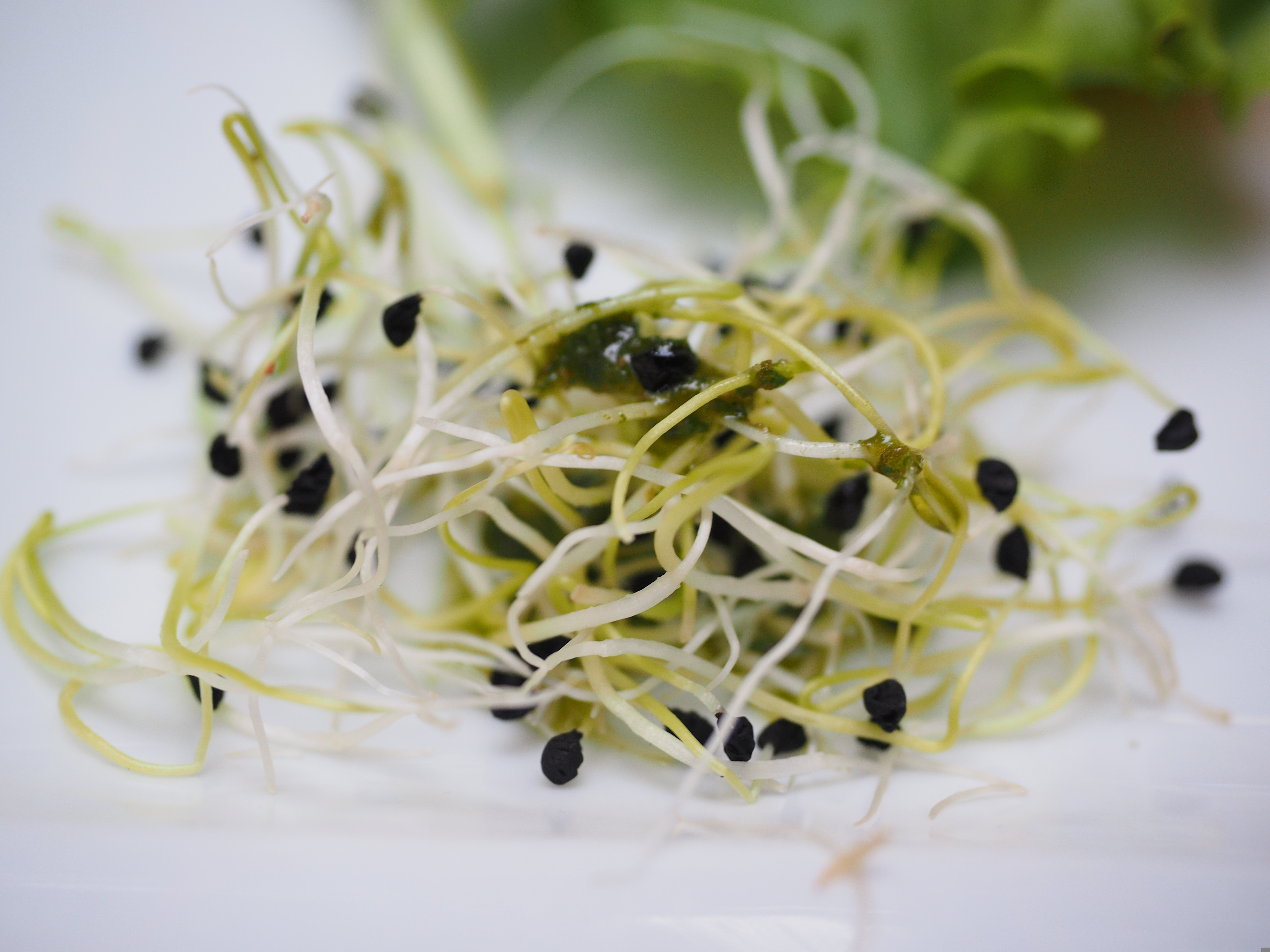
On August 21, 2026, the CDC and FDA announced that they were investigating a 15-state outbreak of 55 confirmed cases of Shiga toxin-producing E. coli (multiple serotypes include: O26:H11, O103:H25, O168:H8) and Salmonella Agona infections associated with consumption of alfalfa sprouts produced by Everything Sprouts, LLC of Minneapolis, MN.

Forty-six people were infected with one of the E. coli outbreak strains, 7 people were infected with Salmonella, and 2 people were infected with both Salmonella and E. coli.

Four of the victims were hospitalized.

Everything Sprouts announced a recall of three varieties of sprout products the following day and expanded the recall to include a fourth variety one week later.

But according to an investigation update issued on August 31st, sprouts produced by Everthing Sprouts did not account for all of the outbreak illnesses. The FDA’s traceback investigation identified at least one additional sprout grower who received the same batch of alfalfa seeds that had been supplied to Everything Sprouts.

The FDA recommended that the seed supplier voluntarily recall the suspect batch of seeds and contact its downstream customers to initiate recalls of sprouts grown from the those seeds.

The FDA did not name either the seed supplier (who we now know was International Sprout Holdings, Inc) or the second sprout grower, and there have been no other publically announced recalls of alfalfa sprouts in connection with this outbreak.

This investigation is ongoing, and there has been no update from either the CDC or the FDA since August 31st.

The FDA offers the following recommendations to consumers and businesses:

  • Do not eat, sell, or serve recalled sprouts. 
  • Check your refrigerators and freezers for recalled sprouts and throw them away or return the product to the place of purchase. If you froze a product without the original packaging and can’t tell if it’s part of the affected sprouts, throw it away.   
  • Consumers, restaurants, retailers, and foodservice customers who purchased or received recalled sprouts, including wholesale products, should carefully clean and sanitize any surfaces or containers that they touched. Follow FDA’s safe handling and cleaning advice to reduce the risk of cross-contamination.
  • Retailers that received recalled sprouts and repackaged them for individual sale should not sell them and should remove the products from the market. 
  • Consult your health care provider immediately if you ate recalled sprouts and have any symptoms that resemble an STEC or Salmonella infection.

The FoodBugLady recommends:


TAINTED formats 3
“Reads like a true crime novel” – Food Safety News

Interested in learning more about food safety and the history of foodborne disease outbreaks and investigations?

Click on the link to listen to a short excerpt, then follow the buy links to add a digital, print or audio copy to your personal library.
Chapter 6. Birth of a Pathogen