
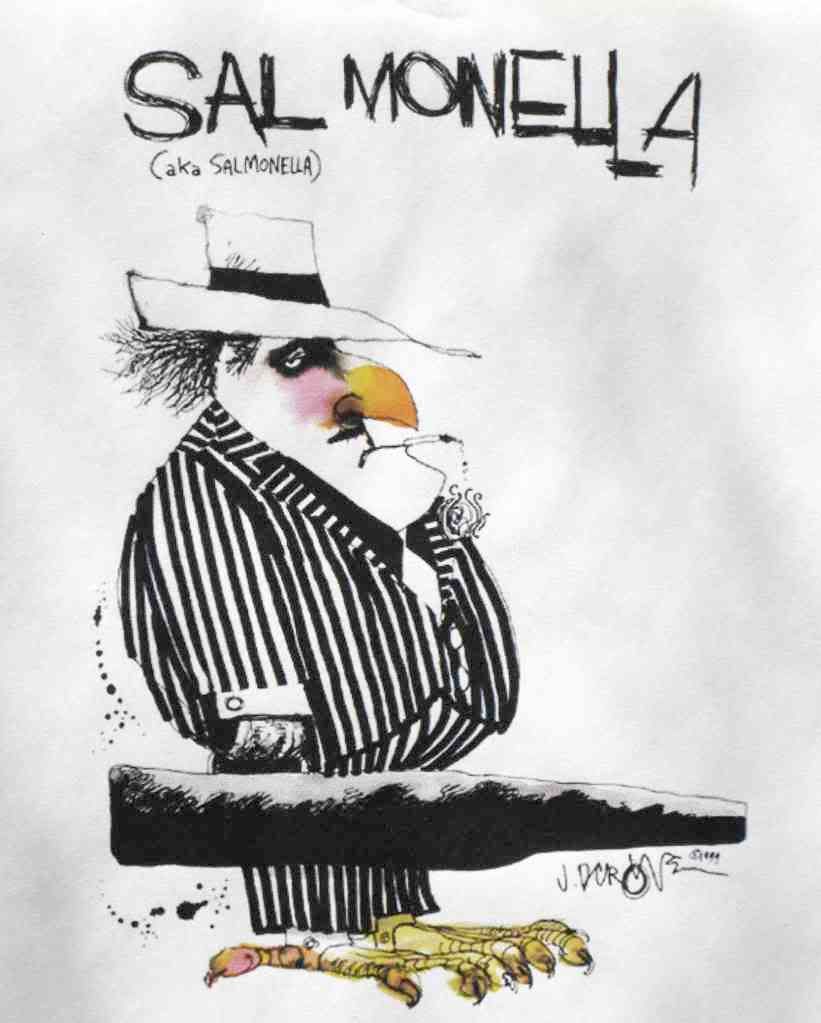
Salmonella Panama: Del Monte’s Dilemma

Cantaloupes grown in Guatemala have been blamed for a baker’s dozen of Salmonella Panama illnesses, according to CDC and various state health authorities.

CDC, which released an updated tally yesterday (March 29th), reports that the 13 outbreak victims fell ill between February 5th and March 4th. Three of the 13 infected individuals were hospitalized.

In response to the outbreak, Del Monte Fresh Produce N.A. Inc. recalled cantaloupe melons (packaged three to a bag in mesh bags) that were distributed through warehouse stores in Alaska, California, Colorado, Idaho, Montana, Oregon, and Washington. The recalled melons all came from a single Del Monte Fresh Produce farm – the Asuncion Mita farm in Guatemala – and were sold in Costco stores in those seven states between March 10th and March 21st.

Based on information contained in the CDC report and obtained from health officials in the affected states, the 13 confirmed cases of Salmonella Panama infections are located in:

  • Alaska.- No cases of Salmonella Panama have been reported.
  • California.- Two confirmed cases. Based on the retail distribution list posted by the California Department of Public Health, the recalled melons were sold in Costco stores in Northern California.
  • Colorado.- One confirmed case. The victim reported having eaten cantaloupe “from a warehouse store” prior to becoming ill.
  • Idaho.- No cases have been confirmed. The Central District Health Department is investigating a cluster of approximately 40 people who fell ill after attending a March 12th wedding reception in the Boise area at which cantaloupe from Costco was served. Two of the ill individuals submitted stool samples, which are still undergoing lab tests for Salmonella and Norovirus. Two melons were obtained from Costco for testing, but the store could not confirm whether the melons were from an implicated lot. Neither melon yielded Salmonella.
  • Maryland.- One confirmed case matching the outbreak strain. This victim reported having eaten cantaloupe in the week prior to becoming ill. The cantaloupe WAS NOT purchased at Costco.
  • Montana.- No cases of Salmonella Panama have been reported.
  • Oregon.- Five confirmed cases, among attendees at a church supper where cantaloupe purchased from Costco was served. An additional three attendees at the supper also were ill, but have not been lab-confirmed. One more person was infected with a very similar (but distinguishable) genetic variant of Salmonella Panama, and also reported having consumed melon from Costco.
  • Washington.- Four confirmed cases, including one adult (male), and three children (2 boys and one girl). The adult victim is from Whatcom County; the children live in Thurston County (one boy) and King County (one boy and one girl).

According to Bill Keene, Oregon’s No. 1 Disease Detective, Costco receives only about 6% of the cantaloupes grown on Del Monte’s Asuncion Mita farm. The rest of the crop is shipped to numerous other wholesalers and retailers – most, but not all, of them in the USA. The farm comprises some 15 cantaloupe fields, which are planted and harvested in series to ensure a continuous supply of melons. The last of the 15 fields to be harvested has been shut down since early March.

I asked Bill Keene about the rationale behind the recall. He said that the situation presented quite a dilemma, both to public health officials and to Del Monte. By the time the outbreak was identified and a probable source determined – which happened rather quickly, thanks to the relative rarity of Salmonella Panama and the Oregon illness cluster – the implicated melons had passed their usable shelf life. There was no point in recalling fruit that was no longer edible.

Why, then, did Del Monte recall the cantaloupes that were sold in Costco stores in several states beginning on March 10th? According to Keene, it was unclear whether the outbreak was a “one-off” problem relating to a small quantity of melons from one portion of a single field or whether it was a continuing situation. Del Monte Fresh Produce, therefore, decided on the recall.

And why was the recall limited to cantaloupes shipped to Costco in seven states? Because, except for the Maryland case, all of the illnesses were clustered within that group of states and were linked to cantaloupes purchased from Costco stores. It did not seem logical to recall the entire remaining production from the Asuncion Mita farm for what appeared to be a limited contamination problem.

Was Del Monte’s decision justified? So far, it looks as though the company, in consultation with public health officials, made a reasonable call. While it’s too soon to say for sure, the outbreak appears to have burned out.

Nevertheless, consumers should remain wary of cantaloupes. Avoid purchasing or consuming melons with bruised or broken skin. Wash the cantaloupes before cutting them open, and store cut cantaloupe in the refrigerator to minimize the risk of bacterial growth.

Finally, if you think that you have become ill after eating cantaloupe – or any other food – seek medical advice and cooperate with your public health authorities. This includes providing stool or any other clinical samples on request. “It is the only way,” says Tom Shanahan of the Idaho Department of Health and Welfare, ” to confirm a link.”


Recall Roundup: March 25, 2011

Here is today’s list of food safety recalls, product withdrawals, allergy alerts and miscellaneous compliance issues. The live links will take you directly to the official recall notices and company news releases that contain detailed information for each recall and alert.

If you would like to receive automatic email alerts for all new articles posted on eFoodAlert, please submit your request using the sidebar link.

United States

  • Allergy Alert: Unified Grocers recalls one date code (Mar 26) of Cottage Hearth Stone Ground Wheat Bread (24 oz) and 7 Select 100% Whole Wheat Bread (24 oz) because they may contain undeclared milk. Cottage Hearth breads are distributed by Unified Grocers and other distributors to select independently-owned and operated retail grocery stores in Southern California and Arizona. 7 Select breads are distributed by Unified Grocers to select 7-Eleven locations throughout Los Angeles and San Diego counties.
  • Allergy Alert: Seoul Shik Poom Inc. (Englewood, NJ) recalls Red Bean Bread (3-pack/2.82 oz.; Code #ES1120; Expiration dates of 08/15/2011, 09/30/2011, and 04/15/2012) due to the presence of undeclared eggs.
  • Allergy Alert (Update): USDA releases updated retail distribution list for Kashi Southwest Style Chicken Products, which were recalled by the manufacturer due to the presence of undeclared egg.
  • Food Safety Recall (Update): California Department of Public Health releases retail distribution list identifying the Costco locations that were supplied with cantaloupes recalled by Del Monte Fresh Produce N.A., Inc. The recalled cantaloupes have been linked to at least 12 cases of Salmonella Panama infections in four US states, including two cases in California.
  • Food Safety Recall (Update): USDA releases retail distribution list for Seltzer’s Beef Lebanon Bologna that was recalled by Palmyra Bologna Company, Inc. due to contamination with E. coli O157:H7. The recalled Lebanon Bologna has been linked to at least 14 cases of E. coli O157:H7 illness in 5 US states. The contaminated meat was sold in Walmart stores (Maryland, New Jersey and Pennsylvania), BJ’s Wholesale Club stores (New Jersey, Pennsylvania and North Carolina), Fry’s,  Ralphs, Giant Eagle, and Giant stores.
  • Food Safety Recall: Thai Golden Spice Inc. (Hayward, CA) recalls HANS BRAND Santra Candy, due to unacceptable levels of lead.
  • Dietary Supplement Safety Recall: USA Far Ocean Group Inc. (Alhambra, CA) recalls U-Prosta Natural Support for Prostate Health Dietary Supplement after FDA finds the prescription drug terazosin in samples of the product. The recalled product was distributed nationwide via retail stores, internet sales and mail order.
  • Dietary Supplement Safety Recall: Shaping Beauty, Inc. (Southampton, PA) recalls Celerite™ Slimming Tea after FDA finds the prescription drug Sibutramine in a sample of the product. The products listed above were sold and distributed nationwide via the internet at http://www.shapingbeauty.com
  • Food Recall: Price Chopper recalls Price Chopper Granola Bars (strawberry and mixed berry varieties), due to a high moisture content, which could promote mold growth.
  • Food Recall: Food City recalls Assorted Food Club Fruit & Grain Cereal Bars.

Canada

  • Allergy Alert: Canadian Food Inspection Agency warns the public that certain Chocolatey Chocolate flavour Raw Organic Food Bars have been recalled due to the presence of undeclared peanuts. The affected products are known to have been distributed in British Columbia, Alberta, Manitoba, Saskatchewan, Quebec and Ontario, and may be distributed nationally. One allergic reaction has been reported.
  • Allergy Alert: Marché Asselin (Montréal, QC) recalls Salmon Pâté and Tourtière Maison, due to the presence of undeclared egg and sulfites.
  • Allergy Alert: Distribution Yvan Nadeau inc. recalls several products due to the presence of undeclared mustard, milk, egg, and/or sulfites.
  • Food Safety Recall: Metro Plus (Saint-Jérôme, QC) recalls SU CRETONS VRAC (Best before 27 March 2011), due to contamination with Listeria monocytogenes.

Europe

  • Allergy Alert (Ireland): Food Safety Authority of Ireland warns consumers that Caffreys Easter Eggs (Covered Mallow Eggs) sold loose from display box contain egg that is not stated on the product label.
  • Food Safety Recall (Ireland): Burren Smokehouse Ltd. recalls Burren Smokehouse Smoked Salmon, whole sides, 500g, 200g and 100g packs (Batch code 1010x; Use by 31/3/11), due to the presence of low levels of Listeria monocytogenes.
  • Food Safety Recall (UK): Dairy Crest Ltd. recalls Frijj Thick and Fresh Strawberry Milkshake (Use by 5 April 2011) due to the presence of low levels of Listeria monocytogenes.
  • Cosmetic Product Safety Recall (France): French authorities have recalled Nanokeratin System Hair Therapy Treatment (Product of China; Lot #MD2001/11/10), due to the presence of an unacceptable level of formaldehyde).
  • Pharmaceutical Product Safety Recall (France): Laboratoire Chauvin recalls all lots of Cébémyxine and Atébémyxine eyedrops, due to levels of Polymyxin B that are out of specification.

Asia, Africa and the Pacific Islands

  • Food Safety Alert (Singapore): The Agri-Food & Veterinary Authority of Singapore (AVA) has detected radiation in four samples of vegetables from Japan. AVA is extending its suspension on the import of all fruits and vegetables to include Tochigi, Ibaraki, Chiba and Ehime prefectures.
  • Pharmaceutical Product Safety Recall (Hong Kong): Bausch & Lomb (Hong Kong) Ltd. recalls all batches of Cebemyxine Eye Drops after routine stability testing by the manufacturer found the content of one of the active ingredients, Polymyxin B, to be lower than the specified level in some batches (Batches No:E2576, E1796 and E2826).
  • Unauthorized “Health” Product Safety Alert (Singapore): The Health Sciences Authority (HSA) alerts members of the public to the peddling of unlabelled bottles of black pills, touted for the treatment of a wide range of medical conditions such as arthritic and rheumatic pain, high cholesterol and hypertension. HSA’s analysis of these black pills revealed the presence of two undeclared western medicinal ingredients, namely dexamethasone and chlorpheniramine. At least two elderly patients have been reported to have fallen seriously ill after consuming these pills.

Some supermarket chains post recall notices on their web sites for the convenience of customers. To see whether a recalled food was carried by your favorite supermarket, follow the live link to the supermarket’s recall web site.

Guatemalan Cantaloupe Spreads Salmonella Panama

The US Centers for Disease Control and Prevention (CDC), and the US Food and Drug Adminstration (FDA), report that cantaloupes grown in and shipped from the Asuncion Mita farm in Guatemala are responsible for at least 12 cases of gastroenteritis due to Salmonella Panama in four states. The Asuncion Mita farm is owned and operated by Del Monte Fresh Produce N.A., Inc. (“Del Monte”).

According to CDC,  confirmed cases of Salmonella Panama illness “… have been reported from Oregon (5 cases), Washington (4 cases), California (2 cases), and Maryland (1 case). Reported dates of illness onset range from February 5, 2011 to February 23, 2011. Ill persons range in age from less than 1 year old to 68 years old, with a median age of 12 years old. Sixty-six percent are male. Among ill persons, two have been hospitalized and no deaths have been reported.” The agency warns that more illness might yet come to light.

Yesterday (March 22, 2011) Del Monte recalled 4,992 cartons of cantaloupes. The cartons each contained 4 plastic beige mesh sleeves sealed with a plastic orange handle with the Del Monte logo and the statement “3 count, Product of Guatemala.” The cantaloupes were identified with lot codes 02-15-24-10, 02-15-25-10, 02-15-26-10 and 02-15-28-10, and were available for sale between March 10th and March 21st.

The recalled cantaloupes were sold in Costco Warehouse stores in Alaska, California, Colorado, Idaho, Montana, Oregon, and Washington. Costco has posted a recall notice on its web site. Del Monte has put on hold production and distribution of cantaloupes from its Asuncion Mita farm.

An efficient trace-back system helped FDA and CDC determine the likely source of the illnesses. CDC described the process in the following way:

“Eleven of 12 ill persons reported eating cantaloupe in the week before illness. Ten of these 11 ill persons purchased cantaloupes before becoming ill at seven different locations of a national warehouse clubs. Information gathered with patient permission from membership card records helped determine that ill persons purchased cantaloupes sourced from a single farm. Product traceback information indicates these cantaloupes were harvested from single farm in Guatemala.”

Notwithstanding CDC’s confidence in the outcome of its investigations, one flagrant discrepancy begs for an explanation. The Del Monte recall notice says that the implicated cantaloupes were available for sale from March 10th to March 21st, inclusive. But the confirmed illness reported to CDC occurred from February 5th to February 23rd, 2011. This suggests to me that the contamination problem pre-dates by more than one month the shipping dates of the cantaloupes formally recalled by Del Monte.

I also wonder how the Maryland case fits into the epidemiological equation, when the implicated melons are said to have been distributed only in seven western US states.

Del Monte has experienced two prior instances of Salmonella contamination in its cantaloupes. In October 2010, the company recalled 81 cartons of cantaloupes grown in and shipped from Arizona. The cantaloupes, which “… had the potential to be contaminated with Salmonella …” were  distributed to wholesalers in the Detroit area. One year earlier, Raley’s Family of Fine Stores recalled Del Monte cantaloupes from its Raley’s, Bel Air, Nob Hill Foods and Food Source stores in Nevada and Northern California between Oct. 5 and Oct. 16, 2009 after Salmonella was detected in a sample of the melons during routine testing. No confirmed illnesses were associated with either recall.

While the recall and the investigation continue, CDC offers the following advice to consumers and retailers:

  • Consumer should not eat recalled cantaloupes and restaurant and food service operators should not serve them.
  • Consumers who have cantaloupes in their homes can check with the place of purchase to determine if the fruit came from this company.
  • Recalled cantaloupes should be disposed of in a closed plastic bag placed in a sealed trash can. This will prevent people or animals from eating them.
  • Persons who think they might have become ill from eating possibly contaminated cantaloupes should consult their health care providers.
  • Consumers and food preparers should wash their hands before and after handling any melon.  Wash the surface of melons such as cantaloupes, and dry them with a clean cloth or paper towel before cutting.

Alternatively, consumers might switch to honeydew melons and watermelons for the duration.