Mini-pastries from Italy trigger Canadian Salmonella outbreak

The Public Health Agency of Canada (PHAC) is investigating an outbreak of Salmonella Enteritidis infections in multiple provinces.

Sixty-one laboratory-confirmed cases have been reported to date in British Columbia (4), Alberta (2), Ontario (21), Quebec (33), and New Brunswick (1). Outbreak victims range in age from 3 to 88 years old.

Seventeen people have been hospitalized.

The outbreak began in late September 2024; the most recent case was reported in December 2024. Many of the victims reported eating mini pastries at catered events or other establishments.

PHAC advises that the investigation is ongoing and more cases may come to light.

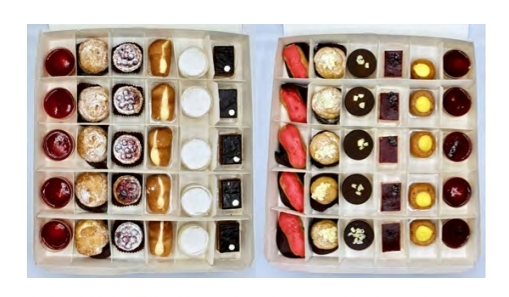
The illnesses have been linked to consumption of Sweet Cream brand mini pastries.

Importations Piu Che Dolci Inc. has recalled the following Sweet Cream brand mini-pastries:

  • Mini Patisserie (~4 kg (4 boxes of 30 pieces); UPC 8 058302 730028; All best before dates from 2025/06/17 up to and including 2025/11/15; Product of Italy)
  • Mini Patisserie – Tray A (1 kg (30 pieces); UPC 8 058302 730004; All best before dates from 2025/06/17 up to and including 2025/11/15; Product of Italy)
  • Mini Patisserie – Tray B (1 kg (30 pieces) UPC 8 058302 730011; All best before dates from 2025/06/17 up to and including 2025/11/15; Product of Italy)

The mini-pastries may have been sold clerk-served or in smaller packages, with or without a label that may not bear the same brand, product name, or best before date.

The recalled products were distributed to bakeries, hotels, restaurants, cafeterias, hospitals, retirement residences, and the general public in Alberta, British Columbia, Nova Scotia, Ontario, and Quebec, and may also have been distributed in other Canadian provinces and territories. The pastries also were served at catered events.

The following advice from the PHAC applies to individuals, as well as retailers, distributors, and food service establishments (bakeries, hotels, restaurants, and cafeterias), as well as facilities such as hospitals and retirement residences across Canada:

  • Contact your health care provider if you think you’re experiencing symptoms of Salmonella infection.
  • Check to see if you have the recalled products in your home or establishment by looking for the specific product name and size, UPC and codes in the recall alert.
  • Do not consume, serve, use, sell or distribute recalled products.
  • Throw out or return recalled products to the location where they were purchased. Consumers or establishments who are unsure if they have purchased the recalled products are advised to contact their retailer or supplier where the products were purchased.
  • Do not cook food for other people if you’ve been diagnosed with a Salmonella infection or any other gastrointestinal illness.

Salmonellosis has a wide range of symptoms. You may not get sick at all. However, if you do get sick, symptoms usually start within 6 to 72 hours after exposure.

You may experience one or more of the following symptoms: chills, fever, nausea, diarrhea, vomiting, stomach cramps, and a sudden headache. Most symptoms end within 4 to 7 days.

While most people recover completely on their own, some people may have a more serious illness that requires hospital care, possibly leading to long-lasting health effects or death.


TAINTED formats 3
“Reads like a true crime novel” – Food Safety News

Interested in learning more about food safety and the history of foodborne disease outbreaks and investigations?

Click on the link to listen to a short excerpt, then follow the buy links to add a digital, print or audio copy to your personal library.

Chapter 6. Birth of a Pathogen

TAINTED is available in digital format from all major on-line retailers. Press the button to go directly to your preferred digital bookstore.

FDA, CDC investigating Salmonella outbreak linked to sprouts

The US Food and Drug Administration (FDA), the US Centers for Disease Control and Prevention (CDC) and their state and local partners are investigating a three-state outbreak of Salmonella Typhimurium infections.

To date, the outbreak has sickened fifteen people in Nebraska (8), South Dakota (6), and Oklahoma (1), according to information provided by the CDC. Two people have been hospitalized.

The Nebraska Department of Health and Human Services has reported sixteen illnesses among individuals who consumed SunSprouts alfalfa sprouts between December 4–13. Eight of these have been confirmed genetically to be part of this outbreak. Results are pending on seven other cases.

Tracing the source

Epidemiological evidence collected by the CDC and its state partners identified alfalfa sprouts as a likely source of this outbreak.

Two outbreak victims specifically reported having purchased SunSprouts alfalfa sprouts at their local grocery stores. Others reported having consumed alfalfa sprouts at local restaurants.

A traceback investigation carried out by the FDA identified SunSprouts brand alfalfa sprouts grown by CW Sprouts Inc., doing business as (DBA) SunSprout Enterprises of Fremont, NE as the probable source of the outbreak.

The company has recalled four batches of alfalfa sprouts, identified as Lots ##4211, 5211, 3212, and 4212.

The recalled SunSprouts brand alfalfa sprouts were packaged in 4-ounce clamshells and 2.5 lb packages with best sold by dates between 12/10/2022 and 1/7/2023. The sprouts were supplied directly to restaurants and grocery stores in Nebraska, Kansas, and Iowa.

Inspection history

According to the FDA’s Inspection Database, CW Sprouts, Inc. has been inspected on at least seven occasions since 2009. Although some of its earlier inspections were classified “Voluntary Action Indicated,” there are no posted citations listed for the past ten years.

The most recent FDA inspection was completed in August 2021.

What you need to know

Consumers, restaurants, and retailers

  • Do not eat, sell, or serve recalled SunSprouts brand alfalfa sprouts.
  • Check your refrigerators for recalled SunSprouts brand alfalfa sprouts with best by dates between 12/10/2022 and 1/7/2023, and discard these items.
  • If you purchased or used recalled alfalfa sprouts, use extra vigilance in cleaning and sanitizing any surfaces that may have come in contact with these products, to reduce the risk of cross contamination.
  • If you or someone in your household ate SunSprouts alfalfa sprouts and have symptoms of salmonellosis, contact your healthcare provider.

Suppliers and Distributors

  • Do not use, ship or sell recalled alfalfa sprouts grown by SunSprout Enterprises.
  • Do not use any comingled and potentially cross-contaminated product if there has been potential cross-contamination or mixing of recalled alfalfa sprouts with products from other sources, and use extra vigilance in cleaning any surfaces and storage areas that may have come into contact with recalled alfalfa sprouts.

TAINTED formats 3
“Reads like a true crime novel” – Food Safety News

Interested in learning more about food safety and the history of foodborne disease outbreaks and investigations? Click on the link to listen to a short excerpt, then follow the buy links to add a digital, print or audio copy to your personal library.

Chapter 6. Birth of a Pathogen

TAINTED is available in digital format from all major on-line retailers. Press the button to go directly to your preferred digital bookstore.

Chicken products fingered in international Salmonella outbreak

A deadly nine-nation outbreak of Salmonella Mbandaka ST413 infections is most likely due to consumption of ready-to-eat (RTE) chicken products and/or fresh chicken meat, such as those used in sandwiches and wraps.

According to the European Centre for Disease Prevention and Control,  196 cases have been reported in nine countries, including seven member states of the European Union (EU), the United Kingdom (UK), and Israel since November 8, 2022.

Nineteen outbreak victims have been hospitalized, five of them with septicemia.

One person–a resident of the UK–has died.

Outbreak cases have been reported by the following countries:

  • Czechia (Czech Republic): 5 (none confirmed as yet)
  • Estonia: 3 (all confirmed)
  • Finland: 89 (42 confirmed and 47 possible)
  • France: 10 (all confirmed)
  • Germany: 2 (all confirmed)
  • Ireland: 1 (all confirmed)
  • Netherlands: 1 (all confirmed)
  • Israel: 4 (none confirmed as yet)
  • United Kingdom: 81 (all confirmed)

The UK was the first country to detect the outbreak, reporting a cluster of 31 cases from England (25), Scotland (3) and Wales (3) on May 20, 2022. Sample collection dates ranged between September 24, 2021 and April 23, 2022. Four of the patients were hospitalized, and one has died.

Finland followed on the UK’s heels with a report of nine cases on June 16, 2022.

The Finnish food safety authority has linked suspect products to an Estonian company, but this link could not be verified by traceback identification or microbiological analysis.

The European Centre for Disease Control (ECDC) is encouraging its member countries to sequence the genomes of Salmonella Mbandaka isolated from human sources and to interview those patients whose isolates match the outbreak strain.

Salmonella Mbandaka was first reported in 1948 in the Belgian Congo, where it was recovered from a patient suffering from salmonellosis.

The ST413 strain entered the Polish feed and poultry sector in the 1990s, and has been circulating in Poland and other EU countries since then.

The ECDC warns that new cases are likely to occur until the source of the outbreak has been identified and controlled.