
Papaya pathogen problems persist

Little appears to have changed since 2011 outbreak, despite efforts of U.S., Mexican governments
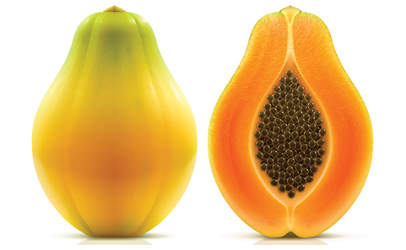
The CDC posted this photo with its outbreak notice, describing maradol papayas as large, oval fruits that weigh 3 or more pounds, with green skins that turn yellow when the fruit is ripe. The flesh inside the fruit is salmon-colored. Photo courtesy of CDC

Salmonella — the pathogen behind an ongoing foodborne illness outbreak that has sickened 173 people across 21 states, killing one — is a normal inhabitant of the intestinal tract of many birds, reptiles and mammals.

The possibility that an agricultural product such as papayas may be contaminated with Salmonella is impossible to eradicate; however, the risk of widespread contamination can be controlled through careful attention to current best sanitary practices in the cultivation, harvesting and packing of raw produce. Failure to do so can result in a vicious cycle of contamination in fields, packing houses and the distribution system.

Cultivation, harvesting and packing
The papaya is a fast-growing, tree-like herbaceous plant, which is at home in tropical and semi-tropical climates and is cultivated extensively across southeastern Mexico, according to a report issued by the University of Florida IFAS Extension Service. The most recent report from Mexico’s Secretaría de Agricultura, Ganadería, Desarrollo Rural, Pesca y Alimentación (Ministry of Agriculture, Livestock, Rural Development, Fisheries and Food) shows Mexico to be the fifth largest producer of papayas in the world.
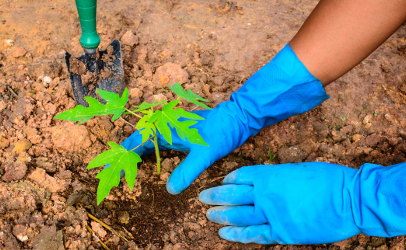
Papaya trees are propagated from seeds. When seedlings are large enough, they are transplanted by hand into growing fields.

The papaya plant is propagated from seeds, with seedlings transplanted into fields when they are of sufficient size. The plant matures in six to nine months in warmer regions. Susceptible to a variety of plant diseases and pests, such as root rot, powdery mildew, papaya ringspot virus, fruit fly and white fly, papaya plants usually have an abbreviated commercial lifespan of two to three years, according to information from the University of Hawaii. It is not unusual for a papaya plant to only produce a single crop in its lifetime.

Once harvested and delivered to the packing house, each papaya is graded according to ripeness and size. Next, the fruit is sorted according to size a second time, as well as shape, and color. It is also examined for insect or mechanical damage.

The sorted fruit is generally washed in large vats of chlorinated tap water to remove dirt, debris and insect contamination. Depending upon the condition of the fruit and the expected final destination, it may be subjected to additional treatments, including a hot water bath or a fungicide dip. After air-drying, the fruit is packed for shipment.

2011 Salmonella Agona outbreak
In 2011, the Centers for Disease Control and Prevention and the Food and Drug Administration investigated a Salmonella Agona outbreak that was traced to contaminated papayas imported from Mexico. The papayas were grown and packed by Agromod SA de CV of Chiapas, Mexico, and distributed by Agromod Produce Inc. of McAllen, Texas.

Photo illustration

The Agromod papaya plantation had an interconnected drainage ditch system, according to information presented in 2013 during the annual educational conference of the National Environmental Health Association (NEHA).

The marsh-like environment of the drainage ditches was a haven for waterfowl, frogs and other wildlife, and provided perfect growth conditions for pathogenic bacteria. During heavy rain and flooding, the ditches overflowed into the soil surrounding the trees, impregnating the soil with pathogens from the water.

During an on-site inspection of Agromod’s plantation and packing house, investigators from FDA recovered a full two dozen different types of Salmonella, including the Salmonella Agona outbreak strain. Salmonella-positive samples were drawn from fields where the papaya grew and from packing-house drains.

The crops at Agromod were harvested by two-person teams. One person worked at tree level, picking fruit and handing or tossing it to the other person below. The second person laid each papaya onto a piece of poly foam on the unprotected soil. The foam was wrapped around the fruit, which was loaded into foam-lined bins for transport to the packing house.

It was common practice at Agromod for the sheets of poly foam to be reused for up to 15 days before being discarded, helping to spread contamination from the fields to the fruit, packing house and back again.

Photo illustration

Once in the packing house, the fruit was washed in large vats of water. The level of chlorine in the wash water was not properly monitored or controlled, allowing Salmonella to spread throughout an entire batch of papayas.

The wash water was discharged into the drainage ditch system, returning Salmonella to the fields in a vicious cycle of contamination.

Import Alert
In response to the extent of Salmonella contamination brought to light during the investigation of the 2011 outbreak, FDA instituted Import Alert #21-17, “Countrywide Detention Without Physical Examination Of Papaya From Mexico.” Firms that provided documentation of five consecutive Salmonella-negative commercial shipments qualified for an exemption from the automatic detention at the U.S. border.

Concurrent with FDA’s initiation of the Import Alert, Mexico’s Servicio Nacional de Sanidad, Inocuidad y Calidad Agroalimentaria (National Service for Health, Safety and Agrifood Quality) (SENASICA ) unveiled a plan to assist that country’s papaya growers, packers and shippers in addressing the issues of safe growing and handling of the fruit.

History repeats
Notwithstanding the efforts of multiple agencies in both countries, the United States is once again in the throes of an outbreak of Salmonella that is associated with consumption of fresh, whole papayas imported from Mexico.

To view a larger version of the map on the CDC’s website, please click on the image.

As of Aug. 18 when the CDC posted it’s most recent outbreak update, 173 people had been confirmed sick across 21 states, with 58 hospitalizations, and one death on New York City. The CDC warns that the number of confirmed illnesses is likely to increase.

Thus far FDA has identified one farm in connection with the contaminated papaya. That farm, Carica de Campeche, has been supplying papayas to the U.S. market under an Import Alert exemption since 2015.

According to a spokesperson from FDA, at present there are no specific ongoing testing or inspection requirements that a producer must meet in order to maintain an exemption from automatic detention, although a firm is expected to “… continue to provide the commodity in a wholesome manner and follow all the regulatory requirements of FDA.”

The FDA revoked the exemption granted to Carica de Campeche under Import Alert 21-17 on Aug. 7.

This article first appeared in Food Safety News and is reposted here with permission.

FDA Import Alert On Mexican Papayas, Effective Immediately

The Mexican government still appears unconvinced that papayas grown in Mexico are to blame for an outbreak of Salmonella Agona that has, at last count, sickened 99 or more people in 23 US states.

When news of the outbreak first was released by FDA and the CDC in late July, Mexico replied that it was “premature” to blame their papayas for the illnesses. Since that time, FDA and the Mexican government have been cooperating in an investigation of Agromod Produce, Inc. (McAllen, TX), the importer whose papayas were implicated in the outbreak. Agromod recalled all of its papayas from the US and Canadian markets on July 23, 2011.

The joint USA/Mexico investigation, however, revealed a problem that is much broader in scope than papayas from a single producer/importer. As part of the investigation, FDA sampled papayas from every growing region of Mexico. More than 15% of the samples – 33 out of 211 samples – contained Salmonella. Positive samples originated from 28 different firms and from nearly every growing region in Mexico.

With these findings in hand, FDA has issued Import Alert 21-17, COUNTRYWIDE DETENTION WITHOUT PHYSICAL EXAMINATION OF PAPAYA FROM MEXICO. Under this Alert, the onus is on the importer to provide evidence, through third-party lab analysis, that each shipment of papayas is Salmonella-free before the papayas are permitted to enter the USA. According to the terms of the Import Alert, a firm can request removal from the detention order by providing “…documentation with sufficient evidence that future shipments of their papaya will not be adulterated. FDA may consider five consecutive commercial shipments over a period of time, analyzed as described in the preceding paragraph, as being adequate for removal…”

Despite the documented finding of widespread Salmonella contamination in Mexican papayas, the Mexican government seems unconvinced of the link between its papayas and the outbreak of Salmonella Agona in the USA. The Secretaria de Agricultura, Ganaderia, Desarrollo Rural, Pesca y Alimentacion released this statement on its website today (loosely translated with the aid of Google):

“Today the Food and Drug Administration (FDA) has issued an import alert on Mexican papayas, arguing that from May 2011 to date  it has detected the presence of ” Salmonella spp “in 33 samples out of 211 (15.6%) from 28 exporting companies.

This alert means that this agency of the United States federal government will increase control over all shipments of papaya at the ports of entry from Mexico into the USA.

Producers who apply preventive measures to reduce the risk of contamination and document at least five successive Salmonella-negative shipments of papaya may be permitted to return to the prior random system of review.

It is important to highlight that the export sector, in coordination with, and with the support of, SENASICA will implement a nation-wide action plan in order to correct those elements that favor the presence of “Salmonella” along the entire supply chain, and also to strengthen the nation’s traceability system. This action plan is available on the website http://www.senasica.gob.mx

It should be noted that recent reports of outbreaks of “Salmonella” in the U.S., allegedly linked to Mexican papaya, cannot be linked with certainty to those papayas inspected [by FDA] in Mexico during the May to August 2011 investigation period.

According to the Federal Commission for Protection against Health Risks (COFEPRIS), it is recommended that people follow good hygienic handling practices of all consumer products in the home, and personal hygiene in food preparation, [including] washing hands with soap and water before eating and after using the bathroom.”

Note the disclaimer in the penultimate paragraph, casting doubt on the link between Mexican papayas and the US outbreak of Salmonella Agona!

For those who prefer to read the original, following is the Spanish text of the Mexican statement:

“El día de hoy la Administración de Alimentos y Medicamentos de los Estados Unidos (FDA, por su siglas en inglés) emitió una alerta sobre la importación de las papayas de origen mexicano argumentando que desde mayo de 2011 a la fecha ha detectado la presencia de “Salmonella spp” en 33 muestras de un total de 211 (15.6%) procedentes de 28 empresas exportadoras.

Esta alerta implica para el sector exportador nacional que esa agencia gubernamental de los Estados Unidos de América incrementará los controles de revisión a todos lo contendedores de papaya procedentes de México al momento de ingresar al territorio estadounidense.

La aplicación de las medidas preventivas que reduzcan el riesgo de contaminación y la generación de registros prevalecerán hasta en tanto los exportadores demuestren que al menos cinco embarques den resultado negativo a la presencia de ese organismo patógeno y con ello gestionar su liberación de esa alerta, lo que significa que se podrá volver al sistema aleatorio de revisión.

Es importante resaltar que el sector exportador de este producto en coordinación y apoyo del SENASICA instrumenta un plan de acción de alcance nacional con la finalidad corregir aquellos casuales que favorecen la presencia de “Salmonella spp” a lo largo de toda la cadena de suministro, así como el reforzamiento del sistema de trazabilidad en el territorio nacional. Este plan de acción está disponible en el sitio web http://www.senasica.gob.mx

Cabe precisar que los recientes reportes de brotes de “Salmonella spp” en Estados Unidos, presuntamente asociados a papaya mexicana, no pueden ser vinculados con certeza a lo inspeccionado en un periodo de estudio que va de mayo a agosto de 2011 en nuestro país.

De acuerdo con la Comisión Federal para la Protección contra Riesgos Sanitarios (COFEPRIS), se recomienda a la población seguir las buenas prácticas de manejo higiénico de todos los productos de consumo en el hogar, así como la higiene personal de quienes preparan los alimentos: lavarse las manos con agua y jabón antes de comer y después de ir al baño.”

CDC last updated its Investigation Report on July 26, 2011. As of that date, federal and state agencies had confirmed 99 cases of the Salmonella Agona outbreak strain from 23 states: Arkansas (1), Arizona (3), California (7), Colorado (1), Georgia (8), Illinois (17), Louisiana (2), Massachusetts (1), Minnesota (3), Missouri (3), Nebraska (2), Nevada (1), New Jersey (1), New Mexico (3), New York (7), Ohio (1), Oklahoma (1), Pennsylvania (2), Tennessee (1), Texas (25), Virginia (2), Washington (5), and Wisconsin (2). Ten people – 10% of the outbreak victims – were hospitalized.

Distribution of Salmonella Agona illnesses per CDC report

FDA import policy is ass-backwards. The agency operates on an “innocent until proven contaminated” basis, which has contaminated food into the country time and again. Instead, FDA should adopt an approach that is similar to Australia’s.

Australia requires importers to submit analytical test results for all microbiologically sensitive food products – or countries – before the foods are allowed to enter distribution. After a certain number of sequential import shipments pass the test, the required frequency of testing is reduced – until a shipment fails. At that point, more stringent testing is reinstated.

If this system had been in place, the contaminated papayas would have been detected and refused entry into the USA. A Salmonella outbreak that sickened at least 99 people and hospitalized ten of them would have been averted. And the safety of our food supply would have been improved.

Is that too much to ask?

“Premature to blame our papayas” – Mexico (Update 2)

Mexico’s National Health, Safety and Food Quality Service (Servicio Nacional de Sanitad, Inocuidad y Calidad Agroalimentaria) issued the following statement yesterday on the outbreak of Salmonella Agona that is believed to be associated with the consumption of papayas from a Mexican grower (translated with the aid of Google).

The National Health, Safety and Food Quality Service (SENASICA) and the United States Food and Drug Administration (FDA) are conducting a joint investigation into the origin of an outbreak of Salmonella and, where appropriate, the strain of the bacteria.

“We are in constant coordination with working groups from both institutions in order to pinpoint the source of contamination and to not draw conclusions before the investigation,” explained the Chief Director SENASICA, Enrique Sanchez Cruz.

He noted that, at present, one cannot attribute the source of the outbreak to Mexican papayas because only 57% of the 97 people who are have been confirmed to FDA as being part of the outbreak reported having consumed the fruit.

Sanchez Cruz said that one of the leading suppliers of papaya to the U.S. market, Agromod, voluntarily withdrew from its product from the market until the conclusion of the investigation of the Mexican and U.S. authorities. Other producers are continuing to operate in a normal fashion.

He explained that the entire operation of the company is being reviewed, including production, packaging, transport, storage and distribution of the product, up to the point it reaches the U.S. market.

The head of SENASICA has already invited the Ministry of Health in Mexico, through the Federal Commission for Protection against Health Risks (COFEPRIS), to participate in investigation. It should be noted that the Ministry of Health has reported no outbreak of Salmonella linked to the consumption of papaya in our country.

It is clear that in any area of ​​production, packaging or handling of agricultural products, there is an ongoing risk of contamination, as these activities and the primary process in the field are conducted in open conditions where risk factors exist.

For this reason, health authorities carry out permanent actions to reduce risks through the establishment of preventive measures in the orchards, harvesting, storing, packaging and transport; these include the hygiene of workers, controls on the inputs used, the quality of irrigation water and for washing, among other biosecurity measures.

It is important to stress that the investigation [of this outbreak] should include a review the handling and distribution of the product within the United States.

Um……

I assume FDA has informed the Mexican government that samples taken from 2 papaya shipments – one collected at Agromod Produce (McAllen, TX) and one collected at the US border – were found to be contaminated with the Salmonella Agona outbreak strain. And that 10 other papaya samples that had not yet entered the USA were determined to be contaminated with other strains of Salmonella.

The outbreak, by the way, now consists of 99 cases (up from the 97 cases reported over the weekend) from 23 states.

Here’s a breakdown of the affected states, with additional details supplied by state agencies (boldface), either via email or posted on the state web sites.

  • Arkansas:- 1 case
  • Arizona:- 3 cases. One person was hospitalized but has since been released. Two of the three Arizona patients reported papaya consumption.
  • California:- 7 cases; none hospitalized. Of the three individuals who were specifically asked, two reported having consumed papaya prior to becoming ill
  • Colorado:- 1 case; the victim, an adult female, became ill in May. She reported having consumed papaya – possibly out-of-state – prior to becoming ill.
  • Georgia*:- 8 cases. One person hospitalized.
  • Illinois:- 17 cases. Eight people were hospitalized. Cases have been reported in Chicago (5), Cook-suburban (4), DuPage (4), Kane (1), Lake (1), Will (1) and Winnebago (1)
  • Louisiana*:- 2 cases; one hospitalized. Neither person had consumed papaya.
  • Massachusetts:- 1 case
  • Minnesota:- 3 cases, each from a different, unrelated household; none hospitalized. Two of the people traveled to Mexico during the typical exposure period prior to becoming ill; only one of the three people reported possible consumption of papaya while in Mexico.
  • Missouri:- 3 cases
  • Nebraska:- 2 cases, including one child and one adult. The adult was hospitalized and later released. One of the two outbreak victims recalled having eaten papaya.
  • Nevada:- 1 case
  • New Jersey:- 1 case
  • New Mexico:- 3 cases
  • New York:- 7 cases. Of the three cases being handled by the state (i.e. outside of New York City), none reported having consumed papaya.
  • Ohio:- 1 case
  • Oklahoma:- 1 case. The patient was a three-year-old child. The child’s parents indicated that the child did not consume papayas.
  • Pennsylvania:- 2 cases
  • Tennessee:- 1 case. No hospitalizations.
  • Texas:- 25 cases. Six people hospitalized. In 2010, Texas reported 28 cases with similar genetic profiles to this year’s Salmonella Agona outbreak strain (see below).
  • Virginia:- 2 cases. One person hospitalized. Neither person recalls having eaten papaya.
  • Washington:- 5 cases, including four adults and one child. Two of the cases were exposed during trips to Mexico. The Washington cases appear to be connected to papaya consumption, although one of the victims was unavailable for an interview.
  • Wisconsin:- 2 cases

In addition to these confirmed cases, one case of Salmonella Agona has been reported in Kentucky, but the state has not yet been able to confirm whether or not this case is linked to the multi-state outbreak. The individual did not indicate having eaten papaya.

CDC reports that 10 outbreak victims were hospitalized; however, based on reports I’ve obtained from some state public health agencies, that total should be 19 (including eight in Illinois, six in Texas, and one each in Arizona, Georgia*, Louisiana*, Nebraska and Virginia).

* Updated July 27, 2011.

According to CDC’s July 26, 2011 Investigation Update, this strain of Salmonella Agona is not a stranger to the USA. Last year, local, federal and state public health agencies investigated an outbreak of Salmonella Agona that sickened 119 people in 14 states between May 28th and September 10th. The four genetic fingerprints (PFGE patterns) associated with the current outbreak were first identified during the 2010 outbreak. The source of the 2010 outbreak was never determined, despite an investigation that focussed on fresh fruit, including papaya.

Why have FDA and CDC pointed the accusatory finger at papaya supplied by Agromod Produce, Inc.? Quoting from CDC’s July 26th report,

“Among 52 ill persons for whom information is available, 57% have reported consuming papayas in the week before illness onset. This is significantly different compared to results from a survey of healthy persons in which 11% of persons of Hispanic/Latino ethnicity and 3% of non-Hispanic/Latino ethnicity reported consuming papaya in the 7 days before they were interviewed. Product information such as date and location of purchase of papayas were collected from ill persons and used by local, state, and federal public health, agriculture, and regulatory agencies to conduct traceback investigations. Agromod Produce, Inc. was identified as a common supplier of papayas purchased by ill persons.”

Agromod is not convinced that its production and handling is at fault. I’m told that the company employs a three-step washing process. The first wash, according to Raul Magaña of Agromod, is done using well water with soap; the second wash uses chlorinated water; and the third wash contains a fungicide. Mr. Magaña informs me that the well water is tested regularly and is pathogen free; the chlorine level in the second wash is maintained with automatic dosing equipment. The company has issued the following statement, which is posted on its web site:

Dear Consumer:

All of the employees of Agromod Produce are committed to supplying consumers with safe and flavorful papayas, every bite, every time.

Please be assured that we are working closely with the Food and Drug Administration to identify the sources of the current “Salmonella agona” food-borne outbreak potentially associated with our product.

Your health is important to us. Despite the fact that no illnesses have been definitively linked to our products at this time, we have taken the step to voluntarily recall all Agromod papayas sold prior to July 23, 2011.

If you have purchased Agromod’s Blondie, Yaya, Mananita, or Tastylicious papayas prior to July 23, please discard them in a sealed container or return them to the place of purchase.

If you have any concerns that you may be infected with Salmonella, we encourage you to seek immediate medical attention. For more information on Salmonella, please visit the Food and Drug Administration website, www. fda.gov.

If you have any questions regarding this voluntary recall please email us at recall@agromodproduce.com

We will continue to update our website as more information becomes available.

Finally, CDC offers the following advice to “Consumers, Retailers, and Others”

Contaminated papayas may still be in grocery stores and in consumers’ homes.

  • Consumer should not eat recalled papayas, and restaurant and food service operators should not serve them.
  • Consumers who have papayas in their homes can check with the place of purchase to determine if the fruit came from Agromod Produce, Inc.
  • Recalled papayas should be disposed of in a closed plastic bag placed in a sealed trash can. This will prevent people or animals from eating them.
  • Persons who think they might have become ill from eating possibly contaminated papayas should consult their health care providers.
  • Consumers and food preparers should wash their hands before and after handling any papayas. Rinse the papayas under running water, and then dry them with a clean cloth or paper towel before cutting. Promptly refrigerate cut papayas.

I would take that advice one step further. Avoid prepared fruit salads that may contain papaya.