Raw turkey products linked to second Salmonella outbreak

Butterball is recalling 39 tons of raw ground turkey products that may be contaminated with Salmonella Schwarzengrund. The recalled products were shipped to institutional and retail locations nationwide.

5 confirmed illnesses in Wisconsin and Minnesota

The US Centers for Disease Control and Prevention (CDC) and the state of Wisconsin have confirmed five cases of Salmonella illness, four of them in Wisconsin and one in neighboring Minnesota.

The four Wisconsin outbreak victims were residents of a single assisted living facility, according to a spokesperson with USDA’s Food Safety and Inspection Service.

Outbreak strain found in Butterball samples

Three intact packages of Butterball ground turkey were obtained from the Wisconsin residence of that state’s outbreak victims. The strain of Salmonella Schwarzengrund recovered from the ground turkey was closely related, genetically, to the strain recovered from the patients.

List of recalled items

The following recalled raw ground turkey products were produced on July 7, 2018 and bear establishment number “EST. P-7345” inside the USDA mark of inspection.

  • 48-oz. plastic wrapped tray containing “BUTTERBALL everyday Fresh Ground Turkey WITH NATURAL FLAVORING (85% LEAN/15% FAT)” with sell or freeze by date of 7/26/18, lot code 8188, and UPC codes 22655-71555 or 22655-71557 represented on the label.
  • 48-oz. plastic wrapped tray containing “BUTTERBALL everyday Fresh Ground Turkey WITH NATURAL FLAVORING (93% LEAN/7% FAT)” with sell or freeze by date of 7/26/18, lot code 8188 and UPC code 22655-71556 represented on the label.
  • 16-oz. plastic wrapped tray containing “BUTTERBALL everyday Fresh Ground Turkey WITH NATURAL FLAVORING (85% LEAN/15% FAT)” with sell or freeze by date of 7/26/18, lot code 8188 and UPC code 22655-71546 represented on the label.
  • 16-oz. plastic wrapped tray containing “BUTTERBALL everyday Fresh Ground Turkey WITH NATURAL FLAVORING (93% LEAN/7% FAT)” with sell or freeze by date of 7/26/18, lot code 8188 and UPC codes 22655-71547 or 22655-71561 represented on the label
  • 48-oz. plastic wrapped tray containing “Kroger GROUND TURKEY FRESH 85% LEAN – 15% FAT” with sell or freeze by date of 7/26/18, lot code 8188, and UPC code 111141097993 represented on the label.
  • 48-oz. plastic wrapped tray containing “FOOD LION 15% fat ground turkey with natural flavorings” with sell or freeze by date of 7/26/18, lot code 8188 and UPC code 3582609294 represented on the label.

2018 Salmonella Reading outbreak also linked to raw turkey products

CDC is continuing to monitor an earlier outbreak of multi-drug resistant Salmonella Reading illnesses, also linked to raw turkey products. As of the last report, 279 cases have been confirmed from 41 states and the District of Columbia.

One person has died, and 107 have been hospitalized.

An additional 72 illnesses linked to this same outbreak have been reported by the Public Health Agency of Canada.

The illnesses have prompted several product recalls in the US and Canada, including two brands of raw pet food in additional to food for human consumption.

What consumers need to know about Salmonella

  • The most common symptoms of salmonellosis are diarrhea, abdominal cramps, and fever within 12 to 72 hours after eating the contaminated product. The illness usually lasts 4 to 7 days.
  • Older adults, infants, and persons with weakened immune systems are more likely to develop a severe illness.
  • Individuals concerned about an illness should contact their health care provider.

What consumers need to know about the recalled products

  • Do not consume any of the recalled products and do not offer it to your pets.
  • Check your refrigerator and freezer for any recalled products.
  • Discard all recalled products in a protected container (such as a trash bin with a secure  lid) so that children and animals can not access the contaminated food.


Beach Beat: Can you see me now?

This opinion piece by Coral Beach first appeared in Food Safety News and is reposted here with permission

Once again science trumps government when it comes to open, easy and meaningful access to the information we need. A Listeria monocytogenes outbreak and related recall of pasteurized chocolate milk in Canada was ever so lightly reported by public health agencies back in 2016.

We covered the recall, expanded recall, and government warning in June 2016. The situation pretty much fell off radar screens after that.

This week, thanks to the journal Emerging Infectious Diseases from the U.S. Centers for Disease Control and Prevention, we’ve seen the rest of the story.

The outbreak, linked to Neilson brand chocolate milk sold by Montreal-based Saputo Inc., sickened at least 34 people, killing four. All but two of the victims were so sick they had to be hospitalized. All of the confirmed victims lived in Ontario. Most were elderly people, though their ages ranged from less than 1 to 90 years old.

People were sickened in two waves, but all are considered part of the single outbreak linked to Neilson brand partially skimmed chocolate milk. Illness onset dates for the first wave of victims were Nov. 14, 2015, through Feb. 14, 2016. The victims in the second wave became sick between April 11 and June 20, 2016.

There’s little doubt that more people were sickened by the milk sold by Saputo Inc. It can take up to 70 days after exposure to Listeria monocytogenes for the symptoms of listeriosis to develop.

Do you remember what you ate and drank 7 days ago? How about 70 days ago? 

Epidemiologists know about the limitations of human memory when it comes to such details. But, being scientists, they almost never speculate about possible cases. They deal in facts, and the fact is only 34 people were diagnosed, underwent confirmation testing, and had their cases reported to public health officials.

Of the confirmed sick people, many bought the implicated milk at the same grocery stores. Lab tests showed the outbreak strain of Listeria monocytogenes in the milk and in the facility where it was produced, according to the research report published in the CDC’s Emerging Infectious Diseases journal.

“Environmental sampling at the manufacturer confirmed the presence of the outbreak strain within a post-pasteurization pump dedicated to chocolate milk and on nonfood contact surfaces. This post-process contamination of the chocolate milk line was believed to be the root cause of the outbreak,” according to the research report.

“A harborage site might have been introduced by a specific maintenance event or poor equipment design. The equipment was subsequently replaced, and corrective measures were implemented to prevent reoccurrence. Chocolate milk production was resumed after vigorous testing for L. monocytogenes under regulatory oversight.”

Forget Waldo, where’s the info?
Considering the striking information reported by researchers, I started crawling around on various websites of public health and food safety agencies in Canada. There was little to find. I contacted Public Health Ontario.

A “communications advisor” got back to me in a couple of hours. That’s impressive in terms of response time in these situations.

The response itself was much less impressive. It turns out there is “an internal final summary of the outbreak.” That’s gov’mint speak for “the public can’t see it.” 

The health department press officer provided a link to the research reported in the journal Emerging Infectious Diseases in case I wanted additional details. Umm, that journal article is what sent me knocking on your email door.

I specifically asked why the release of the information was delayed.

Answer: “The Ministry of Health and Long-Term Care (MOHTLC), the organization that informs the public during provincial outbreak investigations, released a joint statement from the Minister of Health and the Chief Medical Officer of Health (CMOH) about the outbreak on Jan. 20, 2016, and the CMOH issued a follow-up statement on June 12, 2016 after the cause of the outbreak was identified and the chocolate milk was recalled. Public Health Ontario also posted a notice on our website, which was regularly updated between January and October 2016. The final notice remains on our website. We suggest contacting the MOHTLC if you have more questions about this.” 

To save you a click, here what the “final notice” says:

“The provincial outbreak of Listeria monocytogenes which began in November 2015 was declared over on July 29, 2016. A total of 34 cases were linked to the outbreak with the majority being older adults. The cases were from 16 public health units in Ontario. The source of the outbreak was determined to be Neilson brand partly skimmed milk”

Call me a reporter, call me instinctively curious, call me anything you want, but shouldn’t a final report on any outbreak be more than 58 words? Shouldn’t  such a report include whether anyone died, and if there were deaths, how many? 

Shouldn’t such information be less difficult to find with the naked eye? Or, do we need to develop a device to reveal public safety information the way microscopes reveal bacteria such as Listeria monocytogenes.  

It’s like all the best food safety nerds and activists say: If you don’t look for it, you won’t find it.

Note from the FoodBugLady: Here is a link to the report in Emerging Infectious Diseases

Human Salmonella illnesses linked to raw pet food; Woody’s launches recall

This story by Phyllis Entis first appeared in Food Safety News and is reposted here with permission

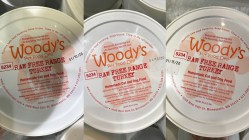
Woody’s Pet Food Deli is recalling three date codes of raw turkey pet food found by the Minnesota Department of Agriculture to be contaminated with Salmonella. The agriculture department initiated testing after the Minnesota Department of Health identified a human case of Salmonella Reading linked to the pet food.

Public health officials discovered during their investigation that Woody’s Pet Deli raw turkey pet food was fed regularly to a pet in the household of the infected individual. The pet tested positive for a different strain of Salmonella.

Woody’s is a small Minnesota-based chain of pet food shops, with locations in Minneapolis, St. Paul, and Woodbury.

The recalled product was sold in 5-pound plastic containers, identified as “Woody’s Pet Food Deli Raw Free Range Turkey,” and bearing one of the following Use By dates: 01/10/20, 01/12/20, 01/15/20.

The U.S. Centers for Disease Control and Prevention is investigating an ongoing multi-state outbreak of Salmonella Reading infections linked to raw turkey products from multiple sources. The outbreak has been in progress since November 2017. As of Dec. 18, 2018, there had been 216 cases of Salmonella Reading illnesses reported in 38 states. One person has died and 84 have been hospitalized. 

The Public Health Agency of Canada (PHAC) has been tracking 33 Salmonella illnesses in six provinces. Those patients are linked to raw turkey and raw chicken products. The same outbreak strain of Salmonella Reading has been recovered from both Canadian and U.S. patients.

No single source or supplier in either the United States or Canada of raw turkey products or of live turkeys has been identified that could account for the whole outbreak.

In November 2018 and again in December 2018, Jennie-O-Turkey Store Sales in Wisconsin and Minnesota respectively recalled nearly 128 tons of raw ground turkey products that were associated with the Salmonella Reading outbreak.

This is the second pet food recall linked to the Salmonella Reading outbreak. In February 2018, Raws for Paws recalled about 4,000 pounds of ground turkey pet food after two children were infected with Salmonella Reading. The outbreak strain was recovered from samples of the Raws for Paws food fed to pets in the household where the children lived. One of the two children was hospitalized with osteomyelitis.

Symptoms of Salmonella infection in people usually include diarrhea, abdominal pain and fever. Infected pets may experience diarrhea, fever and vomiting, or may be without symptoms. Even asymptomatic pets may shed Salmonella in their feces, spreading the infection in the environment.

Individuals who have purchased the recalled Woody’s product should throw it out or return it for a full refund. Consumers with questions should telephone their Woody’s store or contact the company by email at info@woodyspetdeli.com.