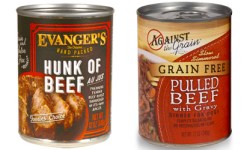
Evanger’s pentobarbital recalls. A peek behind the curtain.

On February 3, 2017, Evanger’s Dog & Cat Food Co. announced a recall of specific production lots of its Hunk of Beef au Jus canned dog food after pentobarbital was confirmed in samples of the product.

One month later, the company expanded its recall to include every batch of Hunk of Beef, Braised Beef and Against the Grain Pulled Beef canned dog foods manufactured between December 2015 and January 2017.

FDA categorized the recalls as Class I.

A Class I recall represents “a situation in which there is a reasonable probability that the use of or exposure to a violative product will cause serious adverse health consequences or death.”

More than two years later, these Class I recalls are still listed as “Ongoing” by FDA.

A series of email exchanges between Evanger’s, its attorneys, its consultants and FDA staff, released in response to a Freedom of Information Act request, offer a glimpse into the prickly relationship between Evanger’s and FDA.

The story began on December 31, 2016 when Nikki Mael gave her five dogs a New Year’s Eve ‘treat’, consisting of most of the contents of a can of Evanger’s Hunk of Beef au Jus dog food. Within 15 minutes, the dogs began to behave oddly, exhibiting acute neurological symptoms. The pet owner rushed her dogs to an emergency veterinary clinic, where one of the dogs died.

Lab tests conducted on stomach contents retrieved during necropsy of the dead dog revealed the presence of a large amount of pentobarbital, a drug used to euthanize animals. The same drug was found in the residue of food remaining in the can from which the five dogs were fed.

FDA, alerted by the veterinarian, launched its investigation into the incident, including an inspection of Evanger’s production facilities that began on January 10, 2017.

According to a February 4th email from Evanger’s to FDA, the agency first advised Evanger’s of the results of the necropsy on January 27th.

Evanger’s management protested FDA’s handling of the incident. In a series of emails, the company questioned FDA’s determination that pentobarbital was an adulterant, and cautioned the agency not to put too much credence in consumer complaints.

The company’s outside consultant had this to say in an email addressed to Joel Sher, Vice-President of Evanger’s, dated February 4, 2017.

I am dismayed by CVM’s determination. Low levels of Pentobarbital have positive uses in treating seizures and insomnia, both in humans and animals. Those who made the decision are obviously unaware of FDA’s 1998 study that found Pentobarbital in almost 50% of the dry dog foods tested and made a determination at that time that residues of Pentobarbital were acceptable.

Evanger’s consultant made reference to a 1986 fraudulent complaint targeting Gerber’s baby food before summarized the company’s thoughts regarding consumer complaints in the following words, taken from an email dated February 17, 2017.

Complaints cannot be trusted! Once a complaint hits the press unscrupulous people will line up complaining hoping for a payout. Back in 1986 FDA did not have the Office of Criminal Investigations to conduct follow-ups at complainants to interrogate them to determine if their complaints were legitimate or not. Today FDA does have that ability and, perhaps, some of the complaints against Evanger’s and Against the Grain should be investigated further by FDA. I would really caution FDA about coming out with a press statement about receiving ‘many’ complaints against these products unless a comprehensive analysis of the complaint is done first.

In a March 3rd email, Evanger’s attorney expressed concern about FDA’s press releases, and asked the agency to give Evanger’s the opportunity to ‘address the issues’ prior to issuing a new public alert, as follows:

Please recall I represent Evanger’s. On its behalf, I’d like to request that the FDA communicate to and work with Evanger’s after the completion of any investigation or the discovery of any new information or questions so that, prior to any new press release from the FDA, Evanger’s is given the opportunity to address the issues. As I am sure you are aware, an FDA press release has significant impact in the market; this is obviously the FDA’s intended effect with the goal of protecting the public. This is indeed the goal the FDA and Evanger’s share.

Later in the same email, the attorney wrote,

It is for this reason that we ask that, Evanger’s be given the opportunity to address new questions, issues or concerns before the FDA issues an independent release. If this is not possible, I believe Evanger’s would be entitled to know why so as to preclude even the appearance of arbitrary or capricious action.

On June 29, 2017, FDA issued a formal Warning Letter to Evanger’s, listing the various violations of the Federal Food, Drug & Cosmetics Act documented during the agency’s January inspection of the company’s facilities. 

On July 9, 2017, a “concerned consumer” sent the following email to FDA.

Dear Mr. Lyons,

I am responding, to the letter that your office sent to Evanger’s Dog And Cat Food Company, dated June 29, 2019. The reason is the FDA has made false Allegations against Evanger’s in the following way: [redacted by FDA].

The anti seizure medication contained 30 mg of phenobarbital not 15 mg. The medication has since been recalled by a company called Truxton because of mislabeling. [redacted by FDA]

Again the FDA jumped the gun when Evanger’s got blamed for the dogs deaths.

[redacted by FDA]

5. The FDA came charging in like a bull, and the FDA failed to ask about the medical history of the dogs. The phenobarbital that you found came from a labor dispute between the meat supplier and its employee.

Before you make any more false and misleading information about Evanger’s, you need to check your facts. As you have caused thousands of dogs to lose a perfectly safe free meal. Please correct your letter and investigate the new facts in this case. Thank you [redacted by FDA]

Ps. Let me also make it clear I am just a concerned consumer writing this letter by myself.

In October 2017, the company and FDA were still in correspondence regarding the destruction of the recalled products. An October 18, 2017 email from FDA to Evanger’s attorney provides a window into some of the ongoing issues.

As you may know, FDA initiated an inspection at the Evanger’s Markham, IL facility on Tuesday, October 10, 2017 (and is still currently in progress). According to our investigators, the firm has approximately only [redacted by FDA] pallets of recalled product in their possession at this location. The amount of recalled product originally inventoried at the firm in February 2017 by FDA was approximately [redacted by FDA] pallets of product. The firm stated they are destroying the product by discarding approximately [redacted by FDA] at a time into their regular trash bin and covering the product in trash; the trash is then collected per their regularly scheduled pickup. The firm has not provided any documentation or evidence that the product was destroyed; however, Chelsea Sher stated on the second day of the inspection that some of the product has been disposed of at a landfill with documentation. Documentation of the landfill destruction has not been provided to the investigators either. According the investigators the firm is also not rendering the product unsalvageable when the product is thrown into the trash.

Relations between FDA and the companies it regulates can be difficult. Fortunately, not every recall situation is fraught with the controversy and confrontation that characterized the interaction between Evanger’s and FDA. 

A final note: All of the excerpts quoted above are ‘as written’ except for the indicated redactions by FDA. No attempt was made to abridge the content or correct any errors of fact, spelling or grammar.

Pentobarbital in Pet Food. A dirty little secret is now out in the open

This story by Phyllis Entis first appeared in The Bark and is reposted here with permission

Talula died on New Year’s Day, 2017, a casualty of pentobarbital-adulterated pet food.

Pentobarbital is the active ingredient in the sedative Nembutal. People who rely on this habit-forming drug over a long period of time develop a tolerance to it, requiring ever-higher doses to achieve the desired sedative effect. Veterinarians use pentobarbital both as a sedative and as a humane euthanasia agent.

In the 1990s, several veterinarians contacted the U.S. Food and Drug Administration (FDA) to express concern that some of their companion-animal patients had become less responsive to the drug. They worried that the animals might have developed tolerance to the effects of pentobarbital as a result of chronic exposure to low levels of the drug in pet foods.

The FDA Digs In

Reacting to the red flag raised by the veterinary community, the FDA surveyed a selection of dry dog foods (kibble) for pentobarbital residue in 1998 and again in 2000. The 1998 survey included 90 individual samples from 49 different kibble varieties and 17 different brands. Twenty-nine of the 49 products were found to contain pentobarbital, with nearly 50 percent of the 90 individual samples testing positive for the drug.

In the second survey, which began in December 2000, the FDA screened 60 samples of kibble for pentobarbital, this time also measuring how much of the drug was present in the contaminated samples.

Compared to the 2000 survey, the one done in 1998 included more products with rendered ingredients near the top of the ingredient list, and the proportion of samples containing pentobarbital in the first survey was notably higher than in the second: 49 percent versus 18 percent. This led the FDA to conclude that pet foods containing higher amounts of rendered ingredients were more likely to be contaminated with pentobarbital.

Even a trace amount of pentobarbital is enough to establish that a pet food is adulterated. Nevertheless, the FDA took no regulatory action against the manufacturers of the pentobarbital-contaminated kibble identified in either survey. According to the agency, the level of pentobarbital in even the most highly contaminated sample was far below the amount that might make a dog ill.

In response to persistent rumors that the rendered remains of euthanized companion animals were being recycled into pet food, the FDA also tested pentobarbitalpositive samples from the 2000 survey for the presence of cat or dog DNA. Results were negative, and the agency concluded that the rendered remains of euthanized cattle or horses were the most likely sources of the pentobarbital contamination.

Rendering is the practice of using heat to extract useable fat and protein from animal carcasses, animal by-products and foodprocessing waste (such as used cooking oil). With a few exceptions, products of rendering are not considered fit for human consumption. However, they may be used as ingredients in animal feeds and pet foods as long as they do not contain any poisonous or harmful contaminants, such as pentobarbital.

The Evanger’s Affair: A Tangled Web

Pentobarbital was back in the news in 2017. Evanger’s Hunk of Beef au Jus canned dog food was linked to the death of Talula, and to the illness of four other dogs who had been fed from the same can. A massive quantity of pentobarbital was found in samples of the pet food, and the drug was also recovered from Talula’s stomach contents on necropsy.

Where did the pentobarbital come from? No rendered ingredients were listed on the product labels, and Evanger’s claimed to use “USDA-inspected, human-grade” beef in its products.

Evanger’s label claims were called into question when FDA investigators examined bills of lading and invoices from Bailey Farms, Evanger’s principal supplier of beef. The paperwork described the meat as “Inedible Hand Deboned Beef. For Pet Food Use Only. Not Fit For Human Consumption.” In addition, some samples of Evanger’s canned dog food contained trace quantities of horse meat. (Horse meat is permitted in pet food as long as its presence is disclosed in the list of ingredients.)

Evanger’s management pounced immediately on the horse-meat finding, insisting the company had been misled, and that Bailey Farms must have supplied Evanger’s with meat from chemically euthanized horses, mislabeling it as beef. The horse meat, Evanger’s claimed, was the source of the pentobarbital found in the canned dog food.

In response to urging from the FDA, Evanger’s voluntarily recalled a limited quantity of Hunk of Beef on February 3, 2017. On March 3, citing an “abundance of caution,” Evanger’s expanded its initial recall to include every batch of Hunk of Beef, Braised Beef and Against the Grain Pulled Beef canned dog foods manufactured between December 2015 and January 2017. (The “Against the Grain” brand name is owned by Nutripack LLC. Both Nutripack and Evanger’s are owned by members of the Sher family.)

According to the company, the March recall encompassed all of the products that contained meat supplied by Bailey Farms. By mid-April, this assurance was proved hollow. Pentobarbital was found in two Cocolicious canned dog-food products manufactured in 2015 by Evanger’s for Party Animal, a small California-based company. On April 24, Party Animal announced a recall of both products.

The Beef Tallow Connection

The Evanger’s incident prompted media outlet WJLA to commission a survey of other canned pet-food brands for pentobarbital contamination. The results of that survey rocked pet owners: in 2018, WJLA reported that several Gravy Train canned dog foods were adulterated with pentobarbital.

The Gravy Train name is owned by Big Heart Pet Brands, a subsidiary of the J.M. Smucker Company. After an internal investigation, the company announced that the source of the pentobarbital was beef tallow from a single supplier. At first, Smucker and Big Heart Brands initiated a company-to-company product withdrawal of a range of products from retail stores. Eventually, the company issued a voluntary recall of all the affected products.

Beef tallow was blamed for yet another pentobarbital contamination episode in 2018, this time involving a limited quantity of Orijen and Acana kibbles manufactured by Champion Petfoods. The relatively low level of pentobarbital in the tallow was not considered to be a health hazard. Champion reacted promptly to quarantine the contaminated tallow and retrieve the potentially affected production lots from its distribution chain. Most of the product manufactured with the contaminated tallow never reached the retail market, and there was no formal recall.

Beef tallow, the fat extracted from rendered beef, is usually disclosed on pet food labels as “beef fat” or “animal fat.” By law, tallow intended for use in human food, pet food and animal feed must not be derived from chemically euthanized animals. In practice, the Evanger’s incident exposed a large hole in this regulatory dyke: the food industry and the FDA’s reliance upon an honor system to identify and segregate carcasses of chemically euthanized animals.

When FDA inspectors visited Bailey Farms in 2017, they were told that the company relied on its customers (i.e., the farms from which it picks up dead animals) to tell its drivers whether any of the dead animals had been chemically euthanized. The drivers were instructed to mark those carcasses with orange paint before loading them onto their trucks. The orangemarked carcasses were segregated from the other carcasses upon arrival at the rendering plant.

According to Bailey’s owner, Gregory Schiel, the company would prefer not to pick up chemically euthanized animals at all. However, Schiel expressed concern that some customers might falsely claim that chemically euthanized animals had died from natural causes in order to dispose of the carcasses more easily.

The Legal Fallout

The Evanger’s affair spawned several lawsuits, including at least two class action lawsuits.

Pet owners who purchased Evanger’s products filed a lawsuit against Evanger’s, Against the Grain, Nutripack and the Sher family’s management company, collectively alleging one dog death (Talula) and seven illnesses as a consequence of feeding a product manufactured by the defendants.

A pet owner who purchased the recalled Party Animal products filed a lawsuit against both Party Animal and Evanger’s, alleging that the Party Animal product made her dog seriously ill.

Party Animal sued Evanger’s and Nutripack.

Evanger’s sued Bailey Farms, its meat supplier.

Colony Insurance Company sued Evanger’s, Nutripack and the class representatives in both class action lawsuits. In its filing, Colony Insurance claimed that Evanger’s owners had lied on the insurance policy application, thus voiding the policy.

The Gravy Train incident resulted in a class action lawsuit against Big Heart Brands. Collectively, plaintiffs in that lawsuit alleged 27 pet deaths (26 dogs and one cat) and two illnesses in pets fed one or more Big Heart canned dog foods.

At the time of the pentobarbital revelation, Champion Petfoods was also defending itself from a class action lawsuit based on alleged excessive heavy metal contamination. The plaintiffs added pentobarbital contamination to the existing complaint.

Of the 28 pet deaths alleged by the plaintiffs in the various lawsuits, only Talula’s death was lab-confirmed to have been due to pentobarbital contamination in a commercial dog food. In the other 27 deaths, the reported symptoms matched those associated with pentobarbital, but the food was not tested at the time the pets fell ill, and in most cases, necropsies were not carried out.

All of the lawsuits are still pending.

JBS knowingly distributed pentobarbital-adulterated products

This story by Phyllis Entis first appeared in Food Safety News and is reposted here with permission.

JBS Souderton Inc. continued to distribute pentobarbital-adulterated products to customers even after receiving formal notification of pentobarbital contamination, according to a warning letter issued on April 23 by the Food and Drug Administration.

The warning letter to JBS Souderton Inc., which does business as MOPAC, was sent more than one year after pentobarbital was first discovered in beef tallow from the company’s Souderton, PA, facility.

Pentobarbital is a barbiturate used by veterinarians to euthanize animals, including companion animals, horses and cattle. According to the FDA, pet foods containing even a trace amount of pentobarbital are considered adulterated. It is against federal law to release “adulterated” products into the stream of commerce.

JBS was the supplier of beef tallow to Big Heart Pet Brands Inc. and to Champion PetFoods, among others.

Big Heart is a wholly owned subsidiary of The J.M. Smucker Company Inc. Champion is a Canadian pet food company whose U.S. production facility is in Auburn, KY. It manufactures Acana and Orijen brands of dry dog food.

In February 2018, a media outlet reported having found pentobarbital in several samples of Gravy Train canned, wet dog food. Smucker initiated a product withdrawal of the implicated products pending the outcome of its internal investigation. 

Concurrently, FDA alerted pet owners about the possible presence of pentobarbital in the several dog food brands, including Gravy Train, Kibbles ’N Bits, Ol’ Roy and Skippy.

Smucker converted its withdrawal into a full-blown recall once company officials had confirmation of the presence of pentobarbital in its finished product and in samples of beef tallow supplied by JBS.

As part of its investigation into the Big Heart, FDA and the Pennsylvania Department of Agriculture conducted a joint inspection of JBS beginning March 13, 2018.

According to the warning letter, FDA found pentobarbital in four out of nine samples collected at the JBS facility. Upon further analysis, three of the samples were found to contain pentobarbital at levels ranging from 61.8 +/-19 to 277 +/-70 nanograms per gram (ng/g), well above the minimum detection concentration of 4 ng/g.

The four pentobarbital-contaminated products were delivered to customers from November 2017 through March 2018.

Samples collected from JBS and from its customers’ facilities and analyzed by Pennsylvania officials found levels of pentobarbital as high as 680 ng/g.

The list of Inspectional “Observations” in the FDA’s Form 483, provided to JBS management on Oct. 17, 2018, contained two items:

  1. JBS did not visually verify loads of raw materials with what the hauler stated that they brought in. This led to tallow, manufactured at [the JBS] facility, to be adulterated with pentobarbital.
  2. JBS did not have an effective system for evaluating incoming raw materials to ensure that these ingredients are suitable for use in human products and animal feeds.

JBS officials informed the FDA on April 17, 2018, that the company had completed cleaning all of its conveyances, conduits, cookers and centrifuges, and some of its storage tanks to remove any pentobarbital-contaminated product. In a May 30, 2018, letter, JBS management indicated the company would complete the cleaning process within an additional 30 days.

The company officials also reported having identified and talked with all of its suppliers that may have presented a risk for entry of euthanized animals into the rendering plant, and obtained a guarantee from each supplier that they would not provide euthanized animals. JBS also indicated it would continue to conduct random tests of tallow products for pentobarbital.

On July 27, 2018, the FDA took a follow-up sample from one of the JBS storage tanks. Upon analysis, the sample was found to contain trace amounts of pentobarbital.

On Aug. 8, 2018, the FDA inquired what actions JBS planned to take in response to the pentobarbital finding. 

The company declined to recall the product. Instead, JBS offered to ask animal food producing customers that received animal food products to remove any products deemed positive for pentobarbital and to have their tanks cleaned.

JBS described its product withdrawals and attempted withdrawals of pentobarbital-contaminated product from its customers in a Nov. 26, 2018, letter to the FDA. 

In its warning letter, the FDA noted that it was unable to asses the effectiveness of the corrective actions in the absence of a voluntary recall or other documentation demonstrating all contaminated products were removed from the marketplace.

As reported by Food Safety News in November 2018, Champion PetFoods retrieved pet foods the contaminated tallow from its third-party distributors. The company declined to initiate a retail-level recall, even though some of the product had reached the store/consumer level. The refusal was based on laboratory test results on retained samples of those finished products that did not reveal pentobarbital.

JBS was given fifteen working days to notify the FDA in writing of the specific steps it has taken to correct the violations listed in the warning letter, or to provide a time frame within which the corrections will be completed.