Myanmar Kitchens

As we traveled in the Bagan region of Myanmar, we had the opportunity on occasion to visit a few village homes and see what was cooking – or how.

Our first stop was at a village that was on the standard tourist route, and we received the standard tour, which I’ll save for another day.

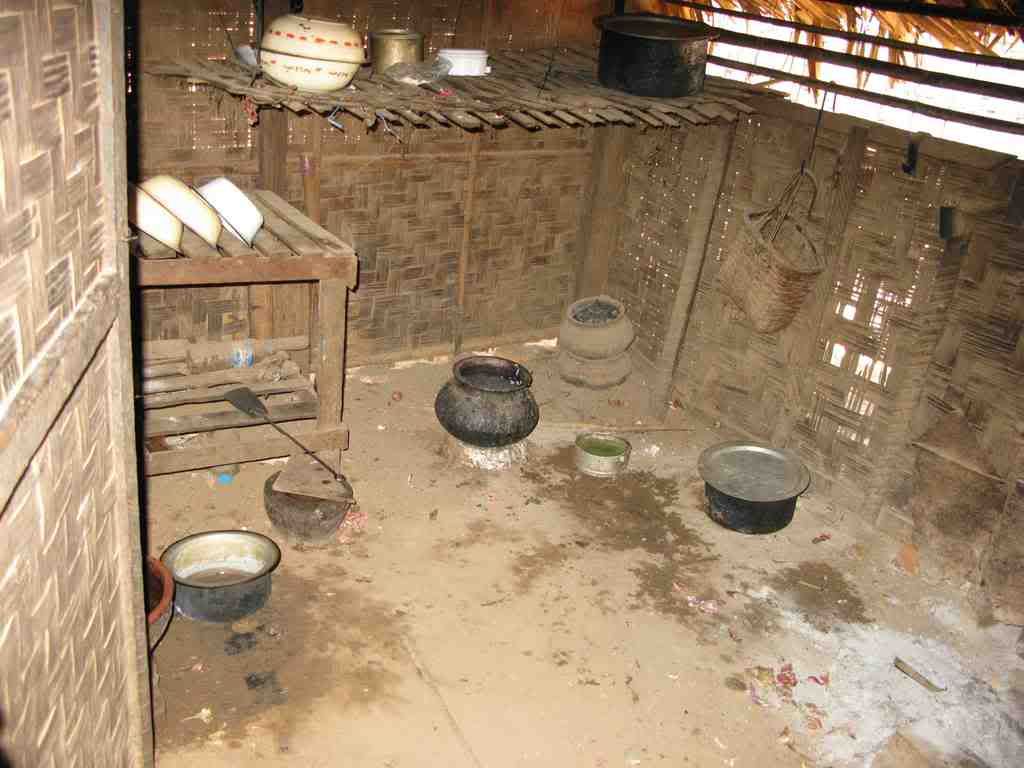
We were told that this is a typical village kitchen in the Bagan region


We visited a second village, and were invited to tour the kitchen of the wealthiest family in the village – the middle-class owners of the local general store. This family has its own private outhouse, a summer kitchen, an indoor kitchen and a separate dining area.

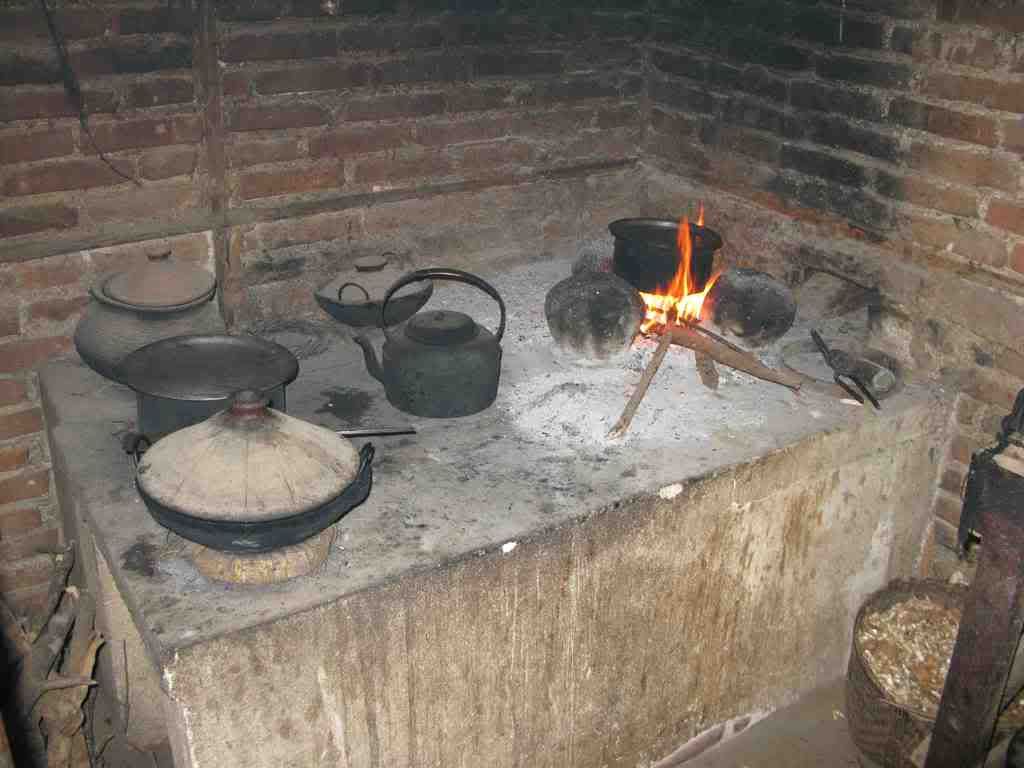
This is the family’s cooktop. In the absence of electricity, villagers cook their food over charcoal or wood fires

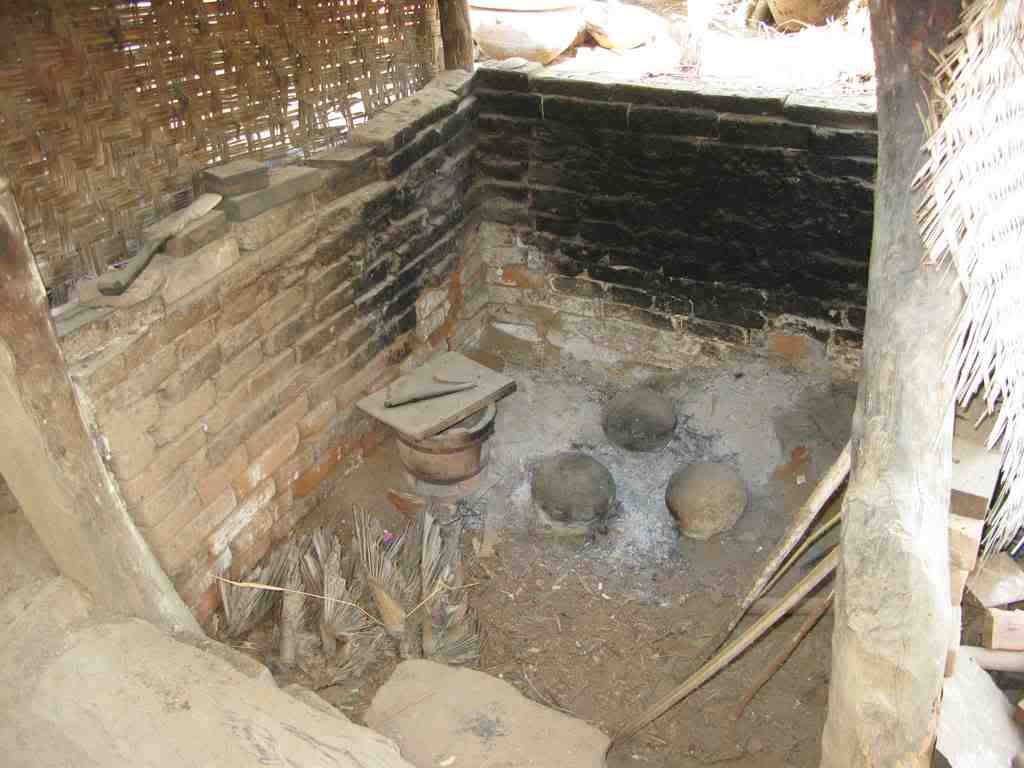
The summer kitchen is outdoors, to avoid generating excessive heat inside the house during the sultry summer months

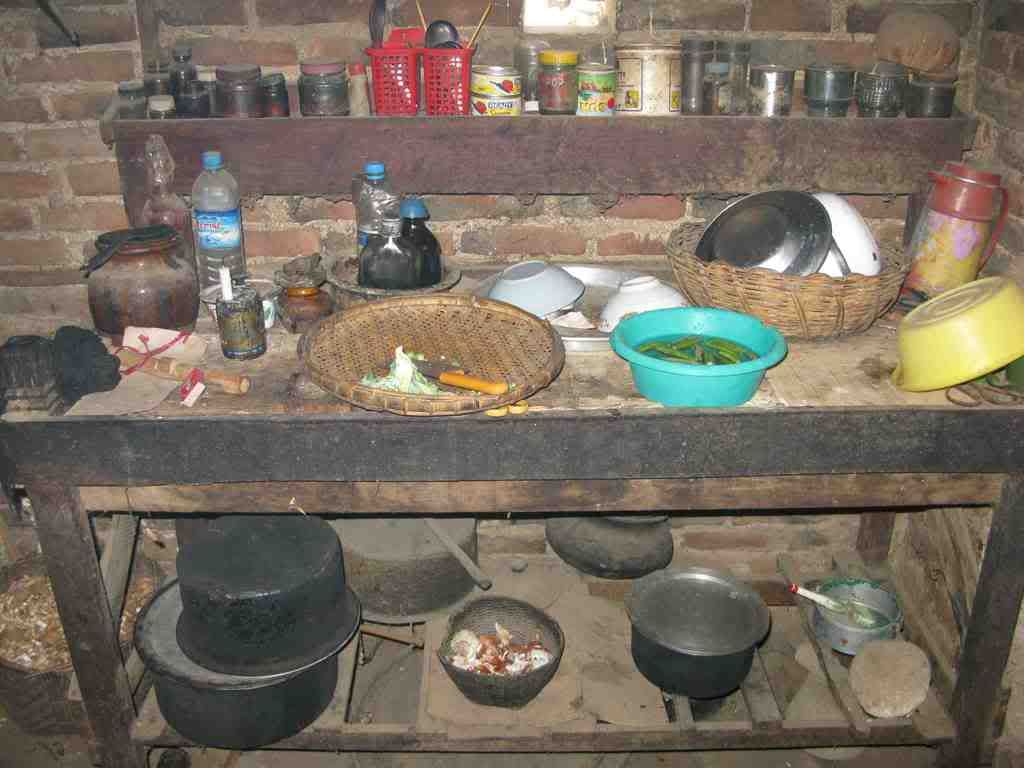
The food preparation area of the kitchen has a spice shelf and storage space for pots and pans

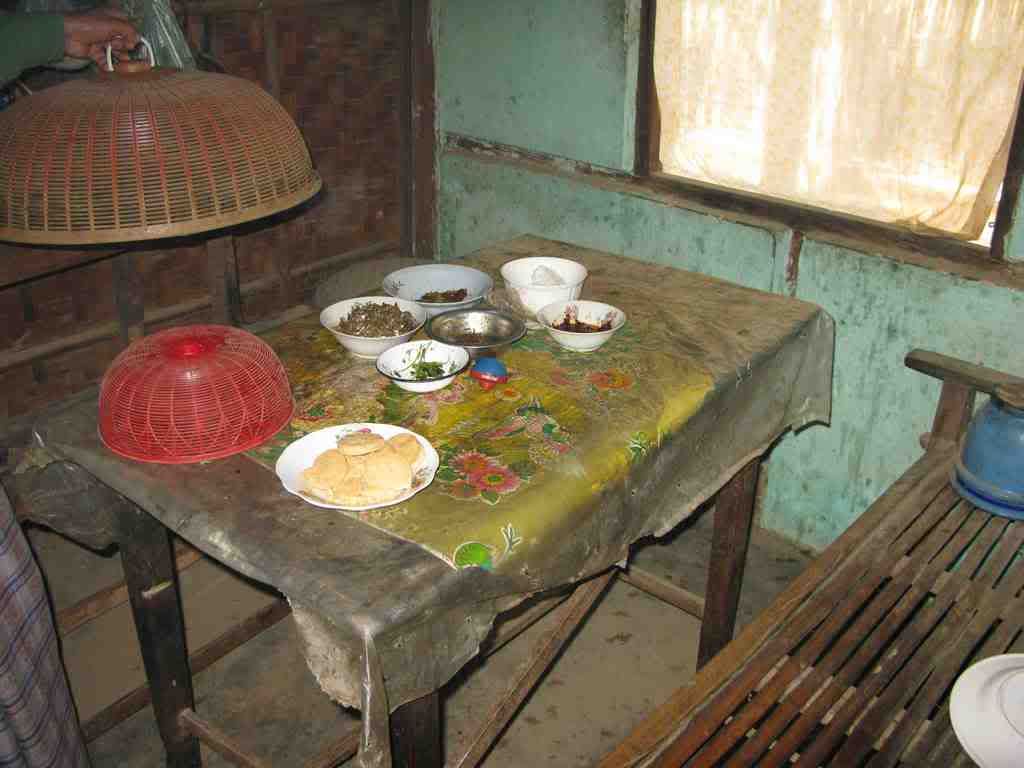
The family eats a hot breakfast at this table. These are the breakfast left-overs.

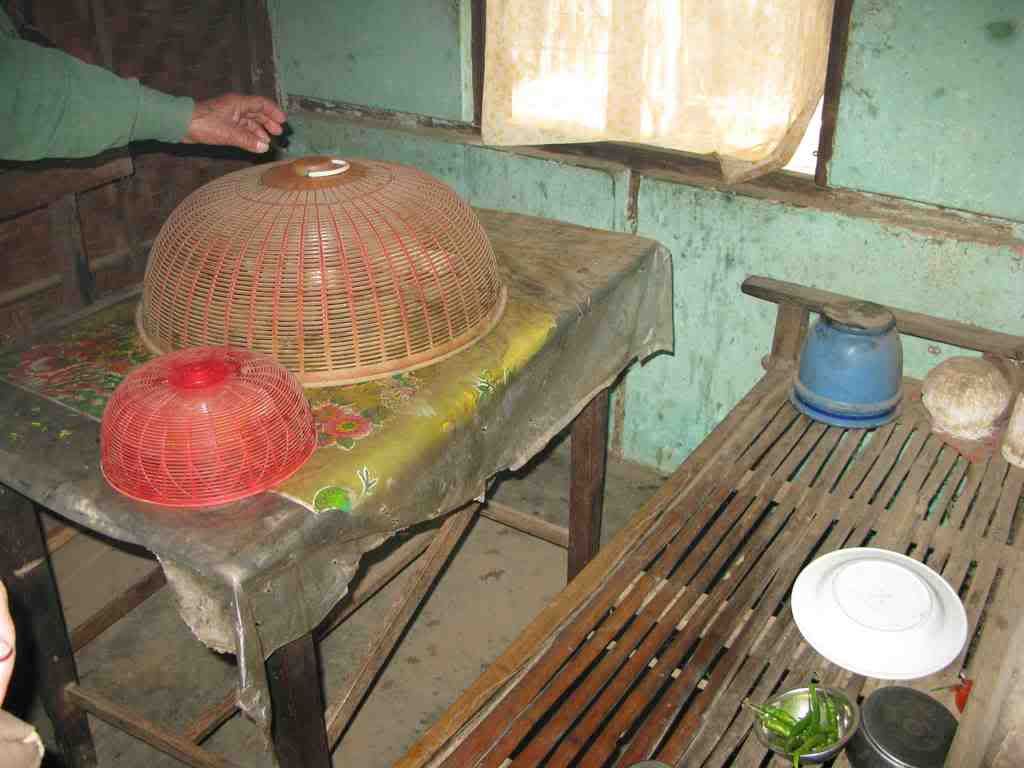
It’s rare for villagers to have time to prepare lunch, so the breakfast left-overs are saved (covered to protect against flies) and eaten for lunch

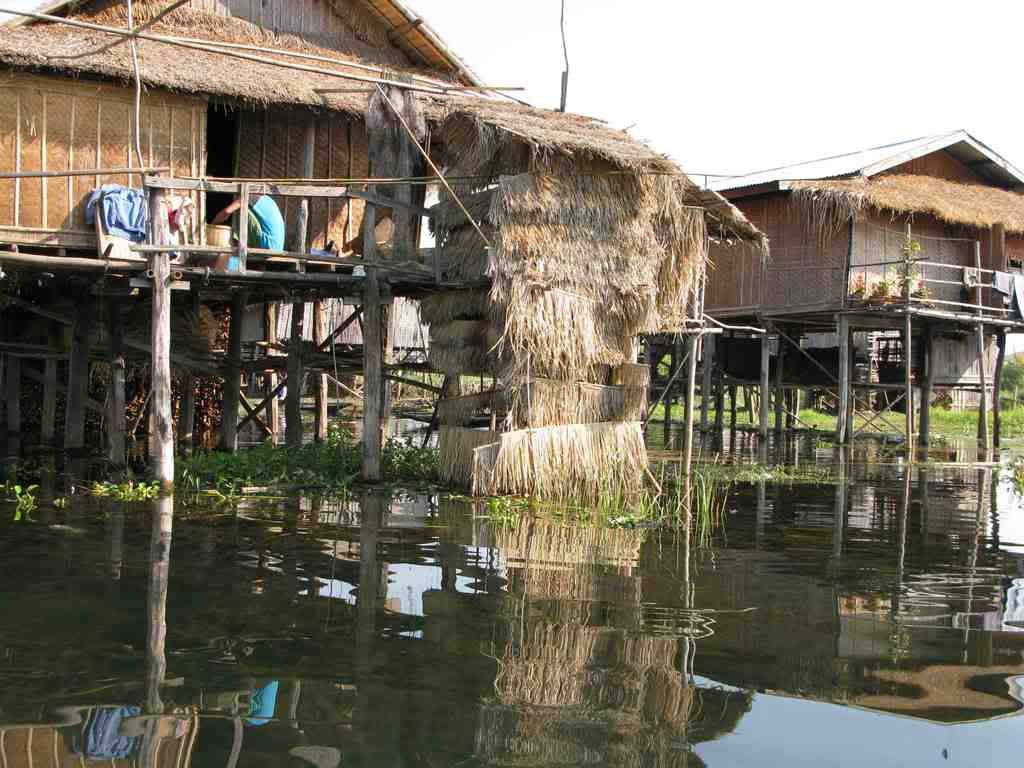
When we arrived at Inle Lake, our next stop after Bagan, we found that the Bagan kitchens were not an anomaly.

We were given the chance to see the interior of a house like this one, built on stilts over the water

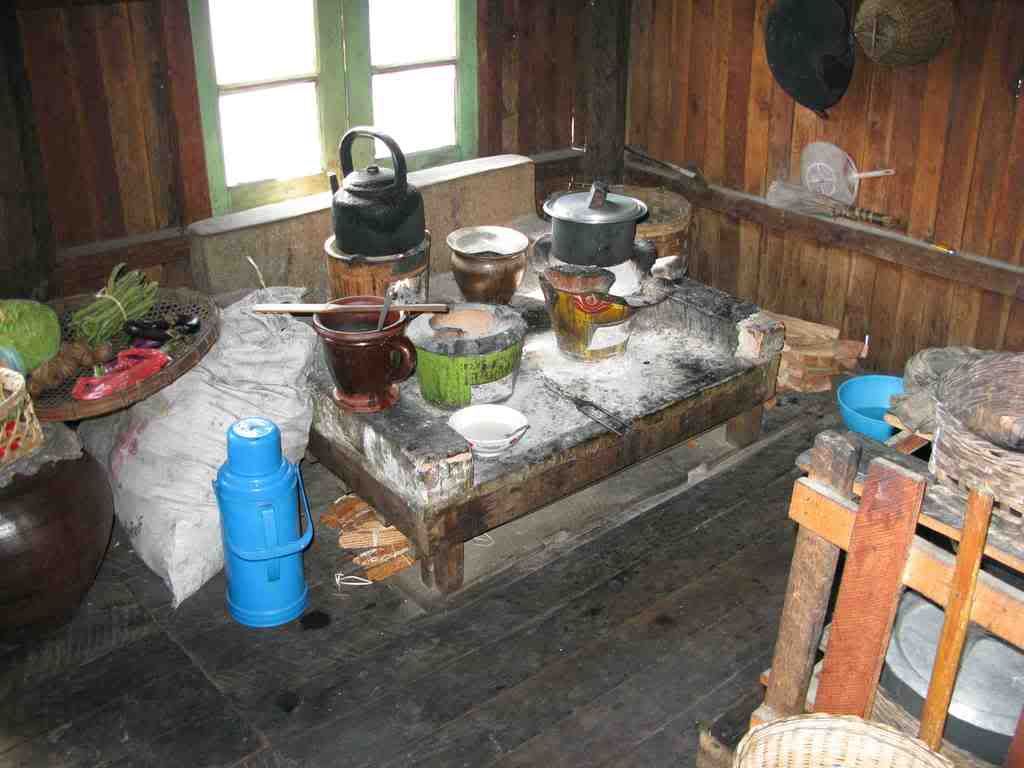
Here’s the kitchen


Whenever we sat down to a restaurant meal in Southeast Asia, we found ourselves wondering what the kitchen looked like. We had a chance to satisfy our curiosity once or twice, so stay tuned for more.

Myanmar: Maymyo Meat Market

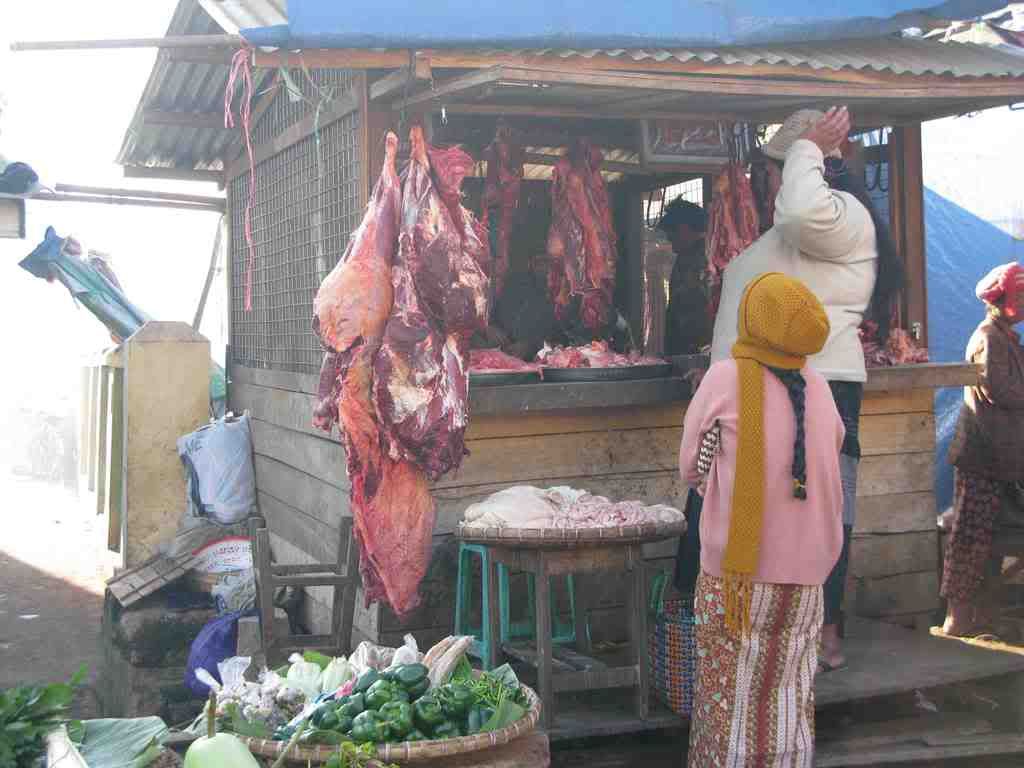
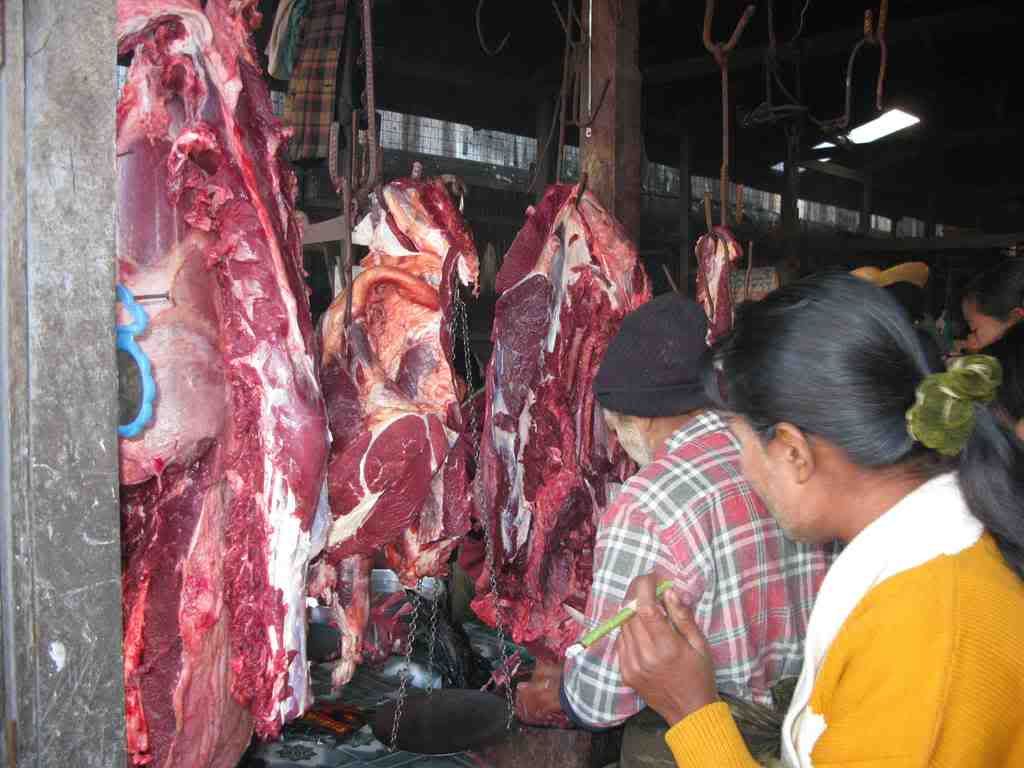
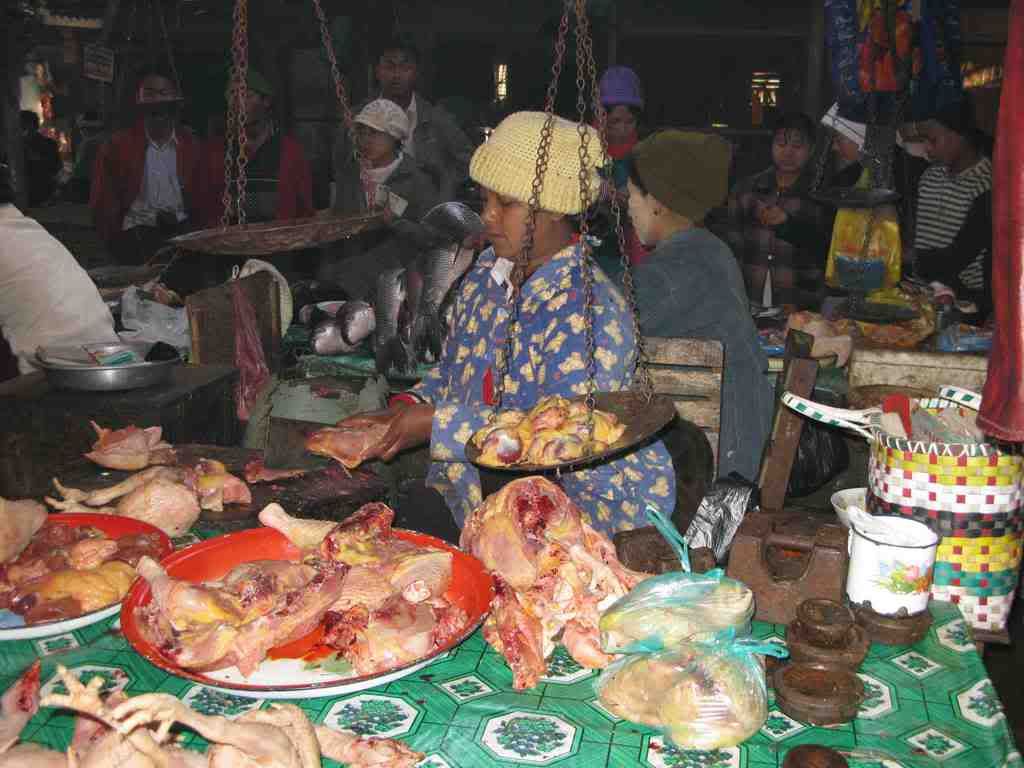
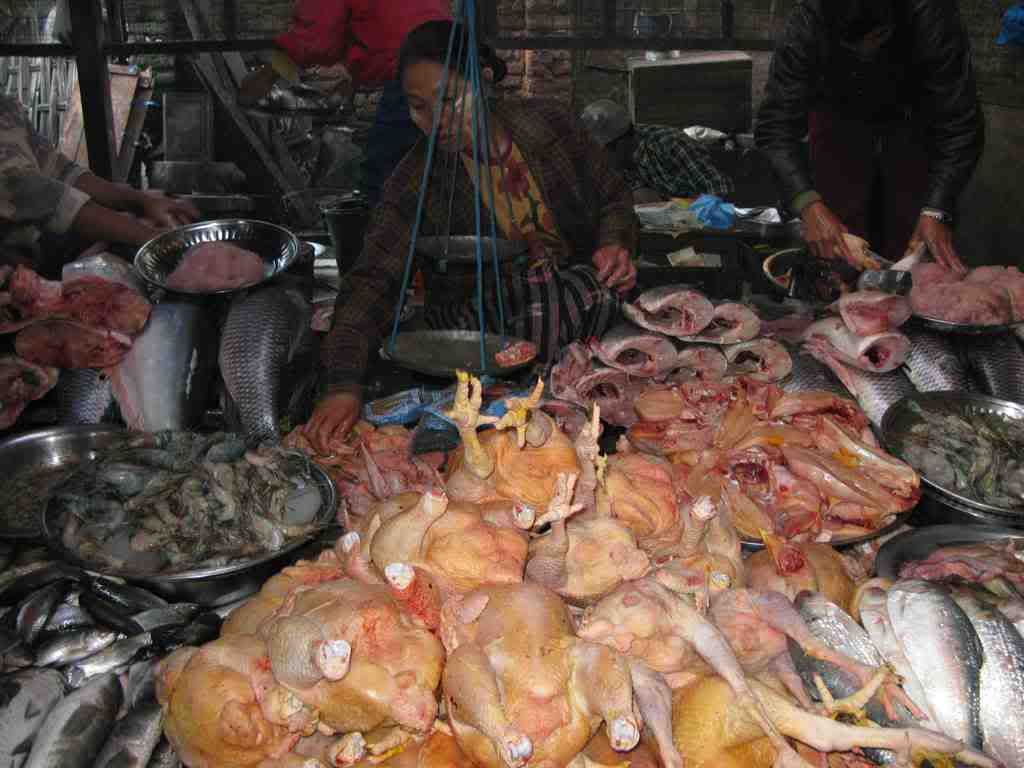
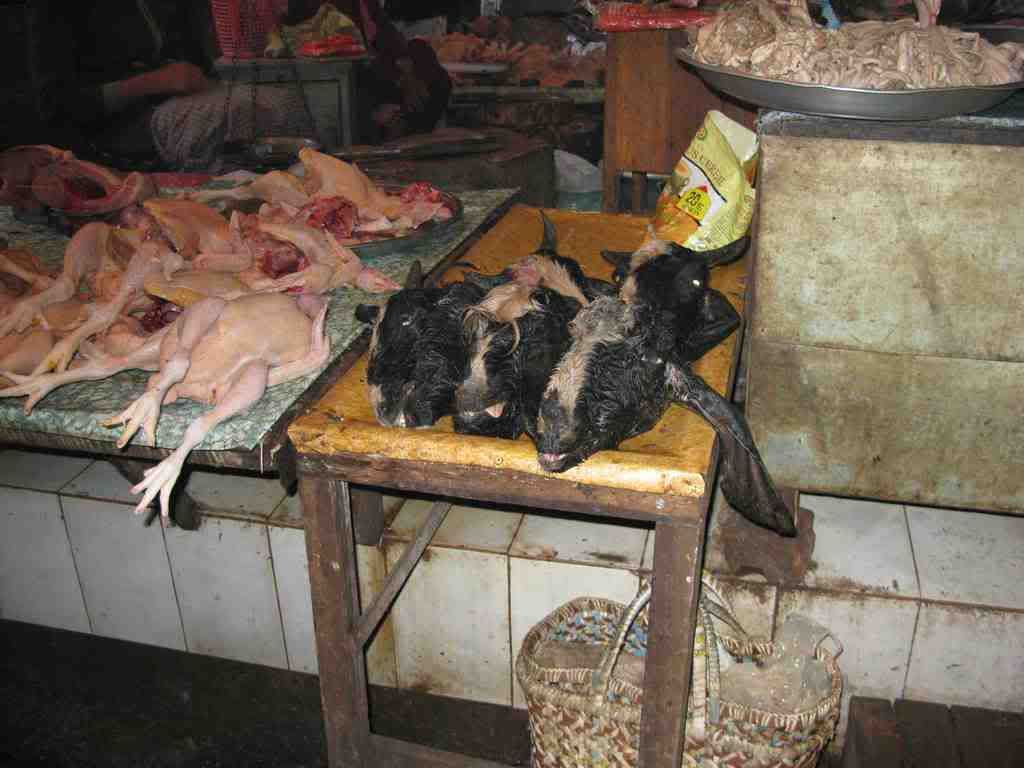
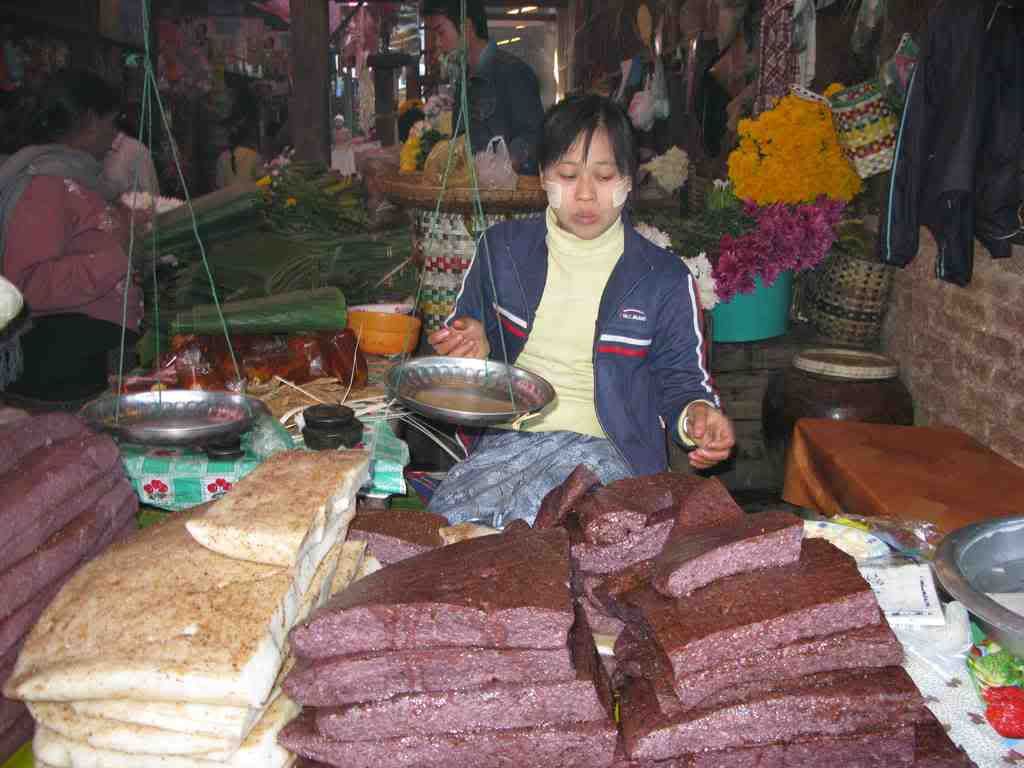
With all the focus on meat inspection these days, I thought it would be interesting to stroll along with a local resident through the central meat, fish and poultry market of Maymyo, a mountain resort town 40 miles northeast of Mandalay while she plans her dinner for her family.

First, we encounter a typical meat stand

And stop for a closer look

Next, we wander over to a poultry stall

Perhaps a mixture of fish and chicken would make an interesting main course

On the other hand, chicken and goat might be a more appetizing combination

Bean curds might be a nutitious and tasty addition to the evening meal

And deli salads are always popular side dishes

Dessert, as always, will be fresh fruit

Myanmar: Shrimpers of Inle Lake

For a period of 2-3 months just after the end of the rainy season, the rice paddies that border Inle Lake produce a different crop – freshwater shrimp.

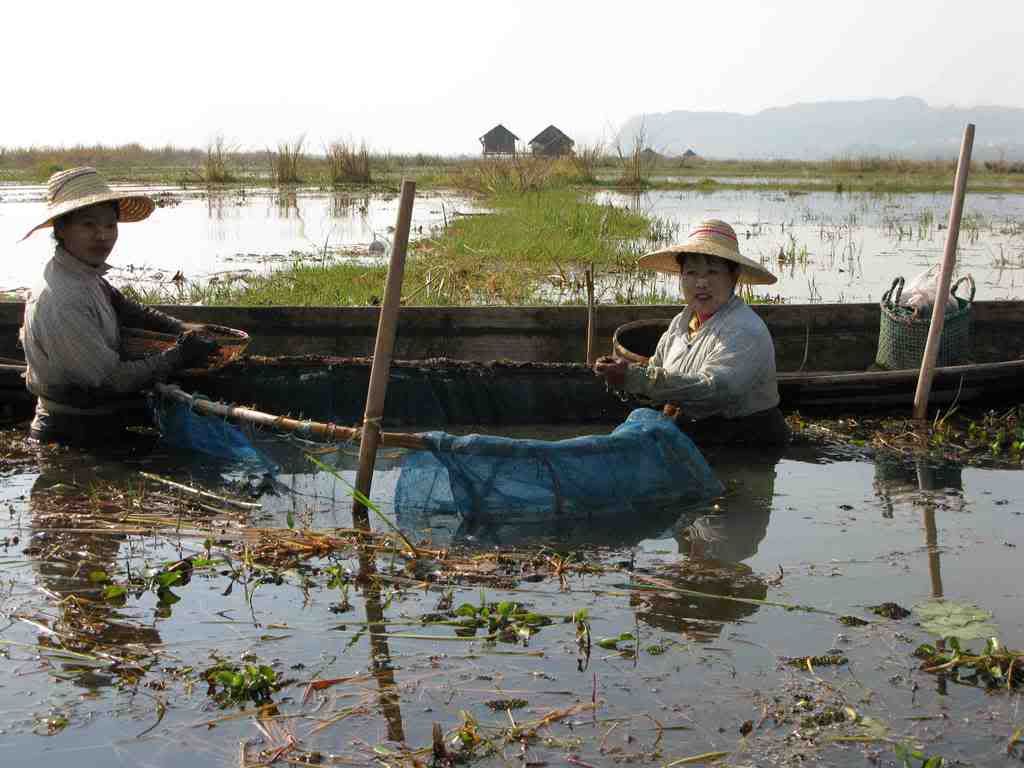
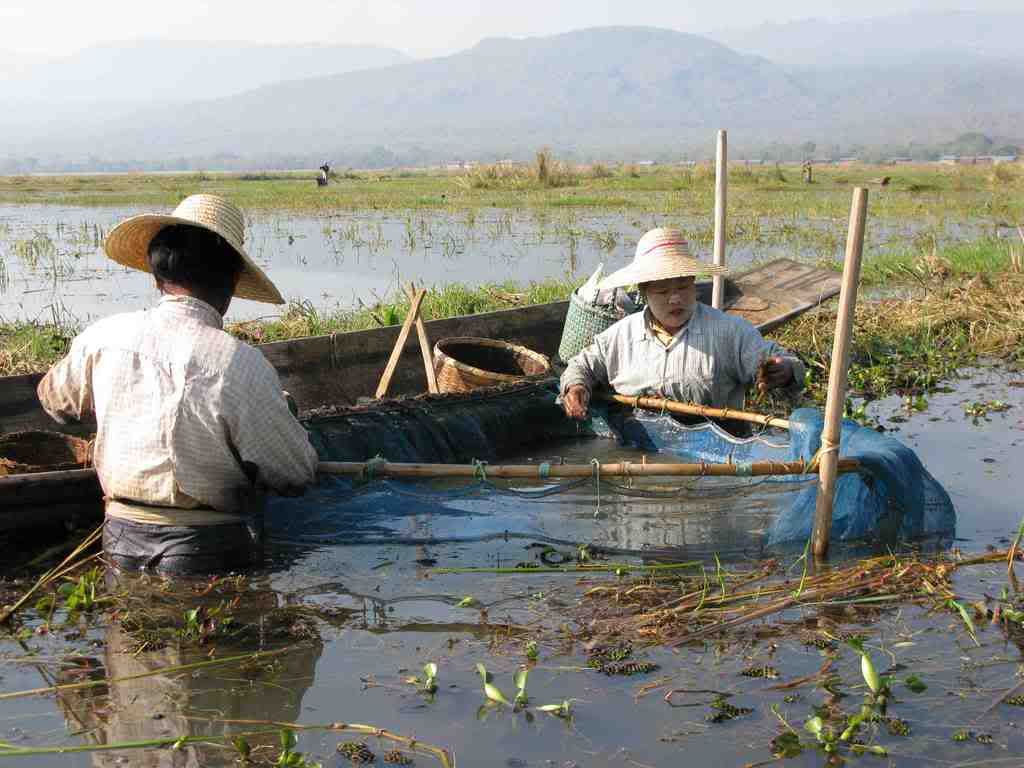
Shrimping is usually carried out by a two-woman team. The pair of young women we encountered in this flooded rice paddy were both in their 20’s, unmarried, and friends as well as colleagues.


Shrimping is not a very well-paying occupation, but neither is anything else in this country (except possibly acting as a guide for tourists). This pair of women will earn approximately 3,000 Kyats (1,200 Kyats = US$1.00) for a full day’s work, most of it performed while standing waist deep in weed-choked water.

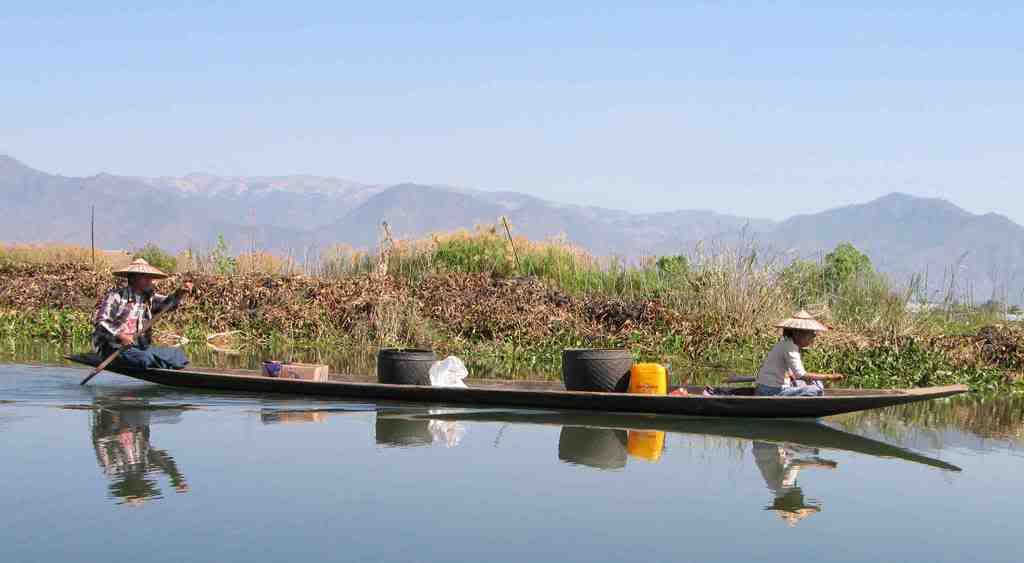
Their day starts with a 90-minute commute (by canoe) from their homes to the shrimp bed


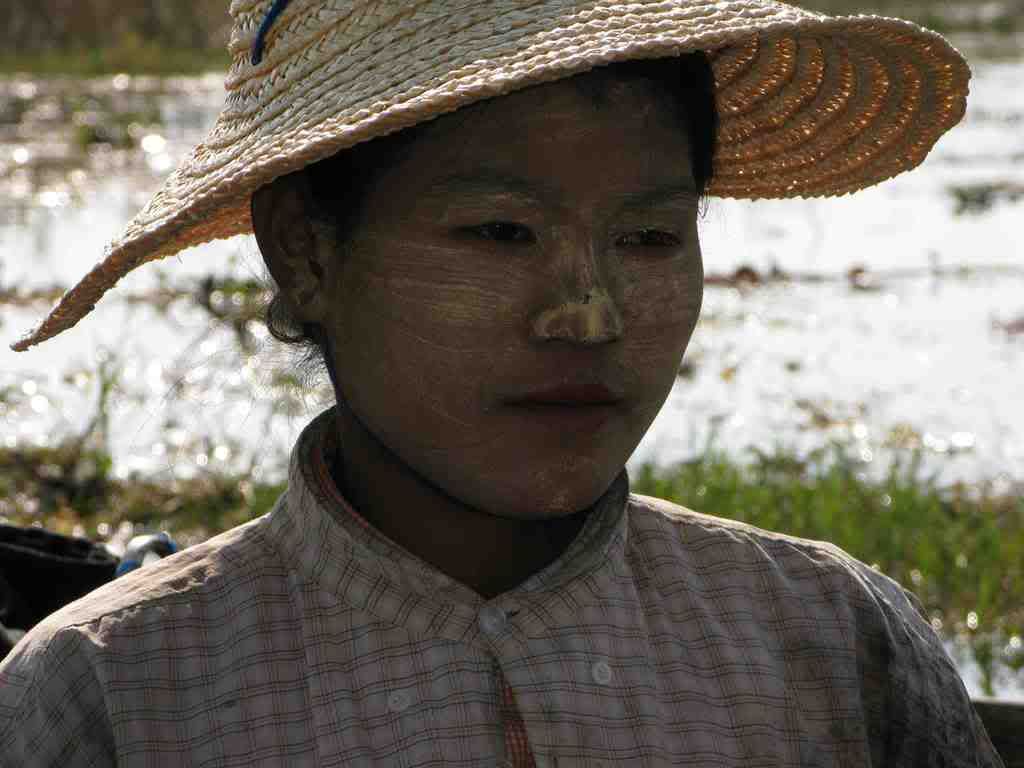
The women were wearing a form of sunscreen that is unique to Myanmar (at least among the countries that we visited). It is made by grinding thanaka bark on a flat stone, and mixing the powder with a bit of water to form a paste that is smeared all over the face.

Some of the Myanmar people, including this shrimper, are quite creative in their application of this Myanmar make-up, and apply the paste in interesting patterns.

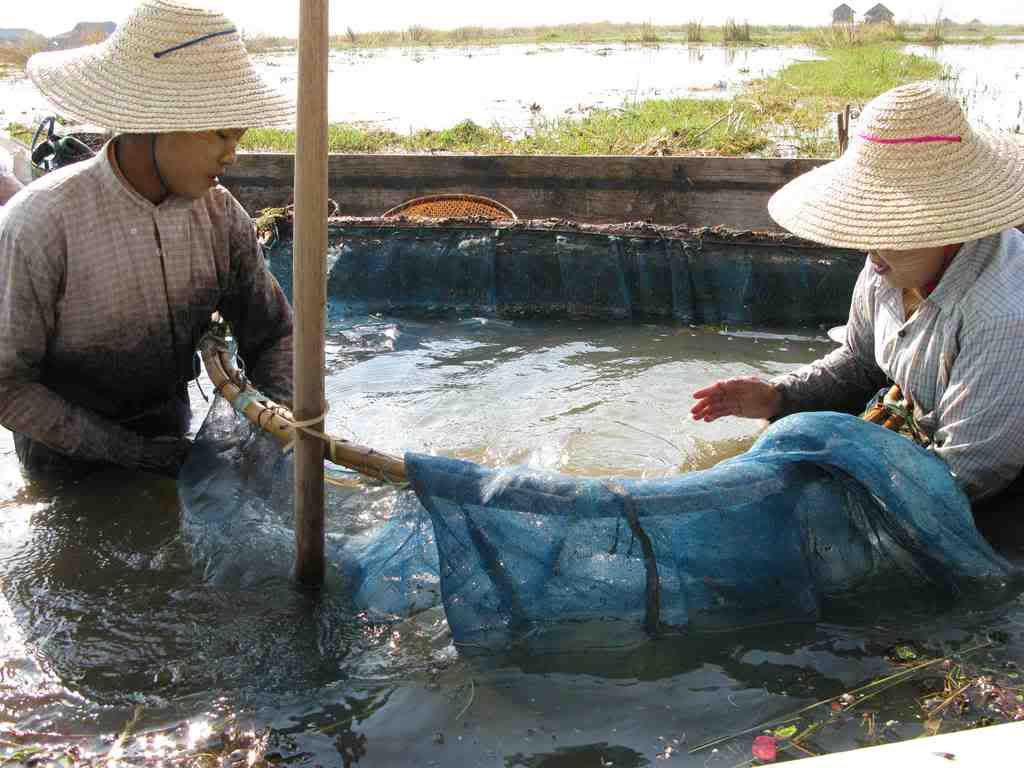
Once at the shrimp bed, they drag a fine-mesh net, which is mounted on a horseshoe-shaped frame, through the weedy water for about 30 minutes, until it is filled with floating weeds and debris. Then they hitch their net onto the side of their canoe and spend an hour or more carefully separating the inch-long shrimp from the weeds, debris, and leeches. If they are lucky, they’ll also find the occasional small fish trapped in the net.

When we arrived, the women had already worked their way through most of the material that they had collected in the net

Although they never stopped working, they were quite gracious about answering our questions


Once the net has been emptied, the process starts all over again. This pair of shrimpers is able to fill and sort three nets-worth of shrimp per day. Their day doesn’t end with their 90-minute commute back home. Once home, the shrimp must be spread out in the sun to dry.

These shrimpers work seven days a week for the 2-3 month season. Except for an occasional festival day, they take no days off. Shrimping season ends when the water level in the paddy has dropped low enough for planting rice.