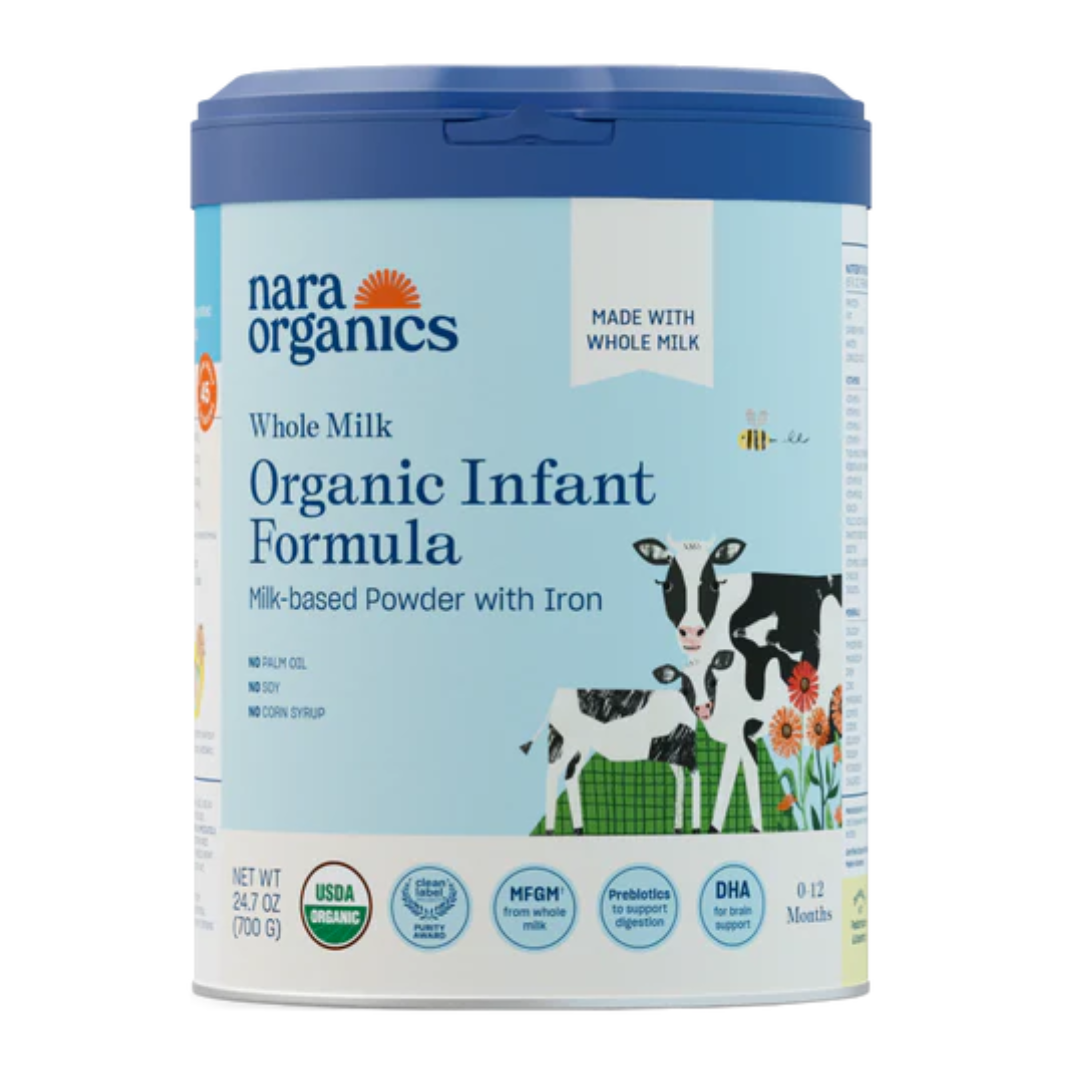
The FDA and the CDC are reporting a fourth baby has been added to the list of infant botulism victims linked to Nara Organics Whole Milk Organic Infant Formula.
The latest victim is a resident of California.
All four of the outbreak victims are male babies ranging in age from 2 to 5 months at onset of illness.
All four babies were hospitalized and treated with BabyBIG.
The California Department of Public Health has detected Clostridium botulinum in an opened can of Nara Organics powdered infant formula obtained from the home of one of the infants. FDA has collected unopened samples from the lot numbers fed to the affected infants for testing, but results are not yet available.
The Nara Organics infant formula was manufactured by the German company, Milchwerke “Mittelelbe” GmbH, and packaged by the Danish company, Advanced Nordic Nutrition.
Prior to becoming aware of the outbreak, the FDA conducted inspections at both facilities and documented several deficiencies. As a result of the inspections, the FDA added Milchwerke “Mittelelbe” GmbH to Import Alert 40-05: “Detention Without Physical Examination Of Adulterated And Misbranded Infant Formula.”
Although the infant formula was manufactured in Germany, at least some of the production batches contained whole organic milk powder supplied by Organic West Milk (a California company) and spray-dried by Dairy Farmers of America’s (Fallon, Nevada). This is the same supplier that furnished whole milk powder to ByHeart.
The FDA is continuing to work with all of the firms involved to determine the root cause of the contamination.
Milchwerke “Mittelelbe” GmbH, the German manufacturer of Nara Organic’s Whole Milk Infant Formula, has been added to the FDA’s Import Alert 40-05 list after an inspection of the production facility found “serious deviations of the Infant Formula Requirements per 21 CFR Part 106.”
Import Alert 40-05 provides specifically for “Detention Without Physical Examination Of Adulterated And Misbranded Infant Formula.”
The entry for Milchwerke “Mittelelbe” GmbH, dated 06/26/2026, states that “…the firm’s powdered infant formula products processed in the facility are adulterated within the meaning of section 402(a)(4) of the Federal Food, Drug, and Cosmetic Act, in that they were prepared, packed or held under insanitary conditions whereby they may have been rendered injurious to health.”
The Import Alert cited the lack of a flow diversion valve on the pasteurization system, failure to take corrective action following the detection of Cronobacter sakazakii in a “high-hygiene” zone of the processing facility, inadequate environmental monitoring for Cronobacter sakazakii, failure to maintain the plant in a clean and sanitary condition, and lapses in good personal hygiene practices.
Perhaps the most troubling of these observations is the lack of a flow diversion valve. This valve is designed to monitor the temperature of the milk at the outflow from the holding tube immediately after pasteurization and to divert the milk back into the tank if the temperature at the outflow point is below the required level. The absence of an proper flow diversion valve could result in underpasteurized milk being introduced into the spray-drying process and, thus, into the infant formula powder.
Coming a close second is the inadequate follow-up on detection of Cronobacter sakazakii in the production environment. After finding the pathogen and conducting a “root cause” analysis to determine the source of the contamination, the company failed to take “appropriate and timely” corrective measures.
The abbreviated inspection report summary included in the Import Alert notification also mentioned “cracked and pitted concrete floors, broken and missing tiles, and damaged grout” in areas where the infant formula is processed.
According to the website ImportGenius, which tracks US Customs activities, Nara Organics took deliver of a total of nine shipments of infant formula between July 29, 2025 and April 30, 2026. (Thank you to one of my loyal readers for this information. Please note the corrected paragraph, below.)
To be clear, the Nara Organics powdered infant formula batches implicated in the infant botulism outbreak currently under investigation were manufactured by Milchwerke “Mittelelbe” GmbH. However, an unspecified number of the shipments were manufactured using organic whole milk powder produced and processed by the same US supplier that produced the whole milk powder used in ByHeart’s organic infant formula powder.
The picture painted by the FDA’s Import Alert is very different from Nara’s rosy description of a “state-of-the-art” facility.
According to the FDA’s updated Outbreak Investigation report, the agency is in the process of reviewing corrective responses submitted by Milchwerke “Mittelelbe” GmbH, and also has been in contact with relevant European authorities.
“Reads like a true crime novel” – Food Safety News
Interested in learning more about food safety and the history of foodborne disease outbreaks and investigations?
Click on the link to listen to a short excerpt, then follow the buy links to add a digital, print or audio copy to your personal library.
Two separate European companies had a hand in producing Nara Organics Whole Milk Organic Powdered Infant Formula, a product that recently was linked to three cases of infant botulism according to reports from the CDC and the FDA.
The company has recalled all lots of its formula currently on the market.
According to the company’s website, Nara’s whole milk powdered formula is “…made in Germany to meet both U.S. and EU food safety standards.” However, the company declined to reveal the identity of the German manufacturer.
On June 18th, Food Safety News reported that Nara’s infant formula powder is manufactured by Milchwerke Mittelelbe GmbH (also known as “Elb-Milch”), a subsidiary of the Krüger Group located in Stendal, Germany.
eFoodAlert has been able to confirm the Food Safety News report through the website ImportGenius, which tracks US Customs records. According to ImportGenius, Nara Organics received 36 containers of infant formula from Milchwerke Mittelelbe GmbH on April 30, 2026.
Elb-Milch manufactured the formula, but did not package it. The infant formula powder was sent in bulk to a Danish company, Advanced Nordic Nutrition (“ANN”), formerly known as Fipros Nutrition ApS.
ANN’s sole role was to package the bulk powder into cans, according to a spokesperson for the company. ANN’s INSOC Establishment Approval number (DK 6568 EC) appears on the can label.
Both Elb-Milch and ANN have been inspected by the FDA in the past—in 2017 and 2016, respectively. In both cases, the results of the inspection were satisfactory.
“Reads like a true crime novel” – Food Safety News
Interested in learning more about food safety and the history of foodborne disease outbreaks and investigations?
Click on the link to listen to a short excerpt, then follow the buy links to add a digital, print or audio copy to your personal library.