

Make America (un)Healthy Again

March 27, 2025

The US Department of Health and Human Services (HHS) announced this morning that 10,000 permanent jobs would be cut from the agencies under its control, including the US Food and Drug Administration (FDA), the US Centers for Disease Control and Prevention (CDC) and the National Institutes of Health (NIH).

The new cuts are in addition to the 10,000 people already fired or bought out through early retirement packages.

The combined cuts has reduced the workforce of HHS by almost 25%.

The cuts are to be accompanied by a consolidation of the department’s various divisions from 28 down to 15.

The largest reduction will be felt at the FDA, which will lose an additional 3500 full-time employees out of what had been a workforce of approximately 18,000 people under the Biden administration.

The CDC will lose an additional 2400 employees, and the NIH will lose 1200.

According to the Fact Sheet accompanying the news release, “The consolidation and cuts are designed not only to save money, but to make the organization more efficient and more responsive to Americans’ needs, and to implement the Make America Healthy Again goal of ending the chronic disease epidemic.”

The goal of ending the chronic disease epidemic is laudable, and a review of the safety of food additives, artificial colors, and other non-essential ingredients is long overdue.

However, the FDA is being tasked with undertaking a major new program while at the same time digesting a major reduction in workforce.

Something’s got to give.

So far, there have been no specifics given as to what personnel will be cut within the FDA. Will it be laboratory services? Inspection staff? Research teams?

The US food safety and disease prevention systems are under attack. Consider this partial list:

  • RFK, Jr., the HHS Secretary, has suggested allowing the bird flu epidemic to run its course in order to identify immune birds. He’s had some support from the Secretary of Agriculture for this approach. The virus already has jumped from poultry to dairy cattle and to a myriad of small mammals (including domestic and farm cats). Imagine the increased opportunity for mutations if the virus is allowed to spread unchecked.
  • RFK, Jr. encouraged the use of cod liver oil or vitamin A supplements as an alternative to vaccination to prevent the spread of measles, taking out of context studies conducted in low-income countries where vitamin A deficiency is common. As a result, doctors in Texas are encountering children suffering from vitamin A overdoses.
  • The NIH is ending grants for Covid-19 research, including the development of antiviral drugs.
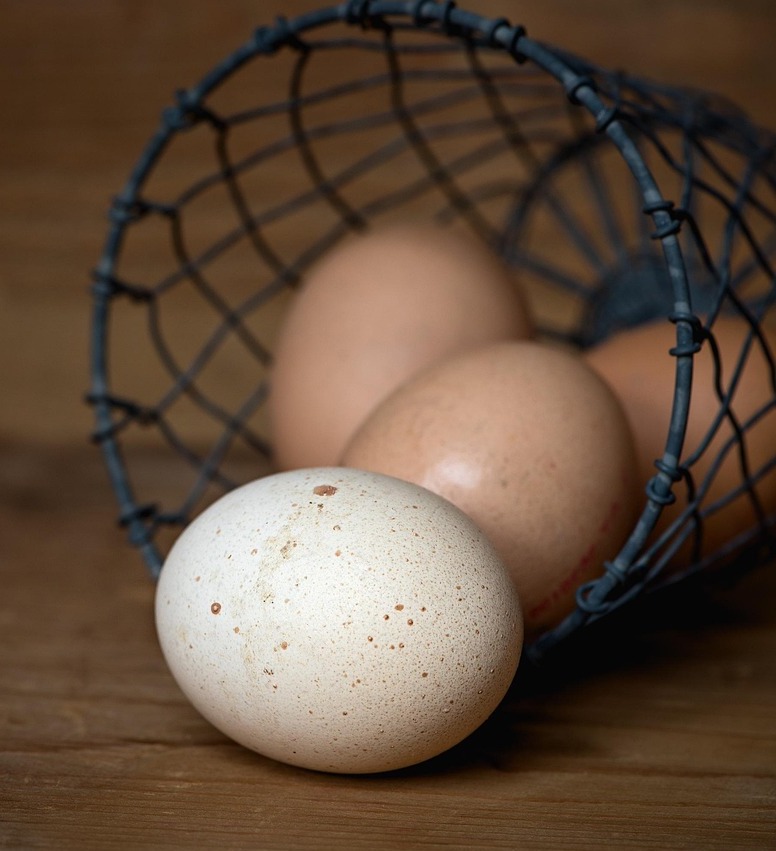
  • The US government has arranged to purchase eggs from Turkey in order to bring down the price of eggs in the US, even though Turkey has a documented high level of Salmonella and bird flu contamination in its eggs, thus exposing US consumers to increased risk of infection with these pathogens.
  • The US government has terminated 60 federal grants to universities in support of HIV research.
  • The CDC has pulled $11 billion in funding to state and local health departments across the US. The funds were earmarked for Covid testing, vaccination, and related programs.
  • The NIH is terminating grants for programs to study vaccine hesitancy and to encourage vaccine uptake. This is directly in line with RFK, Jr.’s widely publicized vaccine skepticism.
  • The Trump administration has withdrawn from the World Health Organization and has terminated USAID programs that funded vaccination efforts in third-world countries.

And there will be more to come. While claiming to attack chronic diseases, the actions taken so far are making the US population more susceptible to the spread of acute illnesses. If this keeps up, I predict a noticeable rise in child mortality rates and infectious disease outbreaks across the USA.


TAINTED formats 3
“Reads like a true crime novel” – Food Safety News

Interested in learning more about food safety and the history of foodborne disease outbreaks and investigations?

Click on the link to listen to a short excerpt, then follow the buy links to add a digital, print or audio copy to your personal library.

Chapter 6. Birth of a Pathogen

“US importing millions of eggs from Turkey”—This won’t end well, folks

The dysfunctional Trump administration, in its infinite lack of wisdom, has decided to import eggs from Turkey as a stop-gap measure.

Has anyone at the USDA or the FDA considered the contamination rates of H5N1 (bird flu), Salmonella, and other pathogens in Turkish eggs?

I thought not.

To be clear, Vladimir Putin tried this a little over a year ago, with disastrous results.

Russia decided to import eggs from Turkey in order to address an egg “crisis” caused by high inflation and Western sanctions triggered by Russia’s war on Ukraine.

According to a January 2024 story in Newsweek, more than 20% of the 19.4-ton batch of Turkish eggs imported into Russia on January 3, 2024, was contaminated with the H5N1 (bird flu) virus and/or Salmonella.

This was not an isolated incident. A 2022 study of shell eggs in Turkey found Salmonella in 12% of free-range eggs, 10% of cage-free eggs, and 12% of eggs from caged birds.

In contrast, the generally acknowledged overall incidence of Salmonella in US eggs is 1:20,000 (0.005%).

I usually try to avoid predictions; however, don’t be surprised if there is a sudden rash of egg-associated Salmonella outbreaks over the next few months.


TAINTED formats 3
“Reads like a true crime novel” – Food Safety News

Interested in learning more about food safety and the history of foodborne disease outbreaks and investigations?

Click on the link to listen to a short excerpt, then follow the buy links to add a digital, print or audio copy to your personal library.

Chapter 6. Birth of a Pathogen

Memo to RFK, Jr: Raw milk not worth the risk

Once upon a time, raw milk was reasonably safe to drink. But, that was long, long ago.

An early scene in the movie “A League Of Their Own” (set in the 1940s) depicts two sisters sitting in a barn, each of them milking a cow.

In this idyllic scenario, the milk that flowed into scrupulously clean pails would be consumed fresh, churned into butter, or used to make cheese. None of this liquid gold (okay, white gold) would sit around in chilled bulk tanks waiting to be bottled.

Of course, even back then, raw milk was not without its problems. Dairy cows suffering from bovine tuberculosis could shed the bacteria in their milk. Likewise, undulating fever (brucellosis) could be transmitted to individuals who drank milk from an infected cow.

In Spoiled. The Myth of Milk as Superfood, Anne Mendelson traced the evolution of Western civilization’s love affair with drinking milk.

As demand in cities grew for fresh milk, problems with purity, safety, and spoilage mounted exponentially. As the frequency and size of milk-borne epidemics increased, pasteurization gained reluctant acceptance as a means of ensuring a safe milk supply.

Nevertheless, now that collective memories of the ‘bad old days’ of milk-borne diseases have faded, a growing cadre of consumers have united in their desire to consume raw milk, cream, cheese, and butter.

And dairy farmers across the United States (and in Canada) have stepped up to fill this market niche.

In September 1987, the US Food and Drug Administration (FDA) issued a Final Rule mandating that “…milk and milk products in final package form for human consumption in interstate commerce be pasteurized.”

The FDA does not regulate food products (including raw milk) that are produced and sold intrastate (ie., without crossing state lines). Oversight of those products is left to each individual state.

As of 2024, approximately 30 states permitted intrastate sale of raw milk, while 20 states prohibited it. Yet, raw milk can be purchased even in those 20 states through a loophole known as the “cow share program.”

According to the website, realmilk.com, a consumer can enter into a contract with a dairy farmer in which the consumer pays the farmer to feed, house, and care for Betsy. In turn, the consumer receives the output of the cow (milk, butter, cheese, etc.).

In practice, Betsy’s milk is mixed with milk from Elsie, Matilda, and all of the other members of the dairy herd, and the consumer receives a portion of that commingled output. Thus, if Betsy is one of 100 dairy cows in the herd, the consumer would be entitled to 1% of the total output of the herd.

If that’s more dairy product than one consumer’s family can handle, he or she could opt to purchase just a fraction of Betsy’s theoretical output. Perhaps just one-half or one-quarter of a cow.

Raw (unpasteurized) milk and dairy products made with raw milk have been the source of multiple outbreaks of Salmonella, Campylobacter, Listeria monocytogenes, and E. coli O157:H7 infections.

The FDA compiled a list of 133 outbreaks associated with raw milk covering the period 1987 to 2010. These outbreaks caused 2,659 cases of illnesses, 269 hospitalizations, 3 deaths, 6 stillbirths, and 2 miscarriages.

The list of outbreaks continues to grow. Between 2009 and 2021, the CDC logged 143 enteric disease outbreaks that were confirmed or suspected to be associated with consumption of raw milk.

From October 18, 2023 through May 4, 2024, the California Department of Public Health and its partner agencies investigated an outbreak of Salmonella Typhimurium that encompassed 171 confirmed outbreak cases, the majority of them among children.  Epidemiologic, laboratory, and traceback investigations identified Raw Farm brand raw milk as the source of the outbreak. 

And in February/March 2024, the CDC advised consumers that eleven cases of E. coli O157:H7 infection had been traced to raw cheddar cheese, also manufactured by Raw Farm, LLC, a California-based raw dairy producer. Five of the eleven victims were hospitalized and two developed hemolytic uremic syndrome (HUS).

The company at first agreed to recall the implicated products, then reversed its position and cancelled the recall.

Raw Farm is owned and operated by Mike McAfee, and has a long history of regulatory disputes both with California regulators and with the FDA.

In March 2024, the bird flu virus, H5N1, was detected in the US cattle population for the first time. As infected cattle are able to shed live virus in their milk, this raised a concern about the safety of the commercial milk supply across the USA.

In response, the FDA carried out an initial sampling of retail (pasteurized) milk and reported that all 297 samples analyzed were negative for the H5N1 virus. A second follow-up survey showed similar results. The FDA also carried out a series of lab tests and confirmed that pasteurization inactivates the H5N1 virus.

To determine the extent to which the bird flu virus has contaminated raw milk, federal and state agencies are working cooperatively to test milk samples drawn from raw milk storage silos at dairy processing facilities. Analysis of these samples for the H5N1 virus is being carried out by the USDA’s National Veterinary Services Laboratory.

There is a small but growing body of reports indicating that the bird flu virus can be transmitted to animals (and occasionally to humans) via ingestion. On January 17, 2025, the FDA notified the cat and dog food industry that manufacturers who are covered by the FDA Food Safety Modernization Act Preventive Controls for Animal Food (PCAF) rule and are using uncooked or unpasteurized materials derived from poultry or cattle must reanalyze their food safety plans to include Highly Pathogenic Avian Influenza virus (specifically H5N1) as a known or reasonably foreseeable hazard. 

This notice followed reports of domestic cats that had become infected with the H5N1 virus after consuming a raw pet food that was later found to be contaminated with the virus.

Several cats also have become infected after drinking raw milk that was later recalled due to the presence of the H5N1 virus.

If RFK, Jr. directs the FDA to rescind its 1987 Final Rule and allow the interstate shipment of retail-packaged raw milk across state lines, the impact on public health could be staggering. And negative.

Considering the decades-long history of foodborne illness outbreaks associated with raw milk consumption, expanding the availability of this commodity will inevitably increase the risk to consumers.

Furthermore, once a dairy product is shipped across state lines, the manufacturer of that product falls under FDA jurisdiction. The FDA’s budget already is inadequate to support its existing regulatory responsibilities. Adding an new industry sector to its workload will stretch resources to the breaking point, with disastrous effects on the entirely of the agency’s food safety activities.


TAINTED formats 3
“Reads like a true crime novel” – Food Safety News

Interested in learning more about food safety and the history of foodborne disease outbreaks and investigations?

Click on the link to listen to a short excerpt, then follow the buy links to add a digital, print or audio copy to your personal library.

Chapter 6. Birth of a Pathogen

TAINTED is available in digital format from all major on-line retailers. Press the button to go directly to your preferred digital bookstore.