
U.S. representative says response from Boar’s Head about Listeria outbreak is a fluff piece

This story by Coral Beach first appeared in Food Safety News and is reposted here with permission.

Calling it a corporate dodge, U.S. Rep. Rosa DeLauro has released a response that Boar’s Head provided to questions she sent the company in the wake of a deadly listeria outbreak.

The outbreak killed at least 10 people and sickened dozens. It was traced to deli meat from the Boar’s Head production facility in Jarret, VA. The company and the U.S. Department of Agriculture are under investigation because of the outbreak after two years of documented food safety violations at the plant.

Rep. Rosa DeLauro

DeLauro sent a letter to Boar’s Head in September demanding answers about the outbreak and the company’s practices. She revealed the response on Dec. 18, calling it a fluff piece.

“What I received (in response to my letter) was not a credible response; it was a classic corporate dodge,” the Connecticut Democrat said in a statement.

“They skirted almost every substantive question, from how they test for contaminants to their alarmingly vague plans to prevent another deadly outbreak. The American people will not be satisfied with marketing fluff or half-truths — they deserve straight answers. Honesty and accountability are essential to prevent another outbreak. 

“If Boar’s Head thinks it can brush this inquiry off and slip back to business as usual, they are wrong. I will not stop pushing until we know exactly what went wrong, how they fix it, and who will finally take responsibility. If they thought this flimsy, PR-driven response to a Congressional inquiry would get them off the hook, they were wrong. I expect a real, substantive response, and soon.” 

Boar’s Head failed to answer several questions raised by DeLauro in her Sept. 30 letter, including:

  • There is no confirmation if they plan to reopen the Virginia plant at the center of the Listeria outbreak. 
  • There is no clear commitment to improving the plant’s infrastructure or explanation of how Boar’s Head plans to prevent noncompliance in the future.
  • No response on explaining their past food safety policies
  • No reaction on why staff did not act sooner to address food safety concerns or how management will be held accountable
  • No response on the frequency Boar’s Head conducted microbial testing
  • No reaction on testing data as requested.
  • There is no word if Boar’s Head tested non-contact food surfaces
  • There is no response on whether third-party inspections were conducted before the recall
  • No reaction on how HQ handled food safety concerns and
  • Limited information on the documented steps of the recall.

The complete Boar’s Head response to DeLauro’s questions can be found here

DeLauro’s September 30 letters to Boar’s Head can be found here.

DeLauro is also trying to get answers about the Boar’s Head plant situation from the USDA’s Food Safety and Inspection Service (FSIS). She sent a letter to the agency requesting information on Sept. 30. The FSIS has not yet responded to DeLauro’s request for information.

Earlier this week, the FSIS announced key reforms that DeLauro had raised in her Sept. 30 letter to the agency. Notable changes include:

  • FSIS added broader Listeria species testing to all samples of ready-to-eat products and environmental and food contact surfaces.
  • FSIS is updating its instructions and training for food safety inspectors to equip the workforce to recognize and highlight systemic problems in a standardized way.
  • FSIS field supervisors conduct in-person, follow-up visits when systemic issues are identified during a Food Safety Assessment.

“While I am grateful that FSIS has acknowledged how they fell short, and I await their response, I am not confident that Boar’s Head has done the same,” DeLauro said. “I look forward to the UDSA Office of Inspector General getting to the bottom of this, and I encourage UDSA and the U.S. Department of Justice to hold Boar’s Head accountable if they are liable.”
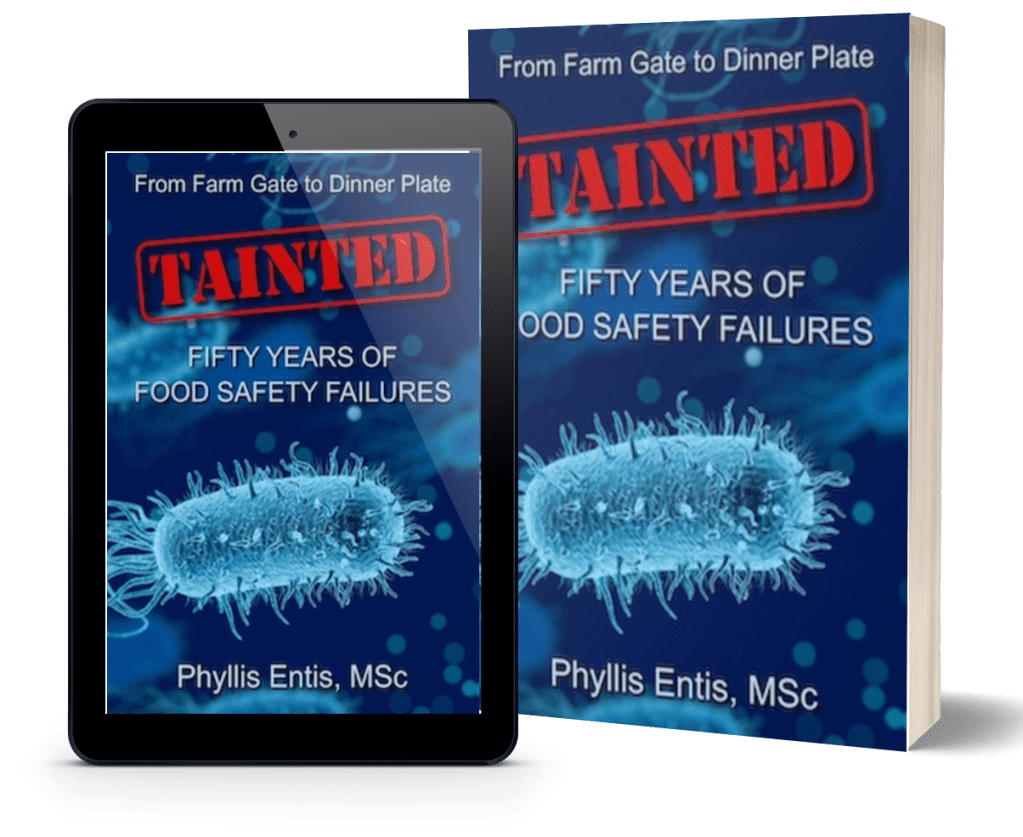

“Reads like a true crime novel” – Food Safety News

Interested in learning more about food safety and the history of foodborne disease outbreaks and investigations?

Click on the link to listen to a short excerpt, then follow the buy links to add a digital, print or audio copy to your personal library.

Chapter 6. Birth of a Pathogen

TAINTED is available in digital format from all major on-line retailers. Press the button to go directly to your preferred digital bookstore.

Boar’s Head shutters Jarratt plant ‘indefinitely’

Boar’s Head Provisions Co., Inc. has announced its intention to ‘indefinitely close’ its Jarratt production location. The announcement was posted yesterday (September 13, 2024) on the company’s website.

The company initially suspended production after receiving a Notice of Suspension from the USDA on July 26, 2024.

Liverwurst manufactured at the Jarratt location was identified as the probable source of a deadly outbreak of Listeria monocytogenes, which has sent 57 people to hospital, killing nine of them, according to the most recent update from the CDC, posted on August 28, 2024.

The Jarratt plant is one of five Boar’s Head production facilities registered with the USDA’s Food Safety and Inspection Service (FSIS). The other four facilities have not been implicated in this outbreak.

According to the company’s announcement, an investigation “identified the root cause of the contamination as a specific production process that only existed at the Jarratt facility and was used only for liverwurst.”

As a result, Boar’s Head also has decided to permanently discontinue production of liverwurst.

The FSIS Notice of Suspension highlighted multiple findings of product adulteration and unsanitary conditions, including:

  • Listeria monocytogenes outbreak strain was recovered from an unopened package of Boar’s Head liverwurst by the Maryland Department of Health
  • Listeria monocytogenes outbreak strain was recovered from the surface of a pallet jack during production of Beechwood Ham. The environmental swab sample was collected as part of the FSIS Intensified Verification Testing as part of the outbreak investigtion.
  • Beaded condensation on door opening and inside blast cell dripping over nine trees (ie., support racks) of Beechwood Hams
  • Clear liquid falling from a patch in the ceiling within ten feet of a fan that was blowing the liquid into an area where nine trees of Assorted Hams were stored.

The Jarratt location relied solely upon its Sanitation Standard Operating Procedures and sanitation program to control the risk of Listeria monocytogenes contamination. The FSIS determined that the recovery of Listeria monocytogenes from both a finished product and an environmental sample demonstrated the inadequacy of the company’s control methods.

The Notice of Suspension summarized the FSIS’s conclusions as follows:

The wholesomeness of your product is directly dependent on the design and implementation of your sanitation program, adequate Listeria monocytogenes control measures and overall maintenance of your facility, including the sanitary procedures conducted in your food production. Evidence demonstrates failure to comply with regulatory requirements identified in 9 CFR 416, including SPS and SSOP requirements, as outlined above. Findings result in FSIS being unable to conclude that sanitary conditions are being maintained, resulting in your establishment’s producing and shipping adulterated product. As such, product may have been prepared, packed, or held under insanitary conditions, whereby product may have become contaminated with filth or whereby product may have been rendered injurious to health, rendering the product adulterated.

In it’s September 13th announcement, the company revealed the measures it is taking to implement “enhanced food safety and quality measures.” Specifically,

  • Appointing a new Chief Food Safety & Quality Assurance Officer, to report directly to the president of the company.
  • Establishing a “Boar’s Head Food Safety Council” comprised of independent industry-leading food safety experts. Founding members of the Council will include Dr. David Acheson, Dr. Mindy Brashears, Dr. Martin Wiedmann, and Frank Yiannas, MPH. Some of these individuals have been assisting with the investigation of the problems in the Jarratt facility.
  • Creation of an enhanced companywide food safety and QA program, to be led by the Chief Food Safety Officer.

The evidence of unsanitary conditions at the Jarratt location was well documented during the course of a Food Safety Assessment conducted by the FSIS in October 2022.

Yet, the company was allowed to continue production.

The FSIS owes an explanation and an apology to the general public over its failure to act in the face of egregious sanitation and food-safety lapses on the part of the company.

Boar’s Head has apologized to consumers. When will the FSIS do likewise?


TAINTED formats 3
“Reads like a true crime novel” – Food Safety News

Interested in learning more about food safety and the history of foodborne disease outbreaks and investigations?

Click on the link to listen to a short excerpt, then follow the buy links to add a digital, print or audio copy to your personal library.

Chapter 6. Birth of a Pathogen

TAINTED is available in digital format from all major on-line retailers. Press the button to go directly to your preferred digital bookstore.

USDA drops ball on Boar’s Head food safety oversight

Major deficiencies associated with the establishment’s physical conditions were observed that could pose imminent threat to product.”

– Conclusion from USDA Food Safety Assessment of Boar’s Head (Jarratt, VA), October 2022

In September/October of 2022, the USDA’s Food Safety and Inspection Service (FSIS) conducted a Food Safety Assessment (FSA) of the Boar’s Head production plant in Jarratt, Virginia.

The FSA, which was conducted by an Enforcement Investigation and Analysis Officer (EIAO), followed on the heels of numerous instances of non-compliance with sanitation, cleaning, and maintenance norms documented by Inspection Program Personnel.

The FSA began on September 27, 2022, with a “walk-through” to evaluate the production facility’s compliance with Sanitation Performance Standards.

During that walk-through, the EIAO observed nearly 100 individual instances of non-compliance, including:

  • condensation beading on pipes and ceilings; in some cases directly above ready-to-eat product
  • rusting brackets, clamps, and conduits
  • peeling paint
  • loose caulking
  • trash on floor
  • smoke and soot collected on ceiling and overhead pipes
  • holes in walls and floors
  • exposed insulation around piping
  • green mold in the vicinity of a crack in a wall
  • live insects

The second phase of the FSA focussed on compliance with Sanitation Standard Operating Procedures (SSOP). This part of the assessment was performed only after plant quality assurance personnel had completed their own pre-operation inspection and declared the areas to be ready to begin production.

During the SSOP inspection, performed on September 28th, September 29th, and October 4th, the EIAO documented 46 individual instances of inadequate cleaning and six maintenance issues, including:

  • multiple instances of product residue on and around production equipment, including on surfaces that would come into contact with fresh product
  • beads of condensation
  • numerous missing links in a conveyor belt line

Upon checking the facilities SSOP records for the dates in question, the EIAO discovered that neither the deficiencies nor any corrective action had been documented, as required.

Finally, in the course of reviewing the company’s HACCP plan and records, the EIAO found that multiple sites had been omitted from the list of Food Contact Surfaces in the Environmental Monitoring Program.

NOTHING!

No warning letter. No suspension of operations (except for a 1-hour pause in a single part of the facility).

And, as far as can be determined from subsequent routine inspections, no real change in the company’s attitude or behavior.

The on-site inspector continued to log instances of product residue and “meat over-splash” in areas that had been cleared by plant QA personnel for production.

Mentions of rust continued to appear on the inspection logs.

Insects still crawled onto the pages of the reports.

And condensation periodically beaded on the ceiling, sometimes above a product-contact area.

In all of the inspection reports, covering a two-and-a-half year period from January 2022 through July 2024, there is not a single mention of Listeria.

We don’t know whether, and to what extent, the company conducted environmental and finished product testing for Listeria, and there is no indication that the 2022 Food Safety Assessment included any such sampling.

The only testing that has been made public consisted of twelve finished product samples collected by the Virginia Department of Agriculture at the request of the FSIS and analyzed by a USDA laboratory. Listeria monocytogenes was not recovered from those samples.

In mid-September 2002, the CDC alerted the public to an outbreak of Listeria monocytogenes that was responsible for 26 illnesses and 4 deaths. By October 4th, the number of confirmed illnesses had increased to 40. Seven people died and three pregnant women miscarried.

Epidemiological analysis linked the outbreak to sliced turkey deli meat. Eventually, the outbreak strain was found in environmental samples collected at Pigrim’s Pride in Franconia, PA and from ready-to-eat poultry products manufactured by JL Foods (a company unaffiliated with Pilgrim’s Pride).

Both companies had a long history of Listeria monocytogenes contamination in their production facilities, dating back at least to 1990 in the case of JL Foods. In both cases, FSIS closed its collective eyes to multiple instances of non-compliance at both facilties.

Food safety regulation and enforcement is suffocating within the FDA. The relatively recent reorganization may help, but feels too much like a rearrangement of deck chairs on the Titanic.

For decades, enforcement of food safety regulations for meat and poultry products within the USDA has taken a back seat to the agency’s mandate as a promoter of US agricultural products and industries. There is an inherent conflict of interest in these dual mandates that cannot be solved by nibbling around the edges.

The current system in the United States is fraught with overlapping jurisdictions and completing interests. Arbitrary definitions can place a single plant be under FSIS jurisdiction for some products and FDA jurisdiction for others.

The only sensible solution is to do what many of the USA’s trading partners have already done.

Combine the food safety mandates of the FDA and FSIS into a single, independent Food Safety Agency.


TAINTED formats 3
“Reads like a true crime novel” – Food Safety News

Interested in learning more about food safety and the history of foodborne disease outbreaks and investigations?

Click on the link to listen to a short excerpt, then follow the buy links to add a digital, print or audio copy to your personal library.

Chapter 6. Birth of a Pathogen

TAINTED is available in digital format from all major on-line retailers. Press the button to go directly to your preferred digital bookstore.